當下,汽車行業正處于歷史巨變之中。作為支撐行業轉型的基石,博格華納(BorgWarner)等一級供應商必須持續推動創新,支持其客戶的靈活發展需求。作為一家擁有推進系統核心技術的供應商巨頭,博格華納首席技術官兼副總裁 Hakan Yilmaz 向《SAE 汽車工程》雜志介紹了自己對汽車行業巨變的見解,以及博格華納將如何在巨變之中求生發展。
Yilmaz 負責博格華納公司的先進工程、投資組合戰略和市場研究等多支團隊,主要工作目標是確保博格華納的技術產品組合始終處于行業領先地位,并同時兼顧當下和未來市場的需求。在加入博格華納之前,Yilmaz 曾為博世(Bosch)效力超過 15 年,擔任過多個技術和高管職位,并最終從博世動力總成和先進工程研發全球主管一職離職。更早之前,Yilmaz 在密歇根大學獲得機械工程和工程管理碩士學位,并在沃爾沃(Volvo)積累了豐富的工作經驗。
如今,汽車行業的推進系統選擇越來越多樣化,遠遠不止汽油或柴油兩個選項。與許多頂級供應商一樣,Yilmaz 也認為,電氣化泛指各種可以提高推進系統效率的技術,但具體如何應用可能因車輛類型和區域監管環境有很大不同。他表示,“博格華納的核心產品策略在于平衡,即同時推進內燃機、混合動力和純電動產品的創新與發展。
目前,這家擁有 92 年歷史的老牌供應商已經看到市場正在明顯向高度多樣化的電動解決方案轉型,包括輕混車型、全混車型、插電式混合動力車和純電動車等。這種多樣化“實際上是電氣化技術在不同立法環境、區域市場需求和車輛市場細分要求等條件下的不同體現。”Yilmaz解釋說,“在如今這樣激蕩多變的市場環境中,博格華納專注于為更多新興推進系統提供具有差異性和附加值的解決方案,從而更好地配合我們的主要客戶推進公司戰略。”
長期以來,北美等市場均更加偏愛皮卡或 SUV 等大型內燃機車型,可以想象,這部分市場更加迫切希望可以有提高內燃機車輛效率的電氣化技術,比如 e-axles、e-boosting 系統等。在此背景下,很多供應商均將絕大部門工程資源留給了電氣化技術研發,博格華納也不例外。對此,Yilmaz 已經證實,公司已經在電氣化研發領域投入了大量人力和物力,但能否將電氣化技術推廣至公司完整產品線應取決于技術本身的可擴展性。
“具體而言,我們已經確定要大力投入混合動力和電動動力總成,要在這兩個領域爭先爭強。”Yilmaz表示,“你想的沒錯,我們的電氣化和集成產品是完全可擴展的,可以根據全球各類客戶的不同需求進行定制化,適應乘用車、卡車、SUV和商用車的使用。”
事實上,博格華納的多款產品都是很好的例子,比如適用于混合動力汽車的集成 Px 模塊、用于純電動汽車的集成驅動模塊(可適用多種電壓和功率級別)、以及適用于內燃機車型的 eTurbo 和 eBooster 充電壓縮機解決方案。
“目前,我們可以看到市場明顯在向高度多樣化的電動汽車解決方案轉型,各種架構和電氣化水平的車輛都有自己的市場。”
Yilmaz 表示,盡管電氣化技術在所有原始設備制造商的產品組合計劃中都是“C 位”,但在短期內,內燃發動機在汽車推進系統領域內的地位仍不容撼動,特別是考慮到內燃技術仍有很大改進與優化空間的前提下。“在傳統推進系統領域中,內燃機、變速箱和傳動系統等組件均見證了大量新的技術創新,可以提高燃油經濟性并減少發動機排放。”Yilmaz 解釋說,“今天,我們很多傳統產品仍然銷量不斷增加,這點不能忘記。此外,新興混合動力架構的出現更是對內燃機的效率提出了更高需求。”
Yilmaz 指出,eTurbo 技術就是一個很好的例子。eTurbo 的“本職工作”是提升發動機的進氣壓力,但其獨特的單軸設計可以將所有動力電子元件全部集成起來,作為電機為車輛提供輔助電力助推,從而提高發動機的燃油經濟性和性能。據悉,博格華納有一位主要歐洲客戶計劃在 2022 年推出一款采用 eTurbo 技術的車型。
電氣化轉型的巨變影響深遠,無論是機械零部件還是其他組件,全部都必須完全集成至車輛的電子控制系統之中。這種轉變無疑增加了供應商需承擔的責任,特別是軟件方面的壓力。Yilmaz 指出,無論是何種系統,可靠性都是第一要務。“我們的重點非常明確:繼續扮演最可靠的合作伙伴,為我們的原廠客戶提供行業領先且具有差異性的獨立和/或集成系統產品。”
Yilmaz 繼續說:“我們擁有非常全面的產品組合,可以滿足內燃機、混動和純電動汽車的不同需求,而且已經儲備了大量研發能力,可以及時開發最適合的產品。“隨著電氣化在我們產品中的比例越來越大,我們也同步補充了我們的軟件和系統研發能力,”從而更好地支持公司“務實而靈活”的產品和系統開發戰略。
目前,電子控制策略在車輛系統功能中的占比逐步加大。在此背景下,當我們聽到博格華納宣布收購德爾福技術公司時也并不驚訝。該收購有望幫助博格華納擴寬其現有的產品和技術組合。Yilmaz 表示:“本次收購也是為了繼續推進我們的平衡產品策略,鞏固我們在電氣化推進以及內燃機、商用車和汽車售后市場中的地位。”
博格華納此番收購德爾福技術相當于強強聯手,受到了業界的贊許。Yilmaz 解釋說,這兩個公司將在完整發動機管理系統研發方面相互支持、相互補充,將德爾福的空氣/燃料、控制和全混合動力解決方案與博格華納的集成式即插即用模組相結合,持續提高純電動汽車的效率。他說,德爾福技術為我們帶來了一大批行業領先的電子電氣技術和人才,且擁有穩定的生產、供應和客戶群。
“在完成對德爾福科技的收購后,我們將有能力為客戶提供更完整的電氣化推進系統,”從而幫助博格華納在大量同類產品中脫穎而出,并鞏固我們在推進系統領域的領先位置。
作者:Paul Seredynski
本文原發表于SAE《汽車工程》雜志
The automotive sector is in a time of enormous flux. As the foundational aspects of the industry shift, longstanding Tier-1 suppliers such as BorgWarner must continue to drive innovation for their OEM customers. Hakan Yilmaz, BorgWarner’s chief technology officer (CTO) and a VP, is well situated to architect the changes affecting the technology at the core of the propulsion revolution. SAE’s Automotive Engineering sought his insights into changes roiling the field.
Yilmaz oversees BorgWarner’s advanced engineering, portfolio strategy and market research teams. He’s tasked with ensuring the supplier’s technical portfolio leads in the industry, while also meeting current and anticipated future market needs. Prior to joining BorgWarner, Yilmaz spent more than 15 years at Bosch, where he held several engineering and executive positions before departing as the global head of powertrain systems and advanced engineering. Before Bosch, Yilmaz earned experience at Volvo and holds a master’s degree in mechanical engineering and engineering management from the University of Michigan.
Strong electrification shift
The industry’s propulsion strategies continue to diversify beyond the incumbent gasoline or diesel choices. As with many of the top suppliers, Yilmaz noted that electrification is a general description for an efficiency improver but how it will be applied can vary widely, he said, by vehicle type and regional regulatory environments. “At our core, BorgWarner is focused on executing our balanced product strategy across combustion, hybrid and electric propulsion,” Yilmaz said.
The 92-year-old company currently sees a strong market shift towards diverse solutions for electrified vehicles with different architectures and electrification levels – mild HEV, full HEV, plug-in HEV and BEV. These are “mainly driven by legislative requirements, regional market demands and segment specific expectations,” Yilmaz explained. “In a volatile and rapidly evolving environment, BorgWarner is focusing on differentiating and value-added solutions for emerging propulsion architectures which fit into the main strategies of our customers.”
For many suppliers, electrification (via systems such as e-axles, e-boosting, etc.) is receiving the lion’s share of engineering resources, as markets such as North America in particular seek to improve the efficiency of larger, more profitable, internal combustion engine (ICE) vehicles such as pickup trucks and SUVs. Yilmaz confirmed that BorgWarner is dedicating large resources to electrification, but the key to applying the technology across vehicle lineups remains in the technology’s scalability.
“Indeed, hybrid and electric powertrains are in our clear focus for product leadership and receiving a high share of our resources,” Yilmaz said. “And yes, our electrified and integrated products are fully scalable and can be adapted based on the needs of our global customers in passenger cars, trucks, SUVs and commercial vehicles.”
Yilmaz pointed to several examples already in the BorgWarner product portfolio, including its integrated Px modules for hybrids, integrated drive modules for BEVs with scalable voltage and power levels, and ICE solutions such as its eTurbo and the eBooster electrically charged compressor.
“We are currently seeing a strong market shift towards highly diverse solutions for electrified vehicles with different architectures and electrification levels.”
Roles for ICE, software – and Delphi
Though electrification is a key aspect of all OEMs’ future portfolios, according to Yilmaz, ICE will continue to be a large part of the propulsion landscape in the near term, particularly as a component to be evolved and improved. “There is still a lot of technology and innovation in conventional propulsion systems in ICE, transmission and drivetrain to improve fuel economy and reduce emissions,” he said. “We continue to see increasing take rates for many of our conventional products – let’s not forget that. In addition, emerging hybrid architectures are increasing demand for efficient ICE products which are synergistic with the electrification levels.”
He cites eTurbo tech as a prime example. BorgWarner has a major European OEM customer that will be launching a new model with this technology in 2022. An eTurbo serves its traditional role of boosting intake air pressures, but the single-shaft setup also features integrated power electronics. It can serve as a motor/ generator to provide a supplemental electrical boost to improve engine fuel economy and performance.
The move towards electrified components has created an enormous shift, from supplying mechanical parts, to components that must be fully integrated into a host of a vehicle’s electronic control systems. This places increased responsibility on suppliers, and particularly on software. Yilmaz notes that regardless of the system supplied, reliability is paramount. “Our focus is very clear: support our OE customers with leading and differentiating stand alone and/or fully integrated system products as a reliable partner.”
“We have a very comprehensive product portfolio for combustion, hybrid and electric vehicles and have built system capabilities in order to develop the right products,” Yilmaz continued. “As the electrification content of our products is rapidly increasing, our software and system capabilities are growing in parallel,” as the company takes a “pragmatic and flexible approach” to product and system development.
With electronic control strategies becoming a larger part of system functionality, BorgWarner’s recent announcement of entering into a definitive transaction agreement to acquire Delphi Technologies should only help broaden its technology portfolio. “This transaction represents the next step in our balanced propulsion strategy, strengthening our position in electrified propulsion as well as our combustion, commercial vehicle and aftermarket businesses,” Yilmaz said.
The Delphi purchase has been widely applauded in terms of combining the two entities’ specialties. They will complement each other for complete engine-management systems, combining air/fuel, controls and full hybrid solutions with BorgWarner’s integrated modules, and plug-to-wheel product and system solutions for battery electric vehicles, Yilmaz explained. He said Delphi Technologies “brings industry leading power electronics technology and talent, with an established production, supply and customer base.
“Once we complete the Delphi Technologies transaction, we would be able to offer customers more complete electrified propulsion systems,” thus helping BorgWarner differentiate and strengthen its propulsion-systems position, he said.
SAE Automotive Engineering
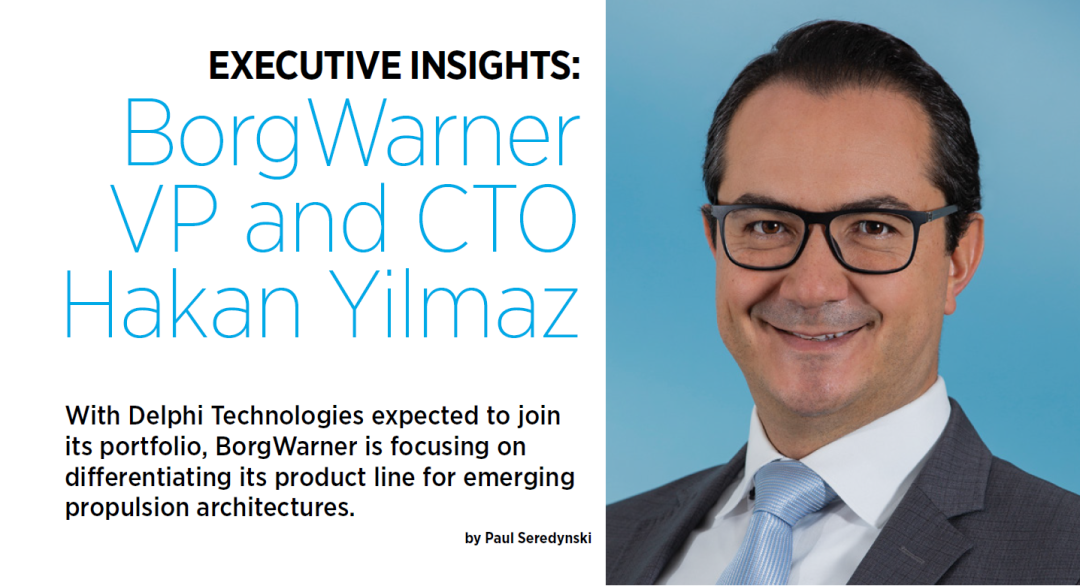 博格華納收購德爾福技術公司,將專注新興推進系統架構方面的產品差異化。
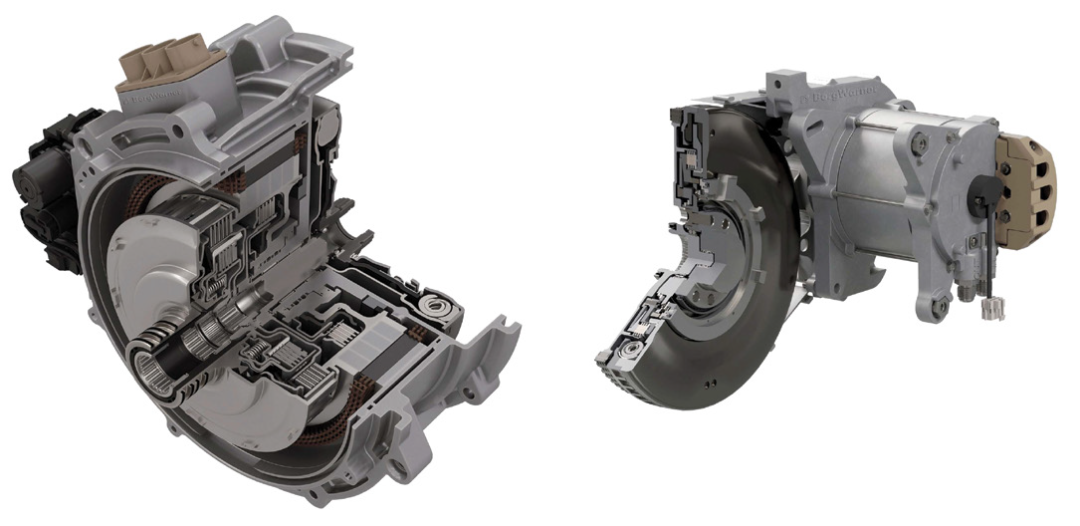 博格華納公司的 P2 混合動力系列解決方案采用了一款分離式離合器,可控制車輛與內燃機的連接,實現純電動駕駛。
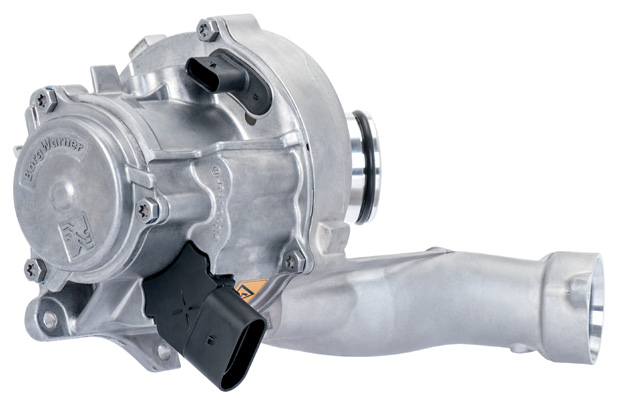 博格華納公司的 eBooster 是一款適用于內燃機應用的電輔助充電系統,其特色在于采用了一款由電機驅動的流量壓縮機,可以以組件的形式輕松安裝在渦輪增壓器之前或之后。