乍眼一看,雙電機AWD 電動汽車似乎可以滿足一些OEM的要求,但 GKN Automotive (吉凱恩汽車公司)最新研究結果表明:要向雙電機 AWD 電動汽車說 No!
單電機比雙電機設計更適合AWD 電動汽車。近日,GKN Automotive(吉凱恩汽車公司)從事實、數據和成本三個主要方面,深入對比單電機AWD 和雙電機 AWD 電動汽車設計后得出結論:“最初應用于內燃機動力汽車的斷開技術同樣適用于下一代電動汽車。” GKN公司 AWD 系統經理 Michael Höck 表示,“我們在公司位于德國羅馬爾的技術中心進行了模擬實驗。結果顯示,向車輛所有車輪傳遞動力的最有效方式是使用傳統AWD 系統配合斷開技術的設計。”
盡管大多數裝配AWD 系統的電動汽車和混合動力汽車是通過第二軸的電氣化向車輪提供動力,也就是在車輛前方或后方配備一個“懸掛式”電機,作為車輛一級電機的補充。由于這種設計不僅需要兩個電機,而且還需要配備兩套逆變器和變速器,因此成本相當昂貴。“額外的逆變器和變速器還會耗能,因此車輛的效率就會降低,”Höck 表示,“而效率降低就意味著續航里程縮水,這在電動汽車行業眾所周知。”此外,雙電機配置的安全性和牽引力在車輛行駛循環的大部分時間中也沒有優勢。
隨著消費者對AWD 電動汽車的需求越來越多,GKN決心詳細研究對比各種 AWD 配置的優劣勢。GKN的模擬基于“大多數雙電機電動汽車基本上一直運行在AWD 模式下”的事實。Höck解釋道,“一些系統允許車輛在不需要AWD 功能時斷開其中一個電機,從而提高效率。但事實上,系統斷開的只有電機耦合部分,車輛傳動系統的其余部分仍在運轉。”
“這不僅會造成不可避免的寄生損耗,而且根本無法讓兩部電機的傳動比同時調試至最優,”Höck補充道,齒輪傳動只能針對單電機或雙電機優化,但 AWD 車輛會在兩輪和四輪驅動間來回切換,因此無法總是優化至可以提供最高效率的狀態。Höck 表示,“機械AWD 系統的優勢在于無需在單電機和雙電機之間做出妥協。”
GKN在研究之初,選擇了一輛帶有“懸掛式” AWD 系統的車輛進行模擬,以確定該“懸掛式”系統的工作頻率。“測試表明,即使在結冰和雨雪等低抓地力路面條件下,AWD 系統的使用頻率也僅有四分之一,” GKN公司 AWD 系統測試協調員 Christoph Schmahl 指出,“在高抓地力的城市和農村路面條件下中,這個數字在 9% 到14% 之間,而在主干道上,AWD 系統的使用頻率僅為 1%。研究結果表明,車輛根本沒有必要隨時隨地為所有車輪提供動力,這會顯著降低整個行駛循環的效率。”
更簡潔、更經濟
對比看來,在電動汽車中應用傳統AWD 架構似乎更簡潔、更高效,而且成本也更低。這種基于單電機的機械AWD 架構僅通過一個動力輸出單元(PTU)傳動軸和一個后驅單元(RDU)即可為車輛的四個車輪提供動力。
Höck 暗示,AWD 電動汽車提高能效的關鍵在于離合器,這個離合器必須能在車輛不需要AWD 功能時斷開 PTU、傳動軸和 RDU。只有這樣,電動汽車才能獲得大幅的能效優化,并同時提供AWD 車型特有的穩定性和安全優勢。此外,傳統機械 AWD 設計無需配備第二套電機、逆變器和變速器,因此整體重量更輕,這也可以進一步提高車輛能效。
GKN的ActiveConnect 主動連接系統采用了搭配爪式離合器的 PTU 單元,可在輸入軸處斷開電機。GKN還在車尾處配備了兩個模塊化 RDU 單元,從而更好地滿足不同應用場景的需求。RDU 助推器則采用了一個側裝式離合器,從而延續傳統AWD 系統緊湊、輕質的優勢。
GKN 的 Twinster RDU 單元使用雙盤離合器取代了傳統的差速器,從而進一步增強了車輛的行駛動力學性能。“通過在傳動軸的縱向方向對兩個后輪應用扭矩控制,車輛在公路和越野路況下的牽引力都得到了提高。”Höck 解釋道,“兩個系統的斷開功能沒有差別,因此效率可以得到最大保證,這對電動汽車來說是至關重要的。”
Höck 表示,公司的 ActiveConnect 系統自2014 年登陸傳統內燃機車型以來,已經展示了“顯著”的節油表現。那么,ActiveConnect系統是否適用于電動汽車呢?事實上,這種“傳統” AWD 系統在控制電機初始扭矩方面可以發揮很大作用,并且可以在相對低速下斷開,從而在正常駕駛條件下獲得最大的能效提升。
單電機解決方案
通過使用基于單電機的ActiveConnect 系統,車輛幾乎可以立即將扭矩分配到任何有需要的地方。“例如,在越野路況下,由于前輪的牽引力更高,則系統可以將全部扭矩輸送給前輪,”Höck 解釋道,“雙電機設計卻只能將其中一個電機的總扭矩輸送給前軸。此外,有了Twinster 的助攻,ActiveConnect 系統還可以優化兩個后輪間的牽引力分配。”
ActiveConnect 系統一旦檢測到牽引力丟失,可以再次“幾乎立即”將高達 100% 的扭矩傳遞到車輛后方,以更大的牽引力向后輪輸送扭矩。此外,如果車輛在彎道行駛中失去牽引力,系統還可以在兩個車輪之間重新分配扭矩,從而協助校正偏航力矩。
在測試過程中,ActiveConnect系統的電動汽車模擬結果顯示,單電機設計的效率比雙電機永久AWD 系統高 9%,比配備電子斷開功能的雙電機設計高6%。另外需要說明的是,為了模擬最常見的正常駕駛環境,GKN在模擬中采用了 WLTC 全球統一輕型汽車測試循環工況和低斷開速度的設置。
Höck 總結了公司有關雙電機技術的主要發現:“與配備斷開裝置的雙電機設計相比,帶有斷開裝置的單電機AWD 設計所需的傳動系統元件數量大大降低,可以為廠商節省大量成本。由于無需裝配第二套電機和逆變器,單電機設計僅在傳動系統上就可以節省高達13% 的成本。”
Höck 補充說,未來,某些電動汽車應用也可能都會使用多速電子變速器,而一輛裝配單電機 AWD ActiveConnect 系統的電動汽車可以“輕松”集成這一功能,從而通過降低能耗或提高性能來進一步延長電動汽車續航里程。
Two-motor AWD EVs may meet some OEM criteria, but results from GKN Automotive’s new study suggest the temptation should be resisted.
One electric motor for AWD EVs is better than two. That’s the conclusion reached by GKN Automotive after carrying out extensive research into facts, figures and costs of both. “The benefits of disconnect technology initially introduced for use in ICE powered vehicles are just as relevant in the next generation of EVs,” said Michael Höck, GKN Automotive’s manager of AWD systems. “Simulations conducted at our Technical Center in Lohmar, Germany, show that the most efficient way of transmitting power to all wheels is to use a conventional AWD system with disconnect.”
Although most AWD equipped EVs and HEVs send power to the wheels via the electrification of the second axle – with a “hang-on” electric motor that supplements a primary electric motor at the front or rear – it is an expensive configuration, also demanding two inverters and transmissions. “And it results in reduced efficiency, the extra inverters and transmissions causing power losses,” Höck stated. “As everyone connected to EVs knows, reduced efficiency means reduced range.” Also, the two-motor configuration provided no safety or traction benefits for the majority of the drive cycle.
With increasing numbers of consumers requiring EVs with AWD, GKN decided it needed to carry out a detailed study of options and opportunities. Simulations focused particularly on the fact that most dual-motor EV systems run permanently in AWD. “Some systems allow one of the two motors to disconnect when AWD is not required, thereby providing some efficiency gain, but this is purely at the motor coupling; the rest of the driveline still runs,” Höck explained.
“Not only does this create inevitable parasitic losses, it also makes it impossible to optimize gear ratios for both motors,” he added. Gearing is either optimized for a single motor or dual motors but cannot be tuned to deliver maximum efficiency as the drivetrain switches between two-wheel drive and AWD. “The benefit of a mechanical AWD system is that no compromise is required,” Höck said.
GKN’s study commenced with research simulating a vehicle with a “hang-on” AWD system to determine how often it would be needed. “The tests show that even in low-grip conditions such as ice and snow, the AWD system is only required 25% of the time,” noted Christoph Schmahl, GKN’s AWD systems test coordinator. “In high grip urban and rural driving this figure varies between 9% and 14%, while on the main highway, it drops to 1%. The findings indicate that powering all wheels at all times is unnecessary, and significantly decreases overall drive cycle efficiency.”
Simpler, lower cost
A simpler, lower-cost and more-efficient strategy for automakers to deliver AWD in an EV is one which appears, initially, more traditional. Employ a single electric motor with a mechanical AWD layout including a Power Take-off Unit (PTU) propeller shaft, and a Rear Drive Unit (RDU) to transmit power to all four wheels.
The key to efficiency gains for AWD EVs, Höck suggests, is the application of clutches capable of disconnecting the PTU, the propshaft and the RDU in instances where AWD is not required. The significant efficiency optimization that is so critical for EVs is then achievable, while still providing the stability and safety of AWD when needed. Compound this with the weight saved from not requiring a second motor or inverter, and further efficiency gains are also achieved.
GKN’s “ActiveConnect” system utilizes a PTU with a dog clutch allowing it to disconnect at the input shaft. At the rear, depending on the application and the level of sophistication required, GKN offers two modular RDUs designed for ease of integration. The Booster RDU has a single, side-mounted clutch to provide the benefits of a conventional AWD system in a more compact, lightweight package.
GKN’s “Twinster” RDU replaces a conventional differential with twin disc clutches to enhance driving dynamics yet further “With torque control to both rear wheels, and longitudinally along the propshaft, traction is improved both on and off road,” Höck explained. “Both systems incorporate an identical disconnect capability, and therefore the efficiency gains so crucial to EVs.”
Höck said that ActiveConnect had been used in conventional ICE vehicles since 2014, enabling “significant” fuel savings to be made. In terms of suitability for EV applications, this “conventional” AWD system would make a substantial impact in controlling the initial torque of the electric motor, and could be disconnected at relatively low speeds, allowing for maximum efficiency gains under normal driving conditions.
Single-motor solutions
With a single motor ActiveConnect system, torque could be distributed almost instantly to where it was needed. “For example, during off-road driving the system can deliver all of the torque to the front wheels if they have better traction," Höck explained. "A dual-motor setup can only ever transmit to one axle the total torque of one of the two motors. Equipped with Twinster, the ActiveConnect system also allows optimized traction between the rear wheels.”
If the system detected a loss of traction, it could, again, “almost instantly” transmit up to 100% of the torque being transferred to the rear, delivering it to the wheel with greater traction. And torque can be distributed to help correct a yaw moment if the vehicle loses traction mid-corner.
During the test program, ActiveConnect simulations within an EV driveline demonstrated the system to be 9% more efficient than a dual-motor permanent AWD system. And it was also 6% more efficient than a dual-motor setup with an e-motor disconnect function. Simulations were performed using the WLTC (Worldwide Harmonized Light Duty Test Cycle) and a low disconnect speed, indicative of normal driving conditions.
Höck summed up the test findings and the tempting technology of two motors: “A single-motor AWD setup with disconnect also provides a large cost saving to OEMs when compared to a dual-motor disconnect, greatly reducing the number of drivetrain components required. Without a second motor and inverter, and additional gears, a cost saving of up to 13% can be made in driveline componentry alone.”
Höck added that in the future, certain EV applications might also warrant the use of multi-speed e-transmissions, and that an EV with a single-motor AWD ActiveConnect system could “easily” integrate this, increasing its potential range by decreasing energy consumption, or boosting its performance.
Author: Stuart Birch
Source: SAE Automotive Engineering Magazine
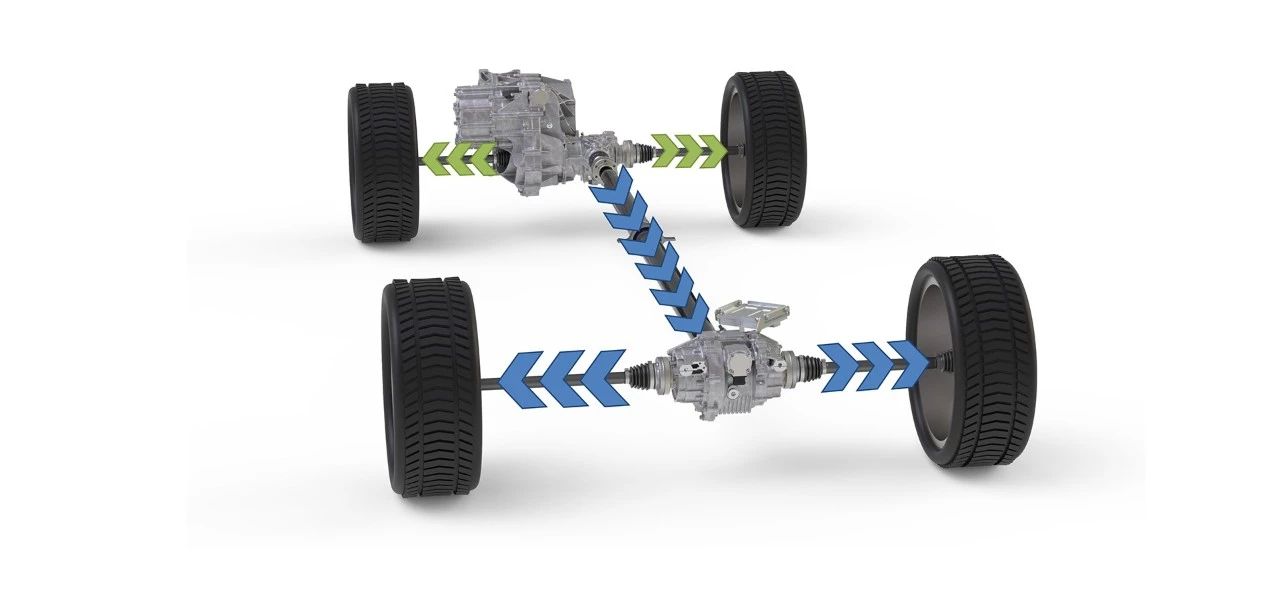 GKN公司研究結果表明,車輛沒有必要隨時隨地為所有車輪提供動力,這會顯著降低整個行駛循環的效率。(圖片來源:GKN)
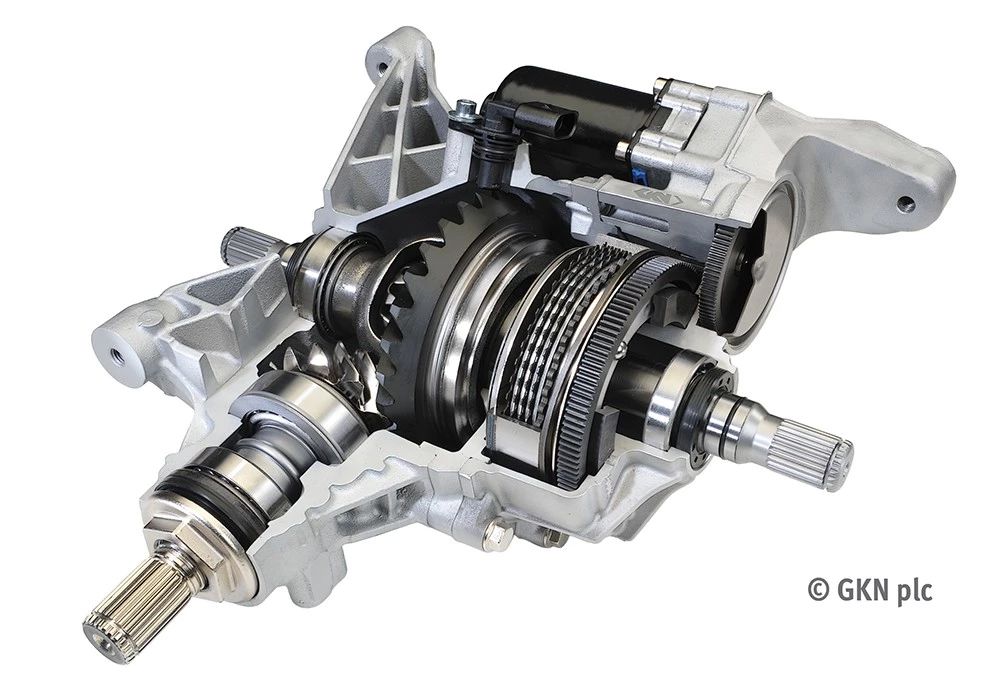 GKN的單離合器后驅模塊和電子扭矩管理器。(圖片來源:GKN)
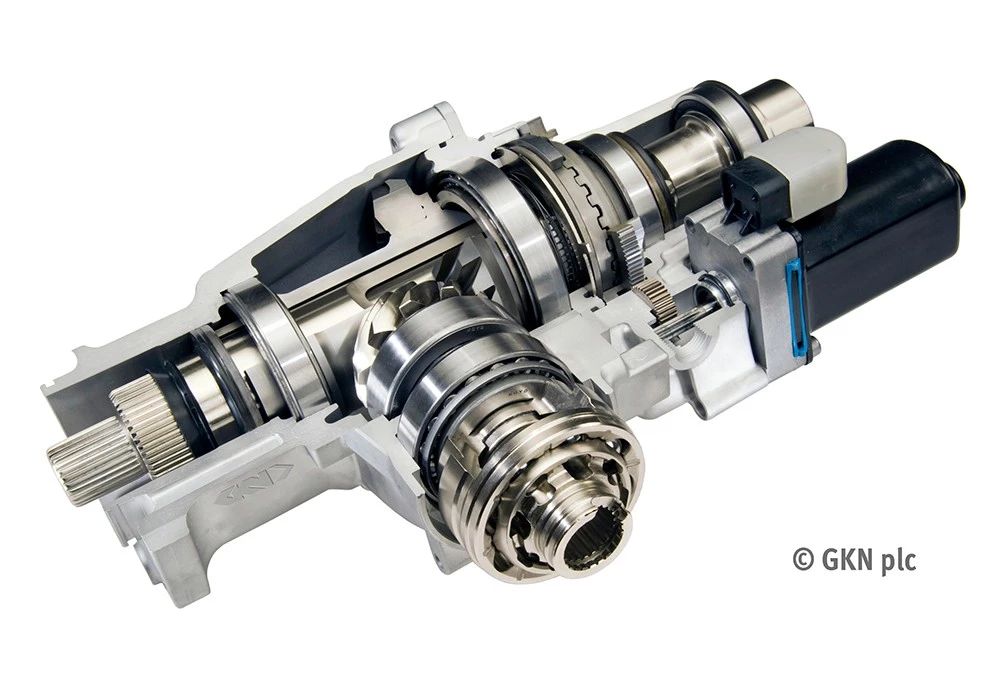 這個PTU 動力輸出單元是GKN為 AWD 電動汽車設計的單電機解決方案的組成部分。(圖片來源:GKN)