伊頓和BAE系統(tǒng)公司(BAE Systems)合作研發(fā)了一款配備BAE電子組件和伊頓四速變速箱的電動(dòng)動(dòng)力總成。
長(zhǎng)期以來(lái),OEM一直大力宣傳純電動(dòng)車無(wú)需使用變速箱等部件,因?yàn)殡姍C(jī)提供了足夠的瞬時(shí)扭矩,不再需要使用其他設(shè)備在選定減速比的基礎(chǔ)上提供更多的扭矩增益。然而,汽車行業(yè)發(fā)現(xiàn)這一概念在特定的應(yīng)用場(chǎng)景中存在局限性。
在連續(xù)坡道或高速公路上運(yùn)載重物時(shí),純電動(dòng)車的直驅(qū)電機(jī)的效率和續(xù)航里程可能會(huì)迅速降低。雖然可以通過(guò)增加電池和電機(jī)尺寸來(lái)提升負(fù)載能力,但這會(huì)增加車輛的成本和重量,導(dǎo)致問(wèn)題變得更加嚴(yán)重。
為解決這一問(wèn)題,伊頓和BAE系統(tǒng)公司共同研發(fā)了一種解決方案,該方案不僅為純電動(dòng)卡車提供了更大的靈活性,還可以使用尺寸較小電池組和電機(jī),并同時(shí)實(shí)現(xiàn)與同等燃油卡車相當(dāng)?shù)男阅堋?/span>
SAE受邀參加了伊頓與BAE的合作成果展示會(huì)暨試駕活動(dòng)。在此次活動(dòng)中,我們親自駕駛了測(cè)試卡車,并了解了所有系統(tǒng)是如何協(xié)作以降低整體復(fù)雜性的。
此次并非伊頓首次為重型卡車搭載變速箱。幾年前,公司就成立了一個(gè)專門(mén)負(fù)責(zé)開(kāi)發(fā)電動(dòng)車組件和系統(tǒng)的電動(dòng)動(dòng)力總成部門(mén)。該部門(mén)的產(chǎn)品總監(jiān)Justin Hopkins表示,“我們主要開(kāi)發(fā)電動(dòng)動(dòng)力總成的機(jī)械部件,例如差速器、減速齒輪和傳動(dòng)系統(tǒng)等。”
BAE系統(tǒng)公司是伊頓的動(dòng)力總成電氣組件合作伙伴,負(fù)責(zé)為后者提供電機(jī)、逆變器和電力電子設(shè)備。BAE系統(tǒng)公司業(yè)務(wù)發(fā)展與戰(zhàn)略總監(jiān)Tom Webb簡(jiǎn)要介紹了公司對(duì)電動(dòng)卡車市場(chǎng)發(fā)展現(xiàn)狀的看法,以及在卡車和商用車行業(yè)中電動(dòng)車普及率最高的細(xì)分領(lǐng)域。
Webb指出,“在客車、校車和物料搬運(yùn)車等市場(chǎng)細(xì)分領(lǐng)域,電動(dòng)車的市場(chǎng)份額正在顯著增長(zhǎng)。這可能是因?yàn)榍皟蓚€(gè)領(lǐng)域推出了相關(guān)激勵(lì)措施,而后一個(gè)領(lǐng)域已經(jīng)形成了可持續(xù)的經(jīng)濟(jì)效益。以上領(lǐng)域的占空比都很適合純電動(dòng)車,但目前某些細(xì)分市場(chǎng)的基礎(chǔ)設(shè)施尚未建設(shè)到位。顯然,汽車電氣化還面臨諸多挑戰(zhàn),并非所有市場(chǎng)都已經(jīng)做好轉(zhuǎn)型準(zhǔn)備,但某些細(xì)分市場(chǎng)已經(jīng)接近這一目標(biāo)了。”
“根據(jù)經(jīng)驗(yàn),市場(chǎng)最終都將趨于整合和簡(jiǎn)化。目前卡車行業(yè)引入了大量新技術(shù),許多OEM都競(jìng)相推出產(chǎn)品以搶占市場(chǎng),這些產(chǎn)品往往包含大量模塊、線纜和連接件的高度零散的架構(gòu)。雖然這一做法確實(shí)令產(chǎn)品實(shí)現(xiàn)了電氣化,但可能并不是最佳的解決方案。”
Webb總結(jié),“許多部件都可能出現(xiàn)故障,不僅會(huì)增加成本和復(fù)雜性,還會(huì)增加制造難度。我們盡可能集成和應(yīng)用多種先進(jìn)的商業(yè)化材料技術(shù),以提高產(chǎn)品散熱性能和工作效率,從而簡(jiǎn)化產(chǎn)品的制造、安裝和服務(wù)過(guò)程。”
Hopkins詳細(xì)說(shuō)明了為何將變速箱集成至電動(dòng)動(dòng)力總成中可以提升設(shè)計(jì)靈活性和整體性能。他說(shuō):“在交通運(yùn)輸領(lǐng)域,大部分客車的行駛速度都不超過(guò)45英里/小時(shí)(72公里/小時(shí)),只有一些客車可能需要攀爬陡坡(如舊金山的坡道)。但對(duì)卡車而言,變速箱的作用非常大,因?yàn)槟惚仨毮軌蛞?70英里/小時(shí)(112公里/小時(shí))的速度行駛,而且還要爬一些很高的坡度。因此,我們馬上意識(shí)到變速箱在該領(lǐng)域比直驅(qū)結(jié)構(gòu)具有更大優(yōu)勢(shì)。”
此外,變速箱還有助于縮小電機(jī)和電力電子設(shè)備的尺寸。Hopkins指出,“卡車市場(chǎng)享受的補(bǔ)貼很少,因此更注重總擁有成本(TCO),而且對(duì)成本十分敏感。要兼顧成本和出色的啟動(dòng)性能,就必須考慮一個(gè)問(wèn)題,‘卡車在滿載啟動(dòng)時(shí)能夠攀爬的最大坡度是多少?’此外,還要綜合考慮巡航效率。”
Hopkins指出,“直驅(qū)結(jié)構(gòu)很難實(shí)現(xiàn)這一目標(biāo),因?yàn)檫@要求電機(jī)做兩件截然不同的事:以極高效率高速運(yùn)轉(zhuǎn),或是在低速運(yùn)行時(shí)產(chǎn)生大量低扭。但如果有了能提供多檔變速的變速箱,事情就變得簡(jiǎn)單多了。你可以采用無(wú)需極高扭矩的標(biāo)準(zhǔn)電機(jī),而且還可以通過(guò)進(jìn)一步優(yōu)化,使其在更加適中的速度下運(yùn)行,以達(dá)到電機(jī)的最佳效率點(diǎn)。”
“電機(jī)效率圖上的峰值效率區(qū)間比內(nèi)燃機(jī)的最佳效率點(diǎn)寬廣得多。但我們還是需要優(yōu)化電機(jī)的峰值效率,以實(shí)現(xiàn)最大續(xù)航里程。因此,如果要同時(shí)滿足這兩方面的要求,變速箱就會(huì)非常有用。”
Hopkins還解釋了為何集成變速箱可以降低電動(dòng)動(dòng)力總成的整體成本。他指出,“銅的價(jià)格昂貴,而各種電機(jī)使用的稀土金屬更加昂貴。此外,隨著電機(jī)尺寸的增加,其重量也會(huì)增加。通過(guò)集成變速箱,可以減輕整體重量并降低電機(jī)總成本。”
伊頓集成到測(cè)試卡車上的變速箱只有四個(gè)檔位,這比常見(jiàn)內(nèi)燃機(jī)卡車和輕型車輛的檔位數(shù)量要少得多。Hopkins解釋道,“因?yàn)殡姍C(jī)的運(yùn)行范圍比發(fā)動(dòng)機(jī)廣得多,因此無(wú)需那么多檔位。總之,我們已經(jīng)找到了滿足市場(chǎng)需求的最佳解決方案。”
伊頓變速箱的測(cè)試平臺(tái)是用2018款Freightliner(福萊納)M2雙排座駕駛室改裝的,并配備了一個(gè)齒輪比為3.9:1的Meritor(美馳)后橋。雖然這輛測(cè)試車最初使用液體燃料(而非電力)作為動(dòng)力,但其動(dòng)力總成的整體改裝和集成過(guò)程卻非常簡(jiǎn)單。
不過(guò),更加值得關(guān)注的是引擎蓋下的技術(shù)。
Webb指出,“你可能發(fā)現(xiàn),各種展會(huì)上展示的許多第一代電動(dòng)卡車都有大量部件。這些卡車通常采用高度零散的架構(gòu),因此如果將化石燃料換成電力,就需要為所有這些部件供電。因此,我們構(gòu)建了一個(gè)集成多種功能的六合一架構(gòu)。”
實(shí)際上,由于該測(cè)試卡車的安裝過(guò)程非常簡(jiǎn)單,它看起來(lái)更像一輛量產(chǎn)車而不是一個(gè)“實(shí)驗(yàn)室”。Webb指出,“我們的系統(tǒng)是高度集成的模塊化解決方案,每個(gè)功能模塊都可以組合或移除,因此我們可根據(jù)需要擴(kuò)展或減少功能。我們希望該系統(tǒng)可以在不同平臺(tái)和不同占空比下運(yùn)行,以避免頻繁返工或從頭開(kāi)始研發(fā)。”
Webb繼續(xù)說(shuō),“這樣一來(lái),一個(gè)核心模塊就可以服務(wù)于多個(gè)市場(chǎng),這不僅提升了所有核心功能的通用性,還降低了非重復(fù)性工程成本(NRE),從而使OEM和最終用戶都能受益。考慮到平臺(tái)電氣化成本高昂,通用性核心功能將惠及整個(gè)行業(yè)。”
在密歇根州馬歇爾鎮(zhèn)的伊頓試驗(yàn)場(chǎng),SAE受邀試駕伊頓與BAE共同研發(fā)的測(cè)試車。該測(cè)試場(chǎng)設(shè)有一個(gè)橢圓形測(cè)試跑道、一個(gè)越野場(chǎng)地,以及幾個(gè)坡度在5%-25%之間的鋪裝和非鋪裝坡道。
正如Hopkins所述,當(dāng)測(cè)試車在平坦路面以較低速度行駛時(shí),變速箱確實(shí)不會(huì)頻繁換擋。然而,在行駛速度超過(guò)62英里/小時(shí)(100公里/小時(shí))時(shí),變速箱會(huì)切換到第四檔。即使在車輛后部有負(fù)載的情況下,它依然能像直驅(qū)電機(jī)一樣運(yùn)轉(zhuǎn)。
我們還駕駛卡車攀爬了多個(gè)坡道,這一過(guò)程展示了卡車的爬坡能力。該卡車的動(dòng)力總成配備了坡道保持功能,其工作原理與燃油車非常相似。即使在坡度高達(dá)25%的路段,駕駛員松開(kāi)電門(mén)后,卡車也可以在短時(shí)間內(nèi)保持在原位不動(dòng),然后才會(huì)緩慢下滑。
陡坡測(cè)試也讓我們有機(jī)會(huì)看到,當(dāng)卡車爬坡需要更大扭矩時(shí),變速箱具有怎樣的換擋邏輯。與燃油車一樣,卡車通常不會(huì)在全力加速時(shí)發(fā)出降檔指令,但如果駕駛員感覺(jué)卡車正在陡坡上減速,可以在車速降至足夠低時(shí)稍微松開(kāi)電門(mén),這樣變速箱就會(huì)切換到第一檔,卡車就會(huì)繼續(xù)爬坡。
在伊頓試驗(yàn)場(chǎng)特意建造的土路上進(jìn)行坡道測(cè)試時(shí),該卡車也展現(xiàn)出穩(wěn)定的性能,沒(méi)有出現(xiàn)塵土飛揚(yáng)的情況。不過(guò),由于車輛在完全停止的狀態(tài)下也能將扭矩拉滿,因此即使掛在一檔上,開(kāi)足馬力仍會(huì)令車輪在低摩擦系數(shù)路面上打滑。但這輛原型車的電門(mén)經(jīng)過(guò)了精心校準(zhǔn),因此后輪打滑不會(huì)引起嚴(yán)重的揚(yáng)塵。
伊頓和BAE系統(tǒng)公司合作開(kāi)發(fā)的解決方案令人印象深刻。這兩家公司通過(guò)將變速箱重新整合至純電動(dòng)車的動(dòng)力總成中,成功解決了當(dāng)前純電動(dòng)車面臨的主要挑戰(zhàn)——提升電動(dòng)動(dòng)力總成在卡車應(yīng)用中的靈活性,并同時(shí)降低電機(jī)和電池組的總重量。
其實(shí)在伊頓和BAE系統(tǒng)公司之前,已有公司嘗試在純電動(dòng)卡車中搭載變速箱。例如,沃爾沃也在其VNR Electric上配備了雙速變速箱。然而,伊頓和BAE系統(tǒng)公司的解決方案表明,配備變速箱不僅可以提高電動(dòng)動(dòng)力總成的操作靈活性,還能顯著簡(jiǎn)化安裝過(guò)程和整體架構(gòu),同時(shí)提供車隊(duì)運(yùn)營(yíng)商所需的必要性能。
One of the advantages that OEMs have long touted for battery-electric vehicles (BEVs) has been the elimination of components like the transmission. The instant torque that an electric motor can supply often mitigates the need for any sort of torque multiplication beyond what the chosen axle ratio can provide. However, what the industry has found is that this concept has its limitations in certain use cases.
When asked to haul heavy loads over sustained grades or at freeway speeds, a direct drive BEV powertrain rapidly begins losing efficiency and range. Of course, batteries and motors can be scaled up to handle heavier loads, but these methods add both cost and weight to vehicles for which these specs are already major concerns.
To that end, Eaton and BAE Systems have teamed up to create a solution that not only provides greater flexibility for battery-electric trucks, but also enables smaller scale battery packs and motors while still matching the performance of an equivalent internal combustion engine (ICE) truck.
SAE Media was invited to a ride-and-drive event demonstrating their collaborative creation, where we experienced their test truck from behind the wheel and learned how all the systems work together to reduce overall complexity.
Gearing up
Eaton is not new to providing transmissions for heavy-duty trucks. The company formed an E-Powertrain division several years ago specifically for developing EV-centric components and systems. “What we do is focus on the mechanical components of an electrified powertrain such as differentials, reduction gears and full transmission systems,” said Justin Hopkins, product director, E-Powertrain, Eaton.
BAE is Eaton’s partner on the electrical side of the powertrain, providing motors, inverters and power electronics. Tom Webb, director of business development and strategy, BAE Systems, outlined where the electrified truck market is in BAE’s view and where the highest adoption rates seem to be among the various sectors of the trucking and commercial vehicle industry.
“In terms of market segments where EVs are actually capturing market share, we’re seeing a lot of transit bus, school bus and materials handling,” Webb said. “That may be due to incentives for the first two, but for the third it’s actually now become economically sustainable. Those are all good duty cycles for BEVs, but for some segments the infrastructure isn’t there yet. Obviously, there’s still a lot of challenges ahead with electrification, and we’re not going to tell you that it’s all ready for primetime. But in some market segments, it’s really getting there.”
“We seek to consolidate and simplify because of experience,” Webb continued. “On the trucking side, a lot of this technology is new with a lot of OEMs rushing to get products to market and tick that box. A lot of them are taking a very distributed approach to the architecture with a lot of boxes, wires and interconnects. It does make the product electrified, but it’s probably not the best way.
“There are too many things that can break, add cost and complexity and are not easy to manufacture. What we’re trying to do is integrate and use as many advanced commercial technologies as possible in terms of materials to get heat out, get efficiency up and ultimately make things easier to manufacture, install and service.”
Hitting the spot
Hopkins detailed why adding a gearbox to an electrified powertrain provides greater flexibility not only in design but also in overall performance. “For transit, most of the buses we see do not travel above 45 mph (72 kph). Now there are buses that do have to drive up steep hills like in San Fransisco,” he said. “But in the truck space, a gearbox helps significantly because you have to be able to do 70 mph (112 kph) and also climb some serious grades. Which is why we realized right away that going to a gearbox would be a big advantage over a direct drive architecture.”
There are other advantages too, such as downsizing the motor and power electronics. “The truck market is not as subsidized, it is more TCO and cost sensitive,” Hopkins said. “Because you need the combination of excellent startability, we have to ask, ‘what is the steepest grade I can start on with a full load?’ You also have to look at cruising efficiency.”
“It’s very difficult to get that out of a direct drive solution because your motor is being asked to do two different things: run at high speed very efficiently or produce a ton of low-end torque,” Hopkins continued. “So, it’s a lot easier once you have multiple speeds to be able to have a standard motor that doesn’t [require] extreme high-end torque and can be more optimized to operate at a more moderate speed in the sweet spot of a motor’s efficiency.”
An electric motor’s efficiency map is “a lot wider and more expansive than an ICE sweet spot in terms of peak efficiency,” Hopkins noted. “But you’re still trying to optimize that motor for peak efficiency where you’re doing the most amount of miles. So, when you get that multiplication for both those demands, it’s very helpful to have the gearbox.”
Hopkins also explained how introducing a transmission can reduce overall cost of an electrified powertrain. “Copper is expensive, and you also have various motor types that use rare earth metals. Scaling these motors up also adds weight. By introducing a transmission, you’re reducing overall weight and reducing overall motor costs,” he said.
The transmission that Eaton has integrated into the test truck has only four speeds, which is a fraction of what has become customary not only in trucks, but also light vehicles. “Because the motor has a much larger range of operation, you don’t need as many speeds,” Hopkins explained. “We really landed on as where we think the market sweet spot is.”
Cutting complexity
The test bed for Eaton’s EV transmission is a reworked 2018 Freightliner M2 crew cab equipped with a Meritor rear axle geared at 3.9:1. While this is still a test mule that began its life running on liquid gold rather than electrons, the overall installation and integration of its adopted powertrain is noticeably simple. It’s what you don’t notice under the hood that catches your eye.
“There’s a lot of current generation-one EV trucks that you see at various tradeshows that have a lot of ‘stuff’ in them. A lot of these generation-one EVs have a very distributed architecture [and] when you remove petroleum, you have to power all your accessories with electrons,” BAE’s Webb said. “So, what we’ve done is build a six-in-one architecture where we’ve integrated a lot of different functions.”
Indeed, the simplicity of the installation makes the test truck in question look much closer to a production-ready product rather than a rolling laboratory. “Our system isn’t just highly integrated, it’s also modular,” Webb said. “So, each of these functions are like slices that can come together or be removed so we can expand and contract them. We wanted to have the ability to support different platforms and duty cycles so that we didn’t constantly have to go back and start from scratch.”
“This allows us to service multiple markets with a core building block,” Webb continued. “That drives commonality between all the core functions, but also benefits the OEM and end user in terms of reducing NRE [non-recurring engineering]. It’s expensive to electrify each platform, so if there’s commonality that carries over, that helps the industry.”
Take a ride
SAE Media was permitted to take Eaton/BAE’s test mule for an extended test drive around Eaton’s proving grounds in Marshall, Michigan. The facility features an oval test track, an off-road course and several paved and unpaved grades ranging from 5- to 25-percent.
As noted by Hopkins, the transmission really does not shift much on level surfaces and below freeway speeds. However, we were able to verify his claim that above 62 mph (100 km/h), the transmission did indeed grab fourth and operate as a direct drive unit would mechanically even with a load in the back.
We also tackled various grades in the truck, which provided an opportunity to show off a few of the truck’s party tricks. The powertrain has a hill hold function that works much like an ICE vehicle would. Even on grades as steep as 25%, one could lift their foot off the accelerator and the truck would hold itself on the grade for a short period before freerolling again.
The steeper grades also provided an opportunity to demonstrate the shift logic of the transmission when more torque is required to make a hill. Like an ICE vehicle, the truck will usually not give a downshift command under full acceleration. However, if the driver feels the truck slowing while on a steep grade, a lift off the accelerator at a low enough speed would signal the transmission to engage first so that the truck could continue climbing.
The off-road grades also demonstrated the truck’s capability to not turn the manicured dirt roads of Eaton’s proving grounds into the starting line of a WRC stage. Naturally, because full torque is available from a dead stop, full power in first gear would likely spin tires in low mu situations. However, the throttle calibration is refined enough even in this prototype that its rear tires won’t suddenly turn into gravel machine guns.
Final thoughts
What Eaton and BAE have collaborated to create is quite impressive. By reintroducing a transmission to a BEV powertrain, they have demonstrated that an electrified powertrain can be even more flexible for truck applications while also reducing the overall weight of the motor and battery packs, which is still a major sticking point for pure electric vehicles.
Eaton and BAE are not the first to put a gearbox in a battery-powered truck. Volvo, for example, uses a two-speed gearbox in its VNR Electric. But their approach demonstrates that not only can electrified powertrains become more flexible in operation, they also can be far more simplified in terms of installation and overall architecture while still providing the necessary performance that fleet owners demand.

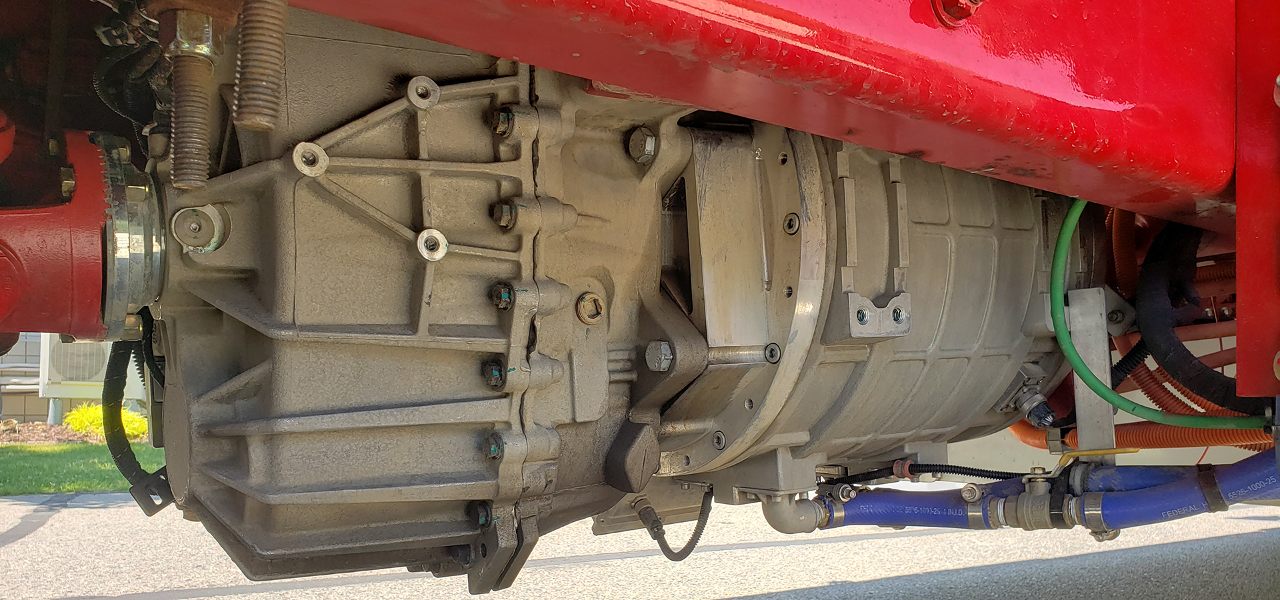 伊頓四速手自一體變速箱專為電動(dòng)車設(shè)計(jì)。(SAE/Matt Wolfe)
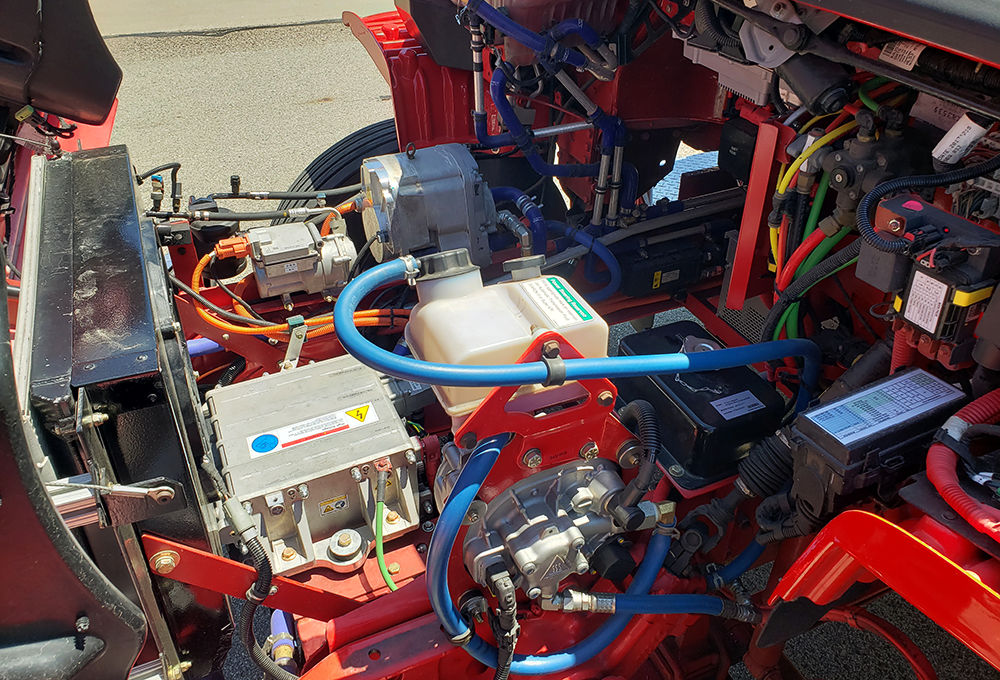 伊頓、BAE的測(cè)試卡車雖然尚未投入生產(chǎn),但與許多原型車相比,看起來(lái)更接近于可上路的產(chǎn)品。(SAE/Matt Wolfe)
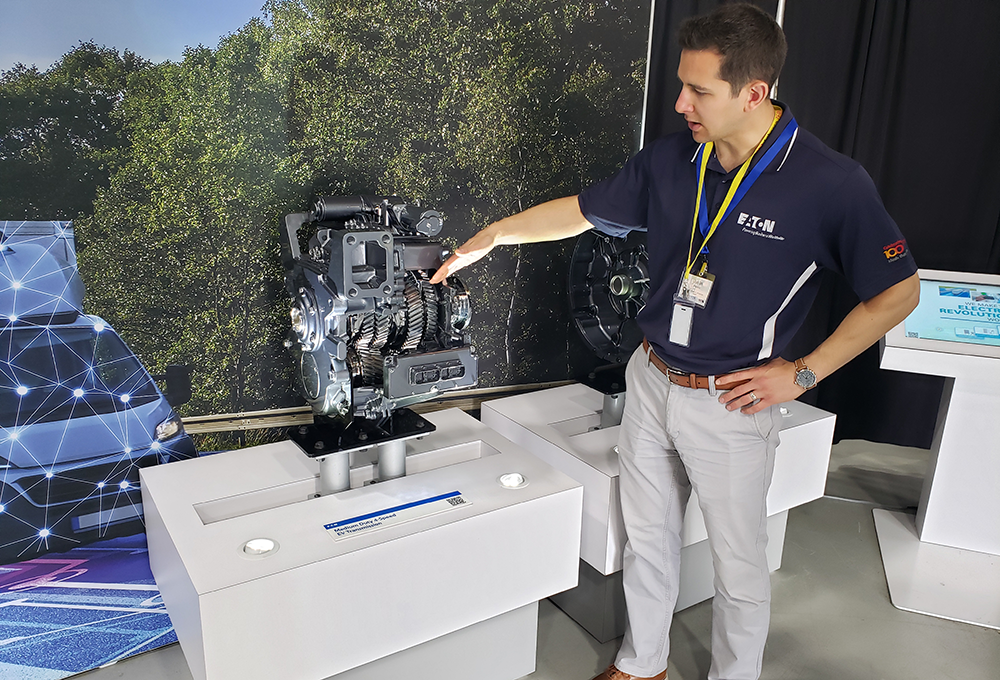 伊頓電動(dòng)動(dòng)力總成產(chǎn)品總監(jiān)Justin Hopkins說(shuō):“通過(guò)引入變速箱,可以減輕整體重量,降低整體電機(jī)成本。”(SAE/Matt Wolfe)
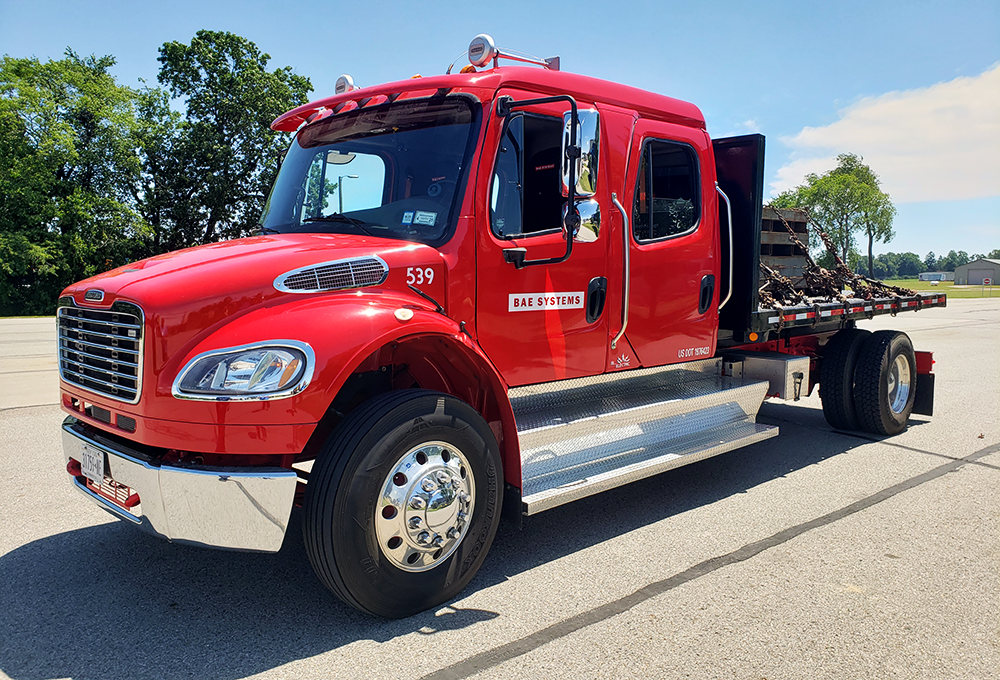 伊頓變速器和BAE系統(tǒng)的測(cè)試平臺(tái)是一輛Freightliner M2。(SAE/Matt Wolfe)
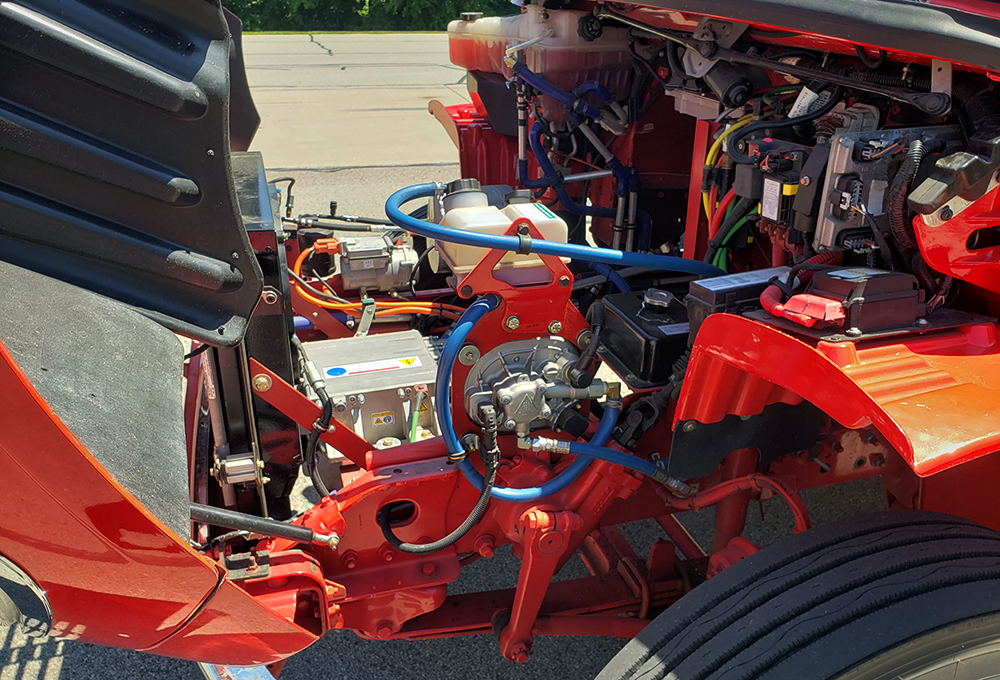 伊頓和BAE測(cè)試卡車“引擎”蓋下的一瞥。(SAE/Matt Wolfe)
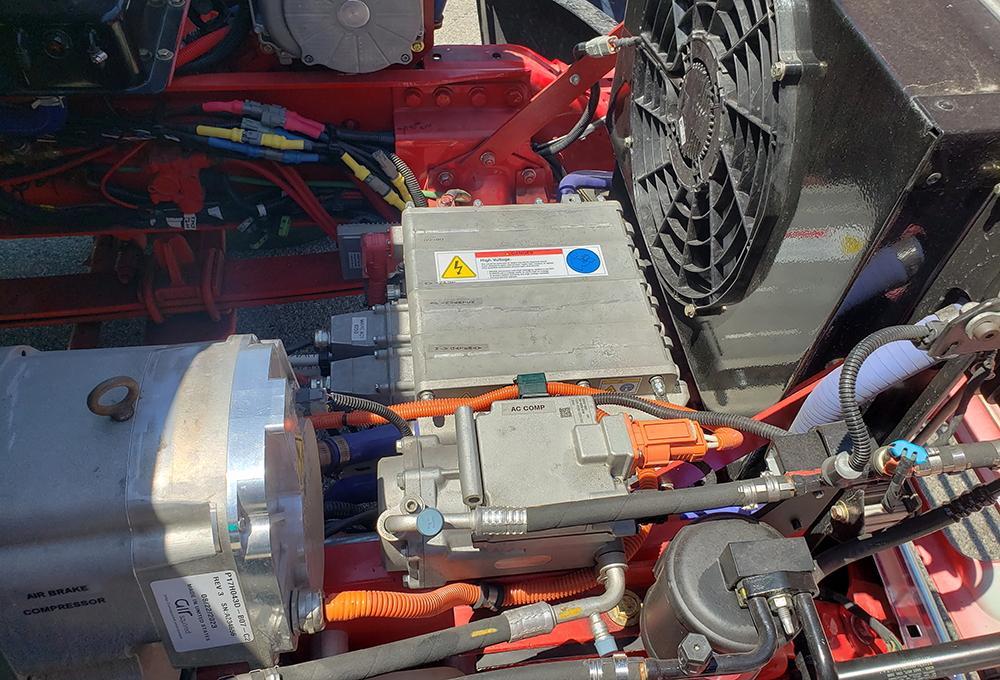 伊頓和BAE測(cè)試卡車“引擎”蓋下的一瞥。(SAE/Matt Wolfe)
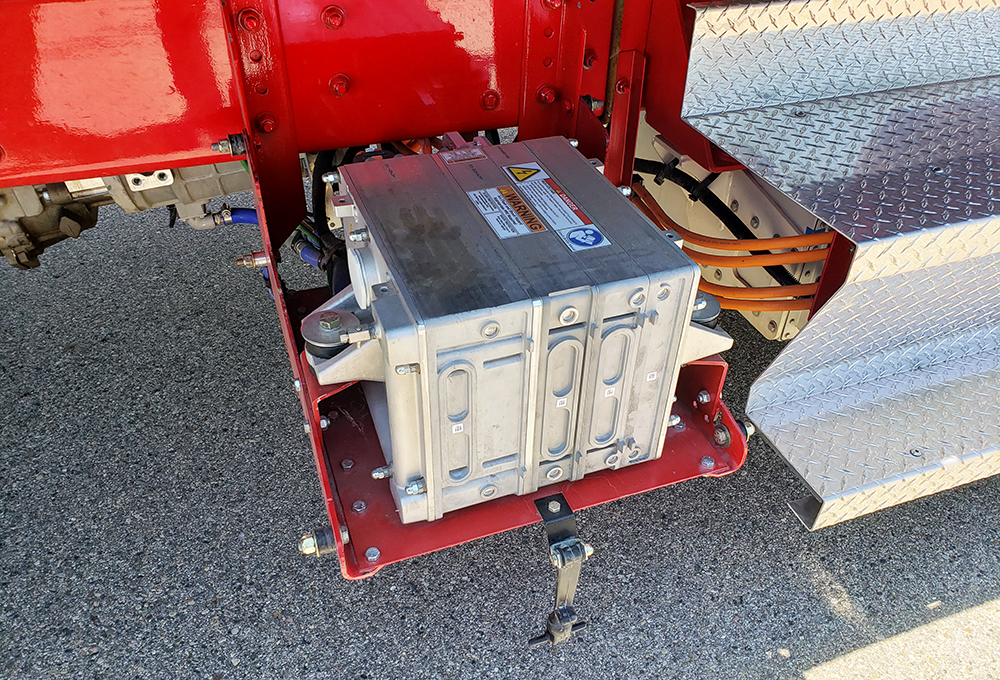 伊頓和BAE測(cè)試卡車“引擎”蓋下的一瞥。(SAE/Matt Wolfe)