如今,汽車雷達傳感器市場正在以每年 21% 的復合增長率飛速擴張,創造了大量芯片設計、測試和模塊部署方面的需求。
長久以來,多家汽車制造商一直奮力拼搏,只為能在 2020 年將首輛自動駕駛汽車投放至公共道路。但 2020 年以來,汽車行業對全自動駕駛汽車的態度卻從絕對樂觀轉為謹慎看好。目前,盡管汽車行業距離實現真正的全自動駕駛汽車(即沒有方向盤的自動駕駛汽車)還有至少數年時間,但用于支持這些智能自動駕駛汽車工作的相關技術與創新卻一直層出不窮。
如今,越來越多的汽車均需要通過傳感器技術與其他車載設備和周邊環境相連接。在此背景下,汽車開發人員面臨的安全標準合規壓力越來越大。現階段,汽車行業可以選擇的傳感器類型日益豐富,性能也越來越強大(見下表)。其中,汽車雷達已經成為保證汽車高級駕駛輔助系統(ADAS)正常工作的重要使能技術之一。
大約 10 年前,24 GHz 雷達傳感器開始進入工程人員的視線,并在一定程度上使能了一批全天候 ADAS 功能,如盲點檢測、車道變換、停車輔助以及碰撞避免等。與攝像頭技術相比,雷達技術受光照條件或惡劣天氣的影響更小,因此很快獲得了 ADAS 應用的青睞。
汽車雷達可以掃描三維空間,并收集有關其他道路用戶和靜態物體的信息,包括識別其他車輛、行人和寵物的存在,以及收集這些目標的位置、速度、方向、形狀和身份等細節信息。在大多數應用場景中,雷達系統可以通過天線向目標位置發射射頻/ 微波或毫米波信號,并使用同一天線接收返回的信號。
接著,反饋信號將觸發車輛的電子控制單元,并激活相應的 ADAS 響應,比如發出車輛變道提示、進行脆弱道路用戶預警或激活車輛的自適應巡航控制以幫助駕駛員保持安全車距等。
根據歐洲電信標準協會(ETSI)和美國聯邦通信委員會(FCC)的頻譜法規,自 2022 年 1 月 1 日起,新的汽車雷達設備將不得繼續使用 24 GHz 頻段和 UWB 頻段。
受此規定影響,76 GHz 至 81GHz 汽車雷達市場正在迅速擴大。該頻段允許設計人員縮小傳感器的封裝尺寸,并通過提高帶寬來提高檢測目標的分辨率。
如今,汽車雷達傳感器市場正在以每年 21% 的復合增長率迅速擴張。根據《微波雜志》(Microwave Journal)的數據,到 2023 年,汽車雷達市場的規模預計將超過 80 億美元,領先雷達技術在環境監測、安全監控、航空航天及國防科技等其他領域的應用。為了保證汽車雷達市場的穩步增長,雷達的性能和可靠性至關重要。
如今,一輛自動駕駛汽車最多可以裝載 24 個雷達傳感器。這些雷達傳感器相互之間,包括與其他車載設備之間,均可能會產生干擾效應。然而,考慮到汽車行業的特殊性質,雷達行業在汽車領域的應用決不允許任何誤差。例如,在一個繁忙的十字路口,如果雷達提供的信息哪怕存在一點點誤差,也可能導致十分嚴重的后果。因此,每一款雷達模塊在量產和真正應用至汽車產品之前都必須經歷非常嚴格的測試。如今,工程師通常會使用雷達仿真設備生成和分析不同的信號,并使用軟件針對各種一致性測試標準創建測試用例,從而摸清雷達模塊在各種環境下的性能與特點。
可以想象,每一款雷達在真正上市前均需要經歷成千上萬次測試。因此,一些測試經理還會使用智能實驗室操作軟件進行被測設備(DUT)的系統化測試管理,從而更好地幫助他們更準確的判斷產品原型是否已經可以進行大規模生產。在功能測試層面,工程師現在已經可以為 76 GHz - 81 GHz 雷達模擬多個檢測目標,從而允許雷達模塊開發人員和汽車制造商能夠在真實道路測試之前,在安全的虛擬環境中模擬大量現實場景。
從另一方面講,雷達技術的探測分辨率仍需提高,這樣才能更好的分辨目標。激光雷達在這方面的性能明顯更好。激光雷達傳感器使用脈沖激光檢測對象,通常具有比雷達更高的分辨率,而且探測的顆粒度更細,因此可以提供更完整的車輛環境視圖。
然而,與攝像頭和雷達傳感器技術相比,激光雷達通常更昂貴。目前,一些行業新秀正試圖推出更便宜的激光雷達,最低報價甚至可以不到 1,000 美元。不過,激光雷達的常規價位仍還在 10,000 美元左右徘徊。此外,激光雷達還面臨數據速率高、工作功耗大,以及低照明條件下的性能較差等種種限制。未來是否會出現一些新的顛覆性技術能大幅降低激光雷達的成本,進而推廣其在汽車領域的廣泛應用呢?讓我們拭目以待吧!
The automotive radar sensor market is growing at a 21% compound annual growth rate, putting greater demands on chip design, testing, and module deployment.
Until recently, various vehicle OEMs were vying to be first to put self-driving cars on the road by the magical turn of the decade. But as 2020 arrived, the bullish tone has switched to a more cautionary outlook. While the truly self-driving SAE Level 5 autonomous vehicle (AV) without a steering wheel is still years away, innovations needed to support the intelligent self-driving car of the future continue to emerge and improve.
Developers grapple with the need to comply with safety and security standards as the average car sees more sensor technology connecting it with onboard devices as well as with its environment. Within the increasingly capable sensor suite (see table), automotive radar is now an indispensable technology that enables sub-systems for advanced driver assistance systems (ADAS).
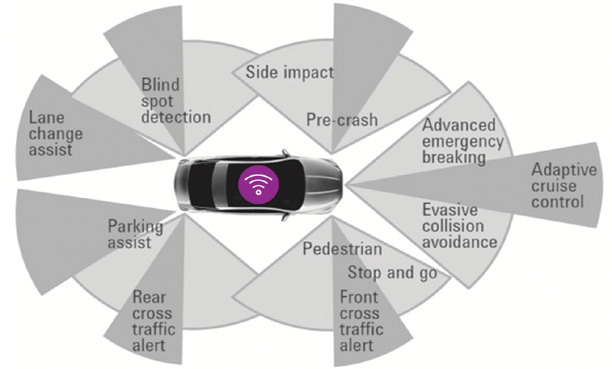
About a decade ago, 24-GHz radar sensors entered the scene and began to impress engineers, enabling all-weather ADAS functionality such as blind spot detection, lane change and parking assistance, and collision avoidance. Minimally affected by lighting conditions or bad weather, radar quickly gained favor over camera technology for ADAS applications.
Radars evolve and proliferate
The essence of automotive radar is the ability to scan the three-dimensional space and gather information about other road users and stationery objects. This includes picking up the presence of other vehicles or pedestrians and pets, to details such as location, speed, direction, shape, and identity. In most implementations, the radar system generates a RF/microwave or millimeter-wave signal and beams it toward the target in question.
The same antenna that transmitted the signal, collects the feedback. The feedback triggers the electronic control units on board the car to activate the appropriate ADAS response. This can be a lane change or vulnerable road user alert, or a trigger to activate adaptive cruise control to help drivers maintain safe platooning distance.
Due to spectrum regulations by the European Telecommunications Standards Institute (ETSI) and the Federal Communications Commission (FCC), the 24-GHz-wide bandwidth and UWB bandwidth will not be available for new automotive radar devices after January 1, 2022.
These changes are spurring market growth for 76-81-GHz band usage for automotive radar applications. These higher frequency bands allow designers to create smaller sensor packages, with more bandwidth available to achieve greater resolution of detected objects.
The automotive radar sensor market is growing at a compound annual growth rate of 21%. By 2023, it is expected to exceed $8 billion, according to Microwave Journal, outstripping other radar sectors like environmental monitoring, security surveillance, and aerospace defense. Meeting this market growth without compromising on performance and reliability requires rigorous testing of each radar from chip design to module deployment.
A self-driving car can have up to 24 radar sensors. Interference effects can arise between sensors within the same car or with other onboard devices. Even marginal errors in measurement, such as wrong angle calculation at a busy road junction, can result in dire consequences. Therefore, engineers must characterize the behavior of each new radar module before mass production and installation in the vehicle. These days, engineers use radar emulation equipment to generate and analyze different signals, with software to create test cases for different conformance test standards.
Some test managers also use intelligent laboratory operations software to help them manage the thousands of tests for their devices under test (DUT). This can help them precisely determine prototype DUT readiness for mass production. At the functional test level, engineers can now simulate multiple targets for radars operating in the 76-81-GHz band. This allows both the radar module developers and car makers to test a multitude of realistic scenarios before the car rolls onto real roads.
Current radar technology still struggles with providing greater resolution to discern different objects. This is where lidar does a better job. A lidar sensor uses a pulsed laser to detect objects, usually with higher resolution than radar. Lidar’s higher degree of granularity can provide a much more complete view of the vehicle’s environment.
On the downside, lidar is generally more expensive versus camera and radar sensor technology. New players are trying to produce cheaper lidar, with some innovations going for under $1,000, versus typical prices in the ~$10,000 range. Lidar has other limitations including high data rate and power consumption, and poorer performance in low lighting. It will be interesting to see if new disruptive technologies help make lidar cheaper and better for wider adoption.
SAE Autonomous Vehicle Engineering
 隨著汽車行業向SAE L5 級自動駕駛汽車穩步邁進,傳感器測試方面的挑戰也日益凸顯。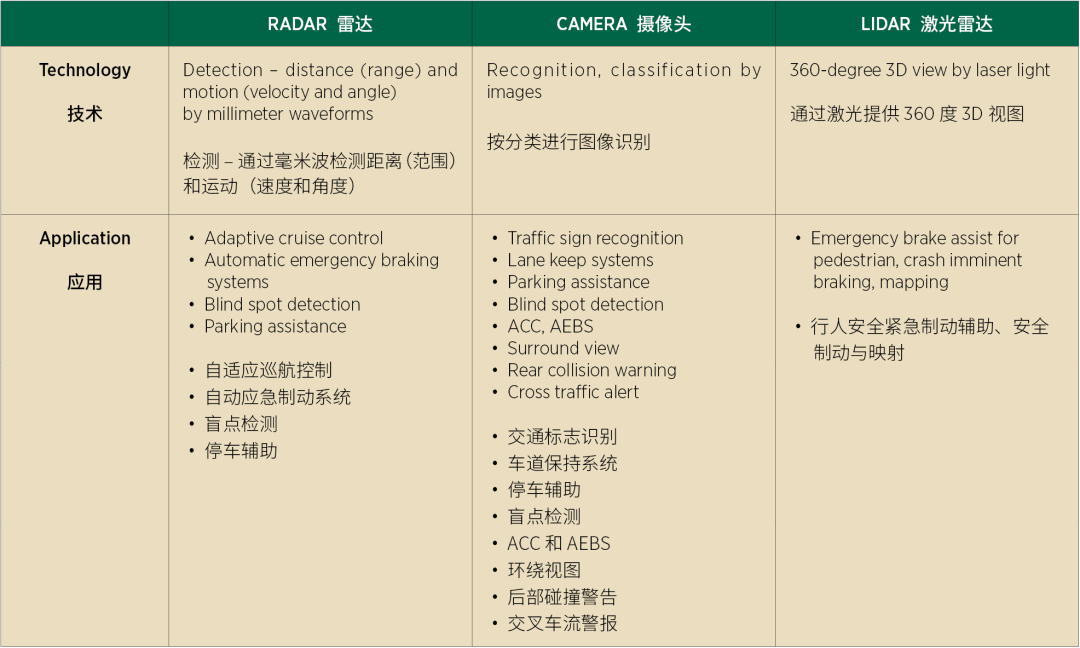
 24 GHz 和 77 GHz 頻段雷達在汽車領域的應用。