工程師和產(chǎn)品規(guī)劃師應(yīng)對(duì)當(dāng)今的自動(dòng)駕駛汽車復(fù)雜度就已十分艱難,而今后復(fù)雜度只增不減,他們又該如何應(yīng)對(duì)?現(xiàn)代車輛通過高帶寬網(wǎng)絡(luò)以管理高級(jí)傳感器融合,通過車載計(jì)算機(jī)以運(yùn)行人工智能算法,完成千兆級(jí)別的數(shù)據(jù)處理。各個(gè)模塊各司其職,而將這些不同模塊連接起來的就是線束。隨著功能的不斷增加,如今的汽車“線束”已經(jīng)越堆越重,給廠商帶來高昂的成本和封裝挑戰(zhàn)。
事實(shí)上,高檔轎車和全尺寸卡車可能使用了 40 種不同的“線束”,搭載了超過 700 個(gè)連接器和 3000 條電線。給大家一個(gè)更直觀的數(shù)據(jù),如果把汽車上的電線全部連起來,其長度可以超過2.5 英里(4 公里),重量也將達(dá) 132 磅(60 公斤)。而且,汽車所需的電線多種多樣,有時(shí)甚至?xí)玫礁哌_(dá) 70 多種專用電線,包括同軸電纜、高速數(shù)據(jù)線和 USB 電線等。
事實(shí)上,上述數(shù)據(jù)還是在不包含“自動(dòng)駕駛”相關(guān)設(shè)計(jì)下的測(cè)算結(jié)果。自動(dòng)駕駛技術(shù)一旦部署,勢(shì)必會(huì)進(jìn)一步增加汽車線束的規(guī)模、重量、成本和復(fù)雜程度。對(duì)于基于電動(dòng)汽車平臺(tái)構(gòu)建的自動(dòng)駕駛汽車而言,更多的電子內(nèi)容也會(huì)帶來嚴(yán)峻挑戰(zhàn)。對(duì)此,工程師可以從汽車架構(gòu)層面和線束層面采用不同策略進(jìn)行應(yīng)對(duì)。
汽車制造商正在研究新的電子電氣架構(gòu),從而通過簡化線路設(shè)計(jì),最大程度地降低成本和重量。此類設(shè)計(jì)可以減少支持各類車輛功能所需的布線,并有機(jī)會(huì)降低重量、便利自動(dòng)化生產(chǎn),從而降低成本。此外,在OEM中已經(jīng)興起了整合電子組件的趨勢(shì),比如將 ECU 和傳感器模塊整合起來,從高度分布式結(jié)構(gòu)向集中式結(jié)構(gòu)轉(zhuǎn)型。這種架構(gòu)整合有助于精簡物料清單(BoM),并直接簡化線路的復(fù)雜性。
隨著汽車制造商開始向車輛嵌入功能強(qiáng)勁的集成電路(IC)和微處理器,ECU 整合已經(jīng)成為一種流行趨勢(shì)。如今,芯片的運(yùn)算能力大幅增強(qiáng),一個(gè)單元已足以承擔(dān)過去多個(gè)單元才能完成的任務(wù)。這樣一來,車輛架構(gòu)整合的趨勢(shì)愈發(fā)明顯,各類強(qiáng)大的域控制器將借助傳感器融合和人工智能算法,首先對(duì)傳感器數(shù)據(jù)進(jìn)行預(yù)處理,而后再將其發(fā)送至車輛的中央處理單元。
然而,架構(gòu)整合不能過度。如果所有汽車功能均僅有 1 或 2 個(gè)控制單元全權(quán)負(fù)責(zé),則勢(shì)必產(chǎn)生大量布線需求,將分布在車輛各處的所有組件連接起來。OEM將需要執(zhí)行大量分析,從而在分布式和集中式功能管理之間達(dá)到最佳平衡。
OEM和一級(jí)制造商也在積極尋求新型線材,從而達(dá)到降低線束重量的目標(biāo)。舉個(gè)例子,業(yè)內(nèi)已經(jīng)推出了一款橫截面積只有 0.13 平方毫米的新型超細(xì)電線。遺憾的是,雖然有了超細(xì)電線,但電線兩端的連接器配套卻仍跟不上,因此這種超細(xì)電線很難在市場(chǎng)上進(jìn)行大規(guī)模推廣。鋁質(zhì)電線的情況也一樣,純鋁材質(zhì)太脆,因此無法做到太細(xì)。如今,相關(guān)供應(yīng)商均在開發(fā)適合極細(xì)電路的終端連接器材料,比如鋁合金。一時(shí)間,市場(chǎng)上的合金材料也形形色色,而且絕大多數(shù)情況無法相互兼容。這意味著,如果使用任何一種電線,整輛車都需要使用同一家供應(yīng)商的連接器,這并不現(xiàn)實(shí)。
新型特種電纜的出現(xiàn)也可以進(jìn)一步縮小線束直徑,并降低線束重量和成本。未來,車輛上的數(shù)據(jù)密集型傳感器和顯示器的數(shù)量只會(huì)繼續(xù)增加。因此,通過標(biāo)準(zhǔn)化線路傳輸視頻和其他數(shù)據(jù)豐富的信號(hào)愈發(fā)重要。另一個(gè)思路是,在多種設(shè)備同時(shí)接入的大背景之下,通過線路復(fù)用將多路信號(hào)部署在同一條共用專用電纜上,這也可以達(dá)到降低重量、成本、電線直徑的效果。
除了架構(gòu)和線束層面的優(yōu)化外,在開發(fā)過程中采用電子電氣軟件解決方案也至關(guān)重要。我們需要使用軟件工具來進(jìn)行快速權(quán)衡分析,以優(yōu)化模塊安裝位置,并識(shí)別可以進(jìn)行集成的模塊,從而節(jié)省重量、成本或降低復(fù)雜度。也就是說,軟件工具可以快速分析改變?nèi)魏尾季挚赡軒淼挠绊懀瑤椭こ處熯x擇出最優(yōu)系統(tǒng)架構(gòu)。
此外,最先進(jìn)的電子電氣工程解決方案還可以在整個(gè)線束開發(fā)過程中保證數(shù)據(jù)的連續(xù)性,與其他工程軟件和自動(dòng)化設(shè)計(jì)軟件完美兼容。比如,Mentor 公司的 Capital 軟件套件即可支持車輛等大型平臺(tái)進(jìn)行電氣系統(tǒng)工程設(shè)計(jì),幫助OEM成功完成哪怕最復(fù)雜的車輛線束設(shè)計(jì)。
數(shù)據(jù)連續(xù)性可確保工程師在電子電氣架構(gòu)和線束開發(fā)的各個(gè)階段均可以訪問最新的準(zhǔn)確信息,即通過為車輛架構(gòu)和線束創(chuàng)建一個(gè)數(shù)字化“副本”,以避免手動(dòng)交換數(shù)據(jù)的需求。這樣一來,工程師可以通過自動(dòng)數(shù)據(jù)交換,避免手動(dòng)數(shù)據(jù)交換和重復(fù)輸入可能產(chǎn)生的錯(cuò)誤,從而實(shí)現(xiàn)更有效的協(xié)作。此外,由于具備與其他領(lǐng)域軟件(比如機(jī)械設(shè)計(jì)工具和產(chǎn)品周期管理解決方案)進(jìn)行集成的能力,該解決方案還可以便利跨工程領(lǐng)域的協(xié)作和自動(dòng)數(shù)據(jù)交換。
自動(dòng)化功能可幫助工程師進(jìn)一步優(yōu)化車輛架構(gòu)和線束。綜合線路設(shè)計(jì)可以將系統(tǒng)連接性信息(例如設(shè)備和信號(hào)類型)與物理線束限制相結(jié)合,從而在車輛范圍內(nèi)生成最優(yōu)的線路布局和連接方式。如今的綜合線路設(shè)計(jì)工具支持復(fù)雜的電線類型、豐富的屏蔽材料選擇、多種網(wǎng)絡(luò)協(xié)議,甚至可以自動(dòng)創(chuàng)建接地點(diǎn)。
最后,結(jié)構(gòu)性優(yōu)化和系統(tǒng)級(jí)改變也會(huì)對(duì)電子電氣和汽車線束帶來廣泛影響。此外,這種方法還允許在工程和制造的任何環(huán)節(jié)啟動(dòng)變更流程,從而讓持續(xù)優(yōu)化成為一種常態(tài)。值得注意的是,最重要的是要在項(xiàng)目的早期階段引入結(jié)構(gòu)性的變更管理規(guī)范。
先進(jìn)的電子電氣工程軟件是一套非常優(yōu)雅的解決方案。借助于變更控制機(jī)制,這套軟件的內(nèi)置設(shè)備數(shù)據(jù)庫功能得到了極大的增強(qiáng),可以判斷特定設(shè)計(jì)數(shù)據(jù)的負(fù)責(zé)人,并提示變更的開展方向。
通過這些增強(qiáng)特性,該數(shù)據(jù)庫可以立即提供自動(dòng)化、結(jié)構(gòu)化的變更管理程序。
電氣化進(jìn)程的推進(jìn)和自動(dòng)駕駛的到來將給車輛的線束布局帶來更多負(fù)擔(dān)。OEM在緊跟趨勢(shì)之余必須考慮新增任何功能可能帶來的復(fù)雜度,因?yàn)檫@將給線束重量、直徑和成本帶來顯著的直接影響。
現(xiàn)代線束設(shè)計(jì)和工程工具可以解決隨汽車創(chuàng)新而來的問題。這些解決方案的自動(dòng)化程度非常高,支持多種先進(jìn)指標(biāo),還具有分析能力,可以幫助工程師克服這些挑戰(zhàn)。此外,此類解決方案還可以幫助設(shè)計(jì)人員更好地進(jìn)行取舍,從而在線束材料、元件放置和布線之間做出最佳平衡,并最終最小化線束重量、成本及直徑。
然后,該解決方案可以根據(jù)設(shè)備型號(hào)、信號(hào)位置及車輛的物理限制,自動(dòng)生成最佳布線設(shè)計(jì)。隨著電子電氣架構(gòu)和線束的發(fā)展,全面的變更管理設(shè)施和強(qiáng)大的數(shù)字“副本”可確保各大工程領(lǐng)域之間實(shí)現(xiàn)的信息實(shí)時(shí)同步。車輛自動(dòng)化、電氣化和連接性將更加接近主流,這些技術(shù)將逐步推動(dòng)汽車工程從機(jī)械系統(tǒng)向電子電氣系統(tǒng)轉(zhuǎn)型。
為了推出強(qiáng)大、可靠且經(jīng)濟(jì)高效的車輛平臺(tái),采用先進(jìn)的電子電氣工程軟件解決方案至關(guān)重要。
Engineers and product planners are already grappling with the complexity of autonomous vehicles (AVs), with the prospect of complexity increasing. Every second, AVs manage advanced-sensor fusion via high-bandwidth networks, while onboard computers run AI algorithms to process gigabits of data. Connecting it all is the wiring harness, which has become increasingly heavy, more expensive and more difficult to package within the vehicle.
Premium-segment cars and full-size trucks can contain 40 different harnesses comprised of 700 connectors and more than 3,000 wires. Stretched in a continuous line, these wires would span 2. 5 mi (4 km) and weigh approximately 132 lb. (60 kg). In addition, there can be more than 70 specialty cables that include coax, high-speed data and USB runs.
This does not encompass the added AV sensors and processing content that will further expand harness size, mass, complexity and cost. The implications of escalating electronic content are a significant issue for AVs built on electric-vehicle (EV) platforms. Engineers can undertake several strategies at the architectural and harness-level to resolve this dilemma.
Architectural optimizations
Automakers are investigating new electronic/electrical (E/E) architectures that will simplify the harness design to minimize cost and weight. Such designs can reduce the wiring needed to support vehicle functionality and offer an opportunity to reduce mass while making automated production easier, driving down cost. And OEMs have begun consolidating electronic components, such as ECUs and sensor modules, moving from highly distributed to increasingly centralized architectures. The architectural consolidation is driving reduced bills-of-material (BoM), which directly impacts harness complexity.
ECU consolidation has become a popular strategy as automakers integrate more powerful integrated circuits (IC) and microprocessors into their vehicles. The increased computational capabilities of these chips enables a single box to manage tasks that used to require multiple units. As a result, vehicle architectures are converging with powerful domain controller units using sensor fusion and artificial intelligence algorithms to pre-process sensor data before sending it to a centralized processing unit.
However, there is a balance to be struck with consolidation. An architecture that features only one or two control units managing all vehicle functions will require an immense amount of wiring to connect with all the components that are necessarily distributed around the vehicle. OEMs will need to perform dozens of analyses to determine the optimal balance between distribution and centralization for harness functionality.
OEMs and Tier 1s also are developing technologies that directly reduce harness weight through smaller wires and new materials. Ultra-thin-diameter wiring (0.13 mm2) is a notable example. Unfortunately, the industry still is struggling to develop sufficient terminal substitutions for all currently existing terminals that can crimp to such a small diameter. The available products on the market currently do not support a large-scale migration to ultra-small diameter wiring. The same applies to aluminum wiring. For small diameter wiring, pure aluminum is too brittle and thus not a feasible option. Terminal suppliers are developing optimal aluminum alloys for the specifications of their terminals. This has led to a multitude of different alloys on the market that, in most cases, are incompatible with other suppliers’ terminals. To use these wires, a vehicle would have to use one supplier’s connectors across the full vehicle, which is not realistic.
Finding alternatives to specialty cables will further reduce weight/cost and bundle diameters of harnesses. The number of data-intense sensors and displays will only increase in the future, making it crucial to develop solutions to transmit video and other data-rich signals via standardized wiring. Alternatively, finding ways to multiplex signals onto a single shared specialty cable while multiple devices tap in will have the same effect: reducing weight/cost/bundle diameters.
Leveraging digitalization
In concert with architectural and harness optimizations, adopting E/E software solutions to support development flow will be crucial. Software solutions need to enable rapid tradeoff studies to optimize module locations and identify any module that can be combined to save weight/cost/complexity. With the ability to compare and analyze layouts for their impact, engineers will be able to choose the optimal system architecture.
Additionally, the most advanced E/E engineering solutions support data continuity throughout harness development, integrate with other engineering software and automate design tasks. An example is Mentor’s Capital software suite that enables the engineering of electrical systems for large platforms such as vehicles. Such capabilities will help OEMs to design harnesses for even the most sophisticated vehicles.
Data continuity ensures that engineers at all stages of E/E architecture and harness development have access to accurate and up-to-date information. This replaces manual data exchange with a robust digital twin of the vehicle architecture and wiring harnesses. As a result, engineers can collaborate more effectively through automated data exchanges that remove errors from manual data exchange and reentry. Likewise, integrations with software from other domains, such as mechanical design tools and product lifecycle management solutions, facilitate collaboration and automated data exchanges across engineering domains.
Automation capabilities help engineers further optimize vehicle architectures and wiring harnesses. Wiring synthesis combines system connectivity information, such as device and signal types, with the physical harness constraints to generate optimized wiring and splices within the context of the vehicle. Today’s wiring synthesis tools support complex wiring types, multiple shielding materials, various network protocols and can even automatically create ground points.
Finally, ongoing architectural optimizations and system-level changes can have wide-ranging effects on the E/E system and wiring harness. In addition, changes can be initiated throughout the engineering and manufacturing processes, driving constant redesign efforts. It is extremely important to develop a structured and disciplined approach to change management early on in the project.
Advanced E/E engineering software can provide an elegant solution. Integrated device databases can be enhanced with change-control mechanisms to determine ownership over design data and the direction in which certain changes should flow.
With these enhancements, this database will immediately provide automated and structured change-management procedures.
New challenges, new solutions
The move to electrification and AV driving places additional burdens on the wiring harness. As OEMs pursue these trends, they must consider the number and sophistication of technology features they integrate into vehicles, as they have a direct effect on wiring harness weight/diameter/cost.
Modern harness design and engineering tools provide a solution to problems wrought by automotive innovation. By leveraging engineering solutions with high levels of automation, advanced metrics and analytical capabilities, engineers can overcome these challenges. Such solutions enable tradeoff studies to optimize harness materials, component placement and routing for minimal harness weight/cost/diameter.
Design automation then can generate optimal wiring based on device and signal location, and the physical constraints of the vehicle. As the development of the E/E architecture and wiring harness progresses, comprehensive change-management facilities and a robust digital twin ensure that the various engineering domains remain in step with all needed information. Vehicle automation, electrification and connectivity are coming closer to mainstream reality. These technologies will progressively shift the emphasis in automotive engineering from mechanical systems to E/E architecture.
The resulting capabilities provided by an advanced E/E engineering software solution will be critical to delivering a robust, reliable and cost-effective vehicle platform.
Engineer Dan Scott is Integrated Electrical Systems market director at Mentor, A Siemens Business. Ulrike Hoff is an independent automotive wiring consultant.
Author: Dan Scott & Ulrike Hoff
Source: SAE Automotive Engineering Magazine

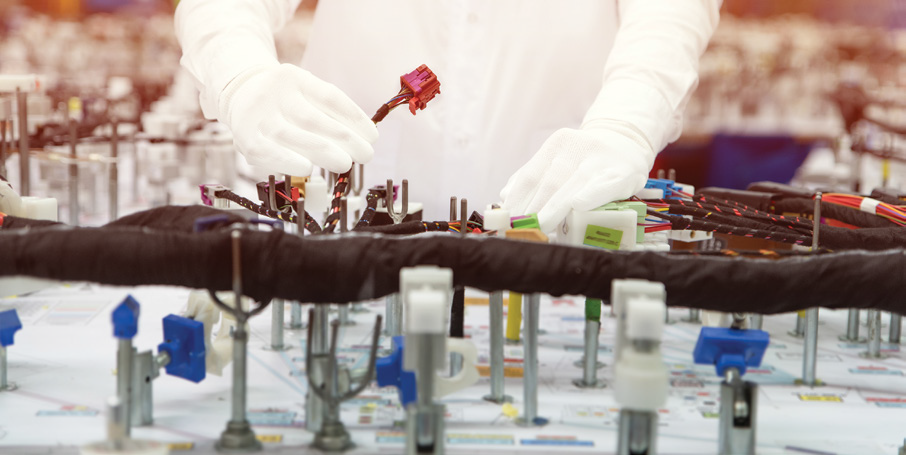 隨著OEM開始將自動(dòng)駕駛等越來越多的新功能集成至車輛產(chǎn)品中,車輛線束設(shè)計(jì)將面臨更大的尺寸、復(fù)雜性、成本和重量挑戰(zhàn)。
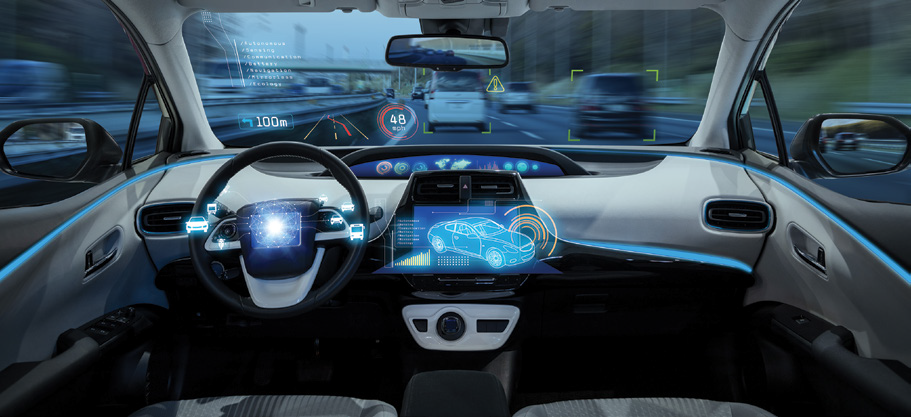 自動(dòng)駕駛依靠強(qiáng)大而密集的傳感器和計(jì)算機(jī)網(wǎng)絡(luò)來檢測(cè)不斷變化的駕駛場(chǎng)景,并對(duì)其做出反應(yīng)。
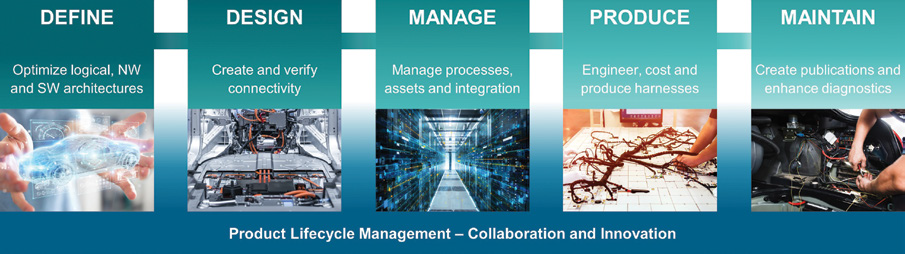 自動(dòng)化的數(shù)據(jù)傳輸可以簡化域與域之間的交互,從而減少線束設(shè)計(jì)中的錯(cuò)誤。
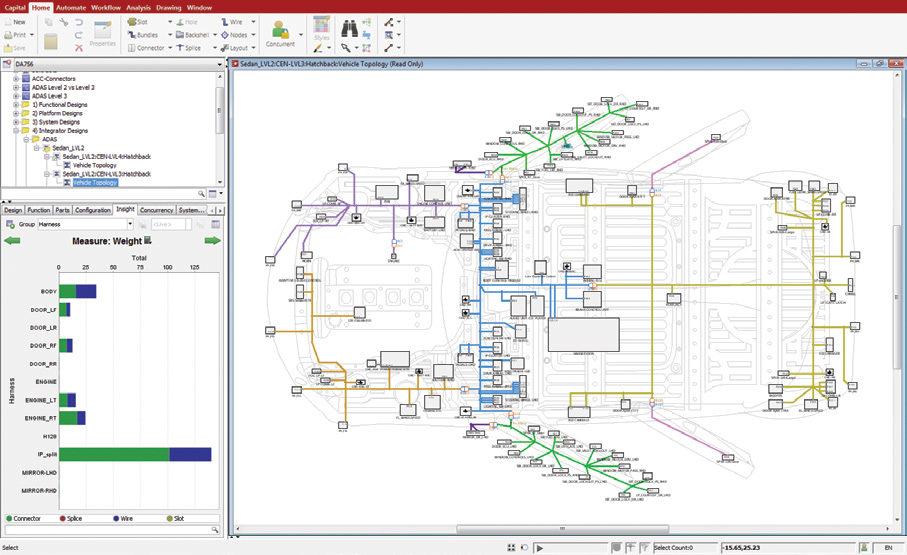 Capital軟件套件可以幫助工程師在成本、重量和尺寸指標(biāo)之間進(jìn)行權(quán)衡,從而達(dá)到最優(yōu)線束設(shè)計(jì)。