從各大新聞頭條來看,固態電池似乎已經“觸手可及”,并將在不久的將來廣泛應用至電動汽車領域,并在較小范圍內應用至其他消費電子產品領域。在2019 年 9 月的北美電池展(2019 Battery Show of North America)上,有關固態電池的專家討論和演講數不勝數。理想很美好,但現實卻很殘酷:在展會的“固態電池可行性”圓桌討論會上,專家們一致認為,這項技術至少在未來五年內都無法達到量產電動汽車的標準。
盡管如此,展會上的大多數專家都認為,固態電池勢必將進入電動汽車領域,只是時間早晚而已。一位分析師估計,僅在 2018 年,固態電池企業就拿到了 5 億美元投資。
北美電池展的五人專家小組包括一位來自福特的代表、一位來自豐田的代表、兩位電池開發商和一位大學研究人員,這些專家均未質疑固態電池技術的潛力。由于鋰箔陽極可以克服非液體電解質電極設計中常見的電導率低的問題,因此得到了最廣泛的應用,也正因如此,固態電池技術有時也被稱為鋰金屬電池。目前,固態電池已經應用至心臟起搏器等應用,但如何才能以合理的成本批量生產用于汽車的固態電池,尚不得而知。
A123 Systems 電池開發副總裁 Brian Sisk 表示:“我們開發固態電池是為了節省成本。”他說,固態電池據說有潛力將當下鋰離子電池的能量密度提高一倍。這意味固態電池的成本效益是鋰離子電池的兩倍,此外還有在縮小尺寸和降低重量方面的優勢。
但是 Sisk 同時表示,除非成本降低至當今鋰離子電池之下,否則固態電池很難真正參與汽車領域的競爭。盡管,一些豪華汽車或高性能汽車可能愿意為了增加續航里程或降低重量而為電池支付更高的價格,但固態電池要想登陸量產汽車,則單位千瓦時成本必須繼續降低。
福特固態電池部門負責人 Venkat Anandan 表示,公司“正在積極研究多種類型的固態電池”,并表示福特正在積極爭取在能源密度、安全性和成本方面的優勢。2019 年 4 月,福特宣布將投資位于科羅拉多州的固態技術開發商 Solid Power。除了福特,寶馬、現代和三星也是 Solid Power 的投資人。Anandan 表示,他認為固態電池真正應用至量產電動汽車至少還需要五年時間。
與此同時,電池開發商 SolidEnergy Systems 公司首席執行官小組成員 胡啟朝 對固態電池技術發展的態度更為樂觀,但也表示確實存在一些問題。SolidEnergy 公司制造的半固態電解質固態電池已經應用至一些高海拔長途車輛、消費者無人機和其他航空航天應用。胡先生表示,他相信汽車領域將在未來3-5年內迎來半固態電池,并在七到十年內迎來鋰金屬固態電池。北美豐田研究所材料研究部門首席科學家小組成員Timothy Arthur 表示:“豐田長期以來一直以固態電池為重,這已不是秘密,”并提醒我們豐田已承諾將在 2020 年東京奧運會期間投運一批使用固態電池的電動汽車。但是,他并未直接預測固態電池將何時用于量產電動汽車。
A123 System 公司的Sisk 表示,該公司計劃明年啟動一條使用石墨陽極的固態電池生產線,并于此同時繼續克服鋰金屬電池在成本和其他可制造性方面的挑戰。
Sisk 補充說,固態電池的單位成本并不一定必須降至當今鋰離子電池的水平。這是因為盡管固態電池的成本可能更高,但可以在系統層面降低其他車輛成本。他詳細介紹說,比如,由于固態電池沒有著火或過熱的風險,因此所需的電池保護結構可能更少,相應的電池管理和熱管理成本也會降低。
作者:Bill Visnic
本文原發表于SAE《自動駕駛車輛工程》雜志
Solid-state batteries are the “reach” energy-storage technology slated to take electric vehicles (EVs) – and to a lesser extent, other consumer-electronic products – to the next level. And at September’s 2019 Battery Show of North America, speaker panels and presentations about solid-state certainly were in abundance. Just one problem: experts at the show’s Solid-State Battery Feasibility roundtable discussion where brutally realistic in agreeing the technology won’t meet criteria for mass-production EVs for at least five years.
The reasons for the five-year wait are manifest, but the two primary factors are familiar to the automotive sector: cost and manufacturability.
Nonetheless, most experts here agree that solid-state batteries for EVs certainly are not an “if,” but a “when. ”One analyst estimate indicates $500 million was invested in solid-state battery ventures in 2018 alone.
None on the five-person panel that included representatives from Ford and Toyota, two cell developers and a university researcher, questioned the potential or the science for solid-state technology, often referred to as lithium metal because of the lithium-foil anode widely used to help the design overcome the reduced-conductivity typical of non-liquid electrolytes. Solid-state batteries already are in use for heart pacemakers and other applications, but determining how to manufacture the batteries for automobiles in volume at a reasonable cost currently isn’t possible.
“We’re doing this [developing solidstate batteries] for cost,” said Brian Sisk, vice-president of battery development at A123 Systems. He said the technology’s oft-touted potential to double the energy density of current conventional lithium-ion batteries means a concurrent potential to halve battery cost for a given capacity (not to mention reduce size and weight).
But Sisk said he is certain that unless and until solid-state technology can be installed in EVs at less cost than today’s lithium-ion batteries, solid-state batteries will not be able to compete. There may be “premium” or high-performance applications for which a higher-cost battery might be an acceptable trade for longer range or reduced weight. But for mass-production vehicles, he believes today’s cost per kilowatt-hour ratio must be improved for solid-state technology to be adopted.
Venkat Anandan, Ford’s Group Leader, solid-state batteries, said the company is “actively looking at many types of solid-state batteries,” saying Ford is anxious to reap the energy-density, safety and cost benefits. Ford announced in April that it is investing in Colorado’s Solid Power, a developer of solid-state technology that also counts BMW, Hyundai and Samsung as investors. Anandan said he believes it will be at least five years before solid-state batteries will be viable for mass-produced EVs.
Meanwhile, panelist Qichao Hu, CEO of battery developer SolidEnergy Systems, was slightly more optimistic in his timeline for solid-state technology – but with some caveats. His company already is manufacturing solid-state batteries with semi-solid electrolyte for high-altitude, long-endurance (HALE) vehicles, consumer drones and other aerospace applications. Hu said he believes the semi-solid design may be vehicle-applicable in 3-5 years and sees lithium-metal designs available in 7-10 years. Panelist Timothy Arthur, principal scientist – Materials Research Dept. at Toyota Research Institute of North America, said, “It’s no secret that Toyota’s been high on solid-state batteries for a long time,” and reminded that the company has promised to have vehicles with solid-state batteries in operation during the 2020 Summer Olympic Games in Tokyo. But he did not directly speculate about when solid-state batteries will be fitted to production EVs.
A123’s Sisk said the company intends to have a pilot production line in operation next year using a graphite anode while the company continues to work on the cost and other manufacturability challenges of lithium-metal.
He added that cost at the battery-cell level may not necessarily have to achieve parity with today’s lithium-ion cells; although solid-state battery cells might cost more, they could deliver cost-reductions at the systems level. Because solid-state batteries have no risk of fire or thermal runaway, he said battery-protection structure potentially could be reduced, as could battery-management and thermal-management costs.
Author: Bill Visnic
Source: SAE Automotive Engineering Magazine
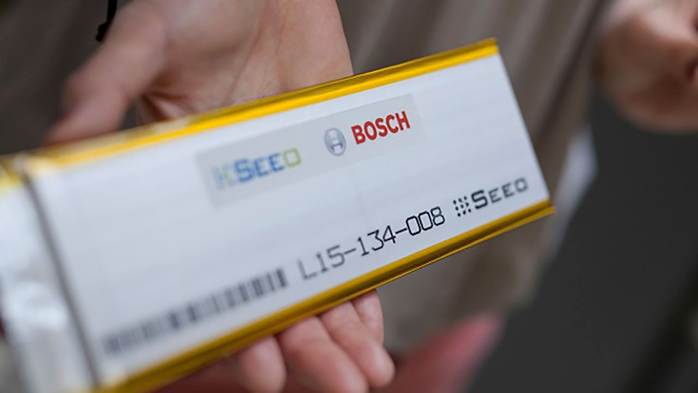 博世曾研究過固態電池,但隨后決定不再繼續開發或制造電池。(博世)
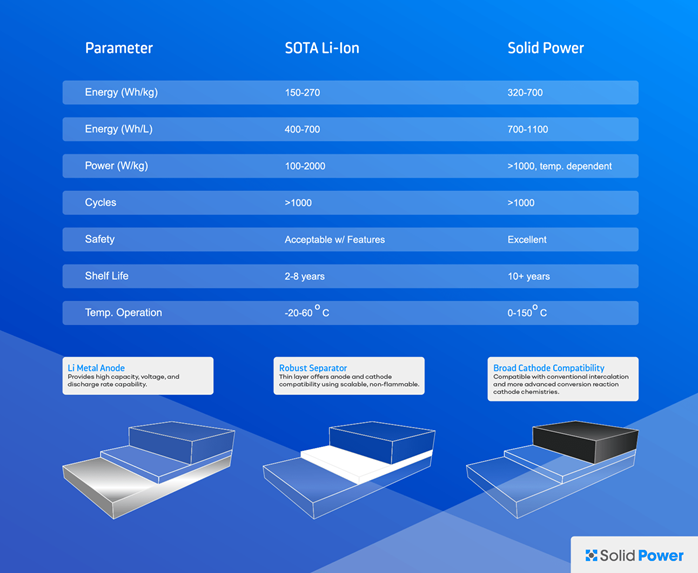 比較鋰離子電池與固態電池的特性與設計(Solid Power)
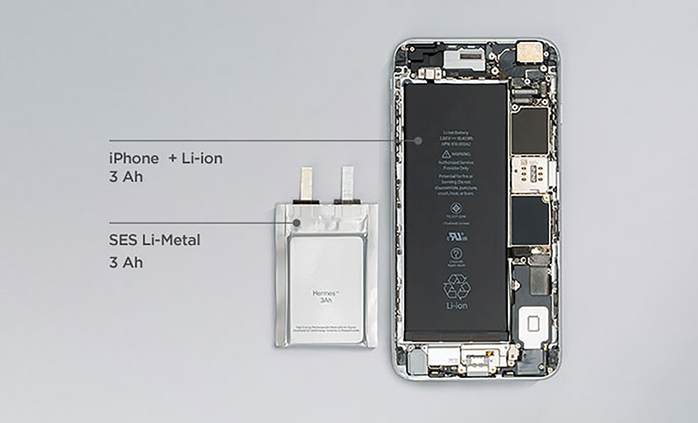 與現有的鋰離子電池相比,SolidEnergy Systems展示了固態電池可能減小的尺寸。(SolidEnergy系統)
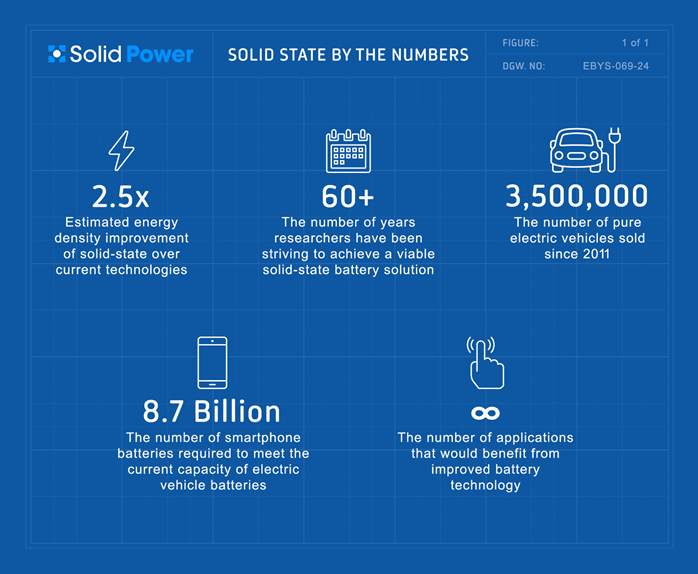 (Solid Power)