如果要為一輛傳統汽車擬定變速箱和傳動系統的規格,有時可以遵循一些設計套路,但如果對象換成自動駕駛汽車,那就毫無“套路”可言了,汽車咨詢公司主管Lee Sykes如此表示。
作為傳動系統工程咨詢公司DSD(驅動系統設計)的商務總監,Sykes表示:“在設計自動駕駛汽車時,我們可能需要采取截然不同的方式。為了找到合適的解決方案,我們應透徹理解從SAE L1到L5的每一個過渡過程及其對功能優先級的影響。我們必須滿足不同過渡階段的不同要求。”多年來,DSD一直專注于未來變速箱和傳動系統的工程設計、開發、測試和控制技術,近期在密歇根州成立了一個新的測試中心,希望幫助汽車制造商及其供應商提高內燃機車、電動車、混動車的傳動系統的效率。
Skykes表示,到底多少比例的架構是沿用傳統,多少是全新設計,這取決于目標級別是L5還是過渡級。他也補充道,完全自動駕駛汽車的設計布局正在變得越來越清晰。L5級系統不會被遺留系統的兼容問題所束縛,可以實現完全優化。
變速器和傳動系統的規范對多項關鍵性能指標做出了規定,其中包括封裝、耐久性、重量、效率、NVH、性能、安全性、舒適度和成本。這些指標決定了變速箱和傳動系統的設計方向。不過,對于無人駕駛汽車而言,一些原本為駕駛員而設立的指標也許可以從此忽略不計了,或者至少,設計的優先順序將會發生顯著變化。
自動駕駛傳動系統的套件配置將在很大程度上取決于座艙的空間要求。舉個極端的例子,如果座艙采用“滑板型”底盤,最合適的解決方案是搭載輪轂電機,每個電機都采用整體減速齒輪傳動。套件尺寸的設計則不可避免地取決于系統的耐久性和負載循環。
Sykes表示,如果一輛自動駕駛出租車提供全天候隨叫隨到服務,則會積累很高的里程數,顯著增加負載循環。但從另一方面來看,沒有人類駕駛員后,車輛不用再遭受人為的機械過載,也不必時不時迎合需求展現最佳性能,這會在一定程度上減少負載循環。當然還有一個福利,不會再有人因為車技被乘客責罵。
NVH的控制和調校一直是變速器和傳動系統工程師面臨的一大問題,而對于電動網聯自動駕駛汽車來說,除了要營造安靜的座艙環境以外,還有其它的挑戰要應對。“如果加減速不平順,人們一般認為是駕駛員的錯。所以,對于自動駕駛汽車,大家期待的是完美平順的加減速。預計未來的NVH調校將包括垂直加速和水平加速,乘坐舒適性需要根據調校結果進行調整。不同于現在大多數飛機和火車乘客,我們認為未來的自動駕駛汽車乘客是不會接受較差的舒適度和NVH的。”
電動自動駕駛汽車的另外一個關鍵問題是如何將電池包的能量損失降至最低。這就需要我們有意識地給所有汽車系統減重。在設計車身架構時,我們需要仔細優化傳動系統,包括提高基本機械效率、減少傳動損失,同時還應制定可以平衡電機性能、且滿足多速傳動比需求的系統性解決方案。目前,DSD正在和客戶一起為未來的自動駕駛汽車設立標準,并為客戶提供架構研發方向上的建議。
Sykes還表示,“如果沒有人類駕駛員,另一個傳統性能指標——車輛的操控性或響應速度——也就失去了意義。在保證車輛安全性和抓地力的前提下,我們可以通過優化懸掛系統讓乘坐更加舒適。為了實現舒適和快速響應兩者兼得,傳統汽車采用了扭矩矢量控制等傳動系統技術,而這些以后都可能會被人工智能算法取代。人工智能算法將使車輛研發階段的動態包絡研究成為歷史。”
車速低時,難度不低
低速行駛時,性能令人滿意的傳動系統能在保證乘坐舒適性的前提下,實現精準操控。在倒車入庫或在車流中走走停停時,尤其需要精準地調整離合器,這對于缺少人類直覺的無人駕駛汽車而言,難度很大,“這會影響到傳動系統的設計。使用電機電流控制可能會比傳統的離合器控制更有效。如果確實如此,那我們必須改良電機設計,使其和變速器設計同步。這里也同樣需要系統性的解決方案。”
如果數據太多,人類駕駛員可能會注意力分散,陷入危險。但自動駕駛汽車不同,超寬寬帶賦予了車輛極強的數據處理能力,車輛可以一邊安全行駛,一邊監測來自傳感器的海量信息。
Sykes強調,“這使得自動駕駛汽車可以持續不斷地處理更多細節性信息,比如動力總成和傳動系統的狀態。同時,這也為更加智能的設計和輕量化設計提供了機會。制造商可以提前更換即將失效的零部件,不用再為了‘第99個百分位數用戶’而過度設計。這種實時監測方案也會改變耐久性標準,連帶影響到封裝、重量和可服務性。同時,需要指出的是,在自動駕駛汽車領域,我們應該重新定義‘第99個百分位數用戶’。”
Sykes認為,除了傳統的工程問題以外,業界還需要思考什么樣的價位和所有權模式會更適合自動駕駛汽車:是平價的私家車?還是魯棒性更高、不同標準的營利性租賃模式?和電池包、燃料電池等其它主流車輛系統相比,為了提高使用壽命,業界應制定適合于自動駕駛汽車的動力總成和傳動系統策略。
理解負載循環
Sykes還表示,“自動駕駛汽車的各種特性互相影響,這意味著傳動系統和底盤工程師未來依然會扮演重要的角色,只是他們的側重點會改變。在設計傳統汽車時,工程師首先考慮的是如何實現最佳性直線能、如何平衡舒適度和操控性。未來,他們將面臨全新的挑戰和機遇。他們需要用開創性思維去看待自動駕駛汽車的基本負載循環問題。”
“另一方面,除了這些優化挑戰以外,在向完全自動駕駛轉變的過程中,推進系統的研發工作還是充滿機遇的。某個適用于中度自動駕駛級別的解決方案不一定適用于L5。顯然,工程師還有很多可以挖掘的空間。”
Sykes的觀點得到了DSD美國區總裁JonBrentnall 的認可。Brentnall在考察密歇根州法明頓山的新測試中心時曾表示,“減排是當前業界關注的焦點,這一下子提高了能效的地位,但與此同時,寄生損失等不必要的能量損失依然存在。”
在蒸蒸日上的電動汽車領域,變速器和傳動系統一直以來都遭到了忽視,為此,DSD英國測試中心專門研發了尖端測試過程系統,打開了電動汽車變速器和傳動系統的應用研究大門,“我們希望為北美市場提供類似的測試服務。”
據悉,DSD的美國測試中心將引進一臺負載變速箱效率測試臺,未來將逐漸建成三個傳動系統試驗車間。中心當前正在全面運行的測試臺適用于各種類型的變速箱,包括機械增壓變速箱等發動機輔助驅動變速箱。該測試臺將主要用于測試變速箱的效率,而測試數據也將進一步提高內部變速器效率數學模型的相關性。
該中心計劃在今年擴充設備,包括一臺用于研發液壓閥閥體的液壓測試架、一臺可以改進潤滑油流量分析的斜臺測試儀。Brentanall強調,“我們很高興能為有志于應對未來挑戰的工程師提供這個機會。”
測試中心的首個項目,是為一家北美汽車制造商測試研發適用于前輪驅動車輛的并聯式混動變速器。
Drawing up a specification for a transmission or driveline may be relatively routine for a conventional vehicle, but for an autonomous vehicle (AV), it's anything but routine, claims automotive consultancy executive Lee Sykes.
“The way we design AVs may require an entirely new approach. We have to address the different requirements of progression through the various SAE Levels of autonomy to understand fully each transition from 1 to 5 and their impact on the functional priorities in order to apply appropriate solutions,” explained Sykes, Commercial Director of driveline engineering consultancy, Drive System Design (DSD), which recently opened a new test facility in Michigan to help vehicle manufacturers and their suppliers increase the efficiency of conventional, electric and hybrid drivelines. DSD specializes in the engineering, development, test and control of future transmission and future driveline systems.
Deciding whether to concentrate on Level 5 or the interim autonomy steps will affect how much vehicle architecture will be carried over and how much purpose designed, he said. But he added that a clearer picture emerges when designing for fully autonomous vehicles where the systems can be fully optimized, without the constraint of accommodating legacy systems.
Transmission and driveline design is steered by a number of key attribute targets defined in the specification, including package, durability, weight, efficiency, NVH, performance, safety comfort and cost. Traditionally, some of these are driver demanded but, if there is no driver, the attribute may have no relevance or, at the very least, the relative weightings of the design priorities will change substantially.
The package demands for an AV transmission will be heavily influenced by cabin space requirements; in the extreme case of a “skateboard” platform, the most suitable solution may involve wheel motors, each with integral reduction gearing. Package size is inevitably related to durability and the required duty cycle.
A summoned-on-demand taxi/rental AV could operate 24/7, clocking up a very high mileage and greatly increasing the duty cycle; on the other hand, eliminating the human driver will avoid mechanical (and passenger verbal!) abuse, or frequent demands for peak performance, so reducing its duty cycle, stated Sykes.
Controlling NVH, refinement and noise have long been a concern for transmission and driveline engineers but a connected AV with an electric powertrain brings additional challenges in an otherwise quiet cabin: “And with no manual driver to blame for any sudden irregularities in acceleration deceleration, smooth progress will be expected at all times. Refinement expectations will include vertical as well as horizontal accelerations, so ride comfort will need to be tailored accordingly. Although the majority of aircraft and train passengers accept relatively poor levels of comfort and NVH, we believe AV users will not.”
Minimizing energy drain from the battery pack will always be an AV priority, which in turn drives a need for vigilant weight reduction of all the vehicle’s systems. Architecture decisions will need careful optimization of the transmission in terms of basic mechanical efficiency and actuation losses, together with a systems approach to balance electric motor performance with the need for multi-speed ratios. DSD is working with its customers to map out future requirements and advise on architecture direction.
Sykes added: “Another conventional aspect of performance, the handling or responsiveness of the vehicle, is largely irrelevant if no driver is in control; provided the vehicle has safe and adequate road holding, the suspension can be optimized for ride comfort. Driveline technologies, such as torque vectoring, used on manually driven vehicles to combine safety with responsive handling, may well be replaced by AI algorithms which prevent the vehicle from ‘exploring’ the full dynamics’ envelope in the first place.”
Easy going takes effort, too
At lower speeds, satisfactory performance includes the ability to carry out maneuvers in a controlled yet timely manner, without discomfort to the occupants. Shuttling into a parking space or inching forward in stop-start traffic typically require precise clutch modulation, which will be more challenging for a robot driver with no human intuition: “This has implications for powertrain design; it may be more effective to use motor current control than conventional clutch control. If so, it will be important to evolve the motor design concurrently with the transmission – again a systems approach is necessary.”
While a human driver might become perhaps dangerously distracted by too much data, an AV has much greater bandwidth available for data processing, so can monitor far greater input from sensors while still driving safely.
Sykes stressed: “This enables an AV to investigate and process more detailed information continually, such as powertrain and driveline condition. It also permits more intelligent and lighter design, based on pre-emptive replacement of failing parts, rather than over-engineering for the 99th percentile user. This approach to monitoring in-field life will impact durability specification and have a knock-on effect on package, weight and serviceability. It should also be noted that what constitutes a ‘99th percentile user’ will need a re-think in the world of AVs.”
Sykes believes that in addition to classic engineering questions, the industry also needs to consider the price/ownership models most relevant to an AV; should it be designed as a low cost consumer product for individual ownership or a more robust commercial product, made to different standards as a revenue generator on a rental basis? An appropriate strategy must be adopted for powertrain and driveline longevity compared to the other major vehicle systems, such as battery packs or fuel cells.
Understand duty cycles
“The interactions between the different attributes of an AV mean that the driveline and chassis engineers will still have important roles, but with different priorities to today,” he said. “Instead of maximizing straight line performance and juggling comfort against handling, there will be new challenges and opportunities. The fundamental duty cycles for an AV will require much future thought too.
In addition to these optimization challenges, understanding how the propulsion systems are developed during the transition phases to full autonomy also brings opportunities. What is appropriate for modest levels of autonomy will not be the best solution for SAE Level 5. Clearly there will be plenty for engineers to get their teeth into.”
His words are echoed in the U.S. by Jon Brentnall, President of DSD Inc. speaking at its new test center in Farmington Hills, Michigan: “The current focus on real-world emissions means the efficiency challenge has suddenly become substantially more critical, yet parasitic and other losses are still draining energy unnecessarily.”
DSD’s UK test center has developed highly advanced processes and systems to ensure that transmission and driveline areas that have not previously received sufficient attention can now be investigated for application in the burgeoning EV world: “It is our intention to build similar test capability tailored to the North American market.”
The U.S. facility will initially house a loaded transmission efficiency test rig and will be developed to include three driveline test cells. The current rig, which is fully operational, is suitable for all transmission types, including engine accessory drives, such as supercharger gearboxes. It will largely be used for transmission efficiency testing and the data produced will also ensure that in-house transmission efficiency math models are well correlated.
Further expansion throughout the year will include a hydraulic test stand for hydraulic valve body development and a tilt rig, which provides enhanced lubrication flow analysis capability. “We are delighted to be offering this opportunity for aspiring engineers looking for their next challenge,” underlined Brentnall.
The facility’s first project is the test and development of a full parallel-hybrid transmission for a front-wheel drive application for a North American vehicle manufacturer.
Author: Stuart Birch
Source: SAE Automotive Engineering Magazine
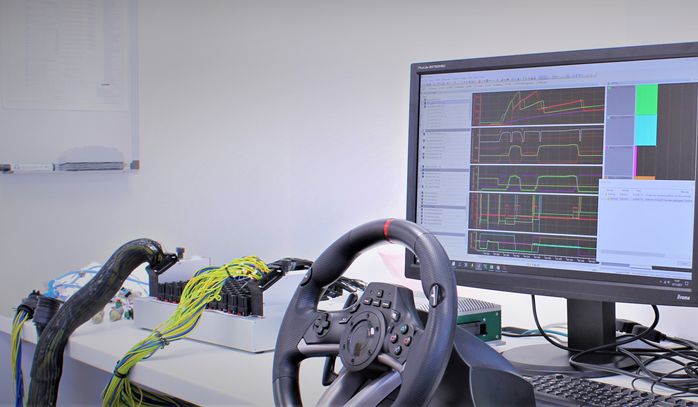 DSD的硬件在環技術(HIL)使得工程師可以在沒有實體零部件的條件下研發傳動系統。(DSD)
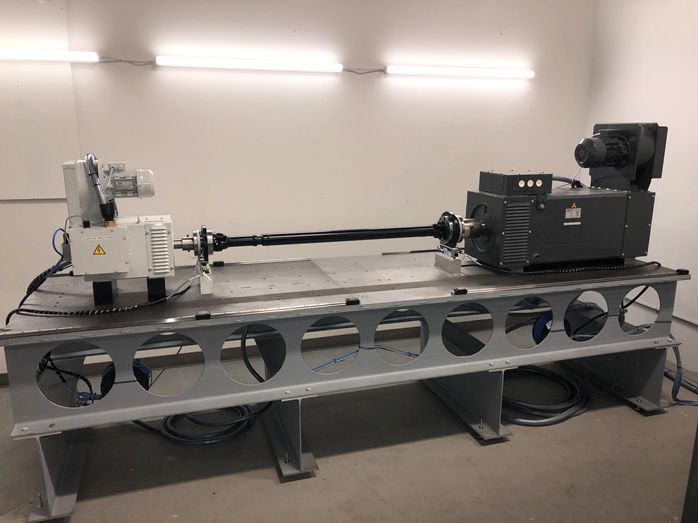 DSD傳動效率試驗臺