隨著OTA(空中升級)技術(shù)的更新,基礎(chǔ)設(shè)施的建設(shè)競賽甚囂塵上,越來越多的供應(yīng)商希望在這個(gè)未來的大熱領(lǐng)域中占據(jù)一席之地。在整個(gè)供應(yīng)鏈的繁榮背后,可以看到保修成本、網(wǎng)絡(luò)安全和智能手機(jī)用戶需求等多種推動其發(fā)展的因素。
OTA最初是以特斯拉為代表的豪華汽車所具備的功能——特斯拉曾大舉宣傳OTA,但如今它已迅速普及至其他車型級別。康明斯在其X12和X15重型發(fā)動機(jī)車型系列上安裝了OTA設(shè)備,預(yù)計(jì)于2017年上市。康明斯互聯(lián)校準(zhǔn)公司(Cummins ConnectedCalibrations)承諾該功能可以對發(fā)動機(jī)進(jìn)行現(xiàn)場無線調(diào)校。
目前OTA更新的主要內(nèi)容是車載娛樂和通訊系統(tǒng),但康明斯的舉動表明,在未來幾年中OTA的應(yīng)用領(lǐng)域還將進(jìn)一步擴(kuò)大。一些分析家認(rèn)為,控制保修成本將成為推動OTA發(fā)展的關(guān)鍵。
“在過去2年內(nèi),軟件問題在產(chǎn)品召回的所有原因中占據(jù)了相當(dāng)大的比例,而且我確信,2016年這一比例還將升高,”戰(zhàn)略分析公司(Strategy Analytics)的Roger Lanctot在最近的一場網(wǎng)絡(luò)論壇上表示。“OEM發(fā)展OTA的一大動機(jī)必定是規(guī)避保修成本。”
隨著網(wǎng)絡(luò)連接的日益擴(kuò)張,黑客問題和其他威脅也將刺激OTA需求的增長。安全程序必須升級,否則無法在汽車的整個(gè)生命周期內(nèi)為其提供有效保護(hù)。此外,消費(fèi)者在智能手機(jī)中增添應(yīng)用的習(xí)慣,也是促進(jìn)OTA增長的原因之一。這些情況意味著,工程團(tuán)隊(duì)必須處理各種各樣的需求。
“OEM需要的是在車輛設(shè)計(jì)完成2-3年后,還能為其添加新功能的人,”Argus 網(wǎng)絡(luò)安全公司業(yè)務(wù)發(fā)展主任Yoram Berholtz表示。“這將成為設(shè)計(jì)團(tuán)隊(duì)的新模式。通訊和信息娛樂系統(tǒng)硬件也需要改變,將來我們需要更大的存儲空間和更強(qiáng)的計(jì)算能力。”
車載軟件和控制器的龐大數(shù)量,將使汽車的OTA更新比手持設(shè)備復(fù)雜得多,來自多家供應(yīng)商的硬件和軟件必須在同一個(gè)環(huán)境中,以極高的質(zhì)量和可靠性協(xié)同工作。
“汽車制造商從來不會只從一家一級供應(yīng)商處購買所有部件,” Airbiquity 市場副總裁Scott Frank表示。“他們會購買多種軟件工具,聘請多家軟件安裝商,因此需要一個(gè)集中式的管理部門。”
構(gòu)建一個(gè)完整的OTA系統(tǒng)需要在車內(nèi)和車外開展大量工作。車載系統(tǒng)必須具備同時(shí)容納舊軟件和更新內(nèi)容的充足存儲空間,因?yàn)榕f軟件在發(fā)生問題時(shí)可以用于備份。此外,整個(gè)架構(gòu)還必須能夠支持從云端到每個(gè)電子控制單元(ECU)的下行鏈路通訊。
“扁平化架構(gòu)可以確保車內(nèi)的每個(gè)終端獨(dú)立與云端進(jìn)行驗(yàn)證,” Movimento的首席技術(shù)官M(fèi)ahbubul Alam表示。“我們現(xiàn)在所做的,就是將更多的CPU與云端相連,并將更多的CPU安裝在車內(nèi)。”
OTA應(yīng)用不僅限于車載信息系統(tǒng),還可以用于加密。“它們可以直接將加密算法置于數(shù)據(jù)源頭,并在其發(fā)送至車內(nèi)終端的整個(gè)過程中對其加以保護(hù),”Alam解釋道。
通訊通道是開發(fā)商關(guān)注的另一個(gè)重點(diǎn)內(nèi)容。蜂窩網(wǎng)絡(luò)連接可能對消費(fèi)者造成一定費(fèi)用,因此許多戰(zhàn)略家認(rèn)為Wi-Fi可能是更好的選擇,部分原因是人們大多數(shù)時(shí)候會把車停在家里或公司里。
但實(shí)際上,蜂窩網(wǎng)絡(luò)連接的成本可能并非如此高昂,并不會對不使用Wi-Fi的用戶造成很大影響。
“盡管大多數(shù)人都將從Wi-Fi渠道下載大部分內(nèi)容,但仍有一些情況會使用到蜂窩網(wǎng)絡(luò),”戰(zhàn)略分析公司(Strategy Analytics)的Lanctot表示。“在大多數(shù)情況下,使用蜂窩網(wǎng)絡(luò)的費(fèi)用很低,因此根本無需擔(dān)心成本問題。”
與費(fèi)用相比,隱私問題可能更加重要。一旦消費(fèi)者購得車輛進(jìn)行使用,就會在使用過程中留下他們的個(gè)人信息,而諸如召回和通知等問題,也都要公開地進(jìn)行仔細(xì)探討。
“消費(fèi)者需要對更新內(nèi)容付費(fèi)嗎?消費(fèi)者在更新內(nèi)容下載前會收到通知嗎?” Lanctot指出。“在需要召回的情況下,可能需要對客戶進(jìn)行更高層級的通知,而隱私保護(hù)也將成為一個(gè)重要的議題。”
盡管人們討論最多的話題是向汽車發(fā)送更新內(nèi)容,但觀察家指出,從汽車上收集信息對OEM而言也非常重要。除了那些發(fā)送至經(jīng)銷商的保養(yǎng)信息外,汽車制造商還會收集與消費(fèi)者偏好和零部件有關(guān)的數(shù)據(jù),以幫助其了解新產(chǎn)品的使用情況和零部件的狀態(tài)。
“在未來的新車上,你可能每天都會檢查一下部件的工作情況,”Frank表示。“但過去你頂多每個(gè)月會檢查一次。”
作者:Terry Costlow
來源:SAE《汽車工程》雜志
翻譯:SAE 中國辦公室
OTA updating brings benefits, challenges
The race to build up an infrastructure for over-the-air (OTA) updating is heating up as suppliers go all-out to gain a spot in a field that’s expected to see momentous growth. Warranty costs, cyber security and the expectations of smart phone users are among the factors driving developments throughout the supply chain.
OTA is quickly moving beyond the luxury vehicles typified by Tesla’s highly-publicized usage. Cummins added OTA capabilities on its X12 and X15 heavy-duty engine lines, which will ship in 2017. Cummins Connected Calibrations permits wireless engine tuning and calibration in the field.
To date, most efforts in OTA updating has focused on infotainment and telematic systems. Cummins’ move highlights the broad applications that are expected to show up in the next few years. Some analysts feel that controlling warranty costs will be a key driving force for the field.
“In the past two years, software has accounted for a significant portion of recalls, and I daresay 2016 will show a higher percentage of recalls for software issues,” Roger Lanctot of Strategy Analytics said in a recent webinar. “A key factor for OEMs is warranty cost avoidance.”
As connectivity expands, hacking and other threats will also fuel demand for OTA. Security programs will have to evolve to meet new threats over the vehicle’s lifetime. The expectations of consumers used to adding functionality to smart phones is another factor fueling growth projections. That’s forcing engineering teams to address a number of different needs.
“OEMs need people who look at adding capabilities two or three years after the design is completed,” said Yoram Berholtz, Director of Business Development atArgus Cyber Security. “This will be a new paradigm for design teams. Telematic and infotainment hardware will also need to change, more memory and more computing power will be needed.”
The huge volume of software and the number of controllers on vehicles make updating a far more complex task than revising handheld computing platforms. Hardware and software from many different suppliers will have to work together in an environment with extremely high quality and reliability levels.
“Automakers never get all their components from a single Tier 1,” said Scott Frank,Airbiquity’s Vice President of Marketing. “They have multiple software tools and multiple software installers, so they need a central management function to pull all that together.”
Building a complete OTA system requires plenty of work inside and outside the vehicle. On-board systems will have to have extra storage space to hold both updates and older software that can be used as a fallback if problems arise. Architectures will have to support communications from the cloud down to individual ECUs.
“Flattening the architecture makes sure that each particular endpoint in the car can authenticate to the cloud individually,” said Mahbubul Alam, CTO at Movimento. “What has been done between the cloud is we are getting more CPUs connecting to the cloud and more CPUs into the vehicle and deeper into the vehicle."
This is not only for infotainment but goes deeper to enable encryption. "They can put the crypto-algorithms directly where the source is and protect the data as it is delivered to end points in the car,” Alam explained.
Communications channels are another important aspect for developers. Cellular links can cost consumers money, so many strategists say that Wi-Fi might be a good option. That’s partially because the network’s short distances mean that cars will be parked at home or offices.
However, the costs of cellular aren’t expected to be large enough to impact owners who don’t utilize Wi-Fi.
“Most people plan to do a lot of updating via Wi-Fi, though there will be instances where software is updated over the cellular link,” Lanctot of Strategy Analytics said. “In most cases, the payloads will be small enough that there won’t be concern for the cost of a cellular connection.”
Concerns about payment will probably be dwarfed by privacy issues. Once buyers own the vehicle, they can have a say in what happens to it. Issues like recalls and notifications will be closely examined in public forums.
“Will consumers have to pay for updates? Will consumers have to be notified before updates are downloaded?" Lanctot asserted. "For recalls, there may be further notification involved. Privacy will be an important factor.”
Though updates sent to vehicles are widely discussed, observers note that pulling information from vehicles is important for OEMs. In addition to maintenance information that can be sent to dealers, automakers will collect data on consumer preferences and components. This input will help them see how new products are being used and how components perform.
“With a new car, you may want to run checks every day to see how new parts are working,” Frank said. “You may only check every month for an older vehicle.”
Author: Terry Costlow
Source: SAE Automotive Engineering Magazine

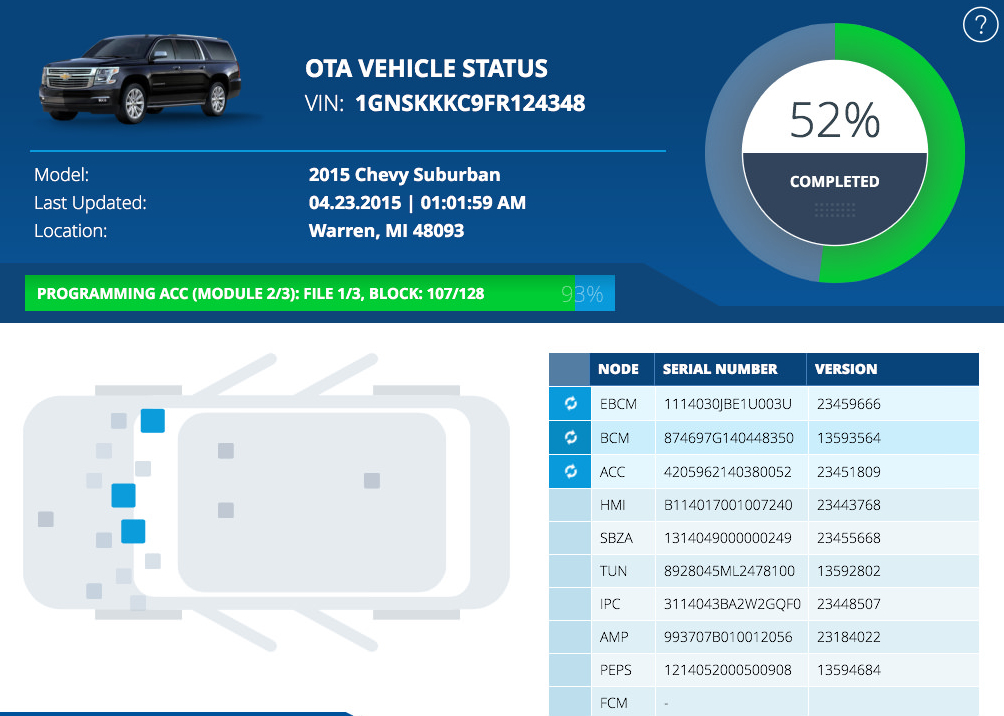 部分供應(yīng)商已經(jīng)著手開始使用OTA技術(shù)