汽車生產商已經開始為傳統乘用車增加高級駕駛員協助系統,逐漸構筑通往全自動汽車的道路,但這并不是唯一的路。好了,這樣就不得不提一個問題:全自動駕駛汽車何時到來?將是什么樣子?
Google在自動駕駛領域擁有多年經驗,按照Google的預測,全自動駕駛汽車最早將在2020年成為現實。在最近由咨詢公司J.D. Power、美國汽車經銷商協會(NADA)及紐約車展聯合舉辦的2016汽車論壇 (2016 Automotive Forum) 上,Google自動駕駛汽車項目CEO John Krafcik發表了演說,介紹Google自動駕駛汽車項目的進展。
很多人都夢想能擁有自己的全自動駕駛汽車——可以在開車的時候舒舒服服地靠在座椅上或者打個盹,用平板電腦讀讀新聞,甚至可以在上班的路上吃個早餐。雖然這種全自動駕駛汽車仍與現實有一定差距,但另一種自動駕駛汽車應用卻可能很快成為現實,并有希望開創一個全新的市場,即適合殘疾人、有視覺障礙者,以及無法自行開車的老年人的自動駕駛汽車。這樣的愿景讓NADA總裁Peter Welch激動不已,他也在論壇上發表了演講。
短續航里程的交通出行
Krafcik稱,自動駕駛汽車的到來是“一個過程,而不是會在某一個時間點一蹴而就的事情。”正如Welch的設想,在最初階段,這些自動駕駛汽車將先為對續航里程需求不高的用戶提供出行服務。隨著技術不斷發展,自動駕駛汽車的續航里程,以及可達到的最高速度均將有所提升,該潛在細分市場也將隨之增長。
然而Krafcik表示,Google自動駕駛汽車的最高時速為25 mph(40 km/h),這種速度水平可以降低研發的難度,因為車速35 mph(56 kph)時所需的動能是25 mph時的兩倍。
對于很多已經不能再繼續開車的人而言,自動駕駛汽車帶來的出行便利性,完全可以值回購買這輛車的費用。目前,Google為旗下的測試車輛規劃了精確的行駛路線。因此,此類自動駕駛汽車也可以采取類似作法,為車主提供若干已經定義好的路線,并在可能的情況下繼續添加新路線,以滿足新的需求。
Google開發的自動駕駛汽車采用了電動動力系統,沒有配備方向盤和油門、剎車踏板。這款車的最高時速僅為25mph,因此符合美國監管機構對智能“園區車(neighborhood car)”的定義,可行駛于區域相對較大的成人社區,其中很多均坐落在商場和醫療機構附近。居住在此類社區的車主可能會滿足于這種緩慢但安全的個人交通方式,但基本上目前車輛僅適合天氣好的時候使用。
Google還擁有一支雷克薩斯(Lexus)RX450h車隊,公司拿掉了這些車的方向盤和油門、剎車踏板,并加裝了自動駕駛系統。
預測性軟件
Google的自動駕駛軟件經過專門編寫,具有預測功能,也就是說可以預測車輛周圍移動對象的行為。Krafcik表示,軟件通常可以預測一輛自行車是否馬上要超車,或是一位行人是否要穿過街道。此時,車輛會減速至安全速度,遠離自行車并為行人讓路。但Krafcik解釋說,道路環境可能非常復雜。舉例而言,在好萊塢的街道上,孩子們會穿著戲服跑來跑去,這種情況是其他地方所不曾遇到的。此時,Google汽車立刻就能判斷出,孩子的行為要比成人更加難以預測,特別是在穿著校服時。
Google在很早之前就為Google汽車配備了應對急救車輛的能力。Google自動汽車擁有一個“警笛”庫,內含各種不同急救車輛的警笛聲,比如救火車是長嘯聲,救護車的聲音則更短更尖。Google汽車一旦“聽”到警笛就會立刻停車,讓急救車輛先通過十字路口。如果急救車輛需要從后方超車,Google汽車則將減速靠邊停車。
Google稱,自動汽車“將首先適用于部分人和部分道路環境,然后隨著技術的不斷發展,再逐漸將適用范圍擴大至更多人。”
Krafcik笑稱,Google汽車“完全就是建立在數據和測量的基礎之上”,并指出公司工程師已經設計了成百上千項測試,另外還從2009年起累計了超過150萬英里的真實道路測試里程。此外,Google每天還會進行300萬英里的模擬。
Google項目的道路測試最早開始于加州101國道中的一段平面路段,那時車上還載有自愿參加測試的Google員工,扮演的乘客/駕駛員。
自給式軟件
Krafcik在論壇期間表示,關于Google項目,值得一提的是目前所有車上軟件均是屬于自給自足式。“我們的自動車會直接利用車載處理器工作,并不需要云平臺的幫助。”他表示,“我們并不依靠V2V(車-車)或V2X(車-基礎設施)通信,因為這兩種方式均有宕機的風險。”
全自動駕駛汽車的駕駛員可在遇到特殊情況時接管對汽車的控制,比如天氣突變、高速封鎖和高速限速等,而Google自動駕駛汽車的情況似乎要更加復雜。然而,由于使用范圍相對有限,Google汽車似乎更容易實現自動駕駛。
目前,Google的兩座自動駕駛車輛一直在加州山景城Google總部附近以及德克薩斯州奧斯丁市的街道上行駛,而且還在華盛頓州柯克蘭市積累了雨中行駛的經驗。此外,Krafcik表示,Google最近還開始了雪地測試,但他并未透露更多信息。
Google自動車頂部的圓餅型傳感器一直被視為自動駕駛車輛的“雨刷”,但總體而言,天氣對攝像頭的影響比對激光雷達影響更大,因為激光雷達可以避免雨滴對視線的影響。現階段,如果出現雨勢過大、視野較差和/或路面濕滑的情況,Google汽車將減速行駛,甚至靠邊停車,直至情況好轉。
預測錯誤
自動駕駛汽車并不能完全避免車禍的發生,特別是在與人類駕駛員共用的道路環境中,即使這本是自動駕駛汽車支持者的愿望。今年2月份,一場發生在山景城的車禍受到了廣泛報道:在等紅燈時,一輛Google汽車靠向右側車道準備右轉。此時,車輛檢測到下水道附近的沙袋擋住了自己的去路。因此,車輛停下先讓多輛后車通過,而后慢慢打方向準備退出。在這個過程中,車輛“預測”一輛逐漸靠近的大巴會給自己讓路,但大巴并沒有停下來,一場輕微車禍就這樣發生了。
Google的自動駕駛汽車項目并非孤軍奮戰,而是得到了一系列供應商的協助,包括博世(Bosch)、大陸(Continental)、孚利模(FRIMO)、LG電子(LGElectronics)、Prefix、RCO,以及Roush Industries等。
Krafcik表示,法律問題必須得到解決。據悉,美國加里福尼亞州要求在該州道路上行駛的汽車必須配備一名合格駕駛員。根據美國國家公路交通安全局(NHTSA)的詮釋,該機構認為對于最高級別的自動車(4級或L4),機器人控制可被視為“合格駕駛員”。如果發生事故,相關經濟責任由車主承擔,但如果事故是由車輛缺陷引起的,則由廠商承擔責任。
目前,一些非政府組織均對NHTSA的詮釋提出了反對觀點,其中包括位于加州的消費者監察人(Consumer Watchdog)。自動駕駛車輛需要相當高級別的“資質證明”。然而,隨著低速自動駕駛汽車,也就是大家更常聽到的“園區車”的不斷優化,該潛在細分市場已經得到認可,可能最先形成規模。
作者:Paul Weissler
來源:SAE汽車工程雜志
翻譯:SAE上海辦公室
Google's Krafcik talks self-driving vehicle development
As automakers add advanced driver-assist systems to conventional passenger vehicles, they are developing one path to the fully autonomous vehicle—but not the only one. So, the inevitable question: When will fully self-driving cars arrive and what will they be like?
Google, with years of experience in this area, has predicted as early as 2020. Work underway was described by the project's CEO, John Krafcik, who spoke at the recent J.D. Power/NADA/NY Auto Show forum.
Many people envision getting into their fully-autonomous cars, sitting back and perhaps taking a nap, reading the latest news on a tablet or even eating breakfast during a drive to work. But there's an application that is likely to come sooner, and it promises to create a whole new market: a self-driving car for the handicapped, visually impaired, and elderly who no longer can drive safely. That was the vision that excited Peter Welch, President of NADA (National Automobile Dealers Association), who also spoke at the forum.
Short range mobility
Krafcik described readiness of self-driving cars as a "process, not a point in time." So at first, as Welch envisions, the cars might provide mobility for people who can be satisfied with a shorter range. As the process improves, the range and top speed should increase and the potential market should grow correspondingly.
However, Krafcik said Google's 25 mph (40 km/h) speed-limited vehicle is easier for the development process because kinetic energy at 35 mph (56 kph) is twice that at 25 mph.
For many people who are no longer able to drive, the mobility afforded by a self-driving car would justify its ownership. At this time Google precisely maps routes for its test cars, so a similar practice could give owners a list of trips to take, with new ones added as needed and possible.
The Google-developed cars are EVs without steering wheels or pedals. Because they're limited to 25 mph, they fit the description of smart "neighborhood cars." They could serve relatively large areas with adult communities, many of which are located close to shopping and medical facilities. Owners in such areas also could be satisfied with slow-but-safe personal transportation suited primarily for generally good-to-fair weather.
Google also has a fleet of Lexus RX450h's, modified for the self-driving system, and with steering wheel and pedals removed.
Predictive software
The Google software is written to be predictive, that is to know what everything movable around the car will do. According to Krafcik, it generally will predict a cyclist will ride by and a pedestrian will cross the street. So the car will slow to a safe speed and move away from the cyclist, then yield to the pedestrian. But road situations can be complex. On Halloween, for example, costumed children in the street were a new experience, he explained, and Google rightly decided children can be more unpredictable than adults, particularly when in costume.
The ability to deal with emergency vehicles on the road was addressed early by Google. It has a "library" of various sirens (a fire truck siren has a long wail, an ambulance a series of short shrills) and as soon as the car "hears" the siren it will stop to let it through an intersection. If the vehicle is coming from behind, it will slow down and pull over.
Google's official position is that "we will be ready for some people and road environments first, and as our technology improves, it will be available to more people."
Krafcik quipped that Google is "all about data and measurements," noting that company engineers have developed hundreds of tests, in addition to logging over 1.5 M miles in real-world road testing since 2009. The company each day performs 3 M miles of simulation.
The Google project began by using a flat section of CA Route 101, with volunteering employees as passenger/drivers.
Self-contained software
A noteworthy aspect of the Google project, Krafcik told the forum, is that presently all the software is self-contained. "Our autonomous cars use on-board processing power, nothing from the cloud," he said. "We are not relying on communication via V2V (vehicle to vehicle) or V2X (vehicle to infrastructure) because either can go down."
Such cars seem to involve more complexity than a full-range autonomous car with a capable driver available for special situations, such as sudden changes in weather, highway blockages and high road speeds. However, the opposite may be more likely to be true, because of the limits on its use.
The two-passenger Google self-driving cars have been rolling along streets in Mountain View, CA, near Google HQ, in Austin, TX, and, to increase experience with rain, in Kirkland, WA. In addition, Krafcik said, Google recently began testing in snow, but he provided no details.
The cars' dome-shaped sensors have what was described as the equivalent of a windscreen wiper, but in general the weather has more effect on cameras than lasers, as the latter can "see through" the raindrops. At this stage, if the rain is severe, visibility is poor and /or road conditions are slippery, the cars slow down and may even pull to the side of the road until conditions improve.
Prediction was wrong
No cars are totally accident free, even if that's the dream of self-driving car proponents, and certainly not with driver-operated vehicles also on the road. In a widely-reported accident last February in Mountain View, the Google car pulled into the right lane to prepare for a right turn on red. It detected sandbags near a storm drain blocking its path. So it stopped, let several cars pass by, then angled out to pull around. In doing so, it "predicted" a slow approaching bus would yield, but it didn't and a minor collision resulted.
Google is not working solo on its project. A long list of suppliers are assisting, including Bosch, Continental, FRIMO, LG Electronics, Prefix, RCO, and Roush Industries.
Legal issues must be sorted out, Krafcik maintained. California requires a licensed driver behind the wheel. NHTSA's interpretation has been that with what the agency considers to be the highest level of autonomy (Level 4, or "L4"), robotic controls can count as a driver, with financial responsibility assumed by the owner—or if an accident is caused by a defect, by the manufacturer.
There are NGOs (non-governmental organizations) such as California-basedConsumer Watchdog, that have objected to this. So the autonomous car will need a very high level of "proof." However, the potentially large market for a continuously improving lower-speed self-driving car, for a broadly-defined "neighborhood" area, is recognized, and so seems to be likely the first to come.
Author:Paul Weissler
Source: SAE Automotive Engineering Magazine

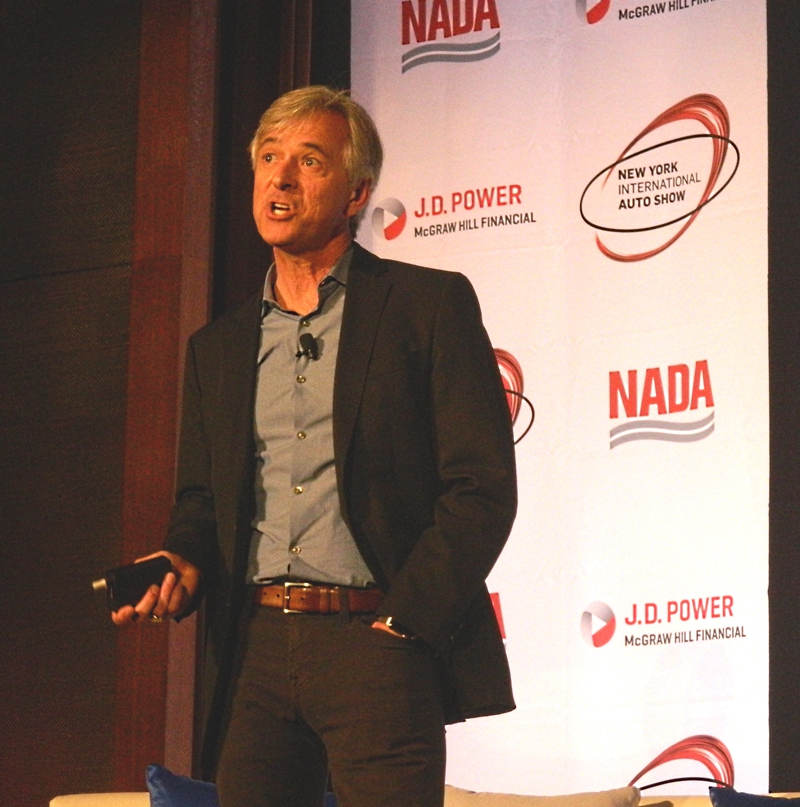 最近在紐約舉行的一次論壇上,Google汽車項目CEO John Krafcik表示,自動駕駛汽車的到來是“一個過程,而不是會在某一個時間點一蹴而就的事情。
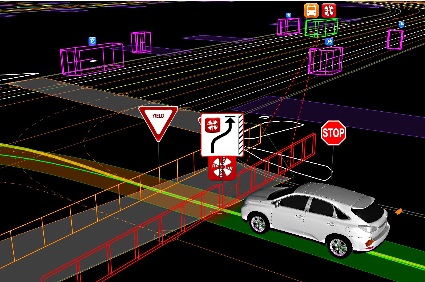 在這種情況下,Google汽車在“聽到”救護車警笛時,會利用自身傳感器“觀察”周邊區域,并在十字路口讓路,直到救護車安全通過。
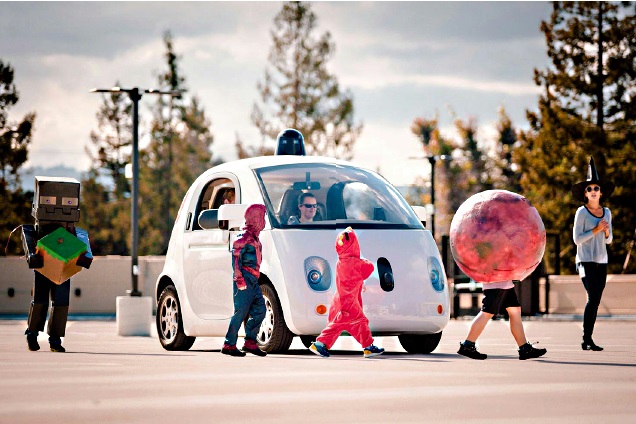 好萊塢為當地街區帶來了非常特殊的環境,街上的孩子們經常穿著戲服,有時還帶著大型物體。