下一代電動(dòng)車(chē)?yán)鋮s液在滿足新的電動(dòng)車(chē)安全法規(guī)要求的同時(shí),兼具低電導(dǎo)率、耐腐蝕性和優(yōu)異的熱傳遞性能。
與內(nèi)燃機(jī)相比,電動(dòng)車(chē)推進(jìn)系統(tǒng)的熱管理似乎更為簡(jiǎn)單。畢竟內(nèi)燃機(jī)的工作溫度要高得多——汽油發(fā)動(dòng)機(jī)的最佳工作溫度大約在100°C左右。相比之下,電動(dòng)車(chē)電池在充放電循環(huán)過(guò)程中產(chǎn)生的熱量相對(duì)較少,通常維持在15-30°C左右。此外,雖然電機(jī)和電力電子元件的工作溫度較高,通常為60-80°C,但仍低于內(nèi)燃機(jī)。
盡管如此,電動(dòng)車(chē)的熱管理仍然需要解決許多復(fù)雜問(wèn)題,例如,電池對(duì)極限溫度的耐受程度、新型電池材料體系的開(kāi)發(fā),以及高壓電氣架構(gòu)和800V快充產(chǎn)生的高熱問(wèn)題等。這些原因都導(dǎo)致電動(dòng)車(chē)行業(yè)越來(lái)越重視電池?zé)峁芾淼姆€(wěn)定性和安全性。專(zhuān)家指出,電池材料體系、硬件和冷卻液之間的兼容性是實(shí)現(xiàn)平衡系統(tǒng)解決方案的關(guān)鍵。
Prestone電動(dòng)車(chē)技術(shù)總監(jiān)Tom Corrigan博士指出,“直到近期,電動(dòng)車(chē)?yán)鋮s液才開(kāi)始受到重視。”他牽頭的科學(xué)家和工程師團(tuán)隊(duì)負(fù)責(zé)研發(fā)面向OEM和終端客戶的下一代冷卻液。Corrigan指出,下一代冷卻液不僅需要能夠?qū)崿F(xiàn)高效熱傳遞,還要與其接觸的每個(gè)組件和材料(如聚合物密封件)兼容,同時(shí)具備與傳統(tǒng)內(nèi)燃機(jī)防凍劑相同的防腐蝕性能。最重要的是,它必須能有效遏制熱失控等極端故障蔓延至整個(gè)電池組。
Corrigan斷言,“冷卻液可能與高壓電氣元件直接接觸,因此必須具備低電導(dǎo)率。”
Corrigan指出,早在冷卻液供應(yīng)商還沒(méi)來(lái)得及開(kāi)發(fā)出專(zhuān)門(mén)的電動(dòng)車(chē)熱管理產(chǎn)品之前,第一批電動(dòng)車(chē)的普及就推動(dòng)了市場(chǎng)的形成。因此,如今上路的大多數(shù)電動(dòng)車(chē)使用的都是燃油車(chē)?yán)鋮s液。他指出,“Prestone與多家OEM建立了長(zhǎng)期合作伙伴關(guān)系,因此他們?cè)陂_(kāi)始生產(chǎn)電動(dòng)車(chē)時(shí),就可以直接使用具備值得信賴(lài)的防腐蝕性能的冷卻液。”
Corrigan注意到,電動(dòng)車(chē)安全問(wèn)題極大地推動(dòng)了行業(yè)思維方式的轉(zhuǎn)變。目前業(yè)界采用的電機(jī)冷卻策略主要分為兩種:直接冷卻和間接冷卻。間接冷卻使用的是由水、乙二醇、防腐劑組成的冷卻液,與電池冷卻液相同,而電機(jī)外殼則充當(dāng)冷卻套,冷卻液流經(jīng)其中并間接帶走熱量。
Corrigan指出,“然而現(xiàn)有冷卻液添加劑的問(wèn)題在于,各廠商的緩蝕劑混合物都沿用了內(nèi)燃機(jī)冷卻液常用的離子緩蝕劑。”離子緩蝕劑含有硅酸鹽、有機(jī)酸和磷酸鹽,這些都會(huì)增加電導(dǎo)率。
他指出,“這種高電導(dǎo)率冷卻液一旦接觸到高壓電子元件(400V或800V系統(tǒng)),就會(huì)引發(fā)劇烈的災(zāi)難性反應(yīng)”。他援引研究結(jié)果表示,鋰離子電池浸入傳統(tǒng)內(nèi)燃機(jī)冷卻液中會(huì)產(chǎn)生大量熱量。“這些熱量很有可能導(dǎo)致冷卻液沸騰,從而導(dǎo)致電池?zé)崾Э夭⒁l(fā)火災(zāi)。”
Corrigan表示,考慮到這些風(fēng)險(xiǎn)以及散熱性能需求的提升,五成以上電動(dòng)車(chē)制造商轉(zhuǎn)而采用直接冷卻策略。這一策略采用電導(dǎo)率極低甚至為零(具體視配方而定)的油基“介電”冷卻液,冷卻液直接流經(jīng)電機(jī)線圈進(jìn)行冷卻。此外,介電冷卻液還會(huì)進(jìn)入電池?zé)峁芾硐到y(tǒng)進(jìn)行冷卻;直接冷卻也稱(chēng)為浸沒(méi)式冷卻,因?yàn)殡姵乇恢苯咏](méi)在介電冷卻液中。
Corrigan表示,“如果你采用我們正在研發(fā)的低電導(dǎo)率冷卻液,就可以緩解這些問(wèn)題。我們的配方團(tuán)隊(duì)面臨的挑戰(zhàn)是必須在維持低電導(dǎo)率的同時(shí)確保防腐蝕性能,目的是為了減少材料沉積、熱傳遞中斷,以及最糟糕的情況——大量材料沉積導(dǎo)致冷卻液泄漏至其他不應(yīng)接觸冷卻液的區(qū)域。
Prestone的研發(fā)團(tuán)隊(duì)已開(kāi)發(fā)出新型性能添加劑配方,以增強(qiáng)冷卻液本身的散熱性能,從而提高組件之間的熱交換效率。Corrigan聲稱(chēng),該配方有助于提升任何電池材料體系的性能,而且可能有助于解決鎳鈷錳(NMC)和磷酸鐵鋰(LFP)電池材料體系之間的安全性差異。他表示,預(yù)計(jì)OEM將于“未來(lái)幾年”內(nèi)采用新型電動(dòng)車(chē)電池冷卻液。
將來(lái)電動(dòng)車(chē)車(chē)主是否需要自行維護(hù)或更換冷卻液?目前大多數(shù)電動(dòng)車(chē)使用的冷卻液都可以“終身使用”,無(wú)需更換。Corrigan指出,“即使我們使用低電導(dǎo)率冷卻液,其電導(dǎo)率也會(huì)隨時(shí)間推移而逐漸增加。隨著冷卻液的逐漸降解,它會(huì)吸收系統(tǒng)中的雜質(zhì)并形成離子,從而導(dǎo)致電導(dǎo)率增加。當(dāng)電導(dǎo)率達(dá)到300μS/cm(即每厘米微西門(mén)子,衡量電導(dǎo)率的單位)時(shí),就會(huì)出現(xiàn)安全問(wèn)題。此時(shí)建議更換冷卻液。”
不僅如此,監(jiān)管壓力也正在逼近。中國(guó)政府已經(jīng)起草了一項(xiàng)針對(duì)電動(dòng)車(chē)?yán)鋮s液的法規(guī)(GB 29743.2),旨在降低冷卻液電導(dǎo)率以減少電池火災(zāi)。SAE電池標(biāo)準(zhǔn)指導(dǎo)委員會(huì)主席Brian Engle表示,預(yù)計(jì)該法規(guī)將于2026年7月生效,屆時(shí)所有在華銷(xiāo)售車(chē)輛都必須符合該法規(guī)要求。
Engle解釋道,“該法規(guī)規(guī)定,新型冷卻液電導(dǎo)率不得高于100μS/cm,即使考慮老化效應(yīng),其電導(dǎo)率也不得高于300μS/cm。這就要求未來(lái)電動(dòng)車(chē)?yán)鋮s液設(shè)定明確的使用壽命,而非無(wú)限期使用。這一要求將改變冷卻液的配方。”
Prestone公司的Corrigan表示,“中國(guó)國(guó)標(biāo)規(guī)定的100μS/cm閾值是一個(gè)安全閾值,在冷卻液與高壓電子元件意外接觸時(shí),100μS/cm的電導(dǎo)率可提供一定的安全性,但這也帶來(lái)了挑戰(zhàn)。因?yàn)槔鋮s液的電導(dǎo)率主要來(lái)自防腐蝕添加劑,雖然去除這些添加劑可以降低電導(dǎo)率,但同時(shí)也犧牲了防腐蝕性能。目前我們的研發(fā)團(tuán)隊(duì)已經(jīng)進(jìn)行了大量技術(shù)開(kāi)發(fā)工作,以確保我們的冷卻劑在滿足中國(guó)國(guó)標(biāo)的防腐要求的同時(shí)保持低電導(dǎo)率。作為參考,Prestone冷卻液的電導(dǎo)率約為75 μS/cm。”
請(qǐng)關(guān)注有關(guān)中國(guó) GB 法規(guī)和 SAE 正在進(jìn)行的電動(dòng)汽車(chē)熱管理液標(biāo)準(zhǔn)工作的單獨(dú)報(bào)告。
Managing the heating and cooling of electric vehicle propulsion systems may seem to be an easy task compared with combustion engines. After all, ICEs run much hotter—the thermal optimum for a gasoline engine is around 100-degC. By comparison, EV batteries normally generate (as a function of current during charge/discharge cycles) a relatively cool 15- to 30-degC. And while motors and power electronics operate hotter, typically 60- to 80-degC, they still run cooler than ICEs.
But among the myriad complexities of EV thermal management are batteries’ dislike for temperature extremes, new cell chemistries, heat-generating high-voltage electrical architectures and 800V fast charging. All are putting greater focus on maintaining stable EV battery thermal performance and safety. Experts note that compatibility among the cell chemistry, hardware, and coolant fluid is the key to a balanced systems solution.
“EV liquid coolant has kind of been an afterthought until recently,” noted Tom Corrigan, Ph.D, director of EV Technology at Prestone Products Corp. His team of scientists and engineers is responsible for developing next-generation thermal-management fluids for OEM and, eventually, consumer customers. Corrigan said that beyond their vital role in enabling efficient heat transfer, fluid formulations must be compatible with every component and material they contact, such as polymeric seals. They also must provide internal corrosion protection (as does traditional ICE antifreeze). And perhaps fluids’ most vital role: Helping to prevent an extreme failure mode, i.e., thermal runaway, from spreading throughout the battery pack.
“Low electrical conductivity is a must for thermal-management fluids which could potentially come into direct contact with high voltage electronics,” Corrigan asserted.
Low-conductivity coolants taking over
The ‘first wave’ of EV adoption established the electric-vehicle market before coolant suppliers had time to develop bespoke thermal-management products, Corrigan explained. “Most EVs on the road today are using the same fluids that are used in ICE vehicles, he said. “We’re [Prestone] long established with many OEM customers, so when those OEMs started producing EVs, they installed the coolant fluids they trust for corrosion protection.”
Corrigan sees a shift in the industry’s thinking, mainly driven by EV safety concerns. For motor cooling, two main strategies are being used today: Indirect and direct cooling. Indirect cooling uses the same water-glycol-based fluid, with corrosion inhibitors, that is used for the battery pack. The motor housing serves as a coolant jacket, allowing the fluid to flow through it and extract heat indirectly from the motor system.
“The issue with the current additive packages and their proprietary blend of corrosion inhibitors, is that the industry had, for a long time, moved towards ionic corrosion inhibitors for ICEs,” Corrigan explained. Ionic additives include silicate, organic acid, and phosphate technologies, all of which increase electrical conductivity.
“With high electrical conductivity, if that fluid were to come in contact with the high-voltage electronics, 400V or 800V systems, you’ll have a pretty violent, catastrophic reaction,” he said, citing studies that show that submerging a lithium-ion battery in traditional ICE coolant results in high heat generation. “There’s a good chance that [heat generation] will cause the coolant to boil with potential for fire and thermal runaway.”
Such risks, combined with increased thermal performance, have spurred over 50 percent of EV manufacturers to adopt direct cooling strategies for the motor, according to Corrigan. This method uses an oil-based ‘dielectric’ fluid, with very low or zero conductivity, depending on the formula. The fluid flows directly over the motor coils. Dielectric fluids are also entering battery thermal management; with direct (also known as immersion) cooling, the battery cells are submerged in the dielectric coolant.
“By moving to the low-conductivity coolants we’re developing, you can mitigate those issues. The opportunity for my team, the formulators, is to find synergies that maintain low electrical conductivity while ensuring sufficient corrosion protection for the OEMs,” Corrigan said. “The anti-corrosion function aims to eliminate a build-up of materials or intermission of heat transfer or, worse-case scenario, a build-up of materials to the point it causes a fluid leak into areas of the battery where it’s not supposed to be.”
The Prestone R&D team’s developments include new performance additives formulated to enhance the thermal properties of the fluids themselves to provide a more efficient heat exchange between two components. Corrigan claims that will benefit any type of cell chemistry and may help “level the playing field” for NMC versus LFP in terms of cell chemistry safety, he said. OEMs are expected to transition to the new EV thermal fluids “over the next couple years,” according to Corrigan
New China regulation
Is EV fluid maintenance by the vehicle owner—fluid changes—coming? The standard coolants used in most EVs today are “life of vehicle” and do not require a fluid change. “But as we move to low-conductivity fluids, we’re seeing a ‘creep’ in conductivity over time,” Corrigan observed. As the coolant degrades and picks up impurities in the system, it forms ionic species. Conductivity increases, and by the time it reaches 300 μS/cm [microsiemens per centimeter, a unit used to measure electrical conductance], safety concerns start to emerge. That’s where we would recommend a fluid change.”
A regulatory push is also looming. The Chinese government has drafted an EV-coolant-specific rule, GB 29743.2, focused on reducing electrical conductivity to mitigate battery fires. The regulation is expected to go into effect July 2026, and all vehicles sold in China must comply, according to Brian Engle, chair of SAE’s Battery Standards Steering Committee and director of business development at Amphenol, a connectivity provider.
“They’re basically setting a maximum limit of 100 microsiemens per centimeter dielectric measurement for new coolants with basically an aging effect allowing for up to 300 microsiemens/centimeter [300 μS/cm],” Engle explained. “Moving forward, it’s going to require a service life for EV coolants, as opposed to being in the vehicle indefinitely. It’s going to change the makeup of the coolants.”
Prestone’s Corrigan said the China GB threshold of 100 μS/cm “is a pretty safe value if there was an accident involving accidental contact of that fluid with the high-voltage electronics. But that’s where the challenge comes in. The conductivity comes from the additives we put in to protect against corrosion. If we pull those out, we can reduce conductivity but now we compromise on corrosion. Our R&D team has done a lot of development work on technologies that allow us to pass the corrosion requirements in that [China] GB specification while maintaining low conductivity. Our fluids are around 75 μS/cm.”
Watch for a separate report coming on the China GB regulation and SAE’s ongoing Standards work on EV thermal management fluids.


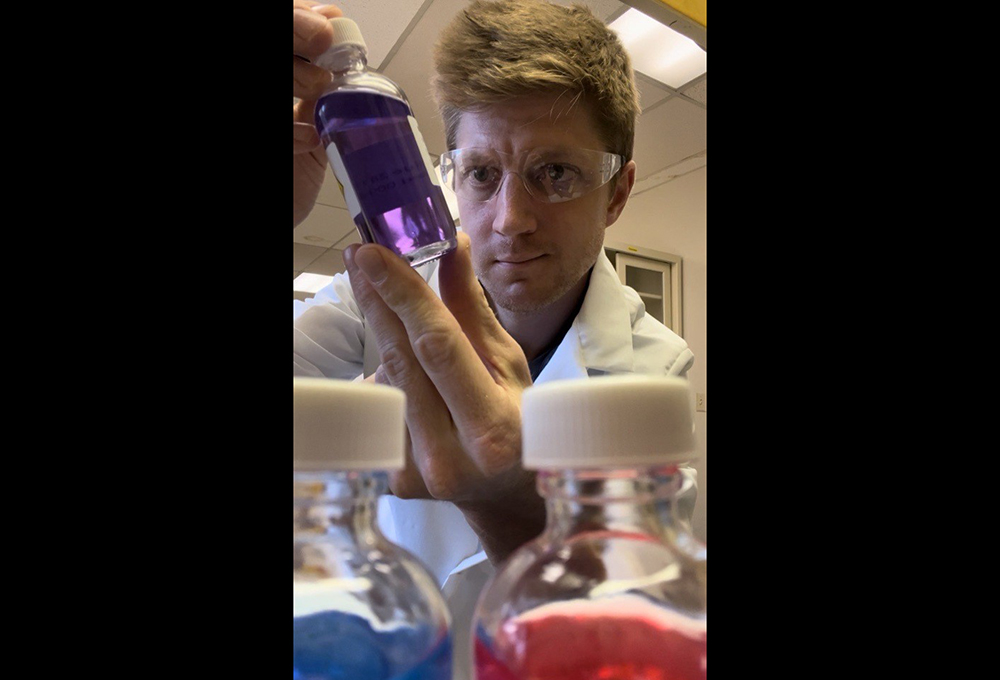 Tom Corrigan表示,Prestone 的電動(dòng)車(chē)技術(shù)研發(fā)團(tuán)隊(duì)正在研究下一代低導(dǎo)電性電動(dòng)汽車(chē)熱管理液體。(Prestone)
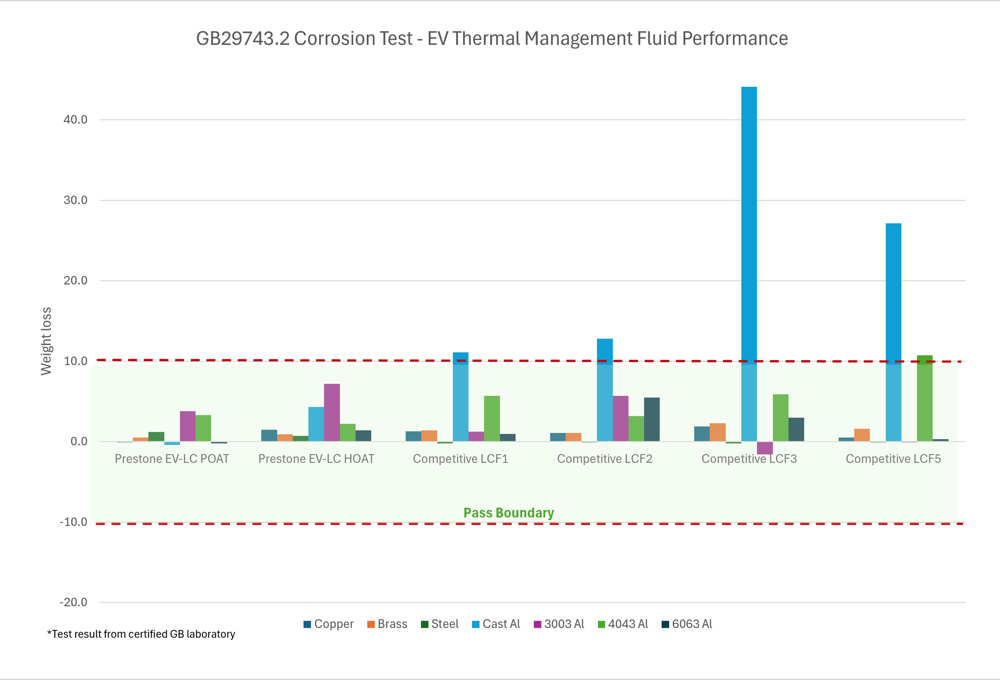 電動(dòng)車(chē)?yán)鋮s液供應(yīng)商一直在測(cè)試其產(chǎn)品的電導(dǎo)率水平,以符合中國(guó)新國(guó)標(biāo)的規(guī)定。(Prestone)
 SAE電池標(biāo)準(zhǔn)委員會(huì)主席Brian Engle認(rèn)為,電動(dòng)車(chē)?yán)鋮s液配方的重大變化旨在提高電動(dòng)汽車(chē)電池的安全性。(Brian Engle)