博世公司正致力于在SiriusXM Connect移動安全app中集成場景安全通知功能,而這僅為博世在CES 2025上推出的眾多技術之一。
博世在2025年國際消費電子展(CES 2025)上展示了其在安全、無障礙和人工智能技術方面取得的最新成果。博世表示,這些技術將對兩類群體產生重要影響:第一類是采用博世軟硬件的汽車的駕駛員,第二類是在看臺上觀看采用這些技術的賽車的觀眾。
第二類涉及的賽車可能會用到博世與賽車手Robert Wickens合作研發的新款制動手控器。Wickens在2018年的一次撞車事故中嚴重受傷,但此后他憑借這類設備成功重返賽場。在代表Bryan Herta Autosport駕駛現代伊蘭特N TCR參賽時,Wickens就使用了上述的新款制動手控器,但該設備實際上是博世向LMDh級賽車供應的電動制動系統的升級版——在線控制動技術的基礎上,通過配備軟件以平衡電機制動和傳統液壓制動產生的扭矩。這一定制軟件還允許Wickens通過其已有的手控器將壓力信號轉換為實際的制動操作。博世北美賽車運動總監Jacob Bergenske在接受SAE采訪時表示,工程團隊仍在改進該控制器的手感。
他表示:“人類能夠通過觸覺感知信息真是太不可思議了。Wickens越是能夠通過雙手精準感知制動的臨界點,同時我們系統提供的反饋精度越高,他的駕駛速度就會越快。與他之前使用的控制系統相比,新控制器的性能得到了大幅提升。在某些操作中,其響應速度甚至提升了10倍。”
2025年,Wickens將駕駛配備最新款制動手控系統的雪佛蘭科爾維特Z06 GT3.R在國際汽車運動協會(IMSA)主辦的衛士泰克跑車錦標賽(WeatherTech SportsCar Championship)上首次亮相。Bergenske表示,團隊在該項目中積累的軟件經驗,還可為其它團隊研發更先進的制動手控系統提供參考。
他表示:“該項目不僅關乎Robert個人,更是為了向那些因殘疾認為自己無緣駕駛高性能賽車的人提供機會。”
在同一場CES媒體發布會上,博世北美區總裁Paul Thomas宣布,公司的逆行警報系統可能將于近期集成到新版SiriusXM Connect移動安全應用程序中。Thomas表示,這項技術的益處不言而喻,因為根據美國聯邦公路管理局(FHA)的數據顯示,2022年因逆行造成的死亡事故已超過700起。實際上,FHA早在2012年就開始關注逆行問題,當時該局與密歇根州交通局(MDOT)聯合發布的一項研究結果顯示,黑暗環境和不清醒駕駛會導致逆行率增加,且由此引發的事故“后果極其嚴重”。研究發現,在逆行引發的碰撞事故中,至少一人死亡或重傷的比例高達32%,而在密歇根州所有高速公路事故中,這一比例為2%。
博世的這套云系統能夠跟蹤車輛上下高速公路的情況,并利用匿名數據來判斷車輛是在正常行駛還是逆向行駛。Thomas在CES上表示,只要駕駛員已經安裝了SiriusXM Connect應用程序,就能夠啟用博世的逆行警報系統,無需額外安裝任何硬件。他表示,與SiriusXM Connect集成后的博世技術能夠精準地針對身處危險的駕駛員發出警報。
“如果駕駛員在正常行駛的過程中遭遇逆向駛來的車輛,逆行警報系統將通過車載收音機或音響系統向其發出語音警報,未來還有可能添加視覺警報。與此同時,該系統還可向逆行車輛的駕駛員發出警告,提醒其注意逆行的行為。”
但目前博世僅希望該系統實現警報功能。Thomas表示,這項技術的研發初衷并非控制逆行車輛,并進一步解釋說此類控制手段可能會受到法律限制。不過,他也表示博世正致力于與其他公司合作,共同將這套逆行警報系統向更多汽車和智能手機推廣,并強調博世并非為了盈利才開發這項技術。
他表示:“如果這項技術已經開始用于拯救生命,那么我愿意無償獻出。”
博世在CES上發布的內容有一個共同點,那就是軟件。Thomas表示,盡管博世今年的參展主題“Coded #LikeABosch”表明公司的戰略重心日益向AI技術和更多軟件開發領域傾斜,但公司依然需要保持戰略平衡。
他表示:“我們絕不會將發展重心完全放在軟件和硬件中的任何一方面上。我們始終會在軟件和硬件之間找到一個平衡點。我們依然致力于成為一家強大的硬件供應商,因為汽車總是需要出色的作動器、轉向器或制動系統等關鍵硬件。”
博世目前正在氫能經濟領域加大硬件研發力度。Thomas表示,盡管氫能市場的整體增長有所放緩,但博世仍與政府和企業合作伙伴保持密切合作,包括開發更先進的電解槽技術,以便在氫能使用地區生產氫。此外,博世還致力于改進氫氣泵的性能。
Thomas表示:“我們仍在氫能領域深耕。我們的力士樂(Rexroth)部門已研發出了一種更高效的氫氣輸送方式。目前,氫能源汽車的加氫過程是氫能市場上最為低效的一個環節,因為在此過程中會損失60%-70%的氫。博世的力士樂團隊開發了一種新型氫氣泵,能夠大幅提升輸氫效率,從而避免大量能量散失到環境中。”
Thomas表示,新一屆政府在支持氫能發展方面將采取何種立場,目前尚不清楚。
他表示:“眾所周知,新政府是否會向先前一樣大力支持氫能發展仍存在較大的不確定性。我們很榮幸與美國能源部(DOE)建立了緊密的合作關系。對于美國目前的氫能生產情況,以及氫能在燃料電池(或可燃氫應用)中的使用情況,我們非常滿意。同時,我們仍與一家生產氫能卡車、并涉足可燃氫業務的大型商用車制造商保持著合作伙伴關系。目前我們正與政府就這些卡車是否符合零排放標準進行深入探討。未來的監管環境如何變化,我們拭目以待。”
Bosch took to CES 2025 with positive messages about its safety, accessibility and AI technologies, which it said will impact both the people who drive vehicles with its hardware and software inside and those might be watching such a vehicle from the bleachers.
A racecar that would fit Into that latter category might use the new hand brake controls that Bosch developed along with motorsport race driver Robert Wickens. Wickens was badly hurt in a crash in 2018 but has since returned to racing using vehicles with hand controls. Wickens uses the new hand brakes in the Hyundai Elantra N TCR he drives for Bryan Herta Autosport, but they are an updated version of the electric brake system Bosch supplies for the LMDh class. Based on brake-by-wire technology, the hand brakes have software that balances the braking torque from the motor and the traditional hydraulic brakes. Bespoke software also allows Wickens to use the brakes with his pre-existing hand controls, translating pressure signals into actual breaking events. Jacob Bergenske, Bosch’s director of motorsport for NorthAmerica, told SAE Media that the engineering team is still improving the feel in the controls.
“It's amazing the perception that a human has through touch,” he said. “The more that [Wickens] can perceive that threshold of breaking in his hands, and we can give the proper kind of feedback, the faster he's gonna be. Where we're at right now is a massive step forward from what he had with his previous system. In certain events, we have literally 10x improved in responsiveness.”
In 2025, Wickens will make his debut in IMSA’s WeatherTech SportsCar Championship with a Corvette Z06 GT3.R that will use a newer iteration of the hand brake system. Bergenske said the software learnings that the team made on this project could be used to make better hand brake controls for others.
“This is not just about Robert,” he said. “It’s about providing people opportunities who never thought that they would have had those opportunities before, people who never thought they would be able to drive a high-performance race car because they have a disability.”
The right move on wrong-way driving
At the same press event at CES, Paul Thomas, president of Bosch North America, announced that the company’s wrong-way driver warning system will likely be coming to the new SiriusXM Connect mobile safety app in the near future. The reasons this technology would be beneficial are obvious, Thomas said, since there were over 700 wrong-way driving fatalities recorded in 2022, according to data from the U.S. Federal Highway Administration (FHA). The FHA has been concerned about wrong-way driving since at least 2012, when it published the results of a study conducted with the Michigan Department of Transportation (MDOT) that found that darkness and driver impairment resulted in higher wrong-way drivers and that wrong-way crashes were “highly severe.” The study found that 32% of wrong-way crashes resulted in at least one fatality or incapacitating injury, compared to 2% of all Michigan freeway crashes.
Bosch’s cloud-based system tracks vehicles as they get on or off a highway and uses anonymized data to tell if a vehicle is moving with or against traffic. Bosch’s wrong-way alert system does not require any supplemental hardware as long as they have SiriusXM installed, Thomas said at CES. Integration with SiriusXM Connect will allow Bosch’s technology to only alert people who are in the line of danger, he said.
“If you're on the road, [and someone is] traveling towards [you in a] car that's coming the wrong way, you will get an announcement audibly and potentially visually over your radio or over your sound system that says you have a wrong-way driver coming towards you,” he said. “It will also trigger the person that's driving the car in the wrong direction to say that they're moving in the wrong direction.”
But alerts are as far as Bosch wants to go for now. The technology wasn’t developed to take control of a vehicle going the wrong way, Thomas said, adding that there are likely legal restrictions against this kind of control. Still, Bosch is “actively working” to bring these wrong-way driver alerts to more vehicles and smartphones through other collaborations, Thomas said, adding that Bosch is not developing this to make money.
“I would give this technology away to save lives, if it was starting to be used,” he said.
Software, AI and hydrogen
One thing Bosch’s CES announcements have in common is software. Thomas said even as the company leans into AI and more software development – the company’s new slogan is “Coded #LikeABosch” – he remains a “balanced guy.”
“I'm never going to say we're going to go all in the software or all in the hardware,” he said. “I'm always going to find a level of balance between both. We still want to be a very strong hardware supplier because you need great actuators in your vehicle, or steering gears or braking systems, or whatever it may be.”
One place where Bosch is advancing its hardware development is with the hydrogen economy. Thomas said that even though the H2 market has slowed a bit, in general, Bosch remains involved with its government and corporate partners, including by developing better electrolyzer technology in order to produce hydrogen energy in the regions where it will be used. Improved pumps are also part of the picture.
“We're still heavily involved in hydrogen,” Thomas said. “With our Rexroth division, we've developed a way to deliver hydrogen in a much more effective way. One of the most inefficient things in the market today is how you fuel a hydrogen vehicle. You lose between 60 and 70% of the energy during the fueling process. Our Rexroth group has developed a new pump that actually delivers the hydrogen in a much more effective way, so you're not losing a lot of the energy to the environment.”
Where the next administration will go when it comes to supporting hydrogen is an open question, Thomas said.
“We all know that the new government might either go as heavy into hydrogen as before, or not,” he said. “We're closely tied with the DOE, and we're happy. We're happy with what we're seeing related to the production of hydrogen in the region and usage either in fuel cells [or combustible hydrogen]. We're still a partner with a large commercial vehicle manufacturer that makes hydrogen trucks and [with] combustible hydrogen, there's lots of discussions now with the government on whether that qualifies as a zero-emission vehicle or not. We’re just going to see how the regulatory environment works out.”

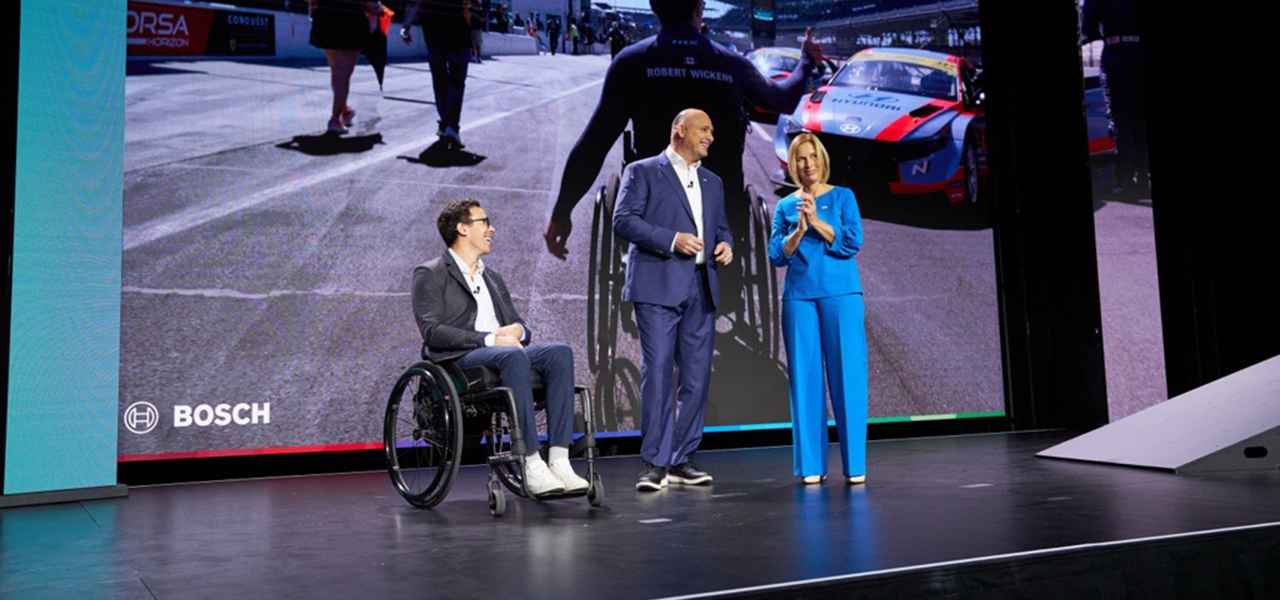 在CES 2025上,賽車手Robert Wickens與博世北美區總裁Paul Thomas及博世董事會成員Tanja Rückert一起在臺上就博世研發的制動手控器進行交流。正是得益于這項創新技術,Wickens才能夠在2018年遭遇嚴重車禍后重返賽場。(Steve Fecht)
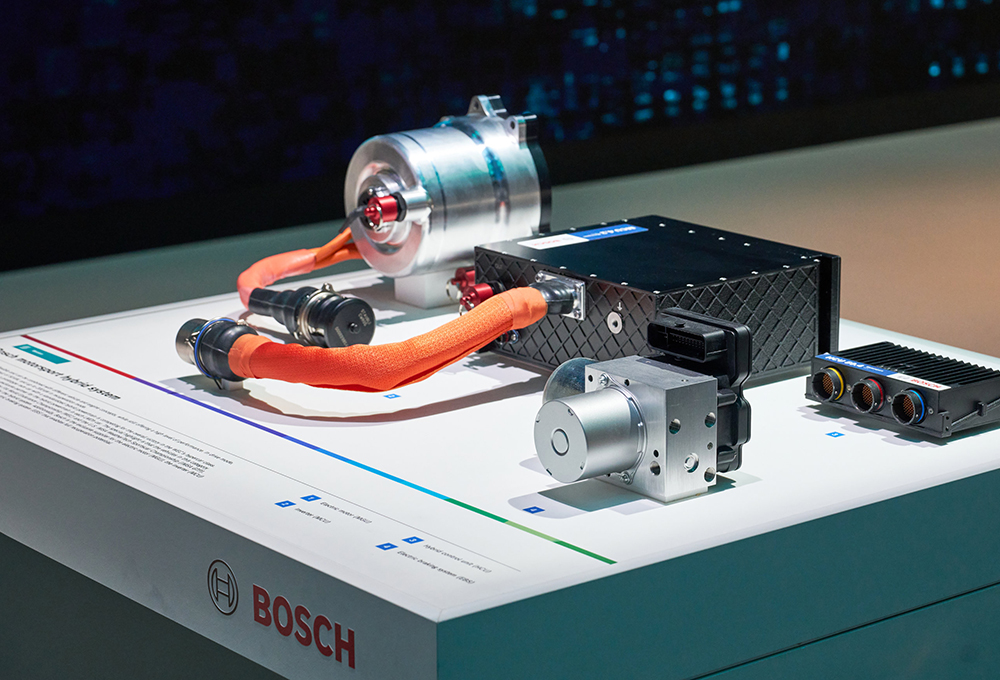 博世賽車運動混動部件在2025年美國消費電子展(CES 2025)上展出。博世賽車運動是每輛LMDh汽車混合動力系統的獨家合作伙伴。(Steve Fecht)
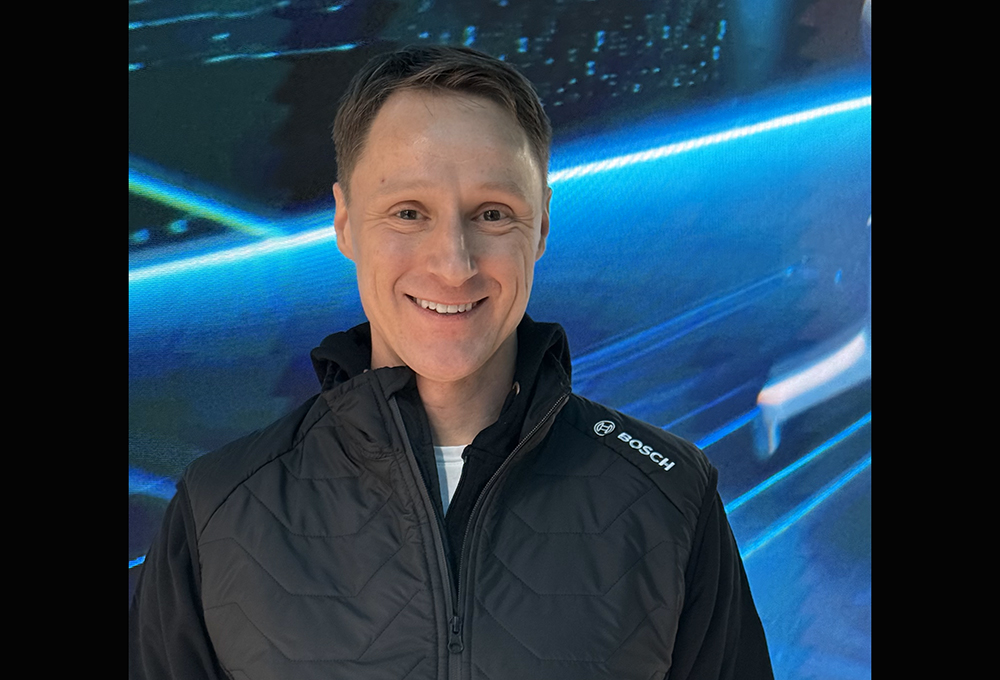 博世北美賽車運動總監 Jacob Bergenske(Sebastian Blanco)
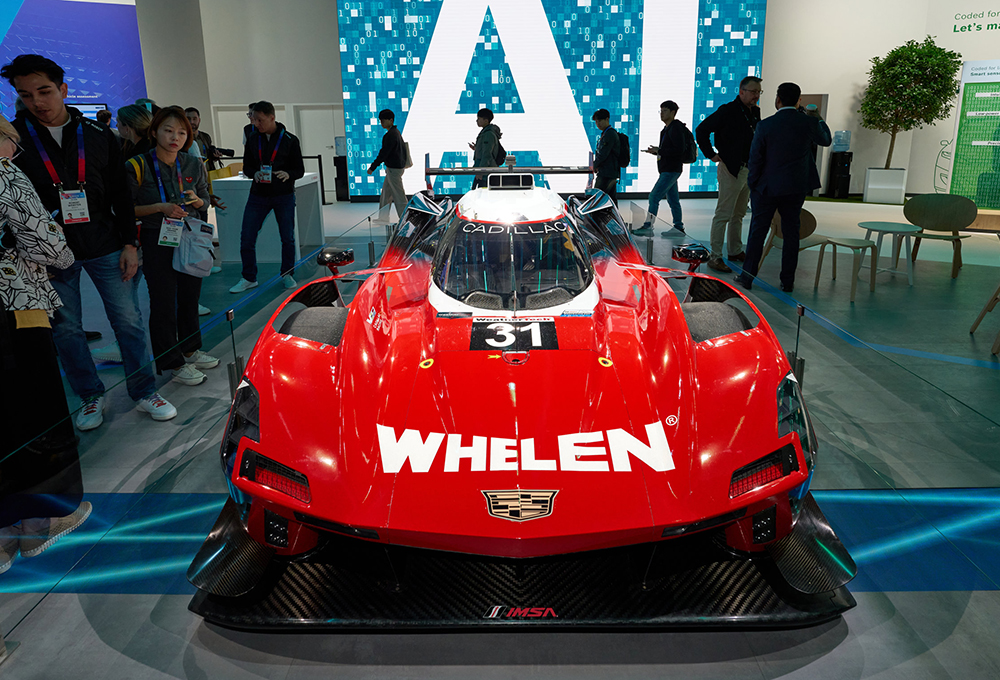 Whelen Engineering Cadillac Racing 的 WeatherTech SportsCar Championship 第 31 號賽車。(Steve Fecht)
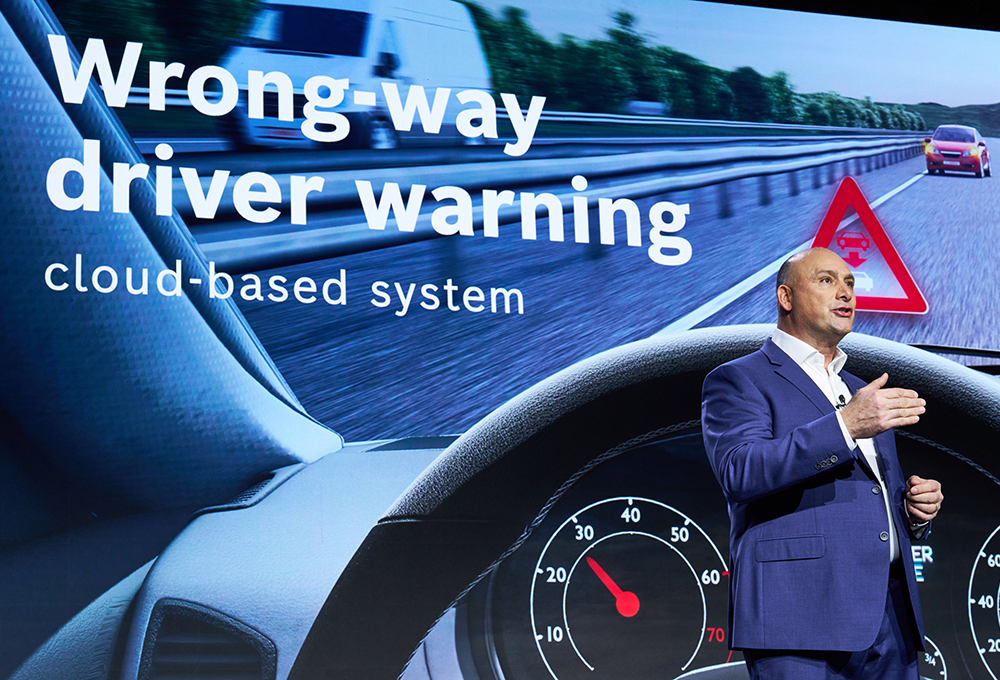 博世北美區總裁Paul Thomas在拉斯維加斯舉行的2025年消費電子展上發表講話。(Steve Fecht)