深入研究REE公司出色的商用卡車底盤的懸架和控制系統就會發現,這兩個系統都采用了可以獨立控制的模塊化設計。
REE Automotive公司計劃通過推出P7電動車底盤,一舉成為中卡領域的技術顛覆者。P7底盤的框架圍繞“REEcorners”懸架構建,后者是REE專有的線控模塊化懸架。REE稱其通過將組件納入底盤和車輪之間的區域內,成功設計出完全平坦的P7底盤,從而為乘客、貨物和蓄電池騰出高達35%的內部空間。
REE Automotive的工程副總裁Peter Dow在接受SAE采訪時表示:“REEcorners懸架系統是我們打造的這款卡車的核心技術,令我們能夠實現理想的車輛動力學性能。我們不斷嘗試打造一款能夠帶來驚喜體驗且易于駕駛的卡車。”
初版REE P7底盤將提供兩種配置:純底盤和帶駕艙底盤。兩種配置均可根據客戶的具體要求和應用場景為3-5級中卡定制。據REE介紹,采用P7底盤制造的卡車具有業內最低的上車高度,可搭載自動駕駛平臺,可使用蓄電池或燃料電池供電。
P7的懸架和底盤設計與傳統中卡截然不同。與傳統的梯形框架和鋼板彈簧設計相比,P7底盤的內部結構更接近于一輛國際汽車運動協會(IMSA)GTP級別的賽車,而非一輛貨車。
REEcorners模塊由帶橫向轉向連桿的鋁制上下控制臂,以及帶線性螺旋彈簧的固定阻尼率雙油壓減震器組成。每個角模塊還集成了一個輪轂、驅動橋和一只四活塞布雷博(Brembo)卡鉗。
車輛的所有關鍵功能都集成在位于每個車輪的四個單獨角模塊中,包括轉向、制動、懸架、動力總成和底盤控制。這意味著P7的四個車輪是完全獨立的,但可通過每個角模塊中負責所有功能的單一電子控制單元(ECU)進行控制。此外,所有車輛功能控制均已實現電氣化(即線控驅動、線控轉向和線控制動)。
Dow表示:“每個角模塊的驅動、轉向和制動裝置都是獨立管理的。我們一直在研究如何將大量控制系統集成進底盤,如扭矩矢量控制和后輪轉向。我們希望研發出一款響應迅速的懸架系統,使我們能夠集成這些系統。”
P7底盤主要針對3-4級中卡設計,但也可應客戶的要求集成到5級卡車中。Dow表示:“集成到5級卡車時,唯一的變化是彈簧部分。為降低懸架的動態高度,我們采用了雙減震器。同時,為了使用螺旋彈簧,我們需要盡可能降低靜態高度。”
據REE介紹,P7懸架的四個角完全相同,這不僅降低了制造成本和復雜性,同時還能更好地控制底盤。Dow解釋說:“有些部件會隨角模塊的位置調整。例如,安裝前剎卡鉗還是后剎卡鉗取決于角模塊安裝在卡車的哪一側。但無論選擇哪種,我們的軟件都能進行補償。”
Dow補充道:“實現上述功能的前提是每個角模塊都有一個便于其在一小時內完成安裝和更換的編號。我們采用了自動連接高壓和低壓系統的復式連接器,因此無需在角模塊安裝高壓接線。我們正在嘗試通過選擇的組件盡可能使卡車底盤的外部接近傳統設計。例如,我們選用的制動卡鉗、轉子和駐車制動系統均為布雷博的現有產品。”
P7底盤的制動系統采用了100%線控制動技術,其中各組件由布雷博供應,包括Sensify智能制動系統的部分組件。Dow介紹說:“P7的制動系統采用了部分Sensify系統,我們利用布雷博制動系統管理對制動盤和剎車片施加的壓力。然后,我們用自己的應用程序代碼幫助該系統管理防抱死制動(ABS)等其他系統。”
該制動系統采用了布雷博制動執行器,搭配一個可在制動系統中產生高達115 bar(1668 psi)壓力的48V系統。Dow解釋說:“該制動系統使我們能夠靈活掌控車輛,實現四個角模塊各自獨立的制動控制。”
他表示:“我們能夠準確控制車輛運動,同時獨立控制卡車四個角模塊的驅動、制動和轉向功能。之所以能做到這一點,是因為每個角模塊都有負責管理轉向、制動和牽引力的獨立ECU。此外,我們還有一個可以管理所有角模塊動作的中央控制單元。例如,當駕駛員發出偏航指令時,該系統可通過調整轉向角、牽引力或扭矩矢量控制,響應其指令。”
P7底盤還配備了一整套先進的安全系統,如主動偏航控制系統。REE公司實施了全面的系統測試(包括在瑞典北極圈進行測試),確保P7在最惡劣的條件下也能保持穩定。
Dow表示:“在摩擦系數較低的冰湖面上,主動偏航系統能夠消除任何因素引起的過度轉向。如果車輛過度轉向,我們可使用扭矩矢量控制以及后輪轉向技術來防止車輛打滑,保障卡車行駛平穩。”
Dow還對驅動系統的控制策略做出了解釋。他介紹稱:“在行駛初期,車輛主要依靠前輪提供驅動力。P7上安裝了一個懸架行駛傳感器,使我們能夠了解車輛的負載水平。這樣,車輛就能夠在負載增加時,將動力傳送到后輪。”
REE在其測試中發現,當車輛負載達到4級中卡的上限時,改變后輪轉向比將有助于提高車輛在變道時的穩定性。Dow解釋說:“后輪轉向系統在20 mph(32km/h)的車速范圍內照常運行,并在接近該限值時逐漸關閉。此外,也可選擇使用防甩尾功能。如果駕駛員處于停車位,不希望后輪轉向系統啟動,駕駛員就可利用防甩尾功能,在車輛至少駛離車位后再啟用后輪轉向系統,防止車輛尾部與周圍的物體發生刮擦。”
他補充道:“當車速達到更高水平時,如50-60mph(80-96km/h),后輪轉向系統就會再次啟用,以配合高速行駛下的轉彎和變道等操作。車輛后輪轉向系統的算法和控制策略確保了低速行駛時的機動性和高速行駛時的穩定性。”主動后輪束角和主動外傾角均可通過后輪轉向系統進行管理。Dow表示:“由于四個角模塊真正實現了獨立控制,各角模塊之間并無防傾桿等連接裝置。每個角模塊都安裝了可人工調整的具備合理剛性的懸架。目前,我們正在研發根據負載水平管理車輛側傾運動的控制軟件。”
Dow的團隊還必須保證P7底盤的懸架可提供足夠的空間來安裝雪地防滑鏈等組件。Dow表示:“我們能夠使P7的轉向角達到32度。”
P7底盤懸架系統的出色之處在于它被設計成一種現成技術,可根據安裝的角模塊和卡車的負載水平輕松進行改裝。
Dow表示:“我們一直在研究如何減少材料用量、提高產量,從而確定合理的價格。公司位于英國的制造中心的年產能可達到4萬臺。我們希望打造出適用于盡可能多車型的P7底盤。目前唯一需要調整的是彈簧剛度。”
P7上的所有金屬結構、副車架、叉臂和萬向節均由REE自主設計并制造。轉向執行器由兩家外部供應商供應。Dow解釋說:“我們盡可能在系統中采用兩家供應商的產品。中央驅動單元是一個集成了電機、逆變器和變速箱的3合1裝置,通過帶有乙二醇界面的介電油進行冷卻。介電油及乙二醇界面均由一家外部供應商供應。”
P7的主要目標市場是北美,但REE也計劃在其它地區推出P7。Dow提到:“我們設計的這款產品是面向全球銷售的。底盤子系統主要針對北美的要求設計,但我們也針對歐洲和日本采取了設計保護措施。為滿足歐洲地區的要求,我們已在卡車前端設計了碰撞和潰縮區域,盡管北美地區的車型不需要這些設計。”
REE已宣布,潘世奇卡車租賃公司(Penske Truck Leasing)即將開始向有意開展車隊電氣化改造的客戶提供REE電動汽車,客戶可以試駕,也可以訂購。潘世奇采購與車隊規劃高級副總裁Paul Rosa 表示:“我們期待REE公司的線控汽車加入我們的電動卡車陣容,讓我們的車隊客戶有機會試駕該車輛并親身體驗這項技術。”
REE Automotive is aiming to be a major disruptor in the medium-duty truck space with the rollout of its P7 EV chassis. The P7 frame is built around its “REEcorners” suspension, which are modular suspension units featuring REE’s x-by-wire design. By packaging components into the area between the chassis and the wheel, REE claims that it was able to design the P7 with a completely flat chassis with up to 35% more interior volume for passengers, cargo and batteries.
“The REEcorners suspension system is the core of the technology that we built this truck around,” Peter Dow, VP of engineering for REE Automotive, said during an interview with SAE Media. “It also allows us to achieve the level of vehicle dynamics we were looking for. We were trying to make a truck that was very exciting and easy to drive.”
The REE P7 Chassis will initially be offered in two configurations: a stripped chassis and cab/chassis. Both can be customized to customer specifications and use cases for Class 3-5. REE is claiming that vehicles built on the P7 Chassis have the industry’s lowest step-in height, are autonomous ready, and can be powered by either batteries or fuel cells.
Intelligent integration
The P7 is a radical departure from traditional medium-duty trucks in terms of suspension and chassis design. Compared to traditional ladder-frame, leaf spring designs, the P7 looks closer to an IMSA GTP machine under the skin than a delivery van.
The REEcorners are comprised of aluminum upper and lower control arms with a lateral link for steering and twin fixed-rate oil-charged dampers with linear-rate coil springs. Each corner also integrates a hub and drive axle with a four-piston Brembo caliper.
The corners integrate all critical functions including steering, braking suspension, powertrain and chassis control into a single module at each wheel. This means that all four wheels of the P7 are completely independent but can also be managed by a single ECU that controls all individual functions at each corner. All vehicle function controls are also electrified (i.e., drive-, steer- and brake-by-wire).
“All of the drive unit, steering and braking is managed at each individual corner,” Dow said. “We were looking into integrating a lot of control systems, such as torque vectoring and rear steer. We wanted a responsive suspension system to allow us to integrate those systems.”
The P7 was designed principally for Class 3 and 4 configurations but can also be outfitted for Class 5 duty should a customer desire. “The only thing we change for Class 5 is the springs,” Dow said. “We went with the twin damper setup because we wanted to reduce the travel height of the suspensions. In order to use coil springs, we needed to get the static height as low as possible.”
Cornering the market
All four corners of the P7’s suspension are identical, which according to REE reduces cost and complexity in manufacturing while also allowing for greater control over chassis behavior. “Certain things will change with the location of the corner,” Dow explained. “You will have a leading or trailing caliper for brakes depending on which side of the truck it is installed on, but our software compensates for that.”
Dow continued, “The whole premise is really about one part number for each corner that can be interchanged on and off the truck within a one-hour window. We have a multi-connector that connects the high- and low-voltage systems automatically, which means we have no high-voltage connections at the corners themselves. We’re trying to keep this outboard section of the truck as conventional as possible with the components we’re choosing. For example, the brake calipers, rotors and park brake system are all off-the-shelf pieces from Brembo.”
The P7’s brake system is 100% brake-by-wire, with various components supplied by Brembo including part of its Sensify system. “It has elements of the Sensify technology,” Dow said. “We have their system managing the pressure to disc and pad, and on top of that our application code assists to manage the ABS and other systems.”
The system uses a Brembo braking actuator with a 48V system that then drives up to 115 bar (1,668 psi) of pressure through the braking system. “Using this system means we get flexibility in terms of how we control the system. We can brake independently on all four corners,” Dow explained.
“We have a lot of control over the motion of the vehicle,” he said. “We have independent control over the drive, brake and steering of all four corners of the truck simultaneously. The way our control strategy works is each corner has its own ECU which manages the steering, braking and traction. We then have a central control unit that manages each corner in terms of action. For example, a driver will ask for a yaw command and that yaw may come from the steering angle or it may also come from the traction or torque vectoring.”
Safety (and stability) first
The P7 features a full suite of advanced safety systems such as active yaw control. REE has performed extensive testing to ensure the P7 will remain surefooted even in the worst conditions including testing at the Artic Circle in Sweden.
“On the low mu ice lakes with our active yaw system, we were able to eliminate any form of oversteer,” Dow said. “If you try and oversteer, we have the ability to use torque vectoring as well as the rear steer to keep the vehicle from spinning. Which means we have a very stable truck.”
Dow also explained the control strategy for the drive system. “We’re predominantly front-biased to start with in terms of drive,” he said. “We actually have a suspension travel sensor which allows us to understand what sort of load we have in the vehicle, which enables us to shift power to the rear as we gain load there.”
REE found during its testing that once load begins to reach the top of Class 4, it is helpful to vary the rear steering ratio to provide more stability during lane changes. “Rear steer will be active up to 20 mph (32 km/h) and then we blend it out as we reach that plateau. We also have the ability to select what we call anti-swipe,” Dow explained. “If you’re in a parking bay where you don’t want the rear steer to be active, we don’t engage the rear steering until you’ve traveled at least one vehicle length. Then the rear steering is brought online again to ensure that a driver does not tail swipe anything next to them.”
“Once we go to higher speeds, say 50-60 mph (80-96 km/h), we actually then bring the rear steering back in parallel for instances such as high-speed cornering and lane change maneuvers,” he added. “So we really use our algorithms and control strategies of the rear steer to provide maneuverability at low speed and stability at high speed.” Active rear toe is managed via rear steer. Active camber control could also be added. “Because we are truly independent across all four corners, there’s no linkage across corners like anti-roll bars,” Dow said. “We have a reasonably stiff suspension at each corner that we can work with. We are then looking at the control software to manage that roll motion of the vehicle depending on load.”
Dow’s team also had to ensure the P7’s suspension provided enough clearance to fit components such as snow chains. “We have enough ability to get up to 32 degrees of steering angle on this unit,” he said.
Dollars and sense
The beauty of REE’s approach to the P7’s suspension system is that it’s an existing technology that can easily be modified based on what corner the unit is being mounted on and what load the truck will be carrying.
“We were looking at how we can get volume to achieve a price point while using the least amount of materials,” Dow said. We have the capacity to make 40,000 of these units per year at our manufacturing center in the U.K. We wanted to have a configuration that was applicable to as many vehicle configurations as possible. The only thing we tune is the rate of the springs.”
All the metal structures, subframes, wishbones and knuckles are REE’s own designs that are being manufactured. The steering actuator is from twin-sourced external suppliers. “We’re trying to dual source as many options as possible in the system,” Dow explained. “The central drive unit is a 3-in-1 unit (motor/inverter/gearbox) that is cooled by a dielectric oil with a glycol interface that is also sourced from an external supplier.”
The main target market for the P7 is North America, but that’s not to say REE doesn’t have plans to bring the P7 elsewhere. “We’ve designed this to be a global product,” Dow said. “The chassis subsystem was designed principally for North America but with design protection for Europe as well as Japan. We’ve engineered crash and crumple zones in the front of the truck to look at European requirements even though we don’t need them for the U.S.”
REE has announced that Penske Truck Leasing will begin to offer Powered by REE EVs to its customers interested in electrifying their fleets for demos and orders. “We are looking forward to adding REE’s by-wire vehicle to our electric-truck lineup and giving our fleet customers the opportunity to demo the vehicle and experience the technology firsthand,” said Paul Rosa, senior VP of procurement and fleet planning at Penske.

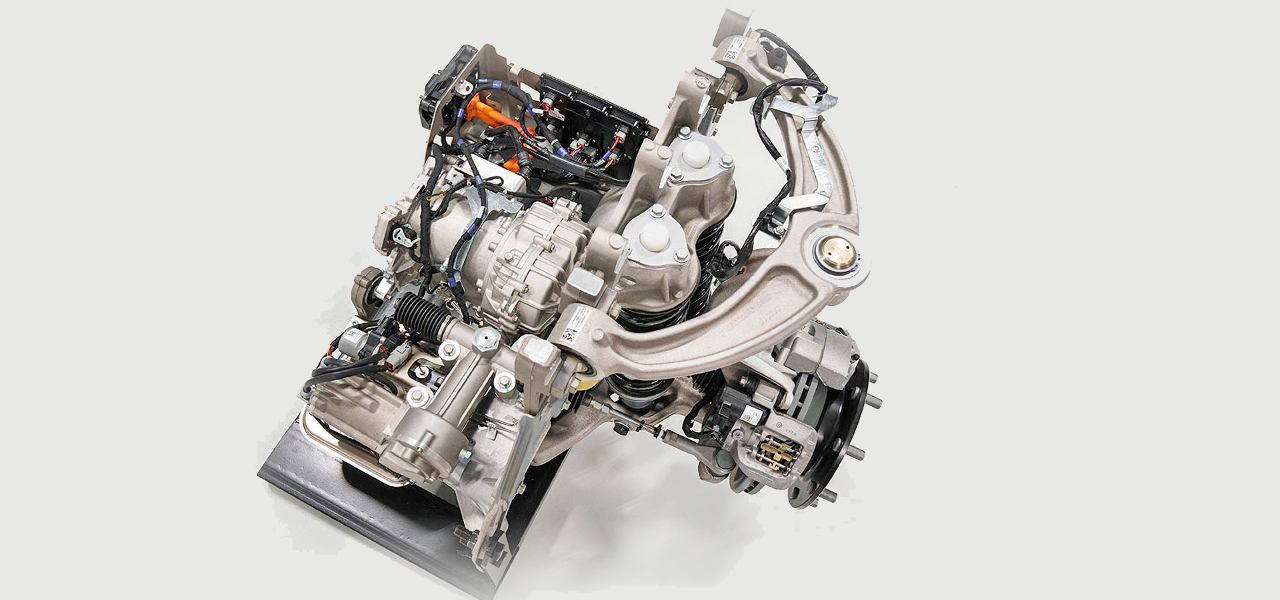 REE公司稱,P7底盤的4個角模塊具有相同的構造,降低了制造成本和復雜性。(REE)
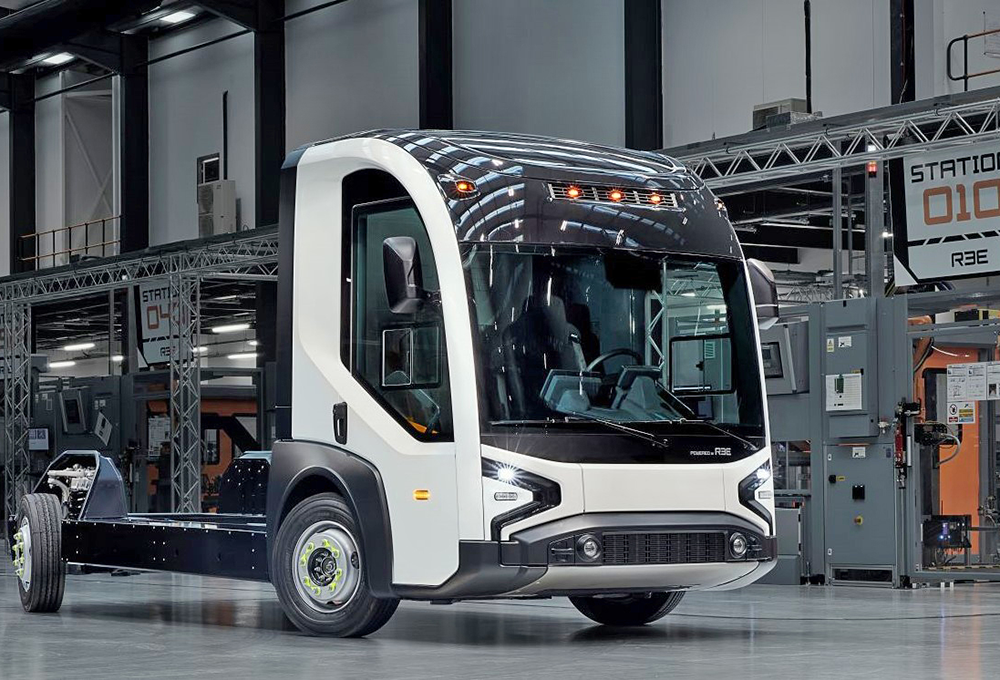 REE P7底盤最初將提供兩種配置:純底盤和帶駕艙底盤。(REE)
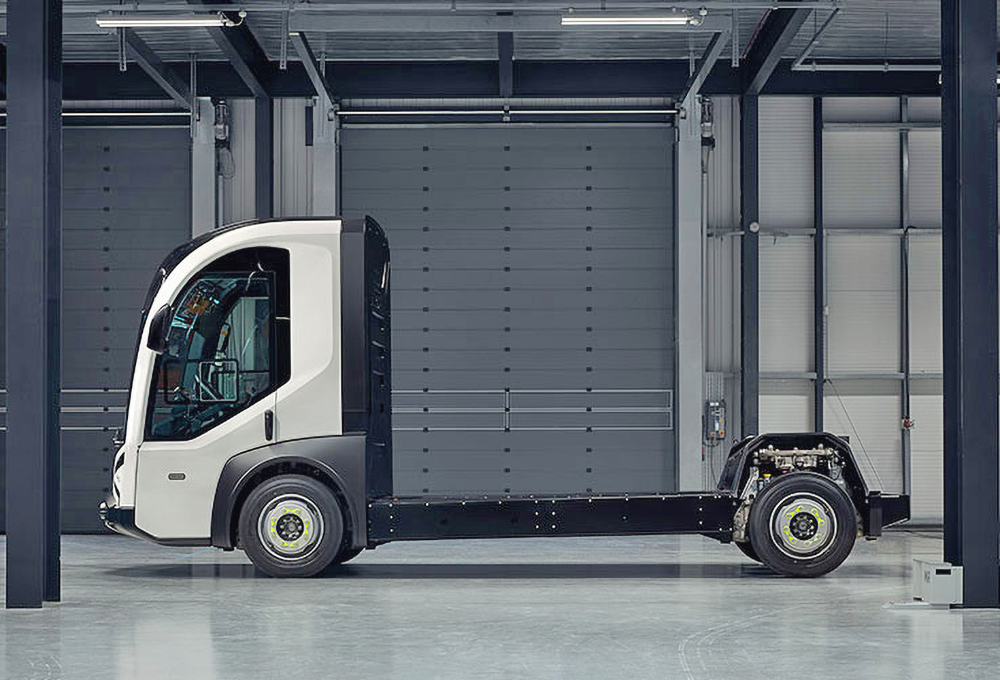 通過在底盤和車輪之間的區域封裝組件,REE 聲稱它能夠設計出完全平整的P7底盤。(REE)
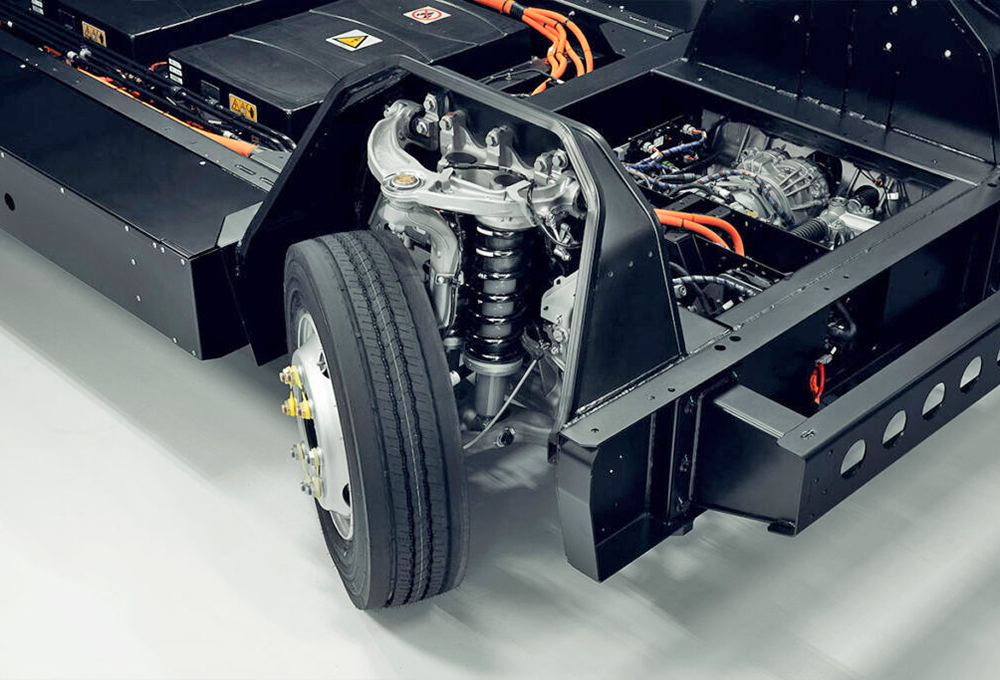 P7的制動系統采用 100% 線控制動,各種部件均由布雷博提供,包括其 Sensify 系統的一部分。(REE)
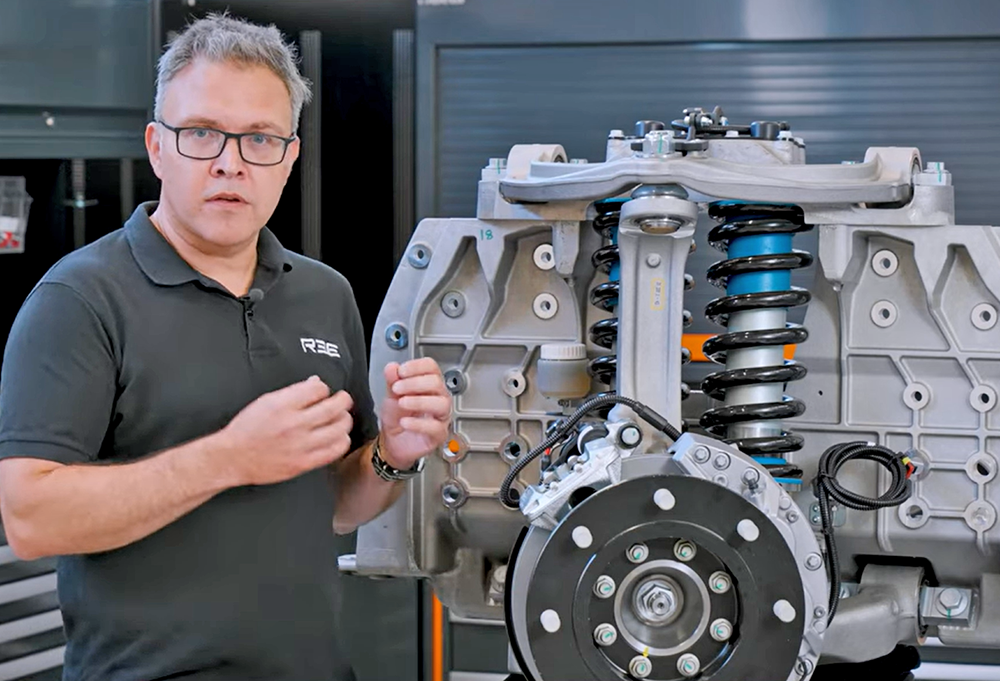 Peter Dow,REE Automotive 工程副總裁。(REE)