沃爾沃在ACT Expo 2024上首次公開自動駕駛卡車VNL Autonomous,并宣布電動挖掘機EC230上市。
沃爾沃在2024年拉斯維加斯先進清潔運輸博覽會(ACT Expo)上發布了幾項重要公告,并重申了到2040年實現凈零排放,以及卡車和非道路機械100%停用化石燃料的目標。
沃爾沃卡車北美總裁Peter Voorhoeve表示,“電動卡車在推動可持續未來方面起著重要作用,但僅靠電動卡車是遠遠不夠的,我們還要關注運輸領域的各個方面。推動可持續未來沒有單一解決方案,我們必須采用電動傳動系、氫燃料電池、內燃機等多種技術,以多管齊下的方式實現零排放卡車。”
沃爾沃計劃通過采用純電動車、可再生柴油和其他非化石燃料來實現其脫碳目標。Voorhoeve表示,“我們將與Westport合作研發液體生物燃料或氫燃料發動機,以履行我們的可持續發展承諾。”
此外,沃爾沃還通過給新出廠的卡車加注可再生柴油燃料來降低碳排放。Voorhoeve表示,“我們的工廠不再使用化石柴油,而是改用氫化植物油(HVO)。換言之,我們將每年使用的110萬加侖傳統柴油替換為等量的HVO,這直接使工廠的二氧化碳排放量減少了85%左右。”
沃爾沃自動駕駛解決方案在ACT展上公布了即將付諸生產的首款自動駕駛卡車VNL Autonomous。該卡車采用Aurora Innovation公司的Aurora Driver自動駕駛系統,并由沃爾沃和Aurora的工程團隊共同集成并打造為SAE L4級自動駕駛系統。VNL Autonomous將在位于維吉尼亞州都柏林的沃爾沃新河谷(NRV)工廠進行組裝。
沃爾沃自動駕駛解決方案總裁Nils Jaeger表示,“VNL Autonomous是在我們的標準化全球自動駕駛技術平臺上打造的首款車型,未來我們將會推出更多車型,并為沃爾沃集團旗下所有卡車品牌配備自動駕駛功能。”
Aurora Driver由人工智能軟件、雙計算機、探測范圍超過400米(1300英尺)的專有激光雷達傳感器、高分辨率攝像頭、成像雷達和其他傳感器組成。沃爾沃表示,VNL Autonomous基于平臺的研發策略能夠讓公司將其自主研發的虛擬駕駛系統用于卡車及限制性應用機械。
沃爾沃自動駕駛解決方案首席產品官Shahrukh Kazmi表示,“我們首先將安全置于首位,從零開始構建沃爾沃VNL Autonomous,通過配置多個高可靠性冗余系統來減少潛在的緊急情況。我們并將這些冗余系統整合在其中,以確保對所有安全關鍵組件都進行了主動復制。”
沃爾沃卡車還在ACT展上宣布推出按需供應項目(Volvo on Demand)。該項目旨在通過推廣卡車即服務(TaaS,Truck-as-a-Service)商業模式,以提高電動卡車的普及率。
沃爾沃服務與解決方案副總裁Charles Carter表示,“通過該項目,客戶無需進行大量前期投資即可將純電動卡車輕松編入車隊,以測試純電動卡車技術并了解運營電動車隊所需的條件。”
該項目將提供25輛8級沃爾沃VNR電動卡車,其中包括20輛六電池配置6x4牽引車和5輛四電池配置4x2牽引車。據報道,客戶可以靈活選擇項目期限,最短為12個月。
沃爾沃卡車區域副總裁Jared Ruiz表示,“目前,一些客戶已經成功部署了VNR電動卡車,而且正在尋求擴大運營規模。許多客戶表示有意向將VNR電動卡車納入其運營車隊中,但他們想先了解該車在其具體應用中的適用性。”
目前,共有57家客戶正在實際運營中使用470輛沃爾沃VNR電動卡車。Voorhoeve表示,“電動和燃油卡車都是運輸工具,我們希望沃爾沃純電動卡車的正常運行時間能達到95%。”
沃爾沃可持續發展和生產力服務副總裁Ray Gallant介紹了沃爾沃建筑設備(Volvo CE)在可持續發展方面取得的最新進展,以及采用電動挖掘機的多個試點項目的成果。Gallant表示,“隨著電氣化轉型步入正軌,非道路領域也面臨著千載難逢的機遇。通過與道路領域的同事合作,我們極大地加快了電氣化轉型的速度。”
Gallant還簡要介紹了Volvo CE的電動產品推廣總體策略。
他指出,“可持續性目標不是一蹴而就的,而是需要在產品的整個生命周期中不斷提升。為此,必須采取三個關鍵步驟。首先,必須證明,新設備和可持續能源系統的性能與之前的水平相當,或者更加出色。如果無法做到這一點,就很難說服客戶改用新設備。”
“此外,作為OEM,我們有責任證明并確保新型可持續能源系統的充電(補能)基礎設施可及性,無論該能源是電動、氫能,還是替代燃料。我們必須確保客戶的設備能夠及時充電(補能)并持續運轉。最后,也是最重要的一步。在我們證明了產品性能和充電或補能設施的可及性之后,就可以與客戶合作探索可持續設備比現有設備表現更為出色的新應用領域。”
2019年,沃爾沃推出了首批純電動非道路機械(包括3臺小型挖掘機和2臺小型緊湊型裝載機),這些機械于2021年首次在美國市場上市。在2024年ACT展的新聞發布會上,沃爾沃宣布配備兩個新充電裝置的EC230電動挖掘機在北美上市。EC230重達23噸,創下了電動挖掘機的新紀錄。據悉,目前市場上的大多數純電動挖掘機都是小型挖掘機。
沃爾沃已在洛杉磯、斯德哥爾摩和不列顛哥倫比亞等多個地區開展了多個EC230試點項目,涉及多個應用領域。據報道,試點項目參與方之一的佛羅里達州海岸廢物回收公司(Coastal Waste & Recycling)利用一輛EC230每小時處理多達100噸施工、拆遷渣土和綠色垃圾。EC230上午工作,中午充電,下午繼續工作,因此該公司每天可用它進行8小時作業。
Gallant指出,“該項目證明,盡管EC230在生產過程中的碳足跡高于柴油挖掘機,但僅在使用800小時后,它節省的燃料和降低的碳排放就抵消了生產過程中的碳足跡。此外,成本方面也同樣重要。因為如果一個解決方案只能減少排放而不具有經濟效益,它就無法迅速推廣。”
Volvo CE還宣布與Portable Electric和Utility Innovation Group (UIG) 在充電產品領域開展合作。Volvo CE將分別與這兩家公司合作研發用于緊湊型設備的2級便攜式充電裝置和高功率直流便攜式充電裝置。這些充電裝置與EC230一起在ACT展上進行展出。
Gallant指出,“電動機械最顯著的優勢是可以減少排放和大幅降低噪聲和振動,這些設備在注重這些方面的多種應用領域均表現出色。與早期用戶的合作,已經讓我們開發出許多獨特的應用場景和解決方案。”
Volvo made several key announcements at the 2024 ACT Expo in Las Vegas. The company also reaffirmed its goal of reaching net-zero carbon emissions with a 100% fossil-free fleet of trucks and off-highway machines by 2040.
“The sustainable future is not only about electric trucks, though they do play a very important role,” said Peter Voorhoeve, president of Volvo Trucks North America. “It’s about all the things that we transport. For a sustainable future, there is not one silver bullet. We will have different technologies that all enable zero-emissions trucks. This will include electric drivelines, hydrogen fuel cells, and internal combustion engines.”
Volvo’s plan to decarbonize will involve BEVs as well as renewable diesel and other fossil-free fuels. “One partnership with Westport demonstrates this commitment to sustainability,” Voorhoeve said. “Together with Westport, we will develop engines that will be able to burn liquid biofuel or hydrogen.”
Volvo is also reducing its own carbon footprint by filling trucks with renewable diesel fuel as they come off the factory line. “We don’t use [fossil] diesel at our factories anymore,” Voorhoeve said. “We use HVO. By doing this, we will, on a yearly basis, move from 1.1-million gallons of traditional diesel to 1.1-million gallons of HVO. This has an immediate impact on the CO2 output of our factory by about 85%.”
Autonomy announced
Volvo Autonomous Solutions unveiled its first production-ready autonomous truck, the VNL Autonomous, at ACT Expo. The truck features the Aurora Driver system from Aurora Innovation. Volvo and Aurora’s engineering teams collaborated to integrate the system and create an SAE level four automated system. The Volvo VNL Autonomous will be assembled at Volvo's New River Valley (NRV) plant in Dublin, Virginia.
"This truck is the first of our standardized global autonomous technology platform, which will enable us to introduce additional models in the future, bringing autonomy to all Volvo Group truck brands,” said Nils Jaeger, president of Volvo Autonomous Solutions.
The Aurora Driver consists of Al software, dual computers, proprietary Iidar sensors that can detect objects more than 400 meters (1,300 ft.) away, high-resolution cameras, imaging radar and additional sensors. Volvo states that the platform-based design approach of the VNL Autonomous will enable the use of its in-house developed virtual driver for trucks and machines working within confined applications.
"Our platform engineering approach prioritizes safety by incorporating high-assurance redundancy systems designed to mitigate potential emergency situations," said Shahrukh Kazmi, chief product officer at Volvo Autonomous Solutions. "We built the Volvo VNL Autonomous from the ground up, integrating these redundancy systems to ensure that every safety-critical component is intentionally duplicated.”
Now on demand
Volvo Trucks also announced Volvo on Demand at ACT Expo, an initiative that provides a Truck-as-a-Service (TaaS) business model to increase the adoption rate of electrified trucks.
“Volvo on Demand is the easiest way for customers to add a battery-electric truck to their fleet by providing the ability to test the technology and understand the requirements to operate an electric fleet without a substantial upfront investment,” said Charles Carter, vice president, services and solutions.
The program will use 25 Class 8 Volvo VNR Electric trucks, including 20 6x4 tractors with the six-battery configuration and five 4x2 tractors with the four-battery configuration. The program will reportedly provide customers with flexible term options as short as 12 months.
“Today, we have customers who’ve successfully deployed the VNR Electric and are continuing to seek ways to scale their operations,” said Jared Ruiz, regional VP of Volvo Trucks. “We have a number of customers who have expressed interest in adding the VNR Electric to their operation but want to understand how it will fit within their specific applications.”
Volvo currently has 470 electric VNR trucks on the road with 57 different customers. “An electric truck is the same as an ICE truck in that it is an asset that is meant for transportation, which is why we want to have an uptime of 95% for our battery-electric trucks,” Voorhoeve said.
Electrified excavation
Ray Gallant, VP sustainability and productivity services, provided an update on Volvo CE’s sustainability efforts and the results of several trial programs that the company has run using electric excavators. “It’s an exciting time in the off-road segment as this transformation starts to gain traction,” Gallant said. “Collaborating with our on-road-focused colleagues has helped us accelerate the transition in thoughtful and significant ways.”
Gallant outlined Volvo CE’s broad strategy for gaining adoption of the firm’s electrified offerings.
“You don’t achieve sustainability, you’re always working to be more sustainable throughout the lifecycle of your products,” he said. “There are three key steps to creating that sustainability. First, you have to prove that the new equipment and sustainable power sources will perform at least as well as the machines they’re replacing. If we can’t do that, it’s very hard to convince customers to make the switch to new equipment.
“The second step is that we have to prove and ensure as OEMs that there is a charging infrastructure for these new sustainable power systems, be it electric, hydrogen or alternate fuels. We have to make sure that customers can refuel and run their machines continually. The third is probably most important. Once we have the product and charging or refueling proven, then we can work with our customers to find new applications that the sustainable machines can do better than the ones they’re replacing.”
Volvo introduced its first battery electric off-highway machines (three small excavators and two small compact loaders) in 2019 and first brought them into the U.S. in 2021. During its press conference at ACT Expo this year, Volvo announced that the EC230 electric excavator is now commercially available in North America with two new charging units. The EC230 is a 23-ton unit that represents a new high watermark for electrified excavators. According to Volvo, most electric-only machines currently on the market are compact models.
Volvo has run several pilot programs with the EC230 in locations such as Los Angeles, Stockholm, and British Columbia in a variety of applications. One program participant was Coastal Waste & Recycling in Florida, which reportedly used an EC230 to process up to 100 tons of construction and demolition debris and green waste per hour. The machine was used for a morning shift, charged during lunch and then used again for the afternoon, allowing the company to get eight hours of work from the machine each day.
“This project demonstrated that, even though production of the machine has a higher carbon footprint in comparison to its diesel equivalent, the fuel savings and carbon reduction offset that in just over 800 hours of use,” said Gallant. “The cost savings are just as important because if these solutions don’t make financial sense in addition to the emissions reduction, adoption will lag.”
Volvo CE has also announced two new partnerships on charging products. One with Portable Electric for a Level 2 portable charging unit for compact equipment and the other with Utility Innovation Group (UIG) for high-power DC portable charging. Those units were on display at the show, along with the EC230.
“The most prominent benefits of electric machines are the elimination of emissions and the significant reduction in noise and vibration,” said Gallant. “We are seeing this equipment do well in a wide variety of applications where these benefits are really appreciated. Early adopters have brought us many unique opportunities and solutions.”
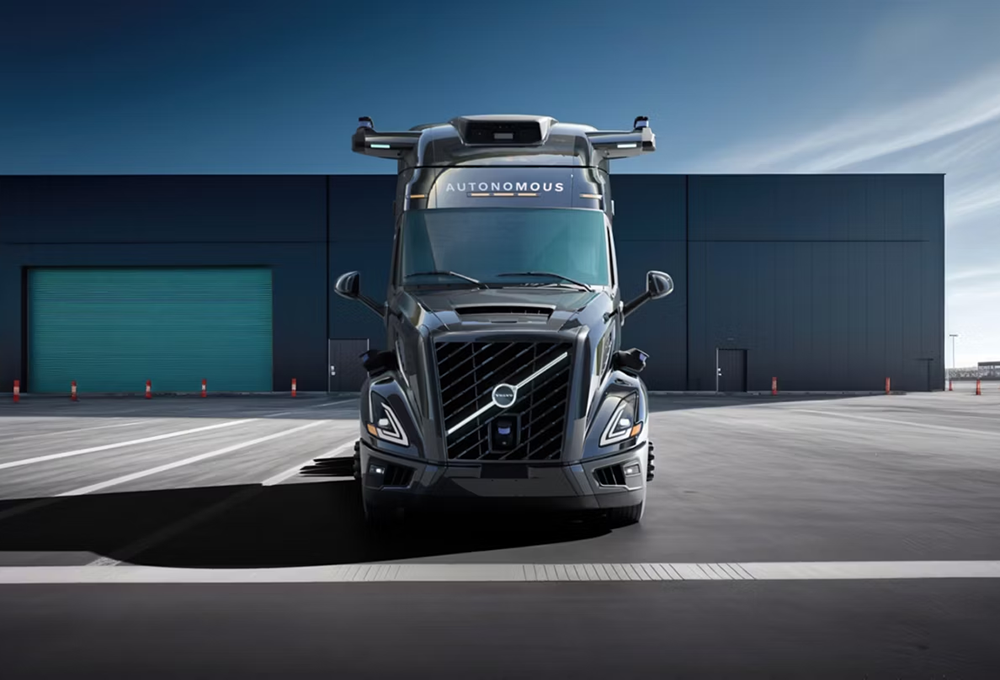 沃爾沃表示,VNL Autonomous可推動其自主研發的虛擬駕駛系統應用于其他領域。(沃爾沃)
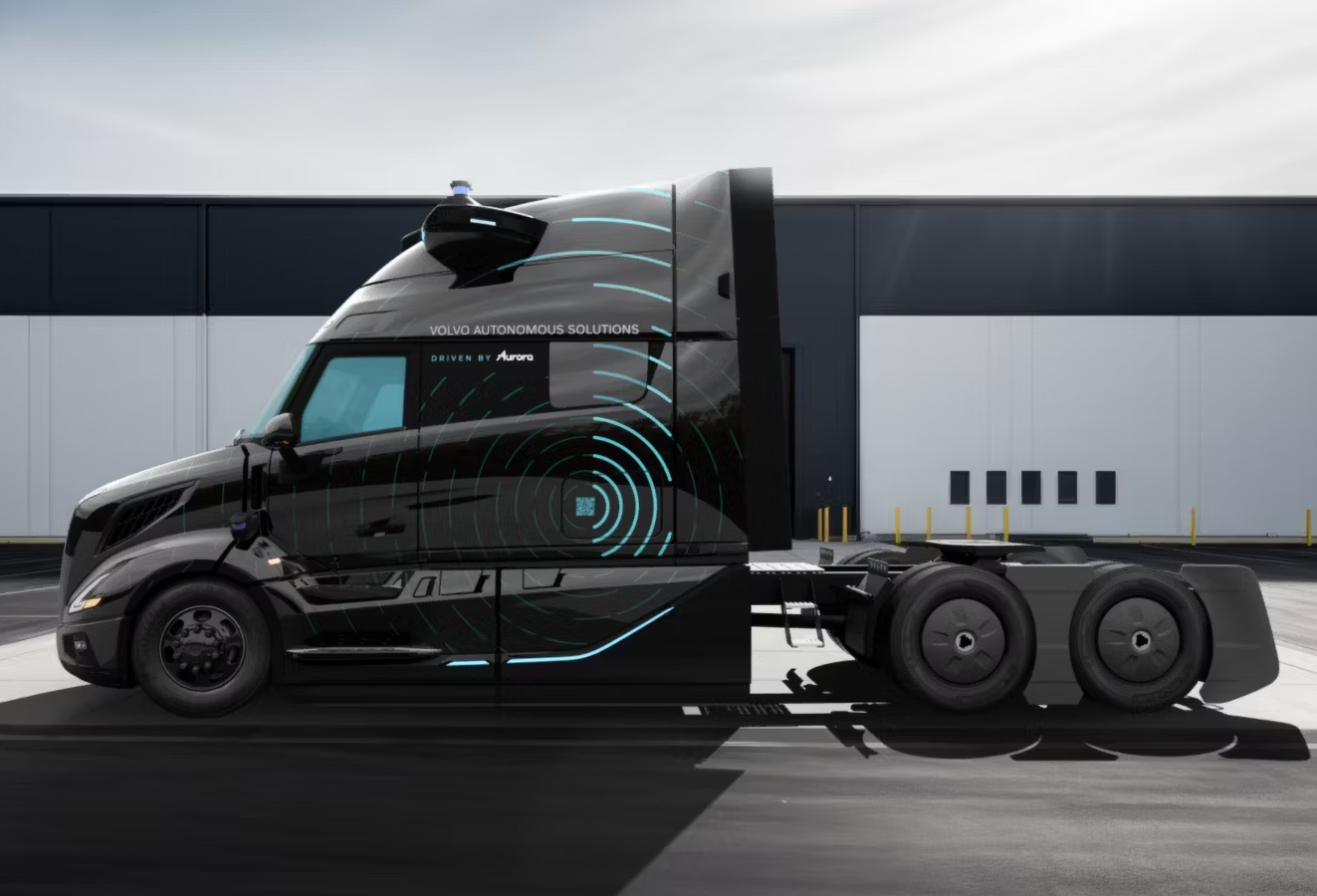 沃爾沃表示,VNL Autonomous 將使其內部開發的虛擬駕駛員能夠用于更多應用。(沃爾沃)
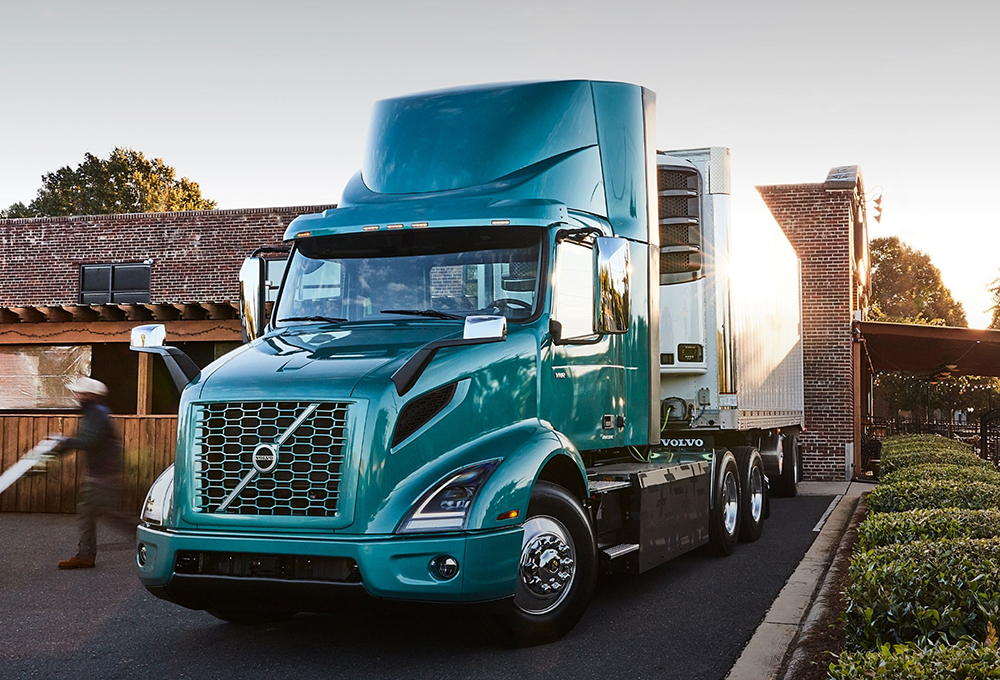 沃爾沃的按需供應項目將使用 25 輛 8 級 VNR 電動卡車。(沃爾沃)
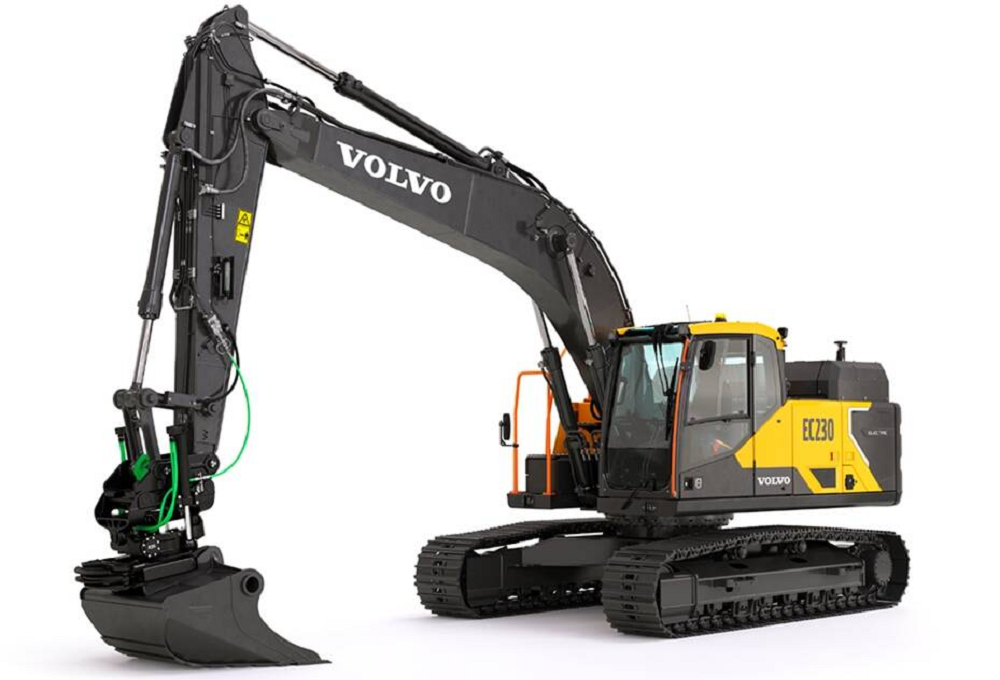 沃爾沃宣布 EC230 電動挖掘機現已在北美投入商用。(沃爾沃)