賞心悅目的硬派復古設計。
如今,創立一家新車企,通常意味著其必會在未來四年內推出一款全新的電動跨界車,但英國石化巨頭英力士公司選擇了另辟蹊徑。
英力士打造了復刻7、80年代路虎衛士(Defender)的Grenadier系列,并推出了汽油和柴油兩種動力版本,旨在向燃油噴射、觸摸屏和倒車攝像頭等技術尚未出現的汽車時代致敬。該系列采用了這些現代技術,但外觀上仍保留了當時的經典元素。
英力士深知,打造一款現代汽車需要生產諸多部件,并需要投入大量的資金和時間。因此,公司選擇從外部采購。例如,Grenadier系列發動機罩下搭載的是寶馬的獲獎產品B58 3.0L渦輪增壓直列六缸發動機,同時撘配與之配套的采埃孚8速自動變速箱。
B58發動機的默認輸出功率和扭矩為382hp和369磅英尺(500牛米),Grenadier系列將其分別調整至281hp和331磅英尺。此舉旨在滿足Grenadier側重越野性能的設計要求,可利用自動變速箱檔把旁的操作桿切換進低速擋。
對于曾經駕駛過70年代、80年代及90年代初期越野車的用戶而言,Grenadier系列能夠引起其懷舊之情。英力士希望減少車上的電子控制模塊(ECM)數量以降低成本,同時希望重現昔日越野車的氛圍——實際成果也正如其所愿。在近期的一次試駕過程中,當我駛至巖石遍布的路段上并轉入低速擋時(換檔桿伴隨著一聲悶響卡緊的手感,令人無比滿足),年輕時似曾相識的駕駛記憶一時涌入我的腦海,我立刻領會了入手Grenadier的意義。
在酷熱的一天(氣溫超過37℃),我在約書亞樹國家公園塵土飛揚的小路上試駕了Quartermaster皮卡和Grenadier SUV。雖然是由新公司打造,但兩款車型均展現出了強大的越野性能,能夠輕松應對沙漠地形的巖石、車轍及沙地等自然障礙。兩款車型均搭配了中央差速鎖和可選配的前后差速鎖,因此在各種地形中行駛均能夠游刃有余。即使處于極度崎嶇的地形中,坐在副駕駛座上的我也能感受到這兩臺越野車的從容不迫。正當我向駕駛員抱怨不夠刺激之時,他立刻以“異常快”的速度下坡,滿足了我對刺激感的需求。
選擇使用循環球式轉向器而非更常見的齒輪齒條式轉向器,是英力士諸多明智的決定之一。理由顯而易見,因為循環球式技術更為穩固,在路況復雜的越野行駛過程中更不易受損。該技術還能夠在復雜的駕駛環境中提供更細膩的逐步遞增的轉向體驗。此外,搭載該技術的車輛即使在崎嶇的地形上行駛,方向盤也不易突然回彈。
經常駕駛越野車的人通常會避免將拇指放在方向盤內側,以減少方向盤突然“打手”時拇指受傷的風險。由于Grenadier系列的轉向比較高,這個問題并不嚴重,不過也存在其它問題……
例如,一些潛在客戶可能無法接受高轉向比在瀝青路面上的表現。這兩款車型在轉向時都需要打很多把方向盤,并缺乏自動回正功能。這并非設計上的缺陷,而是Grenadier車型的一個特色。但對于駕駛過新款路虎或豐田等車型的人而言,Grenadier的轉向體驗截然不同。英力士汽車公司(Ineos Automotive)的執行副總裁Greg Clark向SAE表示,新車主往往需要一段時間來適應差異,通常20分鐘左右就能夠適應這種不同的轉向體驗。
在我親自試駕之后,我發現這款車在公路上的表現雖然不盡如人意,但也不至于勸退客戶。它在鄉間小路的表現并不出彩,在高速過彎時更存在局限性,但這款車并非針對高速過彎場景設計,而英力士公司亦對此開誠布公。已購買或預訂這款車的愛好者可能已充分權衡了其優缺點。對于那些希望向朋友和社群曬出與眾不同的靚車的人來說,他們僅需要準備好迎接全新的駕駛體驗即可。
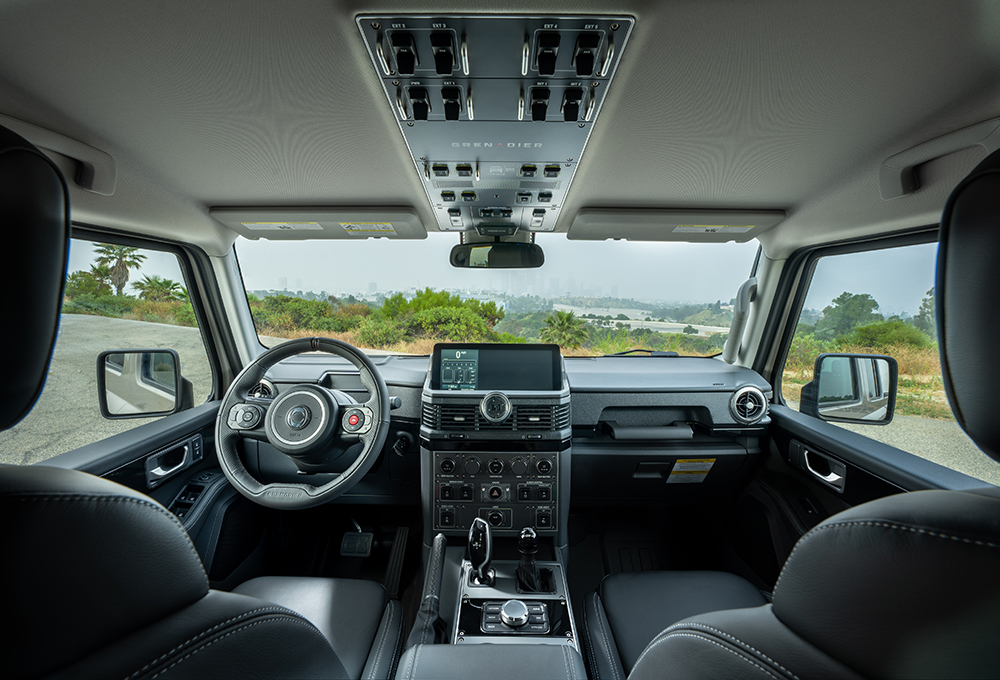
Grenadier的內部體驗與外觀相得益彰。觸摸屏并不負責所有功能的控制,而是主要用于顯示速度計、檔位、燃油信息、越野行駛狀態,以及連接手機播放音樂和使用導航功能等。
位于屏幕下方的大尺寸按鈕用于控制音量、開啟各種氣候功能(包括除霜),以及停車輔助功能。汽車頂棚上部署了差速鎖控制裝置和一系列輔助開關,用于控制車燈、絞盤或車主希望在車上安裝和供電的其它裝置。這些控制按鈕同樣采用了大尺寸設計,不僅美觀,而且對于生活在寒冷氣候區的人而言也具有實用價值,因為即使戴著厚重的手套也不會影響按鈕的操作。
雖然英力士公司在其它初創企業全力押注電動車之際推出這款內燃機車顯得不合時宜,但公司未來也計劃實現電氣化。英力士計劃于2027年推出Fusilier,并提供純電和串聯式混合動力兩種版本。英力士尚未公布新車的大多數細節,但對于該車的內飾是否會沿用英力士一貫的復古美學,讓我們拭目以待。
當被問及公司對電動車的規劃時,Clark表示對業界反感電氣化的一些聲音不能理解,因為電氣化趨勢不可阻擋。當然,英力士未來還是會主打能夠輕松應對各種地形的懷舊特殊用途汽車,并提供汽油和電動兩種動力版本。
Spinning up a new car company in the 2020s typically means there's a new electric crossover being unveiled that may (or may not) come to market sometime in the next four years. British petrochemical company Ineos went in another direction.
The company's petrol and diesel-powered Grenadier lineup resembles the Defenders of the ‘70s and ‘80s. An homage to a time before fuel injection, touchscreens and backup cameras, the Grenadier lineup has all of those features but still looks like something from the time before CDs.
Ineos knew that trying to build many of the elements required to create a modern vehicle would be capital- and time-intensive. So, the company went shopping. Under the hood lies the award-winning B58 BMW 3.0-L turbo inline-six engine, paired with the same ZF 8-speed transmission that BMW uses in its vehicles.
The engine itself has been tuned specifically for the Grenadiers outputting 281 horsepower and 331 pound-feet of torque versus the B58's default 382 hp and 369 lb-ft (500 Nm). This is to match the off-road focus of the vehicle, which uses an actual mechanical shifter next to the BMW-sourced automatic transmission lever to shift the vehicle to lower gearing.
This is where those who have driven off-roaders from the ‘70s, ‘80s, and early ‘90s will enter the nostalgia zone. Ineos wanted to reduce the number of ECMs in the vehicle to reduce cost. The company also wanted to recreate the off-roading vibes of long ago – and has succeeded. As I shifted (more like crammed with a satisfying thud) the vehicle into low ahead of some rock crawling during a recent test drive, memories of doing the same thing in my youth flooded back, and I immediately understood why someone would purchase a Grenadier.
On a triple-digit day on a dusty trail in Joshua Tree, I drove both the Quartermaster pickup and Grenadier Station Wagon. While from a new company, both felt extremely capable of tackling the rocks, ruts, and sand of the desert course. With a locking center differential and optional front and rear locking differentials, the vehicles were never overwhelmed by the terrain. Even during extreme articulation, where I sat shotgun, the off-roader never strained. I complained about the lack of drama to the driver who then descended "quicker than normal" to appease my need for excitement.
One of the more interesting decisions Ineos made was to use a recirculating ball instead of the more common rack-and-pinion steering. The reasoning is fair. Recirculating ball technology is more robust and less likely to be damaged during difficult off-road sessions. It also allows for a more incremental steering experience while tackling the environment. There's also the benefit that the steering is less likely to snap back while on rough terrain.
Frequent off-roaders typically keep their thumbs out of the inside of the steering wheel to reduce the chances of their thumbs being injured when a snap-back occurs. Because the Grenadiers' steering ratio is so high, this is less of an issue. It all sounds great, but…
On asphalt, this design could present a problem for some potential owners. Both vehicles experience quite a lot of play in the steering. There's also a lack of self-centering. It's a feature, not a bug. But for those coming out of, say, a new Land Rover or Toyota, it's an entirely different steering experience. Greg Clark, executive vice president of Ineos Automotive, told SAE Media that new customers often require a bit of a learning curve to adjust. After about 20 minutes, new owners typically become accustomed to the difference, Clark said.
In my time behind the wheel, I found it to be not great on-road but also not a deal breaker. It'll never be a back-roads carving machine. On tight corners at high speed, well, this is not the vehicle for high-speed cornering. Ineos is upfront about this. Enthusiasts who have purchased or pre-ordered the vehicle likely understand the tradeoff. Those looking for something different to impress friends and their community will just have to prepare themselves for a new experience.
The interior experience mirrors the exterior. Instead of the touchscreen taking care of all features, it's mostly there for the speedometer, gear and fuel information, off-roading attitude details and connecting your phone to handle music and navigation.
Large, satisfying-to-push buttons below the screen handle volume control, climate adjustments (including defrost) and even parking assistance. On the ceiling you’ll find controls for differential locks and a series of aux switches for lights, winches, or whatever else an owner wants to install and power on the vehicles. Again, these are all controlled by large buttons. Besides the aesthetic appeal, there’s value for those who live in colder climates as these can be operated while wearing heavy gloves.
While Ineos is a bit of an outlier bringing an ICE vehicle to market while other startups are going all-in on EVs, there is electrification in its future. The Fusilier is slated to land in 2027 as a BEV or a series hybrid. Ineos has been mum on most of the details about the vehicle, but it'll be interesting to see if the interior continues with the automaker's analog-centric aesthetic.
When asked about the electric future, Clark said he was confused by some of the hatred directed towards the powertrain and said that electrification is inevitable. Of course, for Ineos, the future is wrapped in nostalgia and purpose-built vehicles powered by both gasoline and electrons that are ready to tackle terrain with ease.

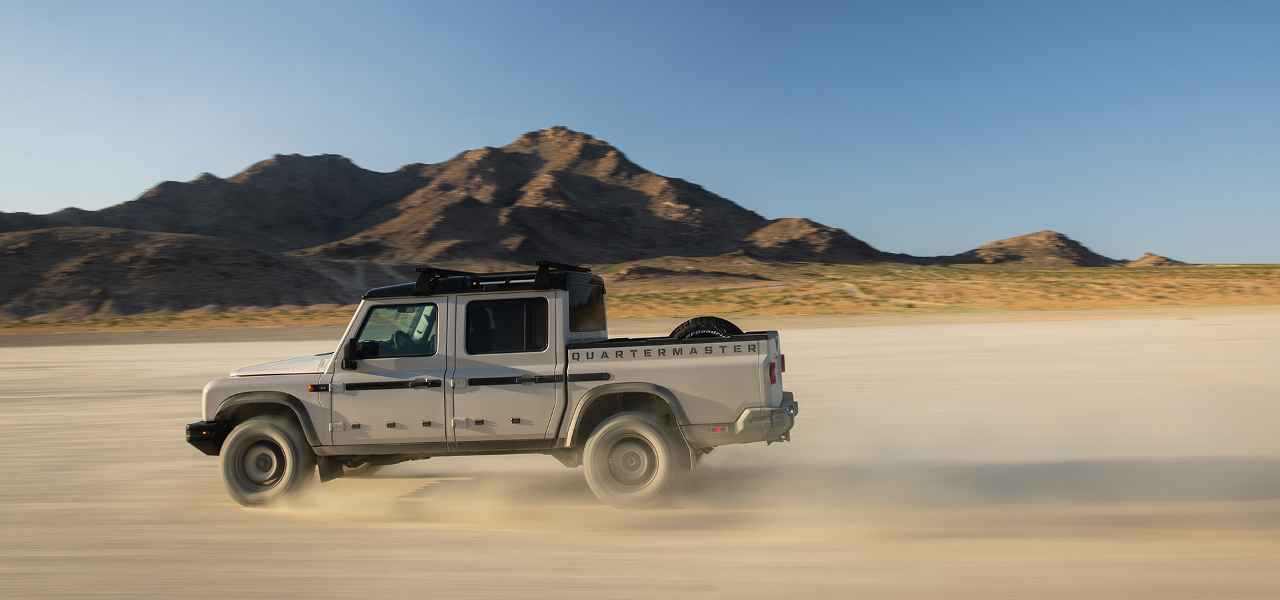 英力士Quartermaster針對越野出行打造,但在瀝青路面上的表現略遜一籌。(英力士)
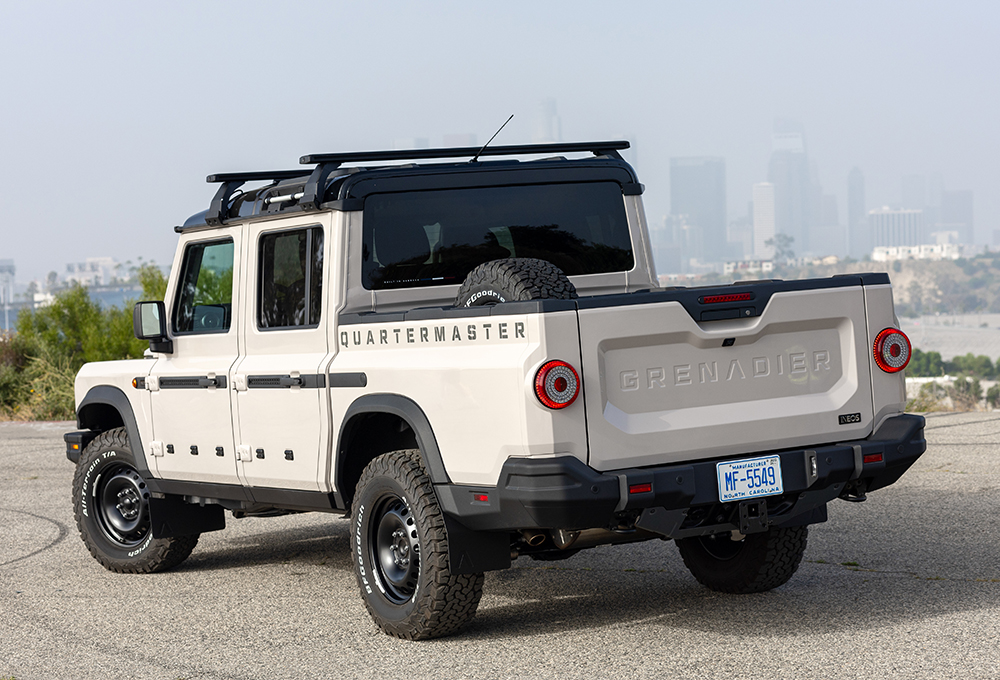 英力士Quartermaster后視圖。(英力士)
 英力士Grenadier采用寶馬3.0L直列六缸渦輪增壓發動機,與動力系統相匹配,充滿復古氣息。(英力士)
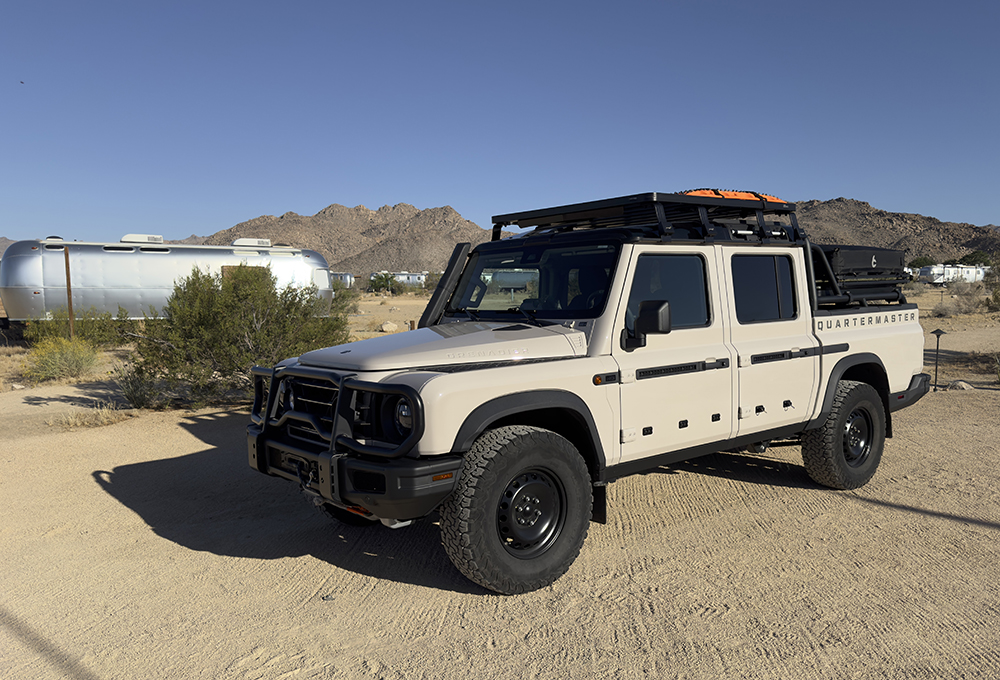 英力士Quartermaster裝備齊全,可執行越野任務。(ROBERTO BALDWIN)
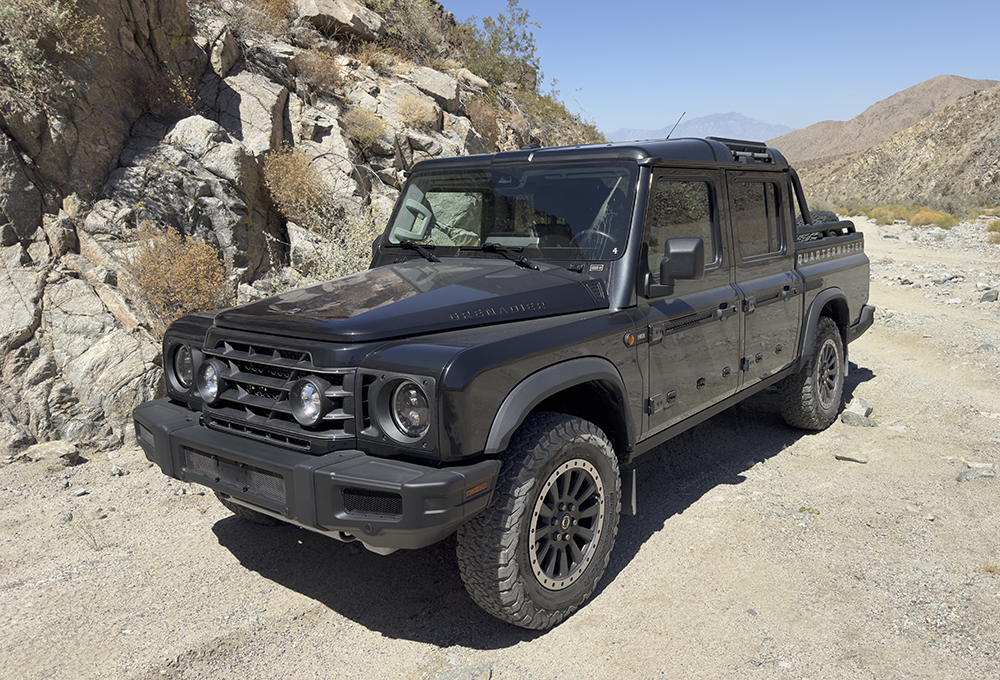 沙漠中的英力士 Quartermaster。(ROBERTO BALDWIN)
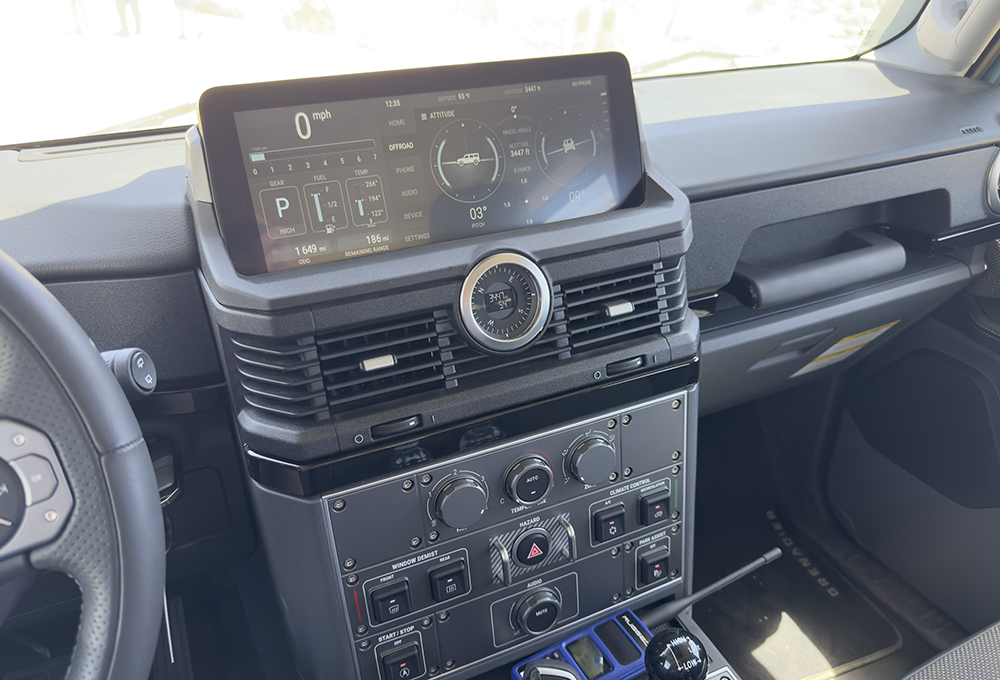 英力士Grenadier的現代裝飾之一——數字顯示屏,但車內確實以真正的實體按鍵為主。(ROBERTO BALDWIN)
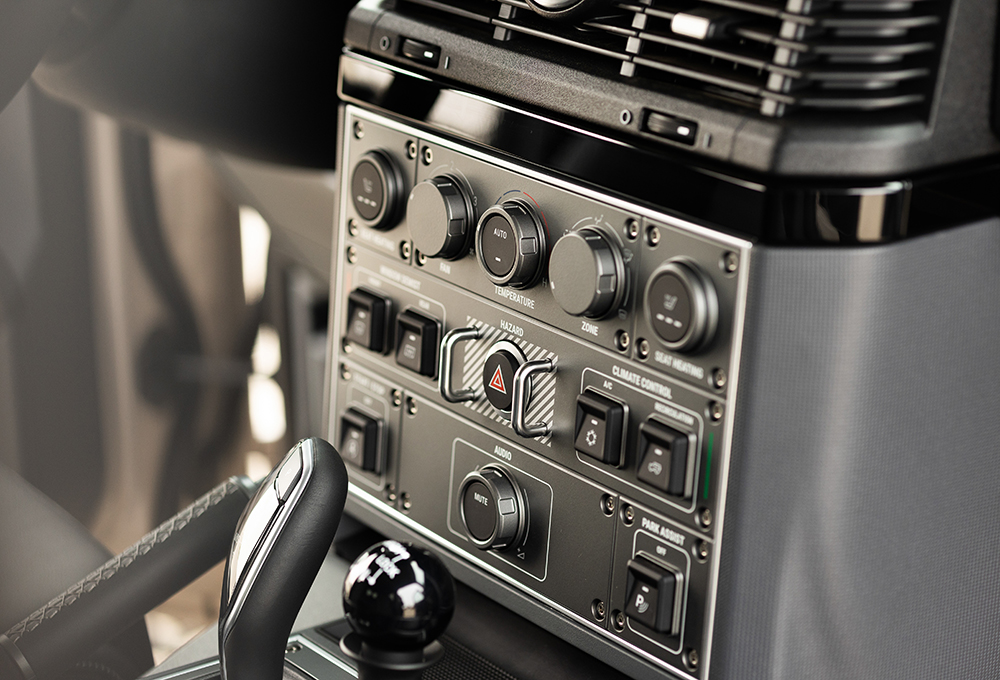 英力士Grenadier的中控按鈕。(英力士)
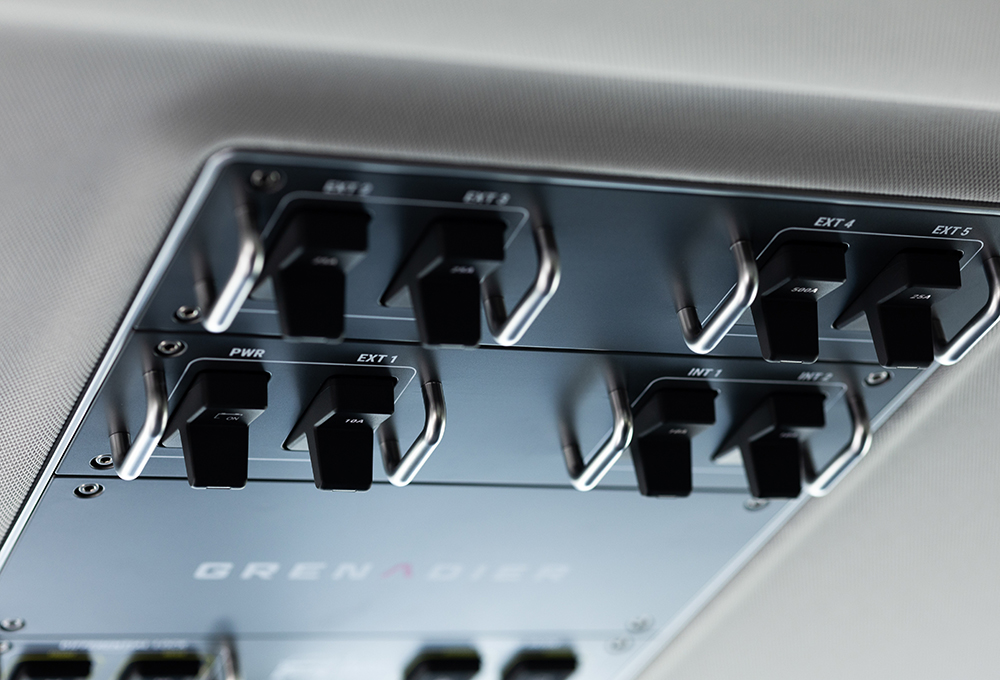 英力士Grenadier的車頂控制開關非常笨重,但是戴著厚厚的手套也能操作。(英力士)