在今年4 月 24 日,CHAdeMO 協會發布了 3.0 版“電動汽車充電協議”。這種雙向直流快充新標準(600 A, 900 kW)由 CHAdeMO 協會和中國電力企業聯合會(下稱“中電聯”)聯合開發,可以兼容當下各類電動汽車的所有現行充電標準。CHAdeMO 由日本五大汽車制造商和東京電力公司 2010 年成立,現已發展成一個擁有 400 多個成員的全球性協會。
該項目人稱 “ChaoJi”,旨在創建一套同名的升級版快速直流充電器標準。“ChaoJi” 項目開始于 2018 年:當時,來自中國的代表建議 CHAdeMO 協會能對中國的快速充電國家標準進行優化。那時,中國已經成為全球最大的電動汽車市場。國際標準化組織(ISO)的中國全國委員會和國際電工委員會(IEC)發布的標準稱為 GB/T 標準,即大家熟悉的“國標”。
“ChaoJi” 項目的早期目標是增加耦合器的機械強度并縮小其尺寸,但經過從 2018 年下半年開始到 2019 年舉行的月度會議,CHAdeMO 和中電聯在再次擴充了項目目標。2019 年 7 月,各國電動汽車用充電技術專家齊聚日本東京,參加了第一屆國際ChaoJi技術研討會。
900 kW 的重型車輛充電連接器
事實上,CHAdeMO 早有計劃升級其現有的400 kW 充電協議至 3.0 版本,將充電功率提升至令人驚嘆的 900 kW(峰值電流 600 A、1500 V),從而覆蓋卡車和公共汽車等重型車輛的充電需求。不過,CHAdeMO協會將在 3.0 標準中提供多種充電功率,從而適應更多類型的電動汽車,并同時解決在公路充電站之外的充電需求,比如家或單位等。
CHAdeMO 協會歐洲秘書長Tomoko Blech 在給 SAE《汽車工程》的電子郵件中解釋說:“首款使用 ChaoJi 充電標準的電動汽車最早有望在 2021 年底問世。”她寫道,得益于中國龐大的電動汽車市場,我們有望以較低成本實現CHAdeMO 3.0 標準的推廣。
Blech 寫道:“其中方法之一便是借助中國的新國標,中國占全球快速充電器市場的80%,我們可以通過規模經濟來降低成本。”中電聯的成員首先進行了早期設計工作和原型制作。接著,中國和日本的團隊將共同確認聯合開發的新標準可以兼容現行的CHAdeMO 和國標充電標準。
測試標準將于 2021 年成型
Blech 在電子郵件中聲稱,“為了使CHAdeMO 3.0 可以從硬件、軟件和安全要求方面盡可能兼容最新版本的 IEC、ISO 和 SAE 相關標準,大家作出了巨大的努力。”目前,中國已經在475 kW 充電器(500 A)方面取得了試驗成功,充電 10 分鐘即可讓車輛跑 250 英里。
項目負責人聲稱,如果汽車制造商使用800 V 電池系統,單位時間內的充電量將是之前的 2 倍。2020 年 2 月 6 日,位于日本千葉縣的 UL Japan Kashima EMC 測試實驗室已經成功完成了新型充電系統(最大電流600 A,采用液冷技術)的前期技術演示。目前,項目成員正在編寫 CHAdeMO 3.0 充電標準的認證測試標準,預計將在 2021 發布。CHAdeMO 已經通過美國認證,由IEEE 統一管理。
未來,市面上還將出現相關適配器,讓使用特斯拉和CCS 充電標準的車輛也能使用 CHAdeMO 3.0 充電器。”但這些充電器將主要來自第三方供應商,而不是 CHAdeMO 或中電聯。特斯拉自 2012 年即加入CHAdeMO 協會,并且還生產銷售“特斯拉—CHAdeMO”適配器。行業集團 CharIn E.V. 一直致力于推動 CCS 成為全球統一電動汽車充電標準。該公司曾在2019 年的一篇文章(點擊文末閱讀原文)中公開表明立場,反對使用任何電動汽車用充電器適配器。
為電動汽車“上網”鋪平道路
CHAdeMO 標準問世以來,最特別之處便在于“雙向充電”,即允許從電動汽車向電網輸送電力。但事實證明,這對ChaoJi 項目來說是一個挑戰。目前,新的 CHAdeMO 耦合器在設計中考慮移除之前版本中的可選引腳,進而將引腳數量從七個減少到四個,可以為雙向充電器提供12 V 輔助電源。
SAE 混合動力/插電式電動車輛通信與互操作性工作組主席Rich Scholer 表示,SAE J3072 標準委員會正在進行最后階段的更新,從而使 J3072 標準可以滿足 IEEE 1547-2018 標準對雙向充電的要求。J3072標準更加偏向交流充電,而非直流充電。Scholer 指出,IEEE 1547-2018 也適用于具備雙向充電功能的 SAE 直流充電器。
在 ChaoJi 的設計中,CHAdeMO和新國標充電器將采用相同的硬件。不過,為了保證采用 ChaoJi 充電標準的車輛可以兼容目前具備雙向充電功能的 CHAdeMO 充電器,充電器還必須配備一款特殊的入口適配器和專門的雙向充電序列。Blech寫道:“在可用引腳(信號)更少的情況下增加新功能,并同時確保魯棒性、電磁抗擾度并與現有的 CHAdeMO、新國標和 CCS Combo 協議完全兼容將是一個相當大的挑戰。”
此外,為了兼容不同的協議,我們還必須增加一個導頻控制電路,隨時檢測需要使用哪一套通信協議。根據Blech 的說法,ChaoJi 項目的下一步目標是實現與 CCS 使用的 ISO 15118 協議的完全向后兼容。CHAdeMO 協會雖然將全球協調作為其長期目標之一,但同時很清楚,汽車制造商、充電器制造商和充電站運營商需要10 年或更長時間才能過渡到新標準,這就是為什么向后兼容性也是至關重要的。但 ChaoJi 是一套具有前瞻性的協議,特別是其中有關下一代電池技術的內容。
“除了符合規范和標準之外,電池系統的設計將取決于每家OEM的策略。”Blech 寫道,“但有一件事是肯定的,固態電池能夠承受非常高的充電速率,而且無需配備昂貴的熱管理系統,因此固態電池在電動汽車領域的應用勢必帶來重大突破,這可能將出現在21 世紀 20 年代中期。”
作者:Bradley Berman
本文原發表于SAE《汽車工程》雜志
On April 24, the CHAdeMO Association released the 3.0 version of its electric-vehicle (EV) charging protocol. The technology was co-developed by the China Electricity Council as a 600-amp, 900-kW, bi-directional DC quick-charging standard that is harmonized and backward-compatible with all existing standards for the world’s EVs. CHAdeMO was formed in 2010 by five major Japanese automakers and the Tokyo Electric Power Co. It has grown into a global association with more than 400 members.
The project to create an updated quick-charger standard was dubbed ChaoJi – the moniker that would also be used for a new harmonized global DC standard. The project commenced in early 2018 when representatives from China, home to the world’s largest EV market, proposed that CHAdeMO make improvements to China’s GB/T standard. The Chinese National Committee of the International Organization for Standardization (ISO) and the International Electrotechnical Commission (IEC) are designated as Guobiao or “GB/T standards.”
An early goal was to increase the mechanical strength of the coupler but reduce its size. In monthly meetings held throughout late 2018 and 2019, CHAdeMO and CEC expanded the goals for the new standard. Those discussions culminated in a gathering of international EV charging experts in Tokyo for the 1st International ChaoJi Technical Workshop in July 2019.
900 kW for heavy-duty vehicles
CHAdeMO had long planned to upgrade its existing 400-kW protocol to the 3.0 version, which would enable a whopping 900 kW of power – with a peak of 600 amps and 1,500 volts – for heavy-duty vehicles, such as trucks and buses. But the association expanded protocols for various levels of power to a wide range of vehicles, as well as charging at homes and workplaces in addition to highway locations.
Tomoko Blech, the European secretary-general of the CHAdeMO Association, in an email to SAE’s Automotive Engineering, explained, “The first vehicle using ChaoJi is expected as early as the end of 2021.” She wrote that the increased capacity of the CHAdeMO 3.0 could be achieved at a reduced cost due to the larger scale of the Chinese EV market.
Blech wrote, “Harmonizing with China’s GB/T is one way to achieve these cost reductions by the economy of scale. China accounts for almost 80 percent of all fast chargers in the world.” CEC members performed the early-stage design work and prototyping. The Chinese and Japanese teams then mutually ensured that the new joint ChaoJi standard would be backward compatible with existing CHAdeMO and GB/T versions.
Test criteria due in 2021
In her email, Blech claimed that “Huge efforts were made to harmonize the hardware, software, and safety requirements of CHAdeMO 3.0 as much as possible with the latest versions of the relevant IEC, ISO, and SAE standards.” Based on successful trials of 500-amp, 475-kW charging in China, a 250-mile EV battery could be almost completely replenished in about 10 minutes.
Project leaders claim that if automakers utilize an 800-volt battery system, twice as much range could be added in the same time. The first demo events and trails – using liquid-cooled connectors and a max current of 600 amps – were conducted at UL Japan Kashima EMC testing laboratory in Chiba prefecture, Japan, on February 6, 2020. The testing criteria for CHAdeMO 3.0 certification, currently being written, will be released in 2021. In the U.S., CHAdeMO has accreditation as a standard managed by IEEE.
Adaptors will likely be produced and sold for Tesla and CCS-compatible vehicles to use CHAdeMO 3.0 chargers. But those would emerge from third-party providers, not as products produced by CHAdeMO or CEC. Tesla has been a member of CHAdeMO since 2012 (Tesla-CHAdeMO adaptors are produced and sold by Tesla). CharIn E.V., the industry group established to develop the Combined Charging System (CCS) as the global standard for charging battery EVs, published a position paper(Click Read More at the left bottom)in 2019 opposing any use of adaptors.
Paving the way for vehicle-to-grid
Bi-directional charging, in which power can also be pulled from the vehicle to the grid, has been a fundamental attribute of the CHAdeMO standard since its inception. But it proved to be a challenge for the ChaoJi project. The proposed new coupler reduced the number of pins from seven to four, removing the optional pin that existed in the original CHAdeMO coupler. It had provided 12-volt auxiliary power to bi-directional chargers.
SAE International’s J3072 standards committee is finalizing updates to meet bi-directional charging requirements to the latest IEEE 1547-2018 standard, according to Rich Scholer, SAE Hybrid PEV Communication and Interoperability Task Force chair. The J3072 standard is focused on AC capabilities rather than DC. IEEE 1547-2018 is also used for SAE DC Chargers capable of bi-directional use, Scholer noted.
Under the ChaoJi design, CHAdeMO and China’s GB/T chargers use the same hardware. However, a special inlet adapter and a dedicated bi-directional charging sequence had to be devised to ensure full-backward compatibility of ChaoJi vehicles with the existing bi-directional CHAdeMO chargers that have this optional feature. Blech wrote, “It was quite a challenge to add a new function with the reduced number of signals, while also ensuring robustness, electromagnetic immunity, and full backward compatibility with the existing CHAdeMO, GB/T, and CCS [Combined Charging System] systems.”
Moreover, a control-pilot circuit detects which of the two communications protocols to use, thereby making the two systems compatible. The next step for the ChaoJi project, according to Blech, is to implement full-backward compatibility with the protocol used by CCS for ISO 15118. While the CHAdeMO Association made global harmonization one of the long-term goals, the group understands that it will take automakers, charger manufacturers and charging station operators 10 years or longer to transition to new standards. That’s why backward compatibility was also critical. But ChaoJi is also forward-looking, especially as it relates to next-generation battery technology.
“How the battery systems are designed in addition to compliance with the specification and standards will depend on the strategy of each vehicle OEM,” wrote Blech. “But one thing is for sure. The introduction to the EV market, possibly in the mid-2020s, of solid-state batteries capable of accepting ultra-high charging rate without the expensive thermal management system, will be a significant breakthrough.”
By Bradley Berman
SAE Automotive Engineering

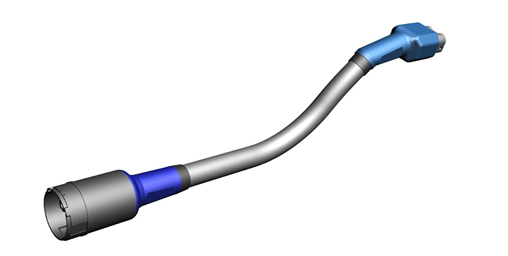 CHAdeMO 協會還在同時考慮通過提供適配器,以提高新協議與之前充電協議的兼容性。圖為其中一個適配器版本。(圖片來源:CHAdeMO)
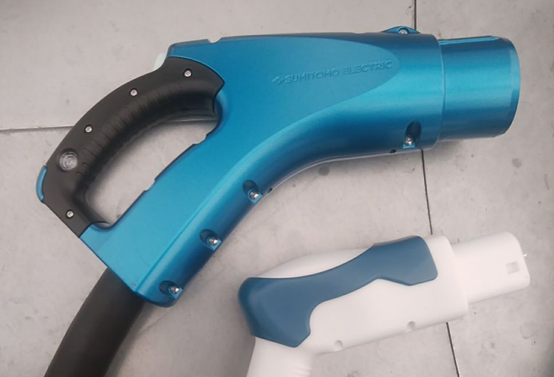 CHAdeMO 3.0 充電連接器原型(下)與當前 2.0 版本的對比圖。(圖片來源:CHAdeMO)
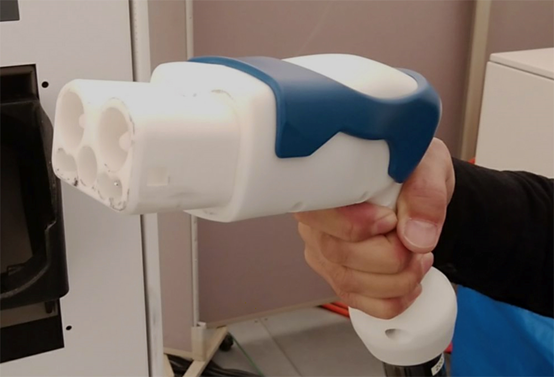 CHAdeMo 3.0 充電連接器原型經過重新設計,體積更小、質量更輕,也透露了一些量產型號的技術細節。(圖片來源:CHAdeMO)
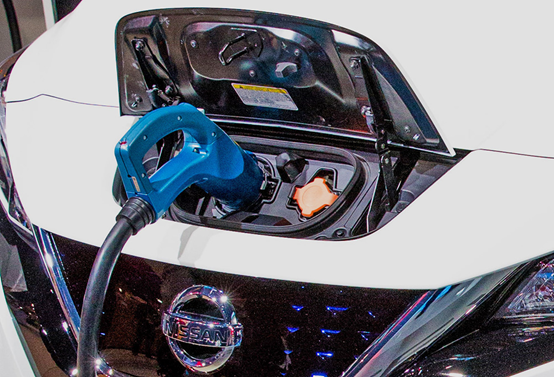 正在為一輛日產Leaf 電動汽車充電的現行版 CHAdeMo 充電連接器。與未來的 3.0 版本相比,這款 2.0 版本更大、更重、更厚實。目前,日產等多家日本 OEM 都在使用CHAdeMO 充電協議。(圖片來源:Lindsay Brooke)