對于摩托車等弱勢道路用戶而言,V2X 通信是自動駕駛汽車成為現實的重要安全前提。
目前,自動駕駛汽車(AV)的發展勢不可擋,而網聯功能,也就是“車對萬物通信”(V2X),也將在推動自動駕駛汽車的普及中發揮關鍵作用。現階段,很多V2X 系統從技術上均已成熟,但由于監管環境不允許、基礎設施不到位等問題仍未得到廣泛部署。
根據安全專家的說法,V2X技術可能成為行人、自行車和摩托車等弱勢道路用戶的福音。盡管目前似乎人人都在討論自動駕駛,但要知道,未來將是“網聯功能”而不是“自動駕駛功能”會提醒前方交通出現停滯,或側方建筑物后方盲區有一輛摩托車正在駛向十字路口等信息。高級駕駛輔助功能(ADAS)和自動駕駛汽車傳感器組合的確可以為車輛提供實時周邊環境信息,指導車輛前進,但只有V2X 網絡才能提供車輛前進方向上的全方位視圖,保護弱勢道路用戶的安全。
目前,業界到底將采用基于蜂窩網絡的CV2X 還是采用無線 DSRC(專用短距離通信)技術仍尚無定論,FCC 宣布將收回頻段的問題也尚無解決方法。但從技術層面而言,保護弱勢道路用戶安全的解決方案已經成熟。
行業協作
長期以來,供應商以及汽車和摩托車OEM一直在進行高效自動交通警報系統方面的合作。2019年 CES 消費電子展上,大眾汽車集團(VW Group)旗下奧迪(Audi)、福特(Ford)和杜卡迪(Ducati)品牌展示了他們與高通(Qualcomm)共同開發的V2X 技術。展覽期間,他們借助一輛杜卡迪 Multistrada1260 汽車,展示了基于蜂窩網絡的 V2X 技術在非視距傳播(NLOS)場景下的應用。高通也是5G 汽車協會(5GAA)的成員,其他參與公司還包括寶馬(BMW)、福特和 PSA 集團。2018 年,5G 汽車協會開始展示乘用車、摩托車與道路基礎設施之間的基于蜂窩網絡的V2X 通信。與寶馬很類似,本田(Honda)也同時生產汽車和摩托車。目前,這家公司正在與全球最大的兩家摩托車聯盟合作,包括歐洲的網聯摩托車聯盟(Connected Motorcycle Consortium,CMC)和美國的安全摩托車運動研究聯盟(Safer Motorcycling Research Consortium,SMRC)。這兩家聯盟的成員幾乎涵蓋全球所有大型摩托車OEM。
“幸運的是,我們可以為我們的摩托車和汽車部門提供密切合作的機會,這兩個部門每周都會交換一些技術和法規相關的信息。”本田北美研發汽車技術研究部門總工程師Sue Bai 解釋道,“CMC 是在 2015 年 ITS 世界大會期間成立的,但我個人從早在 10 年前就一直與 CMC 本田團隊開始合作了。”
與其他任何新技術一樣,成本總是限制技術應用推廣的關鍵,摩托車行業尤是如此。舉個例子,ABS技術早在 10 年就已經上市,但直到現在才剛剛登陸一些入門型摩托車,主要也僅面對新手中的新手客戶。
“與汽車應用相比,摩托車通常更在乎成本,并且由于空間較小,天線等硬件設備的安裝也更有挑戰。”Bai指出,“摩托車騎手的身體很容易阻擋信號,導致難以實現 360 度傳輸。對此,我們的建議是采用一前一后共兩個天線。這種設計確實會增加成本,但為了保證安全,這可能將成為一種必須。”
摩托車還要求所有部件都防水。目前,本田已經在俄亥俄州的智能交通走廊33 號公路部署了 2 輛摩托車,用以收集有關車輛組件密封性和穩健性的數據。
博世公司在摩托車安全領域一直是主要供應商和創新者。這家公司從十幾年前就開始進行網聯項目了。在美國密歇根普利茅斯市,博世公司北美V2X 和網聯產品汽車多媒體團隊產品經理 Suman Yelati 說,“博世在 V2X 領域投入了大量人力與物力。”他表示,自 2008 年以來,博世公司一直在進行“標準化前”階段的工作,“積極與一些委員會合作參與標準的制定,并且與其他OEM開展了大量合作項目。”
根據Yelati 的說法,V2X 技術可以提供車輛雷達和攝像頭看不到的數據,為車輛提供更全面的信息,從而協助車輛更好地進行決策,這將成為自動駕駛生態系統的有力補充。他說,“舉個例子,V2X可以協助車輛看到一些‘視線范圍之外’的車流。盡管雷達、激光雷達和攝像頭都具備分析視覺輸入的能力,但只有 V2X 技術才能獲取視線范圍之外的信息。此外,與攝像頭相比,V2X的延遲也更低。假設我前方第 10 輛車進行了緊急制動 [事件],那么直接通過 V2X 技術將該信息傳遞給我要比等著攝像頭來處理這些信息來得更快。”
網聯功能的實現障礙
目前,V2X 技術的相關標準(包括 SAE J2735 https://www.sae.org/standards/content/j2735_201603/)已經就位、相關解決方案已成型,各大主要供應商和OEM也做好了部署的準備,但對于美國等全球主要市場,現在 V2X 技術面臨的主要挑戰還是在監管環境和基礎設施方面。最終,無論美國最終到底選擇部署DSRC 或 CV2X,業界似乎都已經做好了兩手準備。
“作為一家一級供應商,我們是技術中立的。”博世公司的Yelati 表示,“因此,無論是 DSRC 還是 CV2X,我們都有相應的產品給OEM。”
本田公司的 Bai 指出,FCC 美國聯邦通信委員會在 2019 年曾宣布可能收回之前為 V2X 技術留出的頻譜,該問題比到底要選 CV2X 還是DSRC 更為緊迫。“只要V2X 技術的穩定性和健壯性都驗證沒問題,我們就不用糾結要選哪個了。”Bai 表示,“我認為,現在當務之急是把 5.9 GHz 頻段爭取下來,而不是在兩種技術之間PK。”
Bai 表示,沒有頻譜,就沒有傳輸通道,那就更不用談V2X 的發展。她說,“這些標準都已完成發布,立馬就可以使用,而且已經有一些試點項目已經開始采用這些標準了,這并不僅僅關乎摩托車。”
具體來說,FCC曾在 2019 年建議把分配給 V2X 通信的頻譜范圍從 75 MHz 減少到 30 MHz,這無疑將減少 V2X 系統可以提供的功能數量,并同時降低系統的有效性和容量。Yelati表示:“許多應用程序非常復雜,需要多個通信通道,只給 30 MHz 帶寬根本無法實現。如果 FCC 真要減少帶寬,那就相當于直接給此類應用程序判了死刑。”
Bai 指出,此項規定將對V2X 技術的部署產生決定性不利影響。“如果 FCC 將大部分頻譜分配給其他技術,那么在考慮到左右通道 Wi-Fi 干擾的情況下,其實 V2X 技術真正可以使用的安全通道數量不超過2 個。”Bai 提到了豐田信息技術實驗室主任(Toyota InfoTech Labs)John Kenney 曾在 2020 年 SAE 政府/行業會議上打的一個比方——這就相當于要把召開搖滾音樂會的場地放在醫院兩邊。
加入基礎設施的參與
除了上文介紹的基礎設施和帶寬問題,下一個需要面對的挑戰在于安裝,這通常需要較長時間。摩托車等車輛的V2X 功能可能會分階段推進,先從簡單的信標功能到人機界面(HMI)警報,再到更高級的主動應對策略(這就像是也為摩托車配備了 ADAS 技術)。事實上,讓更多的弱勢道路用戶加入V2X 網絡,特別是在交叉路口等繁忙位置,才能讓 V2X 技術發揮最大效用。
大陸集團(Continental)正致力于提升危險交叉路口安全性。這家公司主要通過創建虛擬用戶的方式,將位于某一交叉路口的全部道路用戶“數字化”。“如果V2X 技術的普及率不高,那系統將很難發揮全部作用。在此背景下,我們認為通過為所有十字路口增加安全傳感器,用以收集所有道路用戶的信息,包括行人、自行車、摩托車、汽車和卡車等,并將這些信息廣播出去可以讓系統發揮最大潛力。”大陸集團被動安全和傳感器部門的業務發展經理Kent Young 解釋說,“之后,我們就可以代表所有道路用戶,發送基本安全信息,無論這些道路用戶自身是否具有 V2X 通信功能。”
根據 NHTSA-美國高速公路安全管理局的數據,大陸集團將在美國摩托車事故多發的交叉路口(占2017 年全美摩托車致死事故的 35%)部署 V2X 基礎設施,并創建虛擬的 V2X 行人。
Young 表示,“只要能在基礎設施中部署V2X 技術,我們就可以實現讓每一輛汽車和每一個位弱勢道路用戶(行人、自行車、摩托車等)都能發送 V2X 信息,從效果上相當于達到 100% 的 V2X 通信功能普及率。”他指出,日后,當自動駕駛汽車真正成為現實后,也能從交叉路口的V2X 基礎設施中獲益,提高運行性能。
Young 表示,“我們將在交叉路口廣播V2X 消息,任何配備 V2X 設備的車輛都可以接收這些信息。”除了安全優勢外,V2X 技術還可以用于調整信號時序,充分考慮交叉路口的行人情況。“我們并不識別用戶,因此不牽扯任何保密事宜,但正在通過提高技術的有效性來提高安全性。”
Young 在談到他們與原廠客戶的合作進展時表示,“大陸集團深耕V2X 技術多年,那時全球仍僅有美國和歐洲等少數發達地區在進行相關研究。如今,我們正在與多家原廠客戶積極進行 V2X 開發。”大陸集團會將公司在 V2X、雷達和攝像頭等量產產品中的‘精華’應用在基礎設施項目中。Young表示,目前,我們有三處交叉路口測試現場已投入使用。他預計這項技術將在未來五年內投入使用,屆時公司將直接與市政當局合作。
隱私保護與過度技術依賴
對于摩托車等弱勢道路用戶,V2X的確可以帶來大量安全優勢,但數據隱私和所有權問題也同樣棘手。美國摩托車手協會(American Motorcyclist Association,AMA)最近上任的政府關系主任Michael Sayre 表示:“摩托車手并不是唯一想得到這些車輛數據的人。事實上,車主和制造商均需要參與開發過程,以確保我們的數據受到保護,無論這些數據來自我們自己的聯網摩托車還是來自周圍的聯網汽車。”
“等到這項技術達到近乎完美的水平時,我們可能就再也不用聽到‘對不起,我真的沒有看到那邊有一輛摩托車’這樣的自責話語,這將是一個巨大的進步,”Sayre說,“但通常來說,涉及多輛摩托車的摩托車事故僅占事故總量的一半,其余的是單車事故,而且原因多種多樣。不過,其中一些問題可以通過 ABS 防抱死制動器和穩定控制等技術得到解決。”
Sayre 指出,潛在問題之一在于公眾是否會過度依賴該技術。這個話題并不陌生,汽車領域的ADAS 也一直面臨同樣的問題。他說:“如果汽車駕駛員由于過于依賴車輛的聯網功能,而誤以為絕大多數車輛都是聯網的,但事實上僅有少數車輛聯網,而主觀上直接忽視自己明明已經看到的摩托車,這就會造成嚴重后果。”
根據本田的Bai 的說法,目前最值得關注的重點是解決監管環境問題,并真正開始部署該技術,提高交通系統的安全性。
“我們從NHTSA 得到了非常積極的回應,他們近期公開表示正在認真考慮 ‘NCAP-ing’ V2X 技術的可能性,這將是我們的巨大勝利。”Bai 表示,“目前,本田已經不存在技術方面的阻礙,我想很多其他主要OEM的情況也一樣。”
For motorcyclists and other vulnerable road users, V2X communication is a vital safety asset for the AV future.
As development of autonomous vehicles (AV) moves inexorably forward, connectivity—also known as vehicle-to-everything (V2X) communication—will play a crucial role in their adoption. Much of the necessary V2X technology is already available, leaving regulatory and infrastructure challenges as the remaining major obstacles to an effective network rollout.
Deployment of V2X capabilities could be a boon to vulnerable road users (VRUs) such as motorcyclists, cyclists and pedestrians, according to safety experts. It is connectivity, not autonomy, that will alert a vehicle that traffic ahead has stopped, or that a motorcycle hidden behind buildings is approaching an intersection. ADAS and AV sensor suites help vehicles that are so equipped navigate their immediate environments in real-time, but it is the V2X network that promises to bring a safer, omniscient view of the road ahead to the VRUs as well.
Communication standards – cellular-based CV2X vs. DSRC (dedicated short-range communications) wireless – and public-spectrum bandwidth issues have yet to be sorted. But in terms of the tech, solutions for providing greater on-road protection to VRUs exist today.
Suppliers, along with automotive and motorcycle OEMs, have been collaborating on what is effectively an automated traffic-alert system. VW Group’s Audi, Ford and Ducati showed off their joint-development efforts in V2X technology with Qualcomm at CES 2019. They used cellular-based technology to demonstrate a cooperative intersection use case in a non-line-of-sight (NLOS) scenario involving a Ducati Multistrada 1260. Qualcomm also is part of the 5G Automotive Association (5GAA) whose members include BMW, Ford and the PSA Group. In 2018, 5GAA began demonstrating direct cellular V2X communication between passenger vehicles, motorcycles and roadside infrastructure. Honda, like BMW a manufacturer of both cars and motorcycles, is working with the Europe-focused Connected Motorcycle Consortium (CMC), and its U.S. equivalent, the Safer Motorcycling Research Consortium (SMRC). Both groups now count nearly every major motorcycle OEM as members.
“We are very fortunate that the motorcycle team and the car divisions are working very closely. We exchange information on a weekly basis on both technical and regulatory issues,” explained Sue Bai, chief engineer in the Automobile Technology Research division of Honda R&D Americas. “The CMC was established in 2015 during the ITS World Congress, but I have been working with the CMC Honda team for more than 10 years.”
Like any new technology, cost is key to proliferation—and it’s a particularly acute issue for two-wheelers. An example is ABS, which after decades in the market is only now making its way onto entrylevel bikes that often are purchased by the most inexperienced riders.
“The motorcycle is more cost-conscious compared to a vehicle implementation, and it has smaller spacing for equipping antenna and hardware on it,” Bai noted. “The rider’s body blocks some of the signals to achieve 360-degree transmission. Our recommendation is to have two antennas, one in front, one at the back. It does have implications to the cost, but to ensure the safest implementation, that may be needed.”
Motorcycles also require all components be waterproofed. Honda currently is deploying two motorcycles in the Ohio Route 33 Smart Mobility Corridor program to collect data and vet component sealing and robustness.
Bosch, a major industry supplier and innovator in the motorcycle safety space, also has spent more than a decade on connectivity projects. “Bosch is heavily invested in the V2X area,” said Suman Yelati, the company’s Plymouth, Michigan-based manager of the car multimedia team in North America for V2X and connectivity product. He said that since 2008 the company has been working in pre-standardization areas, “and also in standardization and various committees related to V2X public-funded projects and collaborator projects with OEMs.”
According to Yelati, V2X is complimentary to the autonomous ecosystem, providing additional data to radar- and camera-based inputs to improve overall decision making. “For example,” he said, “V2X can help see non-visible traffic. While radar, lidar and cameras are all able to analyze visual input, V2X messages go to non-line-of-sight areas. The latency is also less compared to camera processing, so if there’s an emergency braking [event] 10 vehicles ahead of me, that gets communicated to me faster via V2X message than a camera processing all this information.”
Roadblocks to connectivity
With standards including SAE J2735 [https://www. sae.org/standards/content/j2735_201603/] in place, technological solutions available and key suppliers and OEMs ready to deploy, the remaining barriers in the U.S. and other markets are more centered on regulation and infrastructure. Whether the system ultimately deployed in the U.S. is based on the DSRC or CV2X, industry appears ready to support either protocol.
“As a Tier 1, we are technology-neutral,” Bosch’s Yelati said. “So whether DSRC or CV2X, we are ready with the systems to provide the OEMs, whichever it is.”
Honda’s Bai noted that the FCC’s announcement in 2019 that it might take back spectrum previously set aside for V2X is the more pressing issue than CV2X vs. DSRC. “As long as it’s validated, stable and robust, let’s move on,” Bai said. “I think it’s more important to save the [5.9-GHz] spectrum first and spend less time on debating which technology is better.”
Without a spectrum to transmit, there is no V2X future, Bai asserted. “The standards are all set, published and ready to be used, and there are pilot deployments that are using these standards already— and that’s not just motorcycle,” she said.
The FCC’s proposed reduction in allocated V2X spectrum, from 75 Mhz to 30 Mhz, could reduce the number of features available via the system, while also reducing effectiveness and capacity. “A lot of applications will not be possible to be implemented in that 30-MHz bandwidth,” Yelati said, “because complex applications, which involve multiple channels of communication, are completely effected by this reduction.”
The result of such rulemaking would have a detrimental impact to the V2X technology deployment, Bai noted. “If the FCC allocates most of a large portion of the spectrum to someone else, then all the V2X safety communication would be jamming into no more than two usable channels, considering the Wi-Fi interference from the left and right.” She referred to an analogy that Toyota’s John Kenney, director of Toyota InfoTech Labs, made at the 2020 SAE Government/Industry conference, that this would be tantamount to sanctioning rock concerts on both sides of a hospital zone.
Engaging the infrastructure
Once infrastructure and bandwidth are settled, there remains the issue of the installation base, the deployment of which will take time. V2X functionality for vehicles such as motorcycles is likely to progress in stages, from simple beacons to HMI alerts, to more active countermeasures as ADAS tech becomes available for two-wheeler platforms. Getting more VRUs into the V2X network, particularly around intersections, will be key to its effectiveness.
Continental is working to make the most dangerous portion of road networks safer by virtually integrating all intersection users into the V2X network. “If the penetration rate is low, the effectiveness of the system is somewhat limited. So we feel that there’s a real potential to add safe sensors into an intersection, where those sensors can view all road participants in the intersection, including pedestrians, bicyclists, motorcyclists, automobiles, trucks, etc.,” explained Kent Young, business development manager at Continental for the passive safety and sensorics unit. “Then we would be able to send out basic safety messages on behalf of all the road users, whether they have V2X or not.”
Continental’s system would create virtual V2X participants at intersections—a perennial site for motorcycle crashes and where 35% of U.S. motorcycle fatalities occurred in 2017, according to NHTSA.
“With the technology that we can implement in the infrastructure, we can effectively make it as if every single vehicle, every single road user, pedestrian, VRU, motorcycle, bicyclist, in effect would be sending out V2X messages as if it was a 100% penetration rate,” Young said. It will also improve the performance of AVs operating near the intersection – when AVs do enter the market, he noted.
“We would send out these V2X messages and any vehicle equipped with V2X would get this wealth of information about what’s going on in the intersection,” Young said. Additional non-V2X safety benefits include adjusting signal timing to account for pedestrians in the intersection. “We’re not recognizing people themselves, so there’s no confidentiality thing here, but we’re increasing the safety by improving the effectiveness of the technology.”
“Continental has been working on V2X for many years, back when it was just in the research phases both in North America and in Europe, and we are in active development with several customers regarding V2X,” Young said of their progress with OEM clients. The supplier is taking its same high-volume capabilities in V2X, radars and cameras, and implementing those on the infrastructure program. With three test-site intersections already operating, Young said he expected this technology to be in use within the next five years, working directly with cities and municipalities.
Privacy and tech over-reliance
For VRUs such as motorcyclists, V2X could have profound safety benefits. But data privacy and ownership is a thorny issue amongst the notoriously independent demographic. “Motorcyclists aren’t alone in wanting control over the data our vehicles produce with connected vehicle technology,” said Michael Sayre, the American Motorcyclist Association’s (AMA) recently appointed director of government relations. “Motorcyclists and motorcycle manufacturers will need to be engaged in the development to ensure that our data is protected, whether that is data generated by our own connected motorcycle or that which is generated by connected vehicles around us.”
“If this technology was nearly perfect, we could potentially say goodbye to the ‘Sorry I didn’t see the motorcyclist’ type of crash, which would be a huge improvement,” Sayre said. “But multi-vehicle motorcycle crashes typically represent only half of motorcycle crashes. The rest are single-vehicle crashes and have a wide range of causes, some of which can be addressed by technology such as antilock brakes and stability control.”
One potential downside, Sayre noted, is the driving public becoming over-reliant on the technology, which has been a concern with current automotive ADAS technology. “The scenario in which a majority of traffic is connected, while only a small number of motorcycles are, could lead motorcyclists to become even less visible to drivers who are over-reliant on their vehicles to warn them about other vehicles on the road,” he said.
According to Bai at Honda, the most crucial focus currently is to settle the regulatory landscape and begin deploying the technology to start saving lives.
“I got a very positive response from NHTSA, and they recently said in public that they are seriously considering ‘NCAP-ing’ the V2X technology, which is a major step forward,” she said. “Other major OEMs, I think a lot of them are similar in Honda’s position, of technically, we’re ready.”
SAE Autonomous Vehicle Engineering

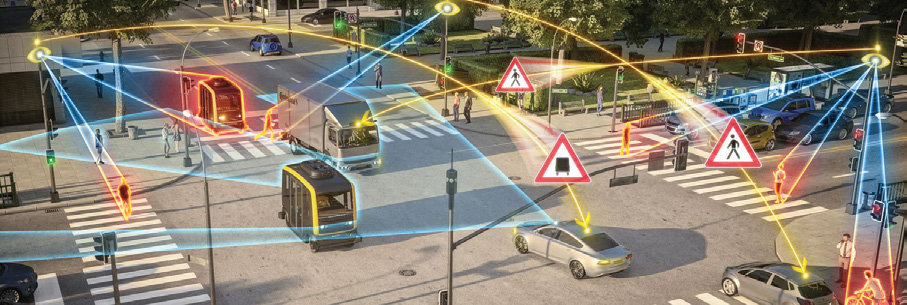 大陸集團的智能交叉路口系統將借助道路基礎設施,通過在繁忙的交叉路口創建虛擬的 V2X 用戶而將這部分弱勢道路用戶“數字化”,讓人人都能聯網,相當于將V2X 通信的普及率提高到 100%。
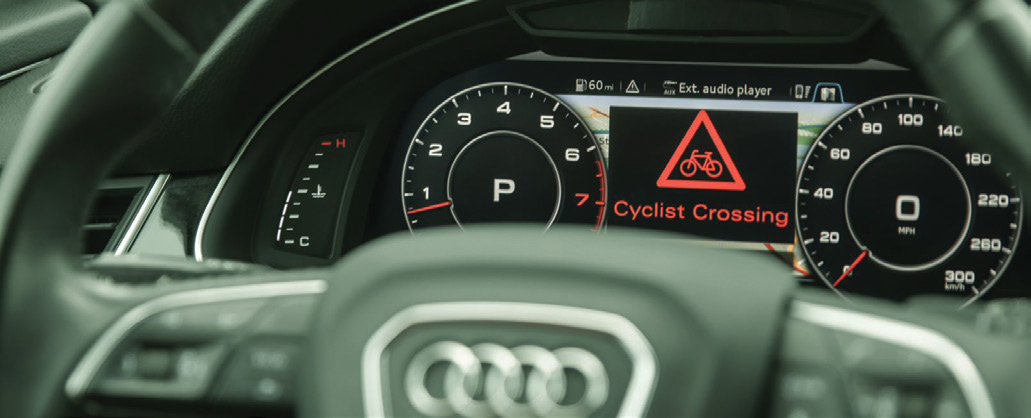 目前,自動駕駛汽車的真正采用率仍非常低,并無統計意義,但 V2X 技術卻已經在保護行人、自行車和摩托車等弱勢道路用戶的安全方面證明了自己的潛力。
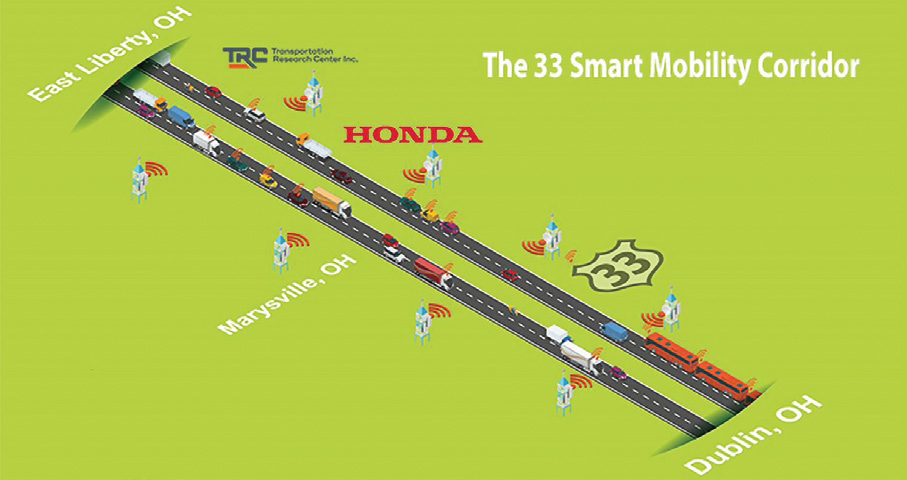 本田(Honda)已承諾在俄亥俄州的智能交通走廊 33 號公路投放 200 輛網聯車輛,其中包括若干輛目前正在進行 V2X 硬件驗證的摩托車。
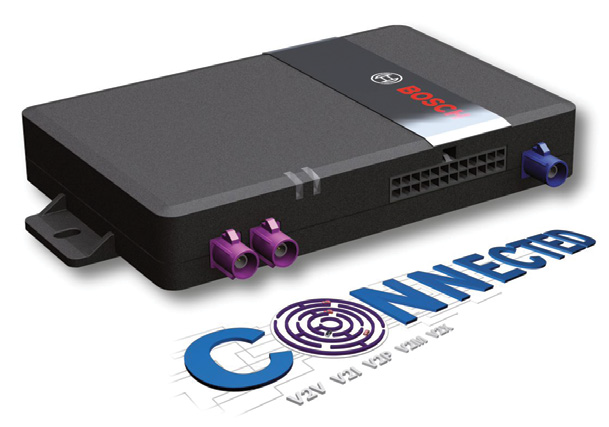 博世網聯控制單元(CCU)可以整合車輛數據,并通過內置的 SIM 卡將數據傳輸到一系列 V2X 配置文件中,包括 V2V(車對車)、V2I(車對基礎設施)、V2P(車對行人)和 V2M(車對摩托車)等。