專訪:ZF ADAS 與自動駕駛負責人 Dan Williams, ZF下一代傳感器,推動商用車輛 ADAS 與自動駕駛技術發展
發布時間:2020-06-01 作者:Ryan Gehm
采埃孚(ZF)公司 ADAS 與自動駕駛負責人 Dan Williams 表示,如今,采埃孚正在與眾多合作伙伴合作,共同為乘用車和卡車市場提供攝像頭、雷達以及其他相關先進組件,而卡車應用非常適合采用更復雜的新一代駕駛員輔助系統。“受到縮短車輛維修時間、降低車輛燃料成本并提高車輛安全性等激勵因素的驅動,商用車輛更愿意采用 ADAS 和自動駕駛技術。” Williams 表示,“此外,行業法規可能也將強制要求我們的客戶采用某些(ADAS 和自動駕駛)解決方案。”
William 指出,采埃孚公司正在同時研發具有“革命性”的高度自動駕駛系統和更加復雜的“新一代”駕駛員輔助系統,并說明公司的 OnTraX 車道保持輔助系統現已登陸某個大型原始汽車廠商客戶的產品,將于 2020 年與大家見面。近日,William 在美國亞特蘭大商用車展會(NACV)上接受了 SAE《卡車與非公路車輛研發》雜志的采訪。此外,他還計劃參加 1 月 22 日至 24 日 SAE 在華盛頓特區舉行的 SAE 政府/行業會議中的商用車安全技術討論環節。
DW: 乘用車行業很有潛力,擁有龐大的規模和充裕的研發資金,這些都是自動駕駛系統研發的絕對必要條件。但乘用車領域也有自己的局限,這些車輛的工作環境通常更加多樣,甚至在很多情況下非常復雜,因此會給自動駕駛系統的應用帶來挑戰。相比之下,非公路車輛的情況則截然相反,這些“大家伙”的工作環境相對單一、穩定,典型的例子包括自動采礦卡車和服務于偏遠地區的其他機械設備。不過,非公路車輛的問題在于“量”特別小,而且需要針對工作站點進行定制,因此需要進行大量研發工作,但最后的需求量卻很低。總體來看,商用汽車是最完美的自動駕駛技術應用場景,一切都恰到好處:這些車輛的使用場景相對固定、活動范圍相對集中,這都有利于自動駕駛的實現。事實上,目前,大約2/3商用車輛 95%的時間均奔馳在各大高速公路上,而這種情況下駕駛員需要做的只是握好方向盤且不要超速。我不是商用車輛的自動化很簡單,但難度確實遠低于乘用車的自動駕駛研發,因為乘用車可能經常需要面對一些奇怪的城市交通場景。
DW: 我們將在 2020 年推出下一代傳感器,以輔助日益復雜的 ADAS 功能。具體來說,我們會推出監測距離更長、視野更廣、分辨率更高的攝像頭和雷達傳感器。這些性能提升將有助于車輛更好地完成更多任務,其中關鍵的幾點包括更好地監測周邊行人及其他靜止或半靜止的目標。除此之外,我們正在與英偉達(NVIDIA)和 Ibeo 公司合作開發一些組件,推動先進技術和自動化水平的提升。2019 年 5 月,采埃孚宣布與ams 和 Ibeo Automotive Systems 合作開發固態激光雷達傳感器技術。
DW: 與目前的 24GHz 傳感器相比,下一代雷達的工作頻率高達 77GHz,這可以更好地監測低速移動或類似靜態的物體,因為事實上,之前相關傳感器在這方面的表現不佳并不是因為目標材質柔軟或移動緩慢造成的。新的攝像頭采用了一種雙模模式:車輛高速行駛時,攝像頭和雷達的視野范圍更窄、更遠;低速行駛時,范圍更寬,但距離肯定也更近,這就是一種取舍。不過,當車輛速度更低的時候,你也不那么關注遠處的視野。因此,我們將在下一代傳感器產品中增加一款短距離雷達,主要可以安裝在車輛兩側,監測周圍環境中的自行車和行人,并配合前向傳感器為車輛提供真正的360 度完整視野。
SAE: 這些下一代傳感器將幫助貴司在自動駕駛領域中獲得些優勢?
DW: 這些傳感器的確是革命性的。我認為,到 2020 年,我們會在SAE L2 級自動駕駛市場中占據非常有利的位置,這是我們眼中“真正的甜蜜點”。我們認為,這種情況會持續一段時間。駕駛員可能在一段時間內還離不開這些車輛,而且我們采用一些技術來持續提高這些車輛的生產力和安全性,那么將在未來很長一段時間保持穩定地位。
DW: 這個問題很難回答。無論您在硅谷聽到了什么,我的回答都比他們超前一步。(笑)我們還需要完成很多工作才能在亞利桑那、新墨西哥和德克薩斯州實現自動駕駛,還要完成更多工作才能把這項技術應用至氣候更具挑戰的北方各州。但一切都會成真的,這毫無疑問,只是時間問題。
DW: 很多車輛僅采用了 ASIL 認證傳感器,而這會不可避免地帶來冗余的需求。您可以找一堆具有較低 ASIL 汽車安全完整性等級的傳感器,把它們堆在一起勉強達到實現關鍵安全功能的最低標準,但這會增加成本,而且一點也不優雅。真正可以滿足功能安全要求的傳感器基本上就是激光雷達,而 2 年過去了,激光雷達還是 5 年前的老樣子,這也是業內經常開玩笑講的。為了實現四級自動駕駛,我們的傳感技術必須取得突破性進展,達到高度可靠的水平。
SAE: 動力總成在 ADAS 和自動駕駛系統中發揮什么作用?
DW: 動力總成將在邁向自動駕駛的過程中越來越多地集成到更復雜的 ADAS 功能之中。最直觀的一個例子就是“列隊行駛”。每個人都知道縮短車隊中的車輛間距可以節省更多燃油,但這毫無疑問需要更加嚴格的動力總成控制。每輛車都需要了解隊列級別等信息,并將這些數據輸入至動力總成中。事實上,這種重載車輛的半坡停車和半坡啟動很難實現平穩,會給動力總成控制提出了挑戰。在這種情況下,要求車隊中的“大家伙”們縮短車輛間距肯定會需要更強有力的控制。
SAE: 采埃孚在“攝像頭上取代卡車后視鏡”的趨勢中發展如何?
DW: 我們肯定會這樣做。我們正在與相關法規事務方面的乘用車人員合作。我們認為,用后視攝像頭替換后視鏡對于行業來說是邁出了重要一步。根據法規,目前在歐洲推行的難度會更低一些。我們在歐洲有個“列隊行駛”演示項目已經將后視鏡替換為攝像頭了。我們將所謂的“機翼”從車輛的駕駛室頂部引出,并在該位置安裝了車隊的 V2V 車對車通信裝置以及后視攝像頭。很顯然,由于監管環境不同,我們暫時還不能在美國完成同樣的設計。
Together with its many partners, ZF supplies camera and radar technology and advanced components for both the passenger car and truck markets, the latter being especially suited for the move to more complex driver-assistance systems, according to Dan Williams, director of ADAS & Autonomy. “The business case in commercial vehicle for reduction in driver hours of service, fuel cost reduction and safety have strong economic incentives to adopt ADAS/automated driving technology,” he said. “Additionally, the regulations placed on the industry will require our customers to utilize certain solutions.”
ZF is working on both highly automated “revolutionary” systems and on “evolutionary” driver-assistance systems that are increasingly complex, he noted, citing the supplier’s OnTraX lane keep assist that will launch in 2020 with its first major OEM customer. Williams spoke with SAE’s Truck & Off-Highway Engineering the recent NACV Show in Atlanta. He’s scheduled to participate in a Commercial Vehicle Safety technical session at the SAE Government/ Industry Meeting, January 22-24, in Washington, DC.
SAE: Which industry will lead with the integration of automation systems?
DW: One very reasonable prospect might be passenger car, which has a lot of scale and a lot of money to invest in R&D that’s definitely required for these very expensive systems to develop. But passenger car has their own problems—they’ve got very diverse and sometimes very complicated duty cycles, or we’d say operational design domains…The opposite extreme is off-highway, like with automated mining trucks and other [machines] in remote areas. All of these off-highway examples are very low volume, very particular to a given site—they require a lot of engineering without much volume. We would say that commercial vehicles are kind of the Goldilocks scenario for automation, where things are just right. There’s more concentrated commercial-vehicle activity in fewer specific use cases that are more simply automated. Two-thirds of our vehicles spend more than 95% of their time going straight down the highway at the speed limit, maintaining the lane. I don’t want to undersell that—that’s still a very difficult thing to automate, but it’s far easier to automate than some of the very strange urban-environment scenarios that passenger cars can get themselves into.
SAE: What can we expect from ZF in the next year or two?
DW: In 2020, we’ll be launching our next generation of sensors that will support increasingly complex ADAS functions. By that I mean these new camera and radar sensors will have a longer range, they’ll have a wider field of view, and they’ll have higher resolution. All these things taken together will allow them to do any number of things, probably most significantly is to allow us to do a better job of detecting pedestrians and other stationary and semi-stationary objects. Apart from that we’re working with NVIDIA and Ibeo on components that power even higher levels of technology and full automation.[In May 2019, ZF announced a partnership with ams and Ibeo Automotive Systems to develop solid-state lidar sensor technology.]
SAE: Can you elaborate on these next-gen sensors?
DW: The next-generation radar is going to be operated at a higher frequency, at 77 GHz [vs. the current 24-GHz sensor], and that will do a better job of detecting slow-moving, sort of stationary objects—it’s not really the ‘soft tissue’ as much as the ‘slow moving’ that causes problems. And the camera, it has kind of a dual mode of operation, where it’s got a narrower field of view that extends longer for on-highway operation at high speed, and then the camera and the radar have a wider field of view that they can go into at slower speeds. The trade-off is shorter range, but at slower speeds you really don’t care. And then a new sensor we’ll be adding in this next generation is a short-range radar that can be placed on the side of the vehicle to detect bicyclists and pedestrians. That in concert with these forward-looking sensors gives us a more complete view not only in front of the vehicle but all the way around the side.
SAE: Where do these next-gen sensors position you on the SAE levels of automation?
DW: They’re evolutionary, really. I think we’re going to be very well positioned in 2020 for the L2 market, and we see that as a real sweet spot; we think that’s going to be around for a while. Drivers are going to be driving these vehicles for some time, and if we can use some of this technology to improve their productivity, to increase the safety, that’s going to have value for quite a while.
ZF’s OnTrax assist offers further capabilities with the addition of short-range radar, including lane change and city drive assist.
SAE: What’s the timeline for Level 4 autonomy?
DW: That’s a tough question. Anything that I’d say would be further out than what you hear from Silicon Valley.[Laughter] There’s a lot of work to get this going in Arizona, New Mexico, Texas, and there’s going to be even more to get it beyond that into more challenging duty cycles, in snowstorms and rough weather up north. But it’ll happen, there’s no doubt it’s going to happen. It’s just a matter of when.
SAE: What are the challenges to get to L4?
DW: A lot of it is just having the ASIL-qualified sensors, and that brings in redundancy.You can pile a bunch of sensors together that have a lower ASIL [Automotive Safety Integrity Level] to get to what you need for safety-critical functions. But that adds expense and that’s not really an elegant solution. The sensors that really satisfy the functional safety requirements, basically it’s lidar, and the old joke is, it’s two years out and it’s been that way for the last five. There needs to be some breakthroughs in highly reliable sensing technology to be able to do that.
SAE: What’s the role of powertrain in ADAS and autonomy?
DW: Powertrain will be increasingly integrated into more complex ADAS functions on the way to autonomy. An easy thing to describe is platooning. Everybody suspects that as we shorten the following distances with platooning we can increase the fuel savings. When you shorten the following distances, you need to more tightly control the powertrain. You need knowledge of grade information and stuff like that and feed that into the powertrain. It’s a fairly difficult problem to be able to smoothly start and stop these heavily loaded vehicles on a grade, that challenges powertrain control—to have them in an automated way to back up and very gently kiss the loading dock. That requires a lot of control.
SAE: What’s ZF’s position on cameras replacing exterior mirrors on trucks?
DW: We’d like to do it, for sure. We are working with our passenger car people that are involved in the regulatory affairs with this action. We think it’d be a good step for the industry to be able to replace the mirrors with rearward-looking cameras. It’s maybe a little bit easier to do in Europe right now based on the regulation. We’ve got a demo going on with a platooning project over there that actually does exactly this. We’ve got what we call ‘wings’ that come out of the vehicle at the top of the cab, and that’s where we put the V2V [vehicle-to-vehicle] communication between the platooning vehicles and we’ve also got rearward-looking cameras in there. It’s obviously something where we’ve got to see regulatory change over here before that can happen.
Author: Ryan Gehm
SAE Autonomous Vehicle Engineering
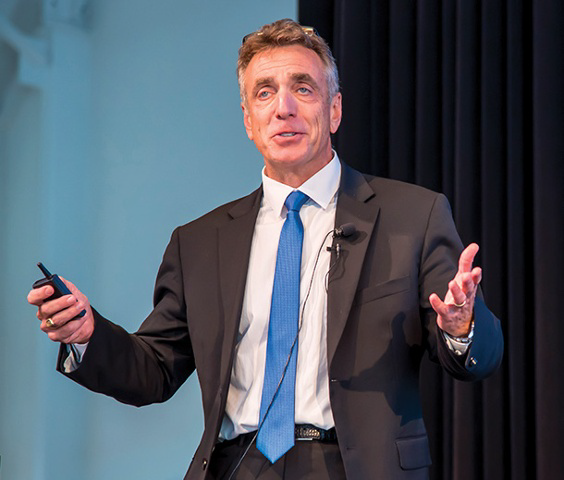 采埃孚ADAS 和自動駕駛負責人Dan Williams
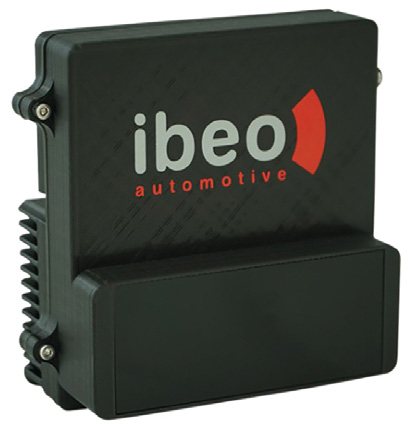 采埃孚正在與 Ibeo 和 ams 合作開發幾款固態激光雷達傳感器,可以提供車輛周圍的完整 3D 圖像,并精確感知復雜的交通狀況。
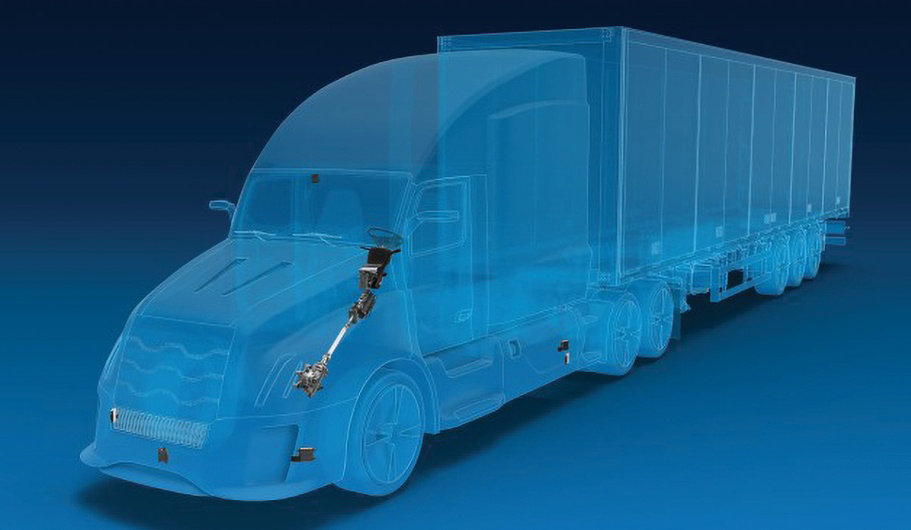 采埃孚的OnTrax 輔助系統采用了更先進的短程雷達,因此具備了更多高級功能,包括車輛變道和城市駕駛輔助等。