一提到未來推進系統(tǒng),你腦海中首先想到了什么?先進燃氣發(fā)動機、柴油內(nèi)燃機?還是混合動力系統(tǒng)、純電動系統(tǒng)?又或是氫燃料電池?事實上,只要是你說的上來,韓國汽車巨頭現(xiàn)代公司(Hyundai)都有相應(yīng)研發(fā)項目,這種應(yīng)有盡有、全面開花的架勢也贏得了眾多競爭對手的認可和尊重。
“我們很榮幸能有機會嘗試各種動力系統(tǒng),”現(xiàn)代汽車北美動力總成總監(jiān) John Juriga 表示。Juriga 已經(jīng)在現(xiàn)代汽車位于安阿伯市的技術(shù)中心工作 16 年了,他說,“推進系統(tǒng)有時能將我們逼瘋,有時卻又帶給我們非同尋常的快樂,因為我們有機會同時嘗試幾乎所有可能的推進技術(shù)。”
Juriga 表示,內(nèi)燃發(fā)動機仍有“優(yōu)化的余地”,我們有一些關(guān)鍵技術(shù)可以優(yōu)化內(nèi)燃機的熱力學、形狀體積和機械效率等。“現(xiàn)在,擺在我們面前的挑戰(zhàn)是如何更好地整合這些技術(shù)從而實現(xiàn)我們的優(yōu)化目標。如今,各地的排放要求真的越來越難實現(xiàn),之前只要求常規(guī)的 NOx 排放物,如今還有 N2O 和顆粒物濃度要求。可以說,正是這些規(guī)定驅(qū)動我們不斷優(yōu)化發(fā)動機和推進系統(tǒng)架構(gòu)。此外,EPA 現(xiàn)在也要測量“駕駛循環(huán)外排放”(Off-cycle emission),這無疑會讓我們的工作量翻倍,但同時也是非常激動人心的挑戰(zhàn)。”
美國的排放監(jiān)管環(huán)境近期可能不會較大改動,但現(xiàn)代汽車仍堅定不移地執(zhí)行自己的動力總成研發(fā)計劃:密切關(guān)注華盛頓條款的有效期限、加里福尼亞州的 ZEV(零排放車輛)要求,以及與薩克拉門托車輛排放政策配合的第 177 條款。Juriga 斷言,“哪怕聯(lián)邦政府放松監(jiān)管要求,我們的技術(shù)路線圖也不會改變。”
GDCI 學習
汽油內(nèi)燃發(fā)動機“仍將是未來幾十年中的主力選手,但將同時具備很高的電氣化水平。”Juriga稱,“目前,沒有任何燃料的功率密度比得過汽油。這種老牌動力源具有龐大的群眾基礎(chǔ)、成本低廉且效率很高,因此不會輕易退出歷史舞臺。在此背景下,我們也集中精力進一步提高汽油發(fā)動機的效率,并致力于電氣化和燃燒技術(shù)這兩個關(guān)鍵領(lǐng)域的發(fā)展。”
Juriga 的團隊屬于韓國現(xiàn)代公司,但同時也與美國能源部、多家頂尖大學和供應(yīng)商,及北美市場中的大量排放驗證與認證機構(gòu)有直接合作。
現(xiàn)代動力總成發(fā)動機開發(fā)測試經(jīng)理 Phil Zoldak 也參加了我們與 Juriga 和 Lee 的會面。他表示,“我們的先進燃燒發(fā)動機研發(fā)主要著力于兩個領(lǐng)域,第一是繼續(xù)優(yōu)化傳統(tǒng)增壓火花點火發(fā)動機,第二是探索稀薄燃燒發(fā)動機。其中,稀薄燃燒發(fā)動機有兩個方向,分別為火花點火(借助 EGR 尾氣再循環(huán)和先進點火系統(tǒng))和稀燃壓縮點火。
“我們更關(guān)注探索稀燃發(fā)動機,重點方向是先進的點火、增壓和控制系統(tǒng),在我們看來,這是解鎖更高燃料效率的關(guān)鍵。”Zoldak 表示,“我們在選擇并優(yōu)化合適的硬件時大量采用了計算流體力學 CFD 工具。”
美國能源部在 2011 年至 2018年間贊助了一項名為 GDCI 的項目,專注于壓縮點火汽油發(fā)動機,參與成員包括現(xiàn)代汽車、德爾福(Delphi)和威斯康星發(fā)動機研究咨詢所(Wisconsin EngineResearch Consultants)。Juriga 表示,我們從該項目中學到了很多,但也同時面臨兩個陷阱。“首先,我們必須使用額外的硬件,也就是渦輪增壓器(turbocharger)和機械增壓器(supercharger),這毫無疑問會增加系統(tǒng)的復(fù)雜度和成本。其次,GDCI 發(fā)動機沒有火花點火模式,完全只能靠壓縮點火,因此無法使用冷啟動等一系列功能,這可能過于激進了。”
“我們的目標是使用低成本硬件組件,打造一款可以根據(jù)負載無縫切換使用火花點火和壓縮點火系統(tǒng)的發(fā)動機。”
混合模式控制器
緊隨 GDCI 項目結(jié)束后開展的是Co-Optima 項目(2019 年 1 月至 2021 年),即“可以滿足未來排放標準的協(xié)同優(yōu)化燃料和多模式汽油壓縮點火發(fā)動機”項目。該項目由美國能源部的“車輛技術(shù)辦公室”資助,旨在打造更加高效的發(fā)動機和燃料搭配組合。目前,全美共有九個美國國家實驗室參與了這個項目。現(xiàn)代北美公司、密歇根理工大學(MTU 模擬)和 Phillips 66(燃料開發(fā))也參與了合作。目前,項目的試驗臺正是一款現(xiàn)代 2.2 升柴油發(fā)動機。Juriga 指出,“最終,我們可能研發(fā)出一款擁有獨一無二氣缸頭的燃氣發(fā)動機。”
“我們希望通過該項目實現(xiàn)高級別的整合,并最終在盡量使用現(xiàn)成硬件的基礎(chǔ)上實現(xiàn)量產(chǎn),”Zoldak 解釋道,“這款發(fā)動機將能夠以火花點火(SI)模式啟動,化學計量或稀燃模式運行,并借助內(nèi)部 EGR 系統(tǒng)轉(zhuǎn)換至低溫燃燒模式,然后使用外部 EGR 系統(tǒng)再次轉(zhuǎn)換為壓縮點火模式。因此,隨著負載的不斷增加,你可以選擇三種過渡模式。
Juriga 指出,“不難想象,這種復(fù)雜的模式切換并不容易,燃料的辛烷值也會產(chǎn)生影響。” Phillips 66 公司提供一系列不同辛烷值和反應(yīng)性的燃料。然后,我們會在項目中對這些燃料進行建模。Zoldak 表示,“我們正在使用密歇根科技大學開發(fā)的真實燃料建模技術(shù)。”
Co-Optima 項目旨在首先通過結(jié)合合適的模擬和硬件以實現(xiàn)穩(wěn)態(tài)性能,然后解決幾乎每臺稀燃發(fā)動機都需要面對的挑戰(zhàn),即優(yōu)化駕駛體驗。
“我們正在構(gòu)建一個可以在定點或動態(tài)過程中捕捉所有模式的發(fā)動機,”Zoldak 解釋說。“這個項目的重點不在瞬態(tài)測試,但也不是說一點瞬態(tài)測試也不會有。比如,使用混合模式控制器處理不同區(qū)域,然后針對每個區(qū)域進行校準優(yōu)化,并使用算法在不同模式間切換。”
模式切換的實現(xiàn)關(guān)鍵在于開發(fā)團隊對系統(tǒng)動態(tài)的理解和掌握,即如何協(xié)調(diào)利用不同模式的工作速度,以及如何進行調(diào)整使發(fā)動機能夠根據(jù)命令迅速開始工作,而非只關(guān)注噴射器、EGR 閥和渦輪增壓水平等硬件規(guī)格。Juriga 指出,“我們想看看,我們到底能稀薄到什么程度以及需要哪些燃料和空氣系統(tǒng)。”此外,本項目的副線之一是研究新的點火系統(tǒng)與技術(shù)。
“我們將在開發(fā)過程中改進壓燃式汽油發(fā)動機的特性,以減少汽缸排放,”Juriga 指出,“燃氣和柴油技術(shù)的融合是我們多年來一直關(guān)注的問題。”
Name a future propulsion solution for vehicles, and Hyundai's on it. From advanced gas and diesel ICE, to all manner of hybrid, EV, and hydrogen fuel cell, Korea's mobility king has it in development or in production. Competitors acknowledge their respect for the company's rapid progress on all engine fronts in recent years.
"We're fortunate to be working on everything," asserts a modest John Juriga, Hyundai North America's Director of Powertrain, who has been with the company's Ann Arbor technical center for 16 years. "It drives us crazy sometimes, but it's also incredibly fun because we're developing all these different technologies concurrently.”
There are still "knobs to turn”— the key technologies that can improve the thermodynamic, volumetric, and mechanical efficiency of combustion engines, he says. "The challenge for us is how to integrate all these systems to do that. Emission requirements are getting really, really tough—standard NOx, and now N2O and particulates. They're huge in driving the engine and propulsion system architecture. And EPA now is looking at off-cycle emissions. The complexity of what we have to accomplish is multiplied, but it's an exciting time.”
That U.S. regulatory environment may seem to be in a ‘holding pattern' but Hyundai remains unwavering in its powertrain plans: keeping an eye on both Washington's regulatory tenor and also on California, with its ZEV [zero-emission vehicle] requirements, along with the Section 177 states aligned with Sacramento's mobile-emissions policies. "Even if the federal government relaxes its regulations, our technology roadmap won't change," Juriga asserted.
The gasoline ICE "will remain the mainstay for decades to come—but it's going to have high levels of electrification attached," asserts Juriga. "There is nothing that currently compares to the power density of gasoline as a fuel source. And the combination of its prevalency, low cost and efficiency means it's not going to go away quickly. So, we focus on how to make it more efficient. That's why electrification and combustion development are two key areas we're working on.”
While it operates under the umbrella of Hyundai Powertrain in Korea, Juriga's team engages in collaborative R&D projects with the U.S. Dept. of Energy (DoE), net- working with top universities and suppliers, in addition to spearheading North American market emissions validation and certification.
"In advanced combustion engines there are two main areas that we're involved in," notes Phil Zoldak, Hyundai Powertrain's manager of engine development and testing, who joined our meeting with Juriga and Lee. "One is furthering traditional boosted SI engines. The other is lean-burn engines, and within that space are two branches: Spark-ignited, which looks at dilution with EGR and advanced ignition systems, and lean-burn compression ignition.
"We're focusing more on the lean-burn development side, in what we call Technology Enablers—advanced ignition systems, advanced boosting and controls," he said. "We use CFD extensively to co-optimize and select the right hardware.”
A DoE-sponsored program that ran from 2011 to 2018, dubbed GDCI, focused on a gasoline-fueled compression-ignition engine with Hyundai working with partners Delphi and the Wisconsin Engine Research Consultants. It yielded significant learnings, Juriga said, but had two pitfalls. "The hardware we had to use—a turbocharger and supercharger—drove system complexity and cost. It also had no spark mode; it relied exclusively on compression ignition, which compromised things like cold start. It was perhaps too aggressive.”
"The intent is to create an engine that seamlessly transitions from spark-ignition stoichiometry to compression-ignition mode, depending on load, using low-cost hardware."
GDCI was followed by the Co-Optima Initiative, launched in January 2019 and running to 2021. Co-Optima is short for "Co-optimized Fuel and Multi-Mode Gasoline Compression-Ignition Engine for Meeting Future Emission Standards."Funded by the DoE's Vehicle Technology Office, the program aims to create engines and fuels that are more effectively optimized together. Nine U.S. National Labs are collaborating on the project. Hyundai North America is collaborating with Michigan Technological University (MTU - simulation) and Phillips 66 (fuel development). A Hyundai 2.2-L diesel is serving as a mule test rig; "we may end up with a gas engine in the end, with a unique head geometry," Juriga noted.
"This program is our effort to put everything into a package that is production-intent and uses more off-the-shelf-type hardware," explained Zoldak. "The engine has the ability to start out in an SI mode, operating in a stoichiometric or lean-combustion mode, and transition into a more low-temperature combustion mode using internal residuals [EGR]. Then make another transition into a compression- ignition mode using external EGR. So, there's three transitional modes we're looking at as you increase load.
"The complexity of mode switching comes into play, and as you can imagine fuel octane starts to bear on this," Juriga noted. Phillips 66 is providing a range of fuels with different octanes and reactivity. The fuels are then being modeled; "we're using a real-fuel modeling technique that MTU has developed," said Zoldak.
The program aims to achieve steady-state performance first, combining simulation and hardware selection, before trying to tackle the transients that have challenged the drivability of virtually every lean-burn engine development effort.
"We're building an engine that can capture all the modes, at specific points, on the dyno," Zoldak explained. "The main scope of the work wasn't to do transient testing. It wasn't a requirement of the project, but we'll be doing some testing in transients. We'll handle them using a mixed-mode controller—we have different combustion modes that are calibration-optimized for that region and use algorithms to transition from one mode to another.”
The changeovers will be dependent on the development team's grasp of system dynamics—the operating-speed deltas among production-intent, rather than R&D-spec hardware including injectors, EGR valves, turbo boost levels, etc.—and how they can be adjusted to operate rapidly, on command. "We'll look at how lean can we go, and what fuel and air systems do we need to support it.”Juriga noted. New ignition-system technologies are being investigated as a sideline of the project.
"As we go through development, we'll be refining the characteristics of the compression-ignition gasoline engine with the goal of reducing emissions in cylinder," he explained. "The merging of gas and diesel technologies is something we've been looking at for years.”
SAE Automotive Engineering
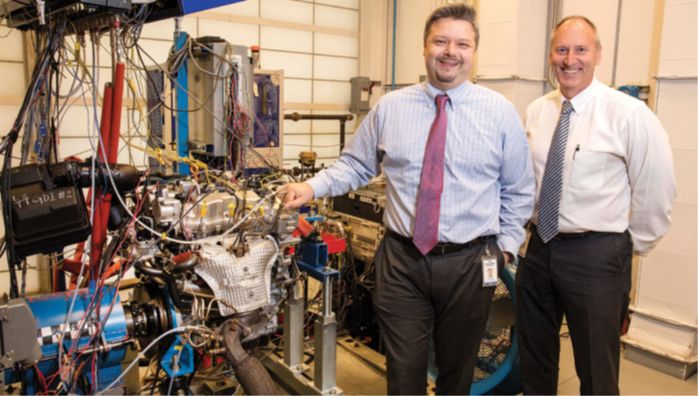 準備啟動測試:Phil Zoldak(左)和 John Juriga 正在對一款稀燃發(fā)動機進行測試前的最終檢查。
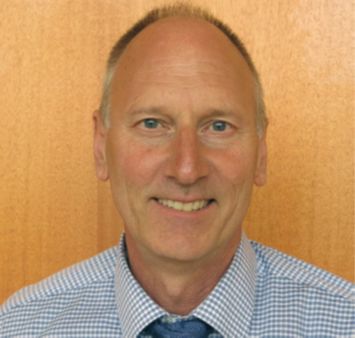 盡管如今的推進系統(tǒng)解決方案越來越復(fù)雜,但作為一名將發(fā)動機研發(fā)融入血液的動力系統(tǒng)“老兵”,John Juriga 仍深深被這個領(lǐng)域所吸引。