通用汽車公司(General Motors)全球產品整合副總裁 Ken Morris 主管公司的動力總成業務,他對目前大肆宣傳的電動推進系統發展趨勢有一套獨特觀點。事實上,你可能想不到目前發動機業務仍是通用汽車公司的關鍵業務之一。最近,在接受《汽車工程》雜志的采訪時,Morris 表示,“你隨便看看現在的報道,可能會以為我們已經放棄(內燃)發動機,一切都要向電動推進系統邁進了,但事實上并非如此。”
Morris 表示,“在我看來,通用汽車公司正處于向電動推進系統轉型的時期,而且就交易量而言,我們的轉型速度可能沒有你想象的那么快。IHS 數據顯示,從現在起 10 年后,90%的發動機市場仍將是內燃機的天下。”
“然而,一旦真正優質的電動汽車開始大批量上市、相關充電基礎設施開始呈現規模,到時候的情況你真的很難預測。”Morris 進一步補充說,“最后,你必須給客戶提供他們想要的東西:燃油經濟性、性能、質量和可靠性。無論是研發內燃發動機、混動汽車還是電動汽車, 這都是我們所有研發的終極目標。有人可能對電動汽車接受很快、有人可能由于工作需求對內燃發動機‘依依不舍’,這都是有可能的,我們要做的事就是為各種客戶提供可以選擇的菜單。”
內燃機時代行將終結?
然而,這并不意味著通用汽車對電氣化未來的到來持懷疑態度。事實上,通用汽車已經針對電氣化動力系統進行了大量投資。“我們在純電動汽車上的資源投入翻了一倍,但并沒有放棄內燃發動機工作。” Morris 解釋說,“如今,我們正在開發兩款全新的內燃發動機。市場對高性能、高能效的發動機總是有需求的。無論是開發全新的發動機型號,還是對現有發動機進行優化,毋庸置疑的是通用汽車的內燃發動機研發仍將持續數十年。”
“如今負責內燃發動機的機械工程師在純電動推進系統研發中還有用武之地嗎?”Morris 回答到,“我認為有,因為他們不僅技術專業而且經驗豐富,已經在長期工作中證明了自己戰勝新挑戰的能力,他們肯定能幫上忙。”
平衡全球組合
“汽車是世界上最復雜的行業之一,”Morris 解釋說,“作為一家全球汽車制造商,成功的關鍵就是時時刻刻、方方面面地做好準備。無論是全球任何一個市場,監管環境變化帶來的影響遠超燃料價格。你必須嚴格平衡在該地區的產品組合及相應銷量,從而滿足公司作為一個整體在該地區的合規需求。”
“例如,柴油發動機在中國的普及率非常、非常低。”Morris 補充說,“但這個市場對全球各地的影響卻非常深遠。過去,全球汽車行業的質心可能是歐洲和美國。但中國,特別是在純電動汽車和混合動力汽車技術出現以來,正在推動全球汽車行業的變化。我研究過數據,柴油發動機的普及率在歐洲已經下降了,那還會反彈回來嗎?”
內部研發與供應商合作
“俗話說的好,要不求人、要不求己,別無他法。我們必須為我們的車型尋找市場上最合適的解決方案,如果沒有合適的,我們就自己開發一個。”Morris 當被問及原始設備制造商和供應商之間關系將如何變化時表示,“無論你如何進行整合、如何規劃車輛功能、如何執行系統運作,但最關鍵的是車輛的靈魂不能改變,這也是通用汽車永遠不會放棄的東西。”
“這也是決定各種汽車是否能在自動駕駛世界中脫穎而出的關鍵,”Morris繼續道,“誰可以客戶提供最佳體驗?我認為,通用汽車從系統層面整合駕駛/操控、噪音/振動、轉向/制動器的能力就是我們的一大優勢。未來,到底是供應商幫我們供貨?還是我們自己研發?這都不重要,重要的是如何將其恰到好處地融合在每一款汽車中,這才是通用汽車與眾不同的地方。”
今天的挑戰
在Morris 看來,每天最緊迫問題是什么?“我認為是內燃發動機,這是為所有純電動汽車和自動駕駛汽車研發‘輸血’的動力,以及這些產品的盈利性如何。我每天的目標:首先,是讓通用汽車成為市場上最好的汽車,這是因為我們不能控制客戶的購買決定,只能為客戶提供更好的選擇;其次,盡量提高車輛的能源效率,這不僅可以增加車輛的賣點,而且也是我們進入很多市場的先決條件;最后,我們還必須盡量提高這些車輛的盈利性,這樣才能為未來的研發計劃提供資金。”
Morris 作為全球汽車巨頭通用汽車的掌門人之一,顯然對未來汽車科技的發展趨勢很有發言權,但他似乎理性地選擇著眼當先。“人們很容易被新技術所迷惑,而忽略了目前的汽車行業也是每年可制造 1700 萬到 1800 萬輛汽車的巨輪。”Morris 解釋說:“這種規模的行業需要大量設備、技術和人力的支持,新技術是在發展,我們也確實在前進,但傳統車輛的動能仍不可忽視。”
As the VP of global product integrity at General Motors, Ken Morris oversees powertrain engineering, and has a first-hand view of the often ballyhooed trend of electrified propulsion. You might be surprised to learn that GM is, in fact, still very much in the engine business. “The way things are being covered right now, you would think we had just stopped everything, and everything is electric, and that certainly is not the way things are going to develop,” Morris said in a recent sit-down with Automotive Engineering.
“I would say GM's in transition, and the speed of that transition in terms of volumes is probably, you know, less huge than you would expect. IHS data says 90% still ICE 10 years from now,” Morris noted, referencing the respected industry analyst.
“But you never know what's going to happen when really good electric vehicles come out in volume, and the infrastructure starts coming around,” Morris said. “In the end you want to provide what the customers want: fuel economy, performance, quality, reliability. We're developing ICEs to match those, developing hybrids, developing electric vehicles. The key is to provide a kind of a menu. Some people are going to be early adopters and some people are going to be diesel diehards because that's a tool they need.”
End of the ICE age?
This does not mean that GM is doubtful of an electrified future, and it is investing accordingly. “We're doubling the number of resources that we have on BEVs, but we still have a tremendous amount of work to do on ICEs,” Morris explained. “We've got two brand-new engines in development right now. There's always going to be a need for really high-performance, high-efficiency engines. Doing that with new engines, or continuing to polish the stone on existing engines, we'll be in that business probably decades for sure.”
“Do I believe mechanical engineers can transfer those skill sets to help us on BEV propulsion systems?” Morris noted to the query. “I do. And that's the thing: It's not just good people, they're brilliant. They're experienced and they've been around the block multiple times. You definitely want to bring them along.”
Balancing the global mix
“The auto industry is the most complex industry in the world,” Morris explained. “The key to being a global automaker is you have to be prepared for whatever region you're trying to sell your vehicles in. The regulatory environment alone drives much more than fuel prices. What you need to do to meet the regulations in terms of what your mixes are, and how many you sell of each type of powertrain.”
“China for example, very, very low adoption of diesel,” Morris added. “And China is driving a lot of what's happening in the rest of the world. It used to be Europe and the United States as kind of the centroid of automotive technology. But China, especially along the lines of BEVs and hybrids and that technology, is driving that. I've looked at the numbers and the penetration rate of diesels has gone way down in Europe, and so does that bounce back?”
In-house and supplier expertise
“The saying is we'll either find a way or make a way. We're going to take the best solution that we can get for the vehicle, and if there isn't a good solution, were gonna make one.” Morris said when asked about the evolving relationship between OEMs and suppliers. “The key—and this is something that General Motors can never let out—is the soul of the vehicle and how you integrate all those things, and how does the vehicle function and how does it perform?”
“That's what's going to be the separator of vehicles in the AV world,” Morris continued. “Who's providing the best experience for the customer? I think our ability to integrate ride/handling, noise/vibration, steering/brakes has really come along as a company, and I think that's one of our strengths. It's a system exercise. The separation between what suppliers give us versus what we invent, that's going to be a case-by case basis. But how we dial that car in, that's us.”
Today's challenges
What does Morris see as the most pressing concerns facing him daily? “The motor that's going to fund all of the BEV and AV stuff are the IC engines and how profitable we are on our standards. My goal every day– number one – is to make those the best vehicles they can be, because people can buy anything they want. Then we have to make them as fuel-efficient as we can for selling points to customers, but also the regulatory environment. Lastly, we need to make as much money as we possibly can on these vehicles, because we want to fund the future.”
Morris is obviously in a thoughtful position to comment on future tech, but he appears rationally anchored in the present. “It's easy to get enamored with a new technology and forget what a massive industry we have making 17-, 18-million vehicles a year,” he explained. “There's a lot of equipment behind that, a lot of technology, a lot of people working on it. It's like an enormous ship. We're moving, and the technology is changing, but there's still a huge amount of momentum for the traditional vehicles.”
Author: Paul Seredynski
SAE Automotive Engineering
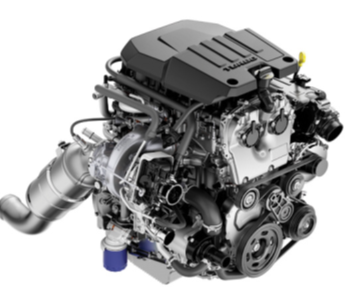 通用汽車新型 2.7L “雙蝸殼”渦輪增壓 4 缸發動機將為公司的電氣化未來投資“輸血”。
 “因為他們不僅技術專業而且經驗豐富,已經在長期工作中證明了自己戰勝新挑戰的能力,他們肯定能幫上忙。”