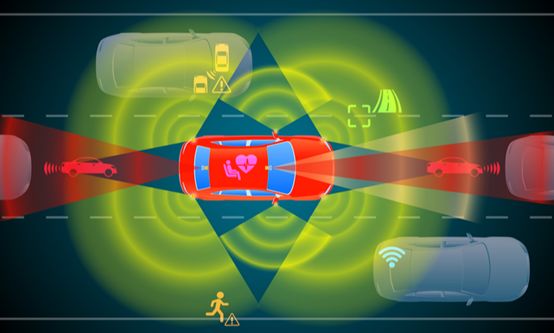
目前�����,全球大多數車禍都是由駕駛員失誤造成的向前碰撞事故��。對此�,汽車制造商正在奮力開發先進駕駛員輔助系統(ADAS)以防止撞車事故的發生��,但目前的效果仍尚不盡如人意��;第二篇則將探討增加一個高性價比的定向激光雷達傳感器將如何有助于防止正面碰撞事故的發生。
定義問題
根據美國公路交通安全局(NHTSA)提供的 2016 年全美車禍數據,至少50% 以上的車禍致死�����、致傷或財產損失事故均為多車連環事故,且其中至少有一輛車面向前方。[1] 2016 年,此類車禍已經造成超過 1.2萬人死亡����、1,20萬人受傷,另造成超過 270萬起財產損失。[2]具體來說,這些多車連環車禍包括追尾碰撞(占 2016年各類碰撞總量的 32.6%)和正面碰撞(占2.6%)。另外,還有 20.9% 是有一定角度的碰撞���,且我們可以合理推論�,在角度碰撞事故中,至少有一輛車經歷了前向碰撞。
在2016年,全美 15.9% 的車禍均與撞上固定物體有關���,如電線桿�、路邊石、溝渠、樹木�、欄桿�����、橋梁等��,并最終導致 1萬余人死亡、37萬人受傷、77.8萬起財產損失報告�����。對此�,我們可以合理推斷��,絕大多數直接撞上固定物體并導致死亡或受傷的撞車事故都是正面碰撞。
此外�,2016 年所有撞車事故中有 2.1% 涉及行人或自行車�����。此類事故的危險性極高�����,占所有車禍致死事故的 16.2%,死亡人數超過 6,500 人�,且絕大多數均與乘用車的正向碰撞有關:87% 的行人和85% 騎自行車的人均死于這種情況��。[3]75% 行人車禍致死事故發生在低光照條件下����。[4] 2016 年,有 10% 的撞車事故是直接撞上其他停放車輛或動物�����。對此,我們有理由認為����,此類碰撞事故也應呈現相同規律���,即大多數傷害都涉及正面碰撞�����。因此��,盡管這些事故中可能也包含側面碰撞和追尾碰撞�,但我們可以合理得出結論���,2016 年與行人、自行車��、動物和停放車輛的正面碰撞����,約占所有撞車事故的 10%��。
基于這些涉及動物、自行車�����、行人、固定物體和其他移動和停放車輛的碰撞事故數據�����,我們可以保守估計,2016 年����,在全部 7,277,000 起車禍中����,76% 均涉及正面碰撞�����。
性能優化的機遇與影響
我們可以從多個方面判斷交通事故的總影響并權衡各種對策的優劣�。根據 NHTSA 的統計結果,2010 年交通事故造成的總經濟和社會影響損失達到驚人的 8,360 億美元。[5]事實上,這一數字在中間幾年還有所增加��;2010 年至 2016 年間�,交通事故死亡人數增長了 12%�,受傷人數增長 29%[6]。因此,根據我們上文的估算���,2016 年����,全美正面碰撞事故造成的經濟損失保守達6,350 億美元。這些正面碰撞事故已經造成了至少 2.7w萬人死亡、150 萬人受傷���。[7]
目前�,市面上的正面碰撞預防系統已經在防止正面碰撞事故發生方面發揮了顯著的作用����。具體來說,美國公路安全保險協會(IIHS)報告稱����,按照出警記錄�,通用汽車配備了自動緊急制動(AEB)和正面碰撞警告系統的車輛�,比不具備同類功能的相同車型發生追尾事故的概率降低了 43%��。[8] 這一信息令人鼓舞����,但仍有巨大改進空間。統計數據表明,即使所有道路車輛均安裝了這種高級駕駛系統,2016 年的所有正面碰撞事故中有 57% 扔無法避免。事實上���,真實的ADAS 性能指標很少公布�;然而����,如果我們將通用汽車 AEB 系統預防追尾事故的成功率應用至其他正面碰撞場景,則可以推斷出,這些未解決的碰撞問題導致的社會損失大約為3,620 億美元(占總量 6,350 億美元的 57%)�����。
事實上,這對汽車安全公司而言意味著巨大的機會�。本文提出����,一個基于前向激光雷達傳感器設計的 ADAS 系統可以防止目前系統 90% 無法應對事故。這種性能優化可以挽回 3,250 億美元的社會損失(即總量3,620 億美元的 90%),如果平攤至2016 年在美注冊的 2.88 億輛汽車����,相當于每輛車可以至少避免1,100 美元的損失����。在本文第二部分中將介紹到���,使用激光雷達傳感器為感知組件可以極大地提高 ADAS 系統的安全性能。
關于作者
文獻參考
[1]National Highway Traffic Safety Administration (NHTSA), “Crashes by FirstHarmful Event, Manner of Collision, and Crash Severity, 2016,”https://cdan.nhtsa.gov/SASStoredProcess/guest.
[2]These statistics are conservative because they reflect reported incidents,which may have involved multiple fatalities or injuries.
[3]NHTSA, “Traffic Safety Facts, 2016: Pedestrians,”https://crashstats.nhtsa.dot.gov/Api/Public/Publication/812493.
NHTSA,“Traffic Safety Facts, 2016: Bicyclists and Other Cyclists,”“https://crashstats.nhtsa.dot.gov/Api/Public/ViewPublication/812507.
[4]NHTSA, “Traffic Safety Facts, 2016: Pedestrians,”https://crashstats.nhtsa.dot.gov/Api/Public/Publication/812493.
[5]NHTSA, “The Economic and Societal Impact of Motor Vehicle Crashes, 2010”;https://crashstats.nhtsa.dot.gov/Api/Public/ViewPublication/812013.
[6]NHTSA, “Traffic Safety Facts 2016,”https://crashstats.nhtsa.dot.gov/Api/Public/ViewPublication/812554.
[7]NHTSA, “Crashes by First Harmful Event, Manner of Collision, and CrashSeverity, 2016,” https://cdan.nhtsa.gov/SASStoredProcess/guest.
[8]Insurance Institute for Highway Safety, “GM Front Crash Prevention Systems CutPolice-Reported Crashes,”https://www.iihs.org/iihs/news/desktopnews/gm-front-crash-prevention-systems-cut-police-reported-crashes.
Most vehicle crashes are forward-facing and result from driver error. Although automakers are striving to develop advanced driver-assistance systems (ADAS) to prevent these crashes, there is still significant room for improvement. This multipart series explores how adding one cost-effective directional lidar (light detection and ranging) sensor would contribute to the prevention of forward-facing crashes.
Defining the problem
According to our analysis of 2016 figures provided by the National Highway Traffic Safety Administration (NHTSA), at least half of all crashes resulting in death, injury, or property damage were multi-vehicle collisions in which at least one vehicle was forward-facing.[1] Altogether, in 2016, this type of crash caused more than 12,000 fatalities; 1,200,000 injuries; and 2,700,000 additional reports of property damage only.[2] These multi-vehicle crashes include front-to-rear collisions, which comprised 32.6% of all 2016 crashes, and head-on collisions, which represented 2.6%. In addition, 20.9% of 2016 crashes were multi-vehicle collisions that occurred at an angle; it is reasonable to conclude that, in the vast majority of angle crashes, one vehicle experiences frontal impact.
In the same year, 15.9% of vehicle crashes involved collisions with fixed objects, such as poles, curbs, ditches, trees, railings, bridges, etc. These crashes resulted in more than 10,000 fatalities;370,000 injuries; and 778,000 reports of property damage only in 2016. We can infer that the vast majority of crashes with fixed objects that resulted in death or injury were forward-facing.
Additionally, 2.1% of all crashes in 2016 involved pedestrians or pedal cyclists and these incidents were disproportionately fatal, accounting for 16.2% of all fatal crashes, with more than 6,500 fatalities. For both pedestrians and pedal cyclists, most fatalities were the result of impact with the front of passenger vehicles:87% for pedestrians and 85% for pedal cyclists.[3] Seventy-five percent (75%) of pedestrian fatalities occurred in low light conditions.[4] When we consider collisions with parked vehicles and animals, which combined to comprise 10% of all crashes in 2016, we would expect the same trend to apply -- namely, that most harmful crashes involve front impact. Therefore, even if we recognize that some of these collisions involved rear or side impacts, we can conclude that forward-facing collisions with pedestrians, cyclists, animals, and parked vehicles accounted for approximately 10% of all crashes in 2016.
Combining these figures -- including crashes involving animals, pedal cyclists, pedestrians, fixed objects, and other vehicles, both moving and parked -- we can conservatively estimate that forward-facing crashes cumulatively represented around 76% of the 7,277,000 total crashes in 2016.
Outlining the opportunity and value of improved performance
A multitude of approaches exists for measuring the total impact of traffic crashes and weighing the benefits of different strategies for reducing the harm that they cause. NHTSA calculated that the total economic and societal impact of traffic crashes in 2010 was $836 billion.[5] This staggering figure has actually increased in intervening years; between 2010 and 2016, traffic fatalities grew by 12% and injuries by 29%.[6]Therefore, utilizing the figure we derived in the previous section, a conservative approximation of the total cost of forward-facing crashes in 2016 is $635 billion (76% of $836 billion).These forward-facing crashes caused at least 27,000 deaths and 1.5 million injuries.[7]
Existing front-impact prevention systems are producing significant benefits in preventing forward-facing crashes. For example, the Insurance Institute for Highway Safety (IIHS) reports that General Motors vehicles equipped with Automatic Emergency Braking (AEB) and forward collision warning are involved in 43% fewer police-reported, front-to-rear crashes than the same vehicles that do not have these features.[8] This information is encouraging, but also shows that there remains significant room for improvement. This statistic suggests that, even if every vehicle on the road included this advanced driving system, 57% of 2016’s forward-facing crashes would still have occurred. Real-world ADAS performance metrics are rarely published; yet, if we apply GM’s AEB success rate to other forward-facing crash scenarios, we can deduce that unaddressed crashes would have resulted in approximately $362 billion in total societal harm (57% of $635 billion).
These conditions present a tremendous opportunity for companies to improve safety. This paper proposes that an ADAS system designed around one forward-facing lidar sensor could prevent 90% of the crashes not currently addressed by ADAS technologies. Such an improvement would prevent $325 billion in total societal harm (90% of $362 billion). Achieving this benefit by equipping each of the 288 million vehicles registered in the US in 2016 with a high-performance directional lidar would represent a starting value of approximately $1,100 per unit. As will be outlined in Part II, a system designed with one lidar sensor as an essential perception component would greatly enhance the safety performance of advanced driving systems.
About the authors
References
[1] National Highway Traffic Safety Administration (NHTSA), “Crashes by First Harmful Event, Manner of Collision, and Crash Severity, 2016,” https://cdan.nhtsa.gov/SASStoredProcess/guest.
[2] These statistics are conservative because they reflect reported incidents, which may have involved multiple fatalities or injuries.
[3] NHTSA, “Traffic Safety Facts, 2016: Pedestrians,” https://crashstats.nhtsa.dot.gov/Api/Public/Publication/812493.
NHTSA, “Traffic Safety Facts, 2016: Bicyclists and Other Cyclists,” “https://crashstats.nhtsa.dot.gov/Api/Public/ViewPublication/812507.
[4] NHTSA, “Traffic Safety Facts, 2016: Pedestrians,” https://crashstats.nhtsa.dot.gov/Api/Public/Publication/812493.
[5] NHTSA, “The Economic and Societal Impact of Motor Vehicle Crashes, 2010”; https://crashstats.nhtsa.dot.gov/Api/Public/ViewPublication/812013.
[6] NHTSA, “Traffic Safety Facts 2016,” https://crashstats.nhtsa.dot.gov/Api/Public/ViewPublication/812554.
[7] NHTSA, “Crashes by First Harmful Event, Manner of Collision, and Crash Severity, 2016,” https://cdan.nhtsa.gov/SASStoredProcess/guest.
[8] Insurance Institute for Highway Safety, “GM Front Crash Prevention Systems Cut Police-Reported Crashes,” https://www.iihs.org/iihs/news/desktopnews/gm-front-crash-prevention-systems-cut-police-reported-crashes.