“這世界上的大多數人,可能都不算真正會開車” — 德爾福公司雖未直說,但他們推出的新技術表達的就是這個意思。近日,德爾福工程師表示,公司最新推出的“Intelligent Driving”智能駕駛技術可以將各類車輛的燃油經濟性平均提高 10% 以上。
這款智能駕駛系統是德爾福公司在 2019 年拉斯維加斯 CES 消費電子展上的王牌產品。該系統將公司的頂尖推進系統組件與自動駕駛技術相結合,可“預判”前方道路狀況并及時調整車輛操作,從而提高車輛的燃油經濟性。很顯然,與對前方道路毫不知情的人類駕駛員相比,對前方道路狀況“了如指掌”的智能駕駛系統可以更加合理地規劃燃料使用,避免浪費燃料的情況。
全新推進組件,全新信息協作方式
智能駕駛系統的核心是一個“無所不知”的全新組件:“推進器控制器”。這個控制器可以用于整理并評估來自各種車輛現有電子控制單元(ECU)的信息,例如發動機控制器、變速器控制器,及越來越多的推進系統控制器(比如電機控制器、電池控制器和混合動力系統控制器等)。
推進系統控制器是車輛聯系外部世界的紐帶,可以從車輛“視覺”傳感器(如攝像頭、雷達和激光雷達)獲取數據,并與“車輛到基礎設施網絡(V2I)”、“車輛到車輛網絡(V2V)”及目前正在建造中的服務于自動駕駛汽車的云信息系統進行通信。這些信息對于幫助推進系統控制器預判前方道路狀況至關重要:比如,交通信號燈可能馬上就要變紅燈,下個轉彎可能路邊停了很多車輛等。
智能駕駛系統的使用方式與“自適應巡航”等車輛功能類似,可以根據自身對前方道路的預判實時調整車速。舉例來說,系統可通過一些精密地圖軟件了解到前方不遠處將出現一座小山,因此會稍微提高車速以避免變速器降檔;或者減少燃料供給,確保變速器在降檔前不會浪費燃油。
德爾福工程師表示,在一些已經在交通信號燈和停車標志中配備了傳感器的交通擁堵路段,車輛在配備智能駕駛系統后可以更加充分地利用交通基礎設施信息,從而避免走走停停的情況,大大改善車輛的燃油經濟性,并緩解交通擁堵狀況。毫無疑問,交通擁堵是全球幾乎所有大城市的通病,因此智能駕駛系統的出現將市民的日常出行帶來很大益處。
智能行駛,絕不浪費
德爾福首席技術官 MaryGustanski 承認,她本人最初也對這個系統持懷疑態度。因此,Gustanski 決定親自試試智能駕駛系統的效果:她駕駛一輛試驗車在同一條測試線路上跑了兩遍,第一遍未使用智能駕駛系統,第二遍使用了智能駕駛系統。
“我本來認為肯定是我開的更好,”Gustanski 表示,但情況并未如此。Gustanski 的駕駛技術值得肯定,一路都非常平穩,但智能駕駛技術還是讓她的駕駛效率有所提高。
“每個人都可以從智能駕駛系統中受益,”Gustanski 告訴《汽車工程》,“這還能讓我們做好準備,迎接自動駕駛汽車的到來。”
在密歇根州的試車場內,與 Gustanski 一樣,記者們在親自上車體驗前也對智能駕駛系統將信將疑。“開慢點、省點油”,這個所謂的智能駕駛系統不就是這回事嗎?更何況,對于很多人來說,開車慢吞吞是絕對無法接受的。但情況并非如此。
在密歇根州弗林特市凱特林大學的一條小型測試道路上,共有 9 名記者親自體驗了德爾福的智能駕駛系統。他們首先在不使用智能駕駛系統的情況下開了一遍,然后在使用智能駕駛系統的情況下又開了一遍同樣的線路。德爾福先進動力總成系統工程經理 Keith Confer 表示,智能駕駛系統幫 9 名未經過專業駕駛訓練的記者平均降低了 16% 的燃油消耗,但完成相同路線的時間僅小幅增加了 4%。
事實上,智能駕駛系統幫本文作者降低了 20%的燃油消耗,而且完成大約 2.5 分鐘路線的時間僅增加了短短2 秒。
無需等待,立刻享受
智能駕駛系統是“已經成熟,”Gustanski 表示,“德爾福正在說服公司的OEM 客戶準備推進系統控制器。”目前,德爾福也已經開始生產推進系統控制器;Gustanski 說,只要推進系統控制器的成本可以降下來,所有車輛都可以得益于智能駕駛系統,無論是傳統動力汽車、混合動力汽車,還是全電動汽車。
德爾福工程師承認,在使用智能駕駛系統后,駕駛員的行為還需要進行一些調整。最重要的是,正如當今的自適應巡航系統一樣,駕駛員也必須在城市駕駛環境中更加習慣于使用智能駕駛系統。
對于一些通常只在高速公路上使用巡航控制系統的人來說,這可能有些陌生。至少就目前而言,智能駕駛系統并不能控制車輛制動,只能控制油門的使用。
Gustanski 表示,與一些商用卡車中已經使用的動力總成控制系統不同,智能駕駛系統的應用“更加廣泛,也更加深入。這其中的差別可能只在信息,但我們現在還需要進行大量開發,獲得更多數據”。
Delphi Technologies isn’t coming right out to say most of us aren’t very good at driving efficiently, but there’s no getting around that’s what’s implied by the company’s new Intelligent Driving technology, which its engineers said can improve the fuel economy of just about any vehicle by 10% or more when the system is engaged.
The Intelligent Driving system, slated as the centerpiece of Delphi’s presence at the 2019 CES in Las Vegas, mixes cutting-edge Delphi propulsion-system components with enabling technology for automated driving to deliver a system that uses autonomous functionality to “predict” the road ahead. If the vehicle— and its propulsion system—know what’s coming up, it can avoid using fuel that the driver, without knowledge of the road ahead, would unknowingly waste.
New propulsion component, new information collaboration
Key to the Intelligent Driving system is an all-new, all-knowing component: a “propulsion controller” that collates and evaluates the information from a variety of existing vehicle electronic control units (ECUs) such as the engine and transmission controllers—and increasingly, ECUs governing electrified propulsion systems such as motor-generators, batteries and entire hybrid-electric drivetrains.
The propulsion controller is the vehicle’s link to the outside world. It takes in data from “vision” sensors such as cameras, radar and lidar and, crucially, communicates with the vehicle-to-infrastructure (V2I) and vehicle-to-vehicle (V2V) networks and cloud-information systems currently being built out to serve autonomous vehicles. This information is vital to helping the propulsion controller understand what’s ahead: maybe a traffic light ready to turn red, perhaps a long line of stopped vehicles just around the next curve.
Using this advance awareness, the Intelligent Driving system is engaged by the driver in essentially the same fashion as adaptive cruise control. It controls the pace of the vehicle based on what is known about the upcoming route. Information from more-sophisticated mapping software, for example, can help the system know when a hill is looming, slightly adding speed to avoid transmission downshifting, or applying less throttle just before the vehicle descends a grade, lessening the need for energy-wasting braking.
Flow in heavy-traffic corridors with sensor-equipped traffic lights and stop signs, all communicating with vehicles equipped to make use of that information, could be greatly improved, Delphi engineers said, easing the stop-and-go pace that is such a fuel-wasting daily routine in nearly every city and town.
Pace without waste
Delphi CTO Mary Gustanski admitted she initially needed convincing. She drove a test car on a fixed route, first without Intelligent Driving, then with the system engaged.
“I was sure I’d done it better,” she insisted. But such was not the case; Intelligent Driving improved her efficiency, even though while driving without the system she was highly attuned to driving as smoothly and frugally as possible.
“This is something that can be done to help everyone on the road today,” she told AVE. “And then be ready for (the autonomous) tomorrow.”
Reporters preparing to try Intelligent Driving on a closed course in Michigan were dubious. It sounds like a fancy twist on the simple practice of “Slow down and save gas.” And many of us don’t embrace the idea of slowing down.
Nine press members drove the Intelligent Driving test car at a small track at Kettering University in Flint, Michigan, each with Intelligent Driving disabled, then a second drive on the same course with the system activated. On average, Intelligent Drive cut fuel consumption by 16% “while showing only about 4% longer time to complete the route,” said Keith Confer, Delphi’s engineering manager for advanced powertrain systems.
This author’s individual test saw fuel economy improved by 20% and the time to complete the roughly 2.5-minute course increase by just two seconds.
No waiting for the ‘future’
Intelligent Driving is “something that can be done now,” said Gustanski of the system’s readiness. “What Delphi is trying to talk [its OEM] customers into doing is putting a propulsion controller in place,” she added. Delphi is producing propulsion controllers now; once the cost of that component is absorbed, any vehicle, whether it’s conventionally-powered, hybrid or fully electric, can reap the benefits of the Intelligent Driving technology, Gustanski said.
Delphi engineers admit there will be some behavioral adaptation required as Intelligent Driving is adopted. Most importantly, drivers will need to become more accustomed to engaging the system—which effectively behaves like today’s adaptive cruise control—in around-town driving.
That may be somewhat foreign to those who typically view cruise control as an open-road feature. And at least for now, Intelligent Driving does not control vehicle braking, only how the throttle is used.
Not unlike some powertrain-control systems already in place in commercial trucks, Gustanski said use of Intelligent Driving for commercial vehicles could be “a broader and deeper” application of the technology. “Part of it is just knowledge,” she said. “We have a lot of development to go and a lot of data to develop.”
Author: Bill Visnic
Source: SAE Autonomous Vehicle Engineering
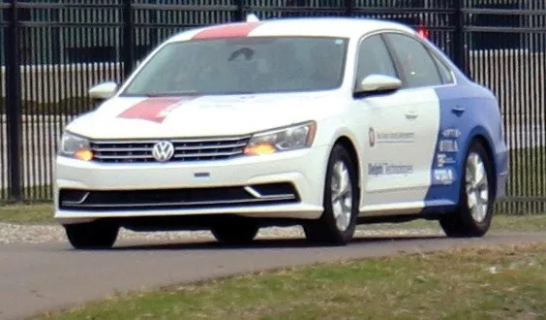 德爾福智能駕駛系統幫助 9 名未經過專業駕駛訓練的記者平均降低了16% 的燃油消耗,但完成相同路線的時間僅小幅增加了 4%。
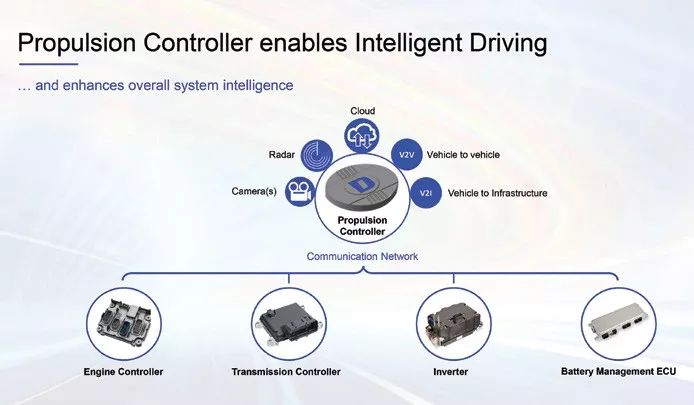 德爾福的新型推進控制器 —— 中央電子控制單元(ECU),可實現智能駕駛(Intelligent Driving)并與其他車載系統以及外部世界的通上。