隨著全球二氧化碳排放標準的日益嚴格,并且世界上一些人口最密集的城市亟需解決用車需求問題,電驅動橋產品將迎來發展的黃金時期。目前,由于全電動車型仍處于醞釀階段,因此電動驅動橋看上去是一個將當前車型電動化的理想選擇。
電驅動橋系統也稱為電動全輪驅動系統(eAWD),指的是一種裝在一個車橋結構中的機電系統,其中包含一個電機、動力電子元件和一種相當于變速箱或差速器的裝置。與傳統內燃機(ICE)或混合動力系統聯合工作時,該系統能夠為原本沒有電力驅動的車橋增添電驅動力,因此被稱為eAWD系統。
通過將電子組件、電機與差速器集成為一體, 電驅動橋系統可以提升各種級別汽車的封裝靈活性、電氣化程度以及性能,起到了出色的整合作用。由于幾乎所有交通領域都必須采取一定形式的電氣化,以滿足二氧化碳排放限值,因此電驅動橋這一創新設備一下變得炙手可熱起來。
然而一位一級供應商直接表示:“我們簡直要忙壞了。”
幾位接受本文作者采訪的工程師們均表示,電驅動橋較強的適應性帶動了整個技術的快速發展。不過,許多一級供應商們也逐漸發現“模塊化”不等于“插件”。對供應商而言,人們最感興趣的模塊化技術,同樣增加了技術迭代的難度,也帶來了系統集成方面的新挑戰。
Dana公司推出的新型eS5700r 電驅動橋系統,能夠直接取代現有的中型卡車與公交車懸架。安裝有該款電驅動橋系統的新款東風卡車于近期正式在中國投入運營。本電驅動橋系統由液冷電機、逆變器、盤式制動器構成,并且僅重673磅(305千克)。(圖片來源:Dana公司)
電驅動橋背后的推動力
盡管某些地區的市場因政治問題而出現動蕩,但二氧化碳排放標準的嚴格化,是全球的普遍趨勢。最近,一些主要城市的零排放區正在制定各項舉措,以推動純電動車的普及。而電驅動橋是一種可以同時解決多個問題的理想部件。
德納(Dana)公司電氣化與混合動力部門高級主管Michael Lembke表示,二氧化碳排放標準是推動汽車電氣化的最主要原因,不過“各個國家的標準都不一樣”。中國的影響力非常大,因為它強制規定了電動汽車的比例。Lembke指出:“中國不僅規定了車隊的二氧化碳排放限值,它還規定在OEM生產的汽車中,必須有8%采用動力電池。”
盡管中國近期出臺的法規會推動電驅動橋應用的普及,但其他市場上更有可能出現電動汽車的需求上升。
吉凱恩傳動系統公司(GKN Driveline)高級工程副總裁Theo Gassmann表示:“我們在中國的業務將在未來幾年中高速增長。但歐洲與美國也不落后,所有頂尖OEM都在加大對電動車及插電式混合動力汽車的研發與投資力度。二氧化碳減排計劃的出臺、當地污染問題的加重以及零排放區的設立,都大大推動了各地區的電氣化發展。”
據IHS Markit 市場調研公司汽車技術領域首席分析師Graham Evans稱,電驅動橋行業將迎來顯著增長,并指出:“我們預測,2017-2023年,輕型車用電驅動前橋的復合年均增長率將達到35%,后橋將達到46%。”
根據IHS 公司的預測,電驅動前橋系統的產量將從2017年的75萬臺增長到2023年的450臺以上,而同時,電驅后橋/全輪驅系統的產量也將分別從32萬臺/11萬臺增長到300萬臺/250萬臺。而隨著零排放區在全球主要城市及地區的設立,電驅動橋產品的商業應用將使其產量進一步高于預期。
Dana公司輕型車工程副總裁Seth Metzger表示:“如果我們只考慮商業領域,城市內使用的工作車輛和配送車輛是需要全電動的。而那些來往于城市間的車輛在進城后需要在一段時間內切換為純電模式。”
快速迭代與成本問題
對于汽車制造商們而言,幸運的是,電驅動橋產品能夠適應現有的汽車結構,幫助解決上述汽車二氧化碳排放方面的問題。來自Dana公司的Lembke解釋說:“由于時間緊迫,現在很多OEM們都要求在他們現有汽車結構(包括發動機、變速箱、傳動軸、排氣系統與油箱)的基礎上,直接安裝一個eAWD系統。”
極強的適應性,是電驅動橋技術廣受歡迎的主要原因。麥格納動力總成系統公司(Magna Powertrain)產品管理與傳動系統部門全球主管Walter Sackl解釋說:“很多的汽車制造商在生產汽車時,都已經形成了自己固有的汽車平臺與汽車結構,而采用電驅動橋部件后,我們能將原有的汽車結構直接轉化為混合動力系統結構。并且,電驅動橋的尺寸往往可以輕松地裝進普通汽車。”
電驅動橋技術發展迅速,它的應用還使得是原有汽車平臺的安裝工作相較于幾年前變得更為方便。GKN集團的Gassmann解釋說:“每一款新的電驅動橋產品都會增添新的特征,并且集成度也更高、布置更為緊密,也更為先進。最開始的電驅動橋有多個組成部分:一臺與變速箱相連的電機,一臺位于后備箱的逆變器,所有部件都由電纜連接。而現在的系統整合程度很高,逆變器、電機和變速箱基本整合在一起,組成一個完整的部件。”
任何新的系統在投入運營時都會遇到一定的工程挑戰,電驅動橋系統也不例外。電驅動橋系統在推出時遇到的最大的一個挑戰在于,由于推動電動車產業發展的是二氧化碳排放法規,而非消費者需求,因此OEM難以從電動車市場中獲利。
Dana 公司的Metzger表示:“高昂的成本是制約電動車發展的一大障礙。許多OEM都坦言,純電動車難以獲利。但隨著電驅動橋產量的增加,市場份額也會提升,并相應帶動電池、電機與逆變器成本的下降。這些部件的成本最后都會降低,因為OEM必須獲利才能生存。”
要想降低成本,除了提升電驅動橋的產量外,還需要降低原材料的價格壓力。IHS Markit公司的Evans表示:“電驅動橋是電動車中第二昂貴的部件,而鑒于目前激烈的市場競爭,單位成本應該很快就會下降了。”
Evans 指出,電機使用的稀土金屬原料是導致價格居高不下的主要原因。不過他也表示,“現在已經有很多公司開始開發無稀土電機,這樣供應鏈上的這一限制將不復存在,也不會阻礙技術發展了。”
除了成本方面的挑戰外,所有接受《汽車工程》雜志采訪的供應商們都指出,噪聲、振動與不平順性(NVH)問題也是電動汽車所面臨的一個新挑戰。
ZF電動交通部門驅動橋系統產品/項目管理主管MichaelWetzel 指出:“由于電動車很安靜,因此只要汽車傳動裝置、電子元件以及電機發出一點噪音,你就能聽得很清楚。而電動車的部件布置又較為緊密,功率重量比較高,因此難以同時采用所有的NVH對策。”
要從系統層面上解決NVH問題,就需要先進的仿真模擬工具加以輔助。GKN的Gassmann解釋說:“從一開始,你就要牢記系統中每個部件以及這些部件的組合方式。然后,你需要確保基本部件要素都準確地布置到位,這樣才能保證汽車無噪聲地高效運行。這其中最關鍵的就是要選擇合適的潤滑油與軸承,也就是說要采用先進的潤滑技術,以盡可能減少發動機運轉過程中的摩擦損失。”
電驅動橋系統輸入轉速較高也是造成電動車NVH問題難解決的原因之一。一般高性能內燃機的最高轉速只能達到8000 rpm,而相比之下,新一代電驅系統的轉速可達20000 rmp。Gassmann表示:“它和傳統系統截然不同,同時也帶來了艱巨的NVH難題。”
電驅動橋系統推廣所面臨的另一大挑戰在于系統布置形式的復雜性。來自Magna動力總成系統公司的Sackl表示:“傳統內燃機總共只有六種布置方式,比如前橫置發動機前輪驅動,前縱置發動機后輪驅動等等。而電驅動橋系統的布置形式則復雜得多,可能會產生42種甚至更多的布置形式。”
OEM與供應商合作,加強系統集成
在此之前,零部件供應商主要專注于零部件的機械制造,而現在則需要與OEM客戶們共同合作,以應對集成系統、尤其是集成系統軟件研發制造方面的挑戰。
Gassmann 也承認說:“OEM們現在開始同一級供應商合作,致力于集成式電驅系統的開發。這對我們供應商而言既是巨大的機遇,也是巨大的挑戰。不過這也意味著我們供應商需要做出重大的轉變,因為我們原先主攻的是機械零部件的整合,以及變速箱的制造等等,但現在我們卻需要擔負起整個系統集成的工作。”
麥格納的Sackl 表示:“過去是機械部件決定汽車的功能,而現在我們開始重點研發制造像電控離合器這樣的電子組件。因此,我們需要在現有汽車結構的基礎上再加入控制軟件,這使得整個系統部件的生產流程變得復雜起來。”
Sackl繼續解釋說:“同以往相比,一級供應商所提供的產品的范圍也在不斷擴大。現在,我們所供應的大部分都是軟件類的部件產品,并且軟件類部件研發的工程人員,也已經占到了我們工程人員總數的近一半之多。”
48伏電氣系統 vs. 高壓電氣系統
48伏電驅動橋系統的應用前景如何?我們采訪的大部分供應商都表示,雖然許多新型舒適性技術與底盤技術的運行仍需要48伏系統的支持,但未來的電驅系統卻需要更高的電壓支撐。麥格納的Sackl解釋說:“48伏系統最主要的功能是向汽車的其它系統供電,但高壓電氣系統的主要功能則是為汽車提供動力。”
ZF的Wetzel對此表示贊同,他指出:“我們目前提供的大部分電驅動橋產品都是與高壓電氣系統相兼容的,因為這一系統下電驅動橋產品的輸出功率可達50 kw及以上,這為用戶在內城區駕駛純電動車提供了可能。”
GKN的Gassmann也表示:“我們認為48伏電驅動橋系統的市場前景并不大,因為這一系統所能提供的扭矩很有限。如果你想在市中心駕駛電動車,并且想讓汽車保持足夠的扭矩、毫不費力地駛過路緣或是爬上停車場的斜坡,那么汽車只能以低速行駛。”
“但如果你更注重于二氧化碳減排目標的實現,那么就需要確保電動車能夠高速行駛,否則就發揮不了電動車的二氧化碳減排能力以及電驅動橋在提升汽車驅動性能方面的優勢了。因此,要實現這一目標,就必須增加整個混合動力系統的設計成本,將傳統的變速箱升級為雙速變速箱,但這就又與原先的48伏低成本混合動力驅動橋系統的設計原則相違背了。”Gassmann繼續解釋道。
汽車動力學與二氧化碳減排
作為零部件供應商,最重要的是生產出客戶想要的產品,而不應只是一味專注于提高產品的效率。將電驅動橋系統添加到現有汽車平臺中,除了能減少汽車二氧化碳的排放量、減小ICE的尺寸外,更為重要的是是能夠增提升車輛的性能。
GKN的Gassmann 指出:“雖然電驅動橋行業的發展必然會對機械式全輪驅動系統的市場造成一定的沖擊,但這不代表我們有所損失。相反,我們還獲利了,因為電驅動橋系統的價值遠高于機械式全輪驅動系統。”
Dana公司的Metzger表示:“大部分向我們詢問高性能系統報價的客戶都會問及汽車的扭矩矢量分配功能。從這里就可以看出,雖然燃油經濟性是一個方面,但很多客戶所關注的已不僅僅是汽車的燃油經濟性這么簡單,而是更注重汽車的整體性能以及駕駛樂趣。”
麥格納的Sackl也表示:“我們的主要目標是實現汽車動力學性能以及減排能力的提升,二者缺一不可。最終,我們將以增加客戶駕駛樂趣為主攻方向,提升汽車動力學性能,讓客戶真正享受到駕駛的樂趣。”
電驅動橋行業迎來快速發展期
無論最終推動電動車產業發展的是排放法規,還是消費者需求,電驅動橋行業都將迎來重大變化。接受《汽車工程》雜志采訪的主要供應商們也都預測,電驅動橋行業將迎來巨變。
Dana公司的Lembke 表示:“看看過去5年中電氣化行業發生的改變就知道,電氣化行業正經歷著內燃機與變速箱過去25年中所經歷的變革。每個月都有OEM宣布:‘到X年,我們混合動力汽車或純電動汽車的生產量將達到……’。尤其是在中國以外的地區,這樣的現象每周都有發生。”
GKN傳動系統部門的客戶與項目工程副總裁StevenLaChance表示:“有了全輪驅動技術后,我們解決了很多系統集成方面的問題,這很棒。但電驅動橋技術更讓人振奮,屬于工程師們的激動人心的時代終于到來了。”
In the quest for ever-lower CO2 emissions, and more immediate needs to retain vehicle access in some of the world’s most-populous cities, the e-axle has found its calling. With most dedicated, fully electrified platforms still gestating in OEM product pipelines, the e-axle seems an automotive component born to electrify current architectures.
Often described as eAWD, the e-axle is an electro-mechanical propulsion system contained in an axle structure housing an electric motor, the power electronics and some form of gearing/differential. Used in conjunction with a conventional ICE or hybrid powertrain, an e-axle can add electric propulsion to an unpowered vehicle axle, hence the eAWD moniker.
Consolidation of electronics, motor and differential makes the e-axle an ideal “bridge” component in terms of packaging flexibility, electrification and performance gains across vehicle segments. As nearly every transport segment will require some form of electrification to remain viable within the CO2 emissions glidepath, the e-axle is an ingenious and in-demand solution.
As one Tier 1 noted dryly: “We're very busy in the space.”
Engineers interviewed for this article note that the e-axle business is booming, thanks to the technology’s adaptability. However, many Tier-1 suppliers are discovering that “modular” does not equal “plug-in.” The same interest that’s creating such demand is also fueling iteration complexity, along with new integration challenges for suppliers.
What’s the draw?
Even with certain market regions in flux due to political shifts, ever-stricter reductions in global CO2 emissions continue. More recently, zero-emission zones in major cities are creating demand for products that can run electric-only. The e-axle is a single component that can provide multiple solutions.
Michael Lembke, senior director of electrification and hybridization at Dana, says that CO2 regulations are still the biggest draw but, “they vary significantly by country.” China’s role is large, as it’s mandating electric vehicle percentages. “They're not just mandating fleet CO2; they're telling the OEMs eight percent of your fleet have to be battery electric,” Lembke noted.
Though the latest Chinese regulations will boost e-axle applications, other markets are seeing increased electrified need.
“It's not just China, where we have the biggest growth rate over the next couple of years,” explained Theo Gassmann, VP of advanced engineering for GKN Driveline. “All the premium OEMs in Europe and in the U.S. are investigating and investing in electric vehicles and plug-in hybrids. The CO2 agenda, local pollution issues, zero emissions zones—all these are pushing hard on electrification.”
According to Graham Evans, a principal analyst in automotive technology at IHS Markit, the e-axle segment will see significant growth. “For our light-vehicle forecast from 2017 to 2023, we see compounded annual growth of 35% for front e-axles and 46% for rear e-axles,” Evans noted.
The IHS light-vehicle forecast includes front–e-axle applications growing from 750,000 units in 2017 to more than 4.5 million by 2023. During the same time frame, rear/AWD e-axle applications are expected to increase from 320,000/110,000 to more than 3 million/2.5 million, respectively. With major cities and other localities continuing to adopt zero-emission zones, commercial applications should only add to those projections.
“If you think about the commercial segment, the way people do work in a city and deliver goods, those vehicles would need to be fully electric,” said Seth Metzger, VP light-vehicle engineering at Dana. “Vehicles that move into the city and move out, they will have to go into a full-electric operating mode for some period of time.”
Rapid iteration, cost challenges
Fortunately for vehicle manufacturers, e-axles are a solution available now—and can be adapted to current architectures. “Many OEMs need to take an existing vehicle architecture, a vehicle that has been designed for an engine, transmission, prop-shaft, exhaust system and the fuel tank,” Dana’s Lembke explained. “And within that given architecture—because time is of the essence—fit an electro-mechanical propulsion system into that same vehicle architecture.”
Such adaptability is key to e-axle adoption. “Companies have legacy platforms, legacy architectures to be considered,” explained Walter Sackl, global director of product management, driveline systems at Magna Powertrain, “and the e-axle is one of the units which can transform an architecture into a hybrid system. The nice thing is that an e-axle usually fits into the packaging space of a standard vehicle.”
E-axle technology is also evolving swiftly, making the latest applications, even within legacy platforms, more easily packaged from even a few years ago. “Every new e-axle application has new features, more integration, and it’s more compact, more sophisticated than the generation before,” GKN’s Gassmann said. “When we started, it was an electric motor bolted to a transmission, an inverter somewhere in the trunk, with a thick cable connecting everything. Now we are talking about integrated systems with an inverter, motor and gearbox pretty much bolted together and it’s one turn-key unit.”
Any new system faces engineering challenges and the e-axle has its own set of hurdles. One of the largest is OEM customers trying to gain share in a segment that’s being driven more by regulation than consumer demand.
“Cost is extremely challenging,” admitted Dana’s Metzger. “A lot of the OEs have been upfront that they’re not making money on battery electrics. As we get more volume it could help [market] share and reduce the costs of batteries, motors and inverters. Ultimately, we have to drive those costs down, because the OEMs have to be able to make money.”
Volume will be key, as well as reducing pricing pressure on some of the raw materials going into e-axles. “It's the second most expensive component within an EV, and all this competition means that the cost per unit is going to come down fairly quickly,” said Evans from IHS Markit.
He said the primary concern is in the rare-earth metals within the motor. “There’s a lot of interest in developing motor applications that lean away from the use of rare-earth metals,” Evans explained, “so this supply-chain constraint won’t exist and won’t hamper growth.”
Beyond cost challenges, all the suppliers who spoke with AE mentioned NVH, which is an entirely new aspect in electrified platforms.
“Because electric cars are nearly silent inside and out, you tend to hear every noise from the gears, electronics and e-motor,” noted Michael Wetzel, head of product/project management axle drive systems, e-mobility division, ZF Group. “And as compact as the components are, you’ve a high power-to-weight ratio, and that makes it complicated to get all the NVH measures implemented.”
To address NVH on a system level, advanced simulation tools are needed. “From the very first approach, you have to keep in mind the individual components and their interactions,” said GKN’s Gassmann. “Then you have to have the experience to get the basic ingredients right so it’s quiet and efficient. It's about oil, it's about bearings, it's about advanced lubrication concepts to minimize churning losses.”
There are also the e-axle’s inherent high-speed inputs. While peak speeds in a high-performance ICE may be up to 8000 rpm, peak input speeds in the next-generation electric-propulsion system will approach 20,000 rpm—making them "a totally different animal and very challenging for NVH,” Gassmann asserted.
Another common challenge in the expanding e-axle business is managing complexity. “We have a history of around six powertrain arrangements in the traditional ICE world – front transverse-engine with FWD, front longitudinal-engine with RWD and so on,” said Magna’s Sackl. “When we transfer into those future architectures, we need to handle a large number of different architectures—maybe 42 and beyond.”
Closer OEM integration
For suppliers used to solving mechanical issues, this can mean working more closely with their OEM customers and with greater integration challenges, particularly on the software front.
“The OEMs are now pushing the whole system integration effort through the first-tier suppliers, which is a great opportunity but a big challenge as well,” acknowledged Gassmann. “It's a huge shift, because we used to do the mechanical integration and the gearbox stuff, but now we’re actually doing complete system integration.”
“In the past, a mechanical solution decided the function,” explained Magna’s Sackl. “Now, we’re transferring to electronics—this includes electronically controlled clutches for example—which makes things more complex because the software controls need to be embedded in the structure.
“The portion of the Tier-1’s scope is by far larger than it was,” he continued. “Now we deliver a large portion of the software function associated with it. So for us, a large portion of our engineering staff—almost 50 percent—are dedicated just to software function.”
48-volt vs. high-voltage
Where does 48-volt fit into the e-axle equation? Most of the suppliers we spoke to see continued growth of 48-volt to power a host of new comfort and chassis technologies, but the future of electrified propulsion will require higher voltages. “The main goal for 48-volt is to generate power for other systems,” Magna’s Sackl explained, “which is completely different from the high-voltage approach, where the primary aim is to propel the car.”
“We’re currently working mainly on high-voltage systems,” ZF’s Wetzel echoed. “In the high-voltage systems, you have power outputs of 50 kilowatts or more, and this gives the possibility to drive fully electric in the inner cities.”
“We don’t see a huge market for an e-axle with 48-volt, because the issue is with the torque it can deliver,” GKN’s Gassmann said. “You either have something that can provide some EV-drive capability downtown, with enough torque to get over the curb or up the gradient in the carpark, but then the system will only be available at lower speed.
“If you go for CO2 [reduction], you need the system to operate at higher speeds as well, otherwise you’re losing all the CO2 recuperation and boosting potential,” Gassmann continued. “To accomplish both, you have to add complexity to the transmission with a 2-speed, which is then spoiling the whole approach, because 48-volt is considered low-cost hybridization.”
Vehicle dynamics + CO2
One of the key roles as suppliers, is helping create products that consumers want to buy, and not just via efficiency. With existing vehicle platforms, engineers can continue to reduce CO2 and the size of the ICE with e-axle boosting. The real draw, however, will come from added capability and performance.
“Electric axles will probably eat some of the all-wheel-drive mechanical market, that's for sure,” GKN’s Gassmann noted. “And it’s not lost business; it’s actually gaining business, because an e-axle adds significantly more value than mechanical all-wheel-drive.”
“Where we've received RFQ’s for performance cars, the majority of those have had torque vectoring as a request, where you're not just purchasing it for fuel economy,” said Dana’s Metzger. “Of course, that’s a benefit—but it's also really for performance and the joy of driving.”
“Vehicle dynamics, plus CO2, is our main goal. For us it’s not either or,” said Magna’s Sackl. “At the end of the day, we are positioning ourselves very much in the space of ‘fun to drive,' with vehicle dynamics to make consumers happy.”
Development accelerates
Whatever the draw, be it regulatory or consumer driven, there’s enormous activity in the e-axle field. The key players AE spoke with all noted the near-seismic shift in the industry.
“If you look at the pace of change, what has happened in electrification in the last five years, it’s equivalent to what happened with combustion engines and transmissions in the last 25 years,” opined Dana’s Lembke. “There's not a month that goes by where an OEM isn’t announcing, ‘by the year X, we’re going to have so many hybrids or so many battery electrics in production. We seem to see that almost every week, particularly out of China.”
Noted Steven LaChance, VP Customer & Program Engineering, GKN Driveline: “The all-wheel-drive side is exciting because we get to solve a lot of unique problems with integration. But the e-technology is really exciting. It's an exciting time to be an engineer.”
Author: Paul Seredynski
Source: SAE Automotive Engineering Magazine

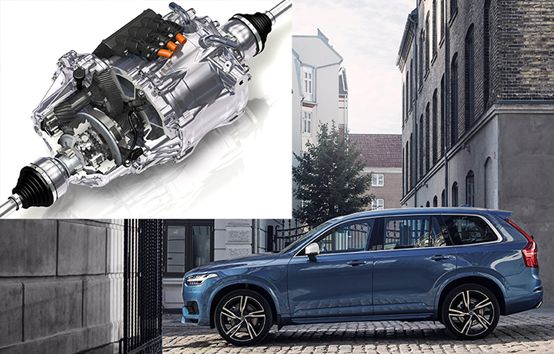 隨著越來越多的城市設立了專門的零排放區,零排放車輛的重要性與日俱增。沃爾沃XC90 T8插電式混合動力SUV采用了eAWD系統(電驅動后橋系統由GKN集團所提供),并配有10.4 kwh電池。這一車型在EPA標準下的純電續航里程可達19英里。(圖片來源:GKN集團;沃爾沃)
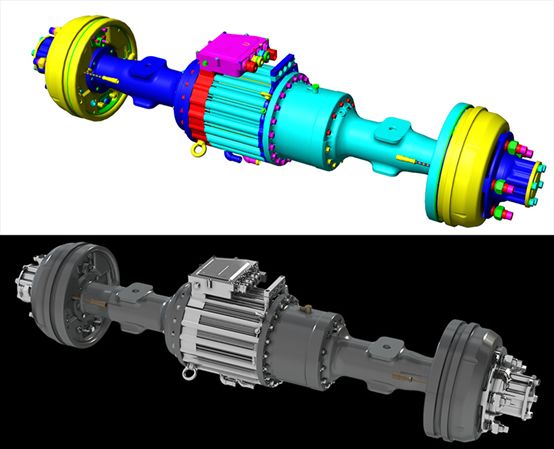 Dana公司推出的新型eS5700r 電驅動橋系統,能夠直接取代現有的中型卡車與公交車懸架。安裝有該款電驅動橋系統的新款東風卡車于近期正式在中國投入運營。本電驅動橋系統由液冷電機、逆變器、盤式制動器構成,并且僅重673磅(305千克)。(圖片來源:Dana公司)
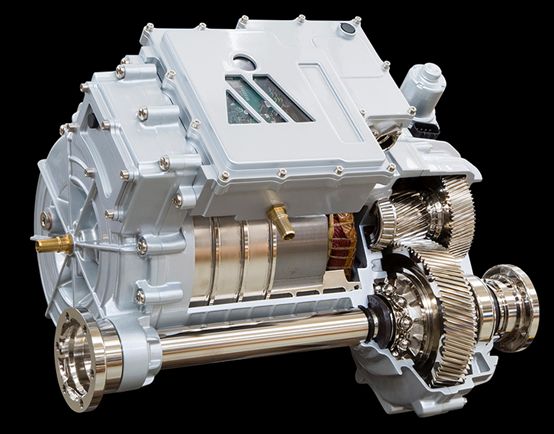 麥格納動力總成系統公司所提供的eDrive電驅動橋系統由變速箱、電機與逆變器構成。圖中顯示的中置電驅動橋系統能提供高達3800 N·m的扭矩,可用于混合動力汽車與純電動汽車。(圖片來源:麥格納)
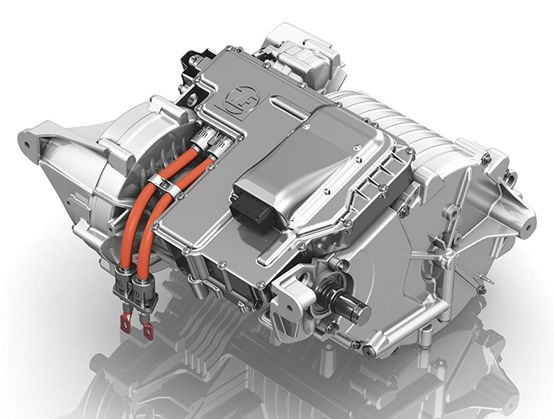 ZF研發的新型完全集成式電驅動橋系統將于2018年底前交由一家歐洲制造商進行量產。(圖片來源:ZF)
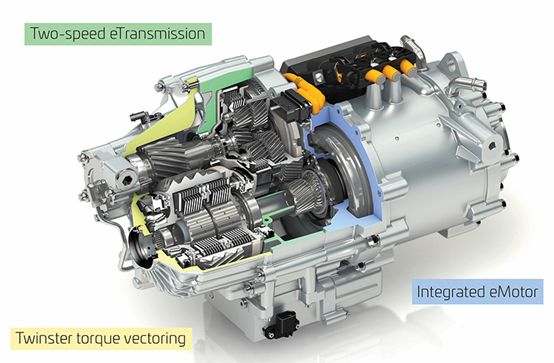 GKN推出的新型eTwinsterX電驅動橋系統擁有獨特的同軸特性,這大大減小了系統空間。該系統最大輸出功率達120kw(161hp),最大扭矩達210 N·m(155 lb· ft),并同時配置有雙速變速箱與扭矩質量分配功能。(圖片來源:GKN)