說到汽車行業(yè)的有機技術轉型,可能沒有比當下的舍弗勒更鮮明的例子了。每每談到變速箱系統(tǒng)的關鍵基本技術時,“舍弗勒”的名字肯定會被提及。通用全球推進系統(tǒng)的一位工程師最近在接受采訪時,就提到通用正在和舍弗勒一同為通用全新8速自動變速箱研發(fā)一款新型減震器。該款減震器將根據傳動系控制器輸出扭矩轉換器的打滑程度,來調節(jié)減震效果。
舍弗勒集團旗下?lián)碛蠪AG和LuK兩大品牌。FAG歷史悠久,長達113年,主要產品為特色軸承和離合器。LuK則專門生產摩擦材料。可見奠定舍弗勒根基的,還是內燃機的相關基礎技術。
既然如此,舍弗勒又為什么要在年初在硅谷建廠,又新增一個電動汽車業(yè)務部門呢?
對此,舍弗勒美國區(qū)副總裁、首席技術官Jeff Hemphill在最近接受《汽車工程》雜志的采訪時風趣地答道,“我們是嘗試一條新路。舍弗勒的技術基石是帶保持架的滾針軸承,而這可以說是電子技術應用最少的部件了。”
如今,幾乎所有跨國供應商都是句句不離電動化。業(yè)務涵蓋傳統(tǒng)車型和混動車型的舍弗勒,在研發(fā)新品、分析測試變速箱、發(fā)動機、底盤零部件系統(tǒng)時,自然也會涉獵電動技術和功能。
說是“全新”,其實不然
Hemphill說道,其實“傳統(tǒng)”機械零部件系統(tǒng)供應商很多年前就已經開始研究電動化了,這點大家都清楚,“10年前,甚至是15年前,我們就已經開始研發(fā)所謂的‘機械電子’驅動系統(tǒng)。剛開始是變速箱,現(xiàn)在拓展到了發(fā)動機。比如在雙離合變速箱執(zhí)行機構技術方面,我們就投入了很多精力。”
“我們研發(fā)的是裝有微型控制器和軟件的智能執(zhí)行機構,可以顯示功能性安全讀數和其他參數。而我們現(xiàn)在的產品在保留了所有機械元素的基礎上,還增加了印刷電路板、傳感器和軟件。”
“我們其實在機電一體化上已經積累了豐富的經驗。我們在機械技術方面的背景讓我們獲益良多。舍弗勒在一體化技術方面的經驗,是我們最引以為豪的優(yōu)勢之一。我們正在開發(fā)一款針對該市場的全新混合動力模塊。從零件到系統(tǒng)層面,我們將結合工程師和生產部門的力量,思考全新的整合方式。”
“這一直是我們的一大優(yōu)勢。借助這一優(yōu)勢,我們新模塊的最終軸長比客戶要求的還要短60毫米。我們本來就在生產扭矩轉換器,所以我們可以研究用不同的方式連接轉換器和電機,這樣節(jié)約了不少的空間。可見,我們在機械技術方面的積累,對于公司的電氣化和機電一體化轉型也不是完全無益的。”
一個詞:軟件
Hemphill表示,對于舍弗勒而言,進一步發(fā)展機電一體化,需要借助另一項重要技術的發(fā)展——軟件和相關電控技術,該技術對汽車業(yè)建立全新的整合型商業(yè)模式而言至關重要。難道說,完全整合供應商現(xiàn)在必須具備軟件開發(fā)能力了嗎?
對此,Hemphill解釋道,“這取決于產品。比如,針對不同的執(zhí)行機構或模塊產品,供應商和整車廠到底誰來開發(fā)軟件,或者開發(fā)多少,答案是不一樣的。”
“針對有些執(zhí)行機構,我們只需要根據整車廠給定的位置提供簡單的接口,他們說需要裝在扭矩閥,那我們就做扭矩閥執(zhí)行機構。但對于另外一些設備,我們會起到更多的主導作用,這完全取決于項目內容。當然,我們現(xiàn)在也有數百名軟件工程人員。確切有多少人,軟件開發(fā)又到底占我們研發(fā)經費多少,準確的數字我要去查一下。不過,雖然軟件開發(fā)很重要,但它不是我們的研發(fā)重點。”
舍弗勒坐擁強大的研發(fā)實力,Hemphill自己就擁有100多項專利,一些已頒發(fā),一些仍在申請中。他說,目前舍弗勒在全球各地擁有超過6000多名研發(fā)人員。他解釋道,對于當今的主要供應商而言,研發(fā)工作其實包含兩部分,一是為推動企業(yè)發(fā)展而不斷研發(fā),二是為滿足客戶需求而改進創(chuàng)新。
“我認為兩者是相互交融的,”他說,“我們當然以我們的創(chuàng)新實力為傲。這些年來,我們也在不斷進取。我們的零部件涵蓋了整個傳動系統(tǒng)甚至整個車身,這就讓我們可以從系統(tǒng)的高度看待問題,進而找到獨特的解決方案。”
“我們會經常展示這些解決方案。我們已經在全球各地做了很多樣車展示,有一些樣車是我們和整車廠合作研發(fā)的。有時候,整車廠會先提出一個想法,我們再在此基礎上延伸,將這個想法付諸實踐。所以這是相互合作。我們很高興能有所貢獻。但是,現(xiàn)在單靠一家整車企業(yè)或一家供應商,是無法應對汽車行業(yè)所面臨的挑戰(zhàn)的。大家都在絞盡腦汁地思考出路。”
在科技圣地立足
舍弗勒最近在硅谷建立了圣何塞新廠。此舉似乎也表明,不僅是在電動化,舍弗勒在各個方面都是不甘落后。盡管面對席卷而來的電氣化和自動化浪潮,舍弗勒目前最顯著的研發(fā)成果還只是一體化輪轂電機,但是Hemphill相信,在加利福尼亞的技術大本營建廠是正確的選擇,這將幫助舍弗勒探索并研究新的商業(yè)模式。
“硅谷有著無限的創(chuàng)意。如果你能發(fā)現(xiàn)一兩個好的、正確的想法,再幫助它們成型,那么最終你可能會成就一番大事。或者,我們也能找到一些初創(chuàng)公司,他們的技術正好是我們需要的。”
“毋庸置疑,混動化電動車出行是一個蒸蒸日上的領域,這也是我們主要的項目研究課題。但與此同時,我們還是保留了部分研發(fā)精力,用于最前沿的自由研發(fā)。我們希望在跟緊潮流的同時也能勇立潮頭。”
“我們非常看好純電動汽車。我記得有一組預測數據提到,2030年前美國的純電動汽車市場普及率將達到約25%,全球范圍的普及率會更高。所以我們十分看好電力驅動系統(tǒng)。畢竟和添加一排氣缸相比,增加電機長度的難度要小很多。”
但是Hemphill也強調,“這也意味著未來大約70%的汽車即使裝有電機,也依然會搭載內燃機和相應的變速箱。傳統(tǒng)發(fā)動機在很長一段時間內都不會消失,只是所占比例或多或少的差別。內燃機可能會和電機一起使用,我們要做好兩手準備,研發(fā)一體化的智能系統(tǒng)。”
他補充道,自動駕駛的未來也差不多如此:
“前不久,我們在德國巴登巴登的技術會議上推出了‘eCorner’的概念,其中包含了一體化輪轂電機,這是專門為機器人出租車、配送車等自動駕駛汽車而設計的。我們馬上就會分拆出一家子公司來生產我們的微交通Bio Hybrid概念車。”
“未來有無限的可能。舍弗勒想力爭上游,能更快地判斷未來的發(fā)展方向,找到我們的立身之處。”
There might be few more incisive examples of the industry’s organic technology transformation than what’s going on with Germany’s Schaeffler. The company’s name invariably arises in discussion of key baseline technology for all manner of driveline systems. An engineer from GM’s Global Propulsion Systems, for example, recently noted that GM collaborated with Schaeffler for development of an innovative damper for GM’s new 8-speed automatic transmission that varies its effect based on the amount of torque-converter slippage dictated by the powertrain controller.
The Schaeffler Group includes the 113-year-old FAG brand that’s intimately associated with specialty bearings and clutch and friction-material specialist LuK. Schaeffler’s foundation essentially rests on the “basics” of internal combustion-related technology.
Then what’s the idea with bricks-and-mortar in Silicon Valley and a new e-mobility business unit, both established early this year?
“Well, we're certainly on a journey,” said Jeff Hemphill, Vice-President and Chief Technical Officer of the Schaeffler Group for the Americas, in a recent interview with Automotive Engineering. “The technical founding of the company is the cage-guided needle roller bearing—it's about a least-electronic product you could think of,” he quips.
But with responsibility for new-product development, analysis and testing of transmission, engine and chassis components and systems for conventionally- and hybrid-powered vehicles, Hemphill and Schaeffler are enmeshed in the adoption of electrified technology and features that has become the byword of almost all major multinational suppliers.
What’s ‘new’ isn’t, really
It’s of course no secret, said Hemphill, that suppliers of “traditional” mechanical components and systems have for years been electrifying: “It's been 10 or 15 years, probably, that we got into what you would probably call ‘mechatronics’ or lead systems. That was started on the transmission side and now also on the engine side. We do a lot of actuation for dual-clutch transmissions, for example.
“And those are smart actuators with embedded microcontrollers and software and functional safety readings and the whole works. So, we now have a product that got our mechanical bits in it but, also has a printed circuit board and sensors and software with it.
"So we actually have quite a lot of experience with that. And, our mechanical background has really helped us with that. One of the things that we're most proud of is our degree of integration. One of our new [developments] is a hybrid module for this market. We can get the design engineers together and the production people together from all the little bits as well as from the system level—and think about new ways to integrate them.
“That has been for us pretty powerful. In that hybrid module, for example, it allowed us to take out, I want to say, 60 mm of axial length compared to the customer's original request—just because we [already] make the torque converters. And we were therefore able to figure out a different way to connect it to the electric motor that took out a lot of space. So, it did turn out not to be that bad of a background for an electrical and mechatronic company.”
One word: software
For Schaeffler, the process of evolving mechatronics effectively led to another important evolution, said Hemphill: development of software—as well as associated electronics-controls “skills”—vital for the new integrated business models the auto sector has come to demand. Is it now inescapable that it’s incumbent on fully-integrated suppliers to have software-development competency?
“It varies by what product we're talking about,” Hemphill explained. “For some of our actuators [and other modules], let’s say, there's a line drawn, usually, between the supplier and the OEM who does how much of the software.
“Some of our actuators, we just provide a simple interface where they can tell us, for example, a torque value and we go to that torque; and in some of them, we have much more ownership of the control strategy and so on. It just depends on the project, but we certainly have hundreds of people doing software now. I could look up an exact number, or what percent of our R&D is doing software; it's important, but it's still not the majority of our R&D force.”
Hemphill, himself holder of more than 100 issued or filed patents, said Schaeffler’s global R&D workforce currently numbers well more than 6000 persons. For major suppliers, he explained, today’s R&D environment is comprised of internally-driven research and response to customer requests for certain developments or innovations.
“I would say it's a combination of both,” he said. “We're certainly proud of our innovative capacity. And we also have developed over the years—because we make parts throughout the powertrain or even throughout the vehicle—we can take system-level perspective on things and sometimes arrive at some unique solutions.
“We'll often demonstrate those solutions. We have a number of demonstration vehicles all around the world that we've shown off; a couple of them we actually did in conjunction with OEMs. And then sometimes the OEM will come to us with an idea, and we'll take that on and execute it. So, it's a mix and we're pretty happy with our contribution there. But the challenges facing the industry go beyond any one OEM or multiple OEMs and one supplier. We're all thinking our brains out here.”
Proximity to tech
Schaeffler’s new Silicon Valley site in San Jose seems to be evidence of the company’s intent to keep pace—and not necessarily just with electrification. Although integrated wheel-hub motors are one of the company’s most-visible developments aimed at the coming twin wave of electrification and automation, Hemphill believes being in California’s tech nest is the right move to help identify and analyze new business models, Hemphill said.
“Out in the Valley there is someone thinking about everything. If you can pick out a couple [ideas] that end up being right and help them get going, you can really be part of something big. And the other side of that is there may be startups we find that have technology that we need.
“e-Mobility hybridization in electric vehicles is certainly a growing area. And probably the bulk of our projects are dedicated to those. But we do keep a certain piece of R&D forward-focused in free-thinking kind of research and advanced development just to make sure that we're trying to lead the curve as well as keeping up with it.
“We're pretty bullish on full-electric vehicles. We do have a U.S. forecast number that shows something in the mid-20s [percent market penetration], I think, by 2030 for pure electric vehicles and more than that globally. So, we're believers in electric propulsion systems. It is a lot easier to add lengths to an electric motor than to add a bank of cylinders to an engine!
“But even with those numbers, that means that 70-some percent of the vehicles will still have a combustion engine and therefore some form of transmission with it—even if it has an electric motor on board. It's almost a matter of degree where the combustion engine will be around for a long time. It may have an electric motor with it. We have to be prepared to engineer both of those and put them together into an intelligent system,” Hemphill asserted.
And it’s a similar outlook for autonomy, he added:
“One of the concepts we just showed in our technical symposium in Baden-Baden we call the eCorner. It has an integrated electric wheel motor; it’s specifically designed for autonomous—you could say robo-taxis or delivery vehicles. And we're just about to spin off a company to produce our Bio Hybrid [micro-mobility concept vehicle].
“There's every possibility out there. We basically just want to be close to the leading edge and have an earlier chance to assess where it might go and not go—and where to get involved.”
Author: Bill Visnic
Source: SAE Automotive Engineering Magazine
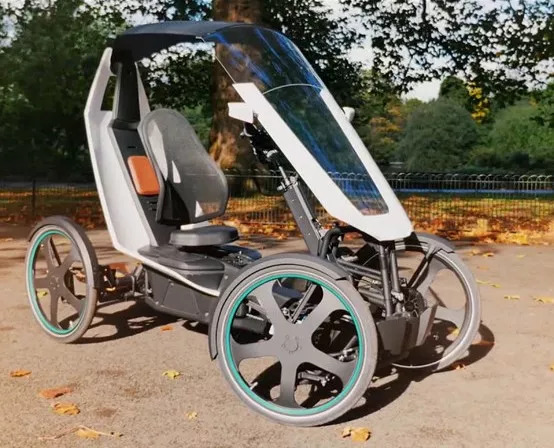 以機械零部件起家的舍弗勒正在大力擴大版圖,雄心壯志從Bio Hybrid微交通概念車中可見一斑。舍弗勒已在籌備該車型的投產。
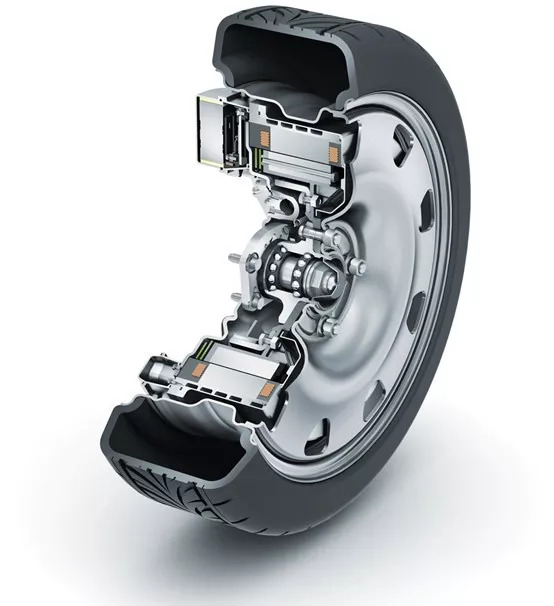 舍弗勒認為,輪轂電機將會顛覆電動汽車架構
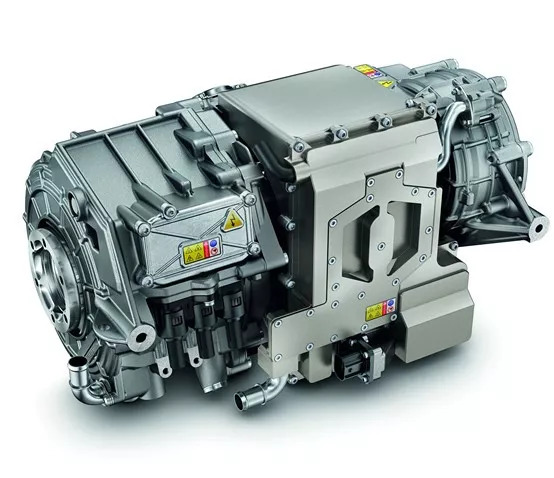 純電動車橋融合了舍弗勒在內燃機傳動系統(tǒng)上積累的經驗和新的電動技術。
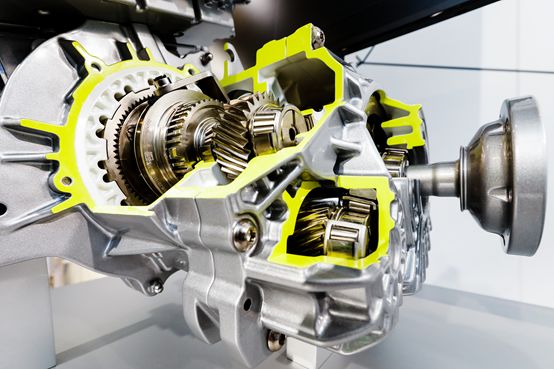 48伏驅動橋是舍弗勒實現(xiàn)全面混動化愿景的途徑之一。