今年晚些時候,Freevalve AB 公司的無凸輪軸發動機將由觀致汽車 (Qoros) 完成評估。未來,這種名為 Qamfree 的技術將有機會真正走入量產發動機,為發動機工程師的動力系統設計與制造帶來新的維度。
除了奇瑞旗下的觀致汽車,還有另外兩家汽車廠商也被認為有計劃采用Qamfree系統。
Freevalve公司在 2003 到 2017 年間曾為瑞典超跑制造商Koenigsegg AB 的姐妹公司,目前已經成為一家獨立企業。與其他無凸輪軸設計發動機不同,Freevalve 的 Qamfree 系統使用“氣動-液壓-電子”促動器 (PHEA) 來取代傳統凸輪軸。Freevalve 公司的工程師指出,這可以在完整氣門進程中提供更精準的控制,并在進氣和排氣兩側提供氣門提升。
2016 年北京車展期間,這款 Qamfree 系統曾搭配一款 1.6 L 4 缸 16 氣門 DOHC 渦輪增壓汽油發動機一同登陸一輛觀致概念車,完成首次公開亮相。Freevalve 工程師聲稱,與采用傳統凸輪軸發動機的同等規格車型相比,這種無凸輪軸設計可以為車輛提供 47% 的動力提升、45% 的扭矩增加,以及 15% 的降耗表現。
Freevalve 公司指出,任何負載等級的發動機采用 Qamfree 系統后,進氣和排氣側的氣門定時均支持獨立編程,系統則將根據具體駕駛條件,決定采用哪種配置,以實現性能最大化,或燃耗和排放最小化。
CTO Q&A問答
這款發動機不僅沒有凸輪軸,而且也沒有使用相關配套硬件,包括節氣門、凸輪軸驅動、定時齒輪和外殼、排氣門、預先催化轉換器,及直噴系統等。系統配備了專用的閥門位置傳感器。與常規發動機相比,無凸輪軸發動機不僅在減重方面具有優勢,與采用常規氣門的標準發動機相比,無凸輪軸發動機的燃料消耗量在“正常”駕駛工況中可降低 10%。
Qoros 和 Freevalve 公司正在利用一款具體型號未知的觀致車型,共同對這種無凸輪軸概念設計進行測試評估。
隨著評估接近尾聲,Freevalve 首席技術官 Urban Carlson 接受了《汽車工程》歐洲總編 Stuart Birch 的采訪,共同討論無凸輪軸發動機及其應用及影響。
SAE:對于一些更保守的廠商而言,Freevalve 公司的設計會不會太激進了?
Carlson:對,沒錯。不過,為了滿足即將實施的排放法規,汽車廠商仍有充分理由選擇嘗試我們的系統。此外,人們現在越來越熱衷開發先進的發動機控制策略,而我們的概念設計非常符合內燃機的這種發展趨勢。我們的優勢在于技術更新穎,參數表現更優秀,從而更好地滿足汽車廠商實現發動機精準控制的需求和目標。
SAE:Freevalve 并不需要一些價格昂貴的傳統組件,那么如果產量達到一定規模,這種發動機的成本是不是會低于常規的同級別發動機呢?
Carlson:是的。在沒有小型化的情況下,1.6 L 渦輪增壓發動機即可節省約 20 公斤(44 磅)重量。通過緊湊安裝和進一步優化,我們預計 Qamfree 的完整設計可以降低發動機的整體成本。我們的成本評估顯示,Qamfree 系統的成本應與汽油直噴發動機組件相仿,需要采用一些更先進的后處理系統,比如顆粒過濾器。我們預計,與同等性能的柴油機相比,汽油機搭配 Freevalve 系統的成本要明顯低的多。
SAE:除了觀致公司,在不久的將來是否還有其他廠商采用無凸輪軸發動機技術?
Carlson:是的。市場導入當然還需要一定時間,但我們正在同時跟進幾個不同領域的項目。我們預計,至少有兩家客戶將在明年公布他們的計劃。
SAE:目前多個國家均已表示,將在 2040 到 2050 年間逐步立法淘汰內燃機汽車,從而支持電動汽車的發展。您認為無凸輪軸發動機是否能在這種巨變下為內燃發動機帶來更多機會?
Carlson:我們肯定無法預見所有地緣政治因素,但從更廣義的層面看,內燃機的性能可以通過采用 Freevalve 的系統得到顯著改善。在包括公路、鐵路和航運在內的交通運輸領域中,更多的關注已經轉移至為內燃發動機選擇替代燃料。液態烴類的儲存和配送非常方便。基于風能和太陽能的 P2G(電轉氣)燃料將迎來巨大機遇,GTL(天然氣r制合成油)領域也將實現巨大進展,可再生能源的氣態和液態燃料極有可能在這段時間實現大規模生產。
Freevalve 技術將在高性能多燃料發動機及其他熱力循環發動機的發展中發揮重要作用。從近期來看,電動汽車的發展的確風頭正勁,但未來的情況誰也說不準。
SAE:您能透露更多項目細節嗎?比如項目是什么時候開始?預計什么時候完成?具體涉及哪些方面以及最近的進展情況?
Carlson:評估項目從 2015 年開始,預計將于今年年底完成,涉及的方面很多,包括扭矩、功率、油耗、排放、包裝及減重等。
SAE:除了目前的 1.6 L渦輪增壓發動機 (169 kW) 外,未來還有其他不同排量和功率輸出等級的發動機采用 Qamfree 系統嗎?
Carlson:這個問題應該由觀致的管理層回答。我們目前的項目是曾在 2016 年北京車展上展示過的發動機平臺。
SAE:Qamfree 將在哪里生產?您已經拿到生產編號的信息了嗎?
Carlson:從目前的信息來看,觀致和奇瑞的生產和裝配都是僅在中國進行。2016 年,這兩家公司共生產了大約 40 萬輛汽車。
Later this year, concept evaluation of Freevalve AB’s radical camless engine technology is expected to be completed by Qoros Auto. The technology, known as Qamfree, could lead to volume production, bringing a new dimension to powertrain design and engineering.
Besides Qoros (owned by Chery Automotive), two other OEMs are also understood to be potential adopters of the system.
Freevalve was a sister company of Koenigsegg AB, the Swedish supercar maker, from 2003-2017 and is now independent. Its Qamfree system differs from other camless designs in that it uses pneumatic-hydraulic-electronic actuators (PHEA) to replace the camshaft. Freevalve engineers state that this delivers more precise and completely customizable control over valve duration and lift on both the intake and exhaust sides.
A demonstrator 1.6-L 4-cylinder 16-valve DOHC turbocharged gasoline engine fitted with the system was first seen at the 2016 Beijing Motor Show in a Qoros concept car. Company engineers claimed it demonstrated a 47% increase in power, a 45% increase in torque, and a 15% reduction in fuel consumption compared to a regular camshaft-equipped engine with similar specifications.
Freevalve states that for any engine load criteria, the timing of intake and exhaust can be independently programmed, the system deciding which one to maximize performance or minimize fuel consumption and emissions, depending on driving conditions.
Q&A with the CTO
The engine dispenses with not only the camshaft itself, but also associated hardware: the throttle body, cam drive and timing gear and cover, wastegate, pre-catalytic converter and direct injection systems. It has proprietary valve position sensors. As well as significant weight saving, packaging efficiency gains include 50mm (1.9 in) off the height and 70mm (2.7 in) off the length of a comparable regular unit. Vehicle fuel consumption is reduced by 10% during "normal" driving compared to the baseline engine with normal valvetrain.
Qoros and Freevalve are working together on the concept evaluation, using a fleet of test engines to refine the technology for use in an as yet unspecified Qoros model.
With the concept evaluation phase approaching scheduled completion, AE's European Editor Stuart Birch discussed the new technology and its implications with Freevalve’s Chief Technology Officer (CTO) Urban Carlson.
Q: Is the Freevalve technology's radical design challenging for the more conservative OEMs?
That is what we expected, but the technical challenges meeting the market demand with coming emission legislations seems to be a stronger factor. We also feel that our concept fits well into the development trends of the combustion engine where people are increasingly interested in developing advanced control strategies. Our fit is that we provide new and powerful parameters to facilitate these needs and wishes.
Q: Some traditional, expensive components are not required for a Freevalve engine, so would its cost be lower than that of a similar capacity regular engine given comparable production volume?
Yes. Without downsizing, the weight saving is around 20 kg [44 lb] for the 1.6-L TC engine and with further optimization in combination with a more compact installation we expect the complete concept to reduce the overall cost. Our cost estimates indicate that our system will be similar to that of a gasoline DI engine, requiring more advanced after-treatment, such as a particulate filter. We expect gasoline engines with the Freevalve system to be significantly cheaper than diesel engines having the same performance.
Q: Apart from Qoros, can we expect to see the technology adopted by any other manufacturers in the near future?
Yes. There is, of course, a lead time for market introduction, but we are working in parallel with projects for several different segments. We expect at least two customers to announce their plans during next year.
Q: Many countries are now indicating that the ICE in new cars is going to be increasingly legislated out of existence in favor of EVs by 2040-2050. Do you see your engine offering an alternative to this radical change?
We can of course not foresee all geopolitical factors, but the ICE as a more general definition can be improved significantly with the Freevalve system applied. Within the transport sector - on road, rail and sea – more focus is directed towards alternative fuels for the ICE. Liquid hydrocarbons are very efficient to store and distribute. With great opportunities for wind and solar based P2G (power-to-gas), as well as great developments within GTL (gas to liquid) technologies, renewable gaseous and liquid fuels will most likely be produced in large quantities within this timeframe.
The Freevalve technology has an important role to play in efficient fuel-flexible engines and in engines switching to other thermodynamic cycles. Even if it is tempting to extrapolate the current EV trends, the long term future of transportation is far from decided.
Q: Can you put some detail on the program such as when did the program start and when is it expected to be completed, what it involves – and how it is progressing?
The concept evaluation, started 2015, is expected to be completed by the end of this year. It has involved torque, power, fuel consumption, emissions as well as packaging and weight optimization for vehicle installation.
Q: Would there be other engine capacities and outputs besides the 169-kW 1.6-L turbo version?
That is a question for the Qoros management to answer. The project we are doing is for the engine platform shown in public in 2016.
Q: Where would the Qamfree be built and do you have any indication of production numbers?
Qoros and Chery build cars and subassemblies only in China as for today. Together they built approximately 400,000 cars in 2016.
Author: Stuart Birch
Source: SAE Automotive Engineering Magazine

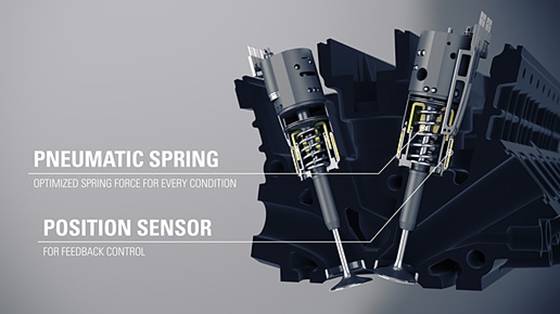 瑞典 Freevalve 公司旗下的無凸輪軸發動機采用了“氣動-液壓-電子”技術(圖片來源:Freevalve AB)。
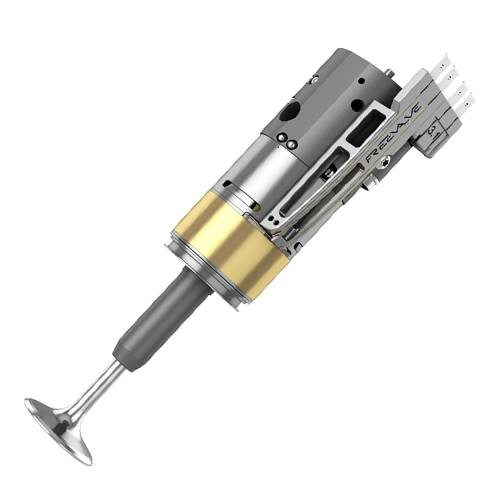 瑞典 Freevalve 公司開發的單氣門氣動-液壓促動器細節圖(圖片來源:Freevalve AB)。
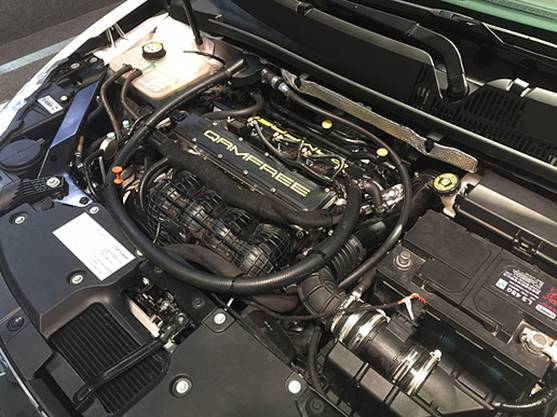 一部安裝在觀致研發車中的 Qamfree 發動機(圖片來源:Freevalve AB)。
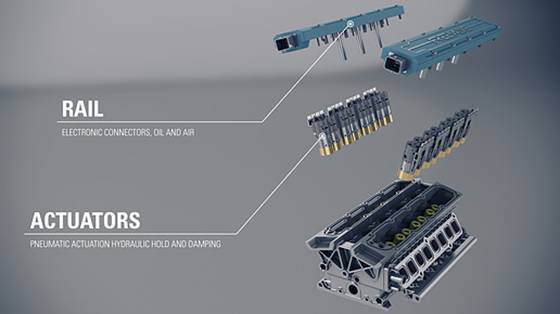 Freevalve 公司無凸輪軸發動機設計的組件圖(圖片來源:Freevalve AB)。
 Freevalve 公司 CTO Urban Carlson 表示,觀致汽車公司對我們無凸輪軸發動機的評估預計將于 2017 年底完成(圖片來源:Freevalve AB)。