可重構處理器(Reconfigurable processors)已越來越多地出現在不斷快速更新變化的車載信息娛樂系統上�。如今��,這一技術正欲繼續拓展,進軍高級駕駛輔助系統(ADAS)領域����。而隨著自動駕駛技術的出現����,現場可編程門陣列(FPGA)及其他定制化處理器也將取得進一步發展����。畢竟,在人工智能發展變幻莫測的當下��,定制化服務已變得日益重要����。
如今���,越來越多的整車廠(OEM)開始將軟件性能作為衡量車輛性能的標桿����。因此��,那些能夠幫助汽車硬件作出及時調整���,以適應系統算法及車載軟件變化的設備���,將變得更具實用性����。對越來越多的系統來說�,軟件的升級可以帶來性能的大幅提升�,而有時僅僅通過調整程序架構,就能使硬件性能更上一層樓���。
“算法一直在不斷推陳出新,然而研發人員發現���,只有在硬件改變的前提下,汽車的性能才能提升2%��,但是如果硬件不變的話�����,這就是空談���。”鏗騰(Cadence)旗下Tensilica市場部的集團高級總監Steve Roddy談到���,“研發人員需要一個可編程的解決方案�����,且該方案的計算力要足夠強大。”
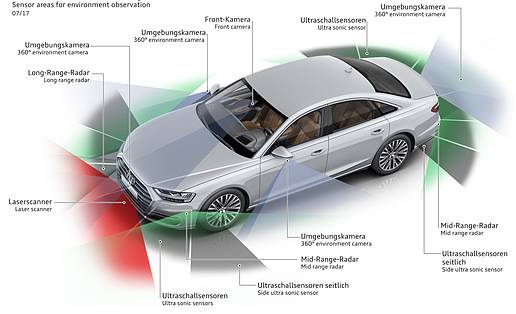
在介紹2018款奧迪A8的zFAS自動駕駛技術時���,奧迪就著重強調了可重構硬件的重要作用,并再次明確了電子控制技術對程序計算有著非常高的要求�����,因為在關鍵時刻��,這將是攸關生死的問題���。英特爾(Intel)全新的Cyclone V FPGA將搭載ARM雙核處理器,可以有效提升奧迪控制單元的性能。其他一同搭載的重要部件還包括英偉達(Nvidia)的圖形處理器���、Mobileye的視覺處理器以及中央處理器等。
“在這款奧迪車上,我們首次將異質性方式運用到ADAS系統上�����。”英特爾汽車駕駛編程方案集團(Intel’s Automotive Programable Solutions Group)高級總監Michael Hendricks告訴我們����,“ADAS和自動駕駛的發展可謂突飛猛進,幾乎每三個月就會有一項重大突破。專用集成電路(ASIC)的研發者很難迅速抓住應用的要點����,而FPGA則帶來了很多幫助�,研發者也能更從容靈活地去適應這些變化�����。”
這一技術巨大的發展潛力����,正吸引著越來越多的FPGA供應商,Xilinx就是其中之一��。借助可重構設備�����,設計團隊改動處于研發階段后期的硬件時可以更省力�。與此同時�,設計人員也可借此設置控制單元,以適應不同模型的需求�。比如���,有些ADAS系統會比同類產品多幾個感應器。
“有了FPGA,就能更好調整I/O(輸入/輸出)����,正確設置LVDS(低電壓拆分信號)和CAN連接����。”Hendricks指出��,“比如說����,FPGA可以提供海量的邏輯門�,因此,可以對硬件與軟件進行編程�����,從而優化算法與硬件�。”
定制化的硬件過去主要是用于研發的,而ASIC和專用處理器則投入量產。然而�����,在車載多媒體逐步取代無線收音設備后�,定制化硬件的功能也隨之突破了自身局限。如今,隨著用戶對于娛樂資訊軟件的特性和功能提出了更多的要求�����,這些硬件能派上用場的地方也越來越多��。在大型車輛內��,定制化的處理器甚至可用來支持人與人之間的溝通交流。
“在大型SUV中,汽車頂棚的智能聲音接收系統能夠識別誰在說話,并將其聲音通過揚聲器播放出來����。”Roddy說道,“這些芯片可以實現很多此類功能�。”
目前�,由于用戶對于汽車安全性和車載多媒體需求的不斷增加��,汽車IC市場有著長期穩定的增長預期���。據IHS Markit預測����,汽車半導體的市場總規模將會從2016年的321億美元上升到2017年的344億美元����,較2015至2016年7%的增長水平略有提升。
長期的增長預期����,也在不斷推動著汽車芯片市場的變革�����。英特爾收購了生產FPGA的阿爾特拉(Altera),又收購了制造視覺處理器的Mobileye����。高通(Qualcomm)則在積極收購恩智浦半導體(NXP Semiconductors)�,而恩智浦去年剛剛合并了飛思卡爾半導體(Freescale Semiconductors)�。據花旗集團(Citigroup)估算,英偉達(Nvidia)——這個原本并未大舉進入汽車行業的公司�����,將會在2018會計年度在汽車這塊注資10億美元,想必也和2017會計年度該領域收益上升52%不無關聯��。
盡管像英偉達和鏗騰(Cadence)這樣的業界新貴已開始專注汽車應用軟件��,傳統供應商依舊延續了其市場龍頭的地位。Semicast Research的數據顯示���,2016年,恩智浦�、英飛凌(Infineon)�、瑞薩(Renesas)����、意法半導體(ST Microelectronics)和德州儀器(Texas Instruments)依舊是全球最大的幾家自動駕駛組件供應商。而在位列前十的全球頂尖自動駕駛技術公司中����,還有博世(Robert Bosch)���、On Semiconductor���、微芯科技(Microchip Technology)�、東芝(Toshiba)和羅姆半導體(Rohm Semiconductor)等���。
Reconfigurable processors have seen growing use in rapidly-changing infotainment systems and are expanding into advanced driver assistance systems (ADAS). The role of field-programmable gate arrays (FPGAs) and other customizable processors is expected to develop further with the emergence of autonomy, where the vagaries of artificial intelligence makes customization more important.
As vehicle OEMs make software more of a differentiator, devices that make it simple to alter hardware to match changes in algorithms and software are becoming more practical. In a growing number of systems, changes in software can improve performance significantly. Sometimes, performance can be further improved by altering the programming structure.
“Algorithms change rapidly, researchers can find 2% better performance, but they can’t do that if they can’t change the hardware,” said Steve Roddy, Senior Group Director, Tensilica Marketing at Cadence. “They need a programmable solution that has the computing horsepower they need.”
The 2018 Audi A8’s zFAS piloted driving highlights the growing role of reconfigurable hardware, as well as the demanding computing requirements of electronic controls that make life or death driving decisions. An Intel Cyclone V FPGA that has dual ARM cores augments Audi’s control module, which also employs an Nvidia GPU, a Mobileye vision processor and a basic CPU.
“Audi is our first adoption in an ADAS system with a heterogenous approach,” said Michael Hendricks, Senior Director of Intel’s Automotive Programable Solutions Group. “ADAS and autonomy are moving so rapidly, there’s a major breakthrough every three months. It’s difficult for an ASIC developer to hit the bulls eye. FPGAs bring a lot of assets and give developers more flexibility to adapt.”
Expectations of strong growth is attracting other FPGA suppliers like Xilinx. Reconfigurable devices make it simpler for design teams to alter hardware late in development cycles while also letting them configure control modules that can be used in various models. For example, some ADAS systems may have more sensors than others.
“With an FPGA, you can tailor the I/O, setting the right number of LVDS and CAN connections, for example,” Hendricks noted. “FPGAs offer a sea of logic gates so both hardware and software can be programmed so algorithms and hardware are optimized.”
Customizable hardware was once used primarily for development, with ASICs or specialized processors used in production. But that limitation faded as radios transformed into infotainment systems. These devices are seeing more widespread usage in infotainment as users demand more features and functions. In large vehicles, customized processors will help foster communications between humans.
“In a big SUV, smart microphones in the headliner can figure out who’s talking and send their voice through the speakers,” Roddy said. “These chips let them layer in this level of functionality.”
Safety and infotainment are primary drivers behind expectations of continued solid growth for automotive ICs. IHS Markit expects the automotive semiconductor market from $32.1 billion in 2016 to $34.4 billion in 2017, slightly outpacing 7% growth from 2015 to 2016.
Long-term expectations are fueling major changes in the automotive chip world. Intel acquired Altera, which makes FPGAs. It also acquired Mobileye, maker of vision processors. Qualcomm is in the process of acquiring NXP Semiconductors, which last year purchased Freescale Semiconductors. Citigroup predicts that Nvidia, once a small player in vehicles, will hit $1 billion in automotive in fiscal 2018 after seeing revenue rise 52% in fiscal 2017.
Though newer companies like Nvidia and Cadence are focusing on automotive applications, traditional suppliers have maintained the bulk of the market. NXP, Infineon, Renesas, STMicroelectronics and Texas Instruments were the largest automotive suppliers in 2016, according to Semicast Research. Robert Bosch, On Semiconductor, Microchip Technology, Toshiba and Rohm Semiconductor rounded out the top 10.
Author: Terry Costlow
Source: SAE Automotive Engineering Magazine