現階段,盡管美國交通公路安全局(NTHSA)尚未強制要求部署V2I(汽車-基礎設施)通信系統,但支持者堅持認為該技術將成為自動駕駛汽車成為現實的必要條件之一,并因此大力推動V2I技術的應用。隨著該技術的不斷成熟,路邊基礎設施的建設費用問題也開始凸顯。
在今年4月4日開幕的WCX17 - SAE 2017 全球汽車年會上,來自聯邦和州政府機構的專家組成員分享了各自對V2I部署的看法、探討了目前存在的一些挑戰,并介紹了密歇根州、紐約市、懷俄明州的V2I公路測試項目進展。通過一系列測試,專用短程通信技術(DSRC)的穩健性和可行性都得到了驗證,專家組成員也普遍認為V2I技術將顯著提高道路安全性,并改善交通擁堵情況。
路邊發射裝置等V2I道路設施可以發揮輔助通訊功能,對車輛的傳感器系統進行補充,因此有望成為完整自動汽車系統的必要組成要素。然而,盡管專家組成員均樂觀地認為,NHTSA將強制要求車輛及路燈等道路設施必須配備DSRC通信功能,但相關費用可能會成為一個問題。在此背景之下,邀請私營機構加入,可能是一個可行的解決方案。
“我們沒辦法突然‘變’出一大堆錢,來支持V2I系統的部署,”密歇根州交通運輸部的Matthew Smith表示,“即使有了網聯汽車,我們還是該建橋要建橋,該立樁要立樁,原本的道路開支一點也不會縮小。因此,我們必須求助于私營機構,看看能否利用收集的數據,幫助節約一部分成本。”
從另一方面來說,即使聯邦和州政府愿意掏錢負責完成V2I系統的初始安裝,那后期的軟件升級等維護成本也是公共服務規劃者需要考慮的地方。大多數專家組成員認為,為了保證系統的長期安全并控制運維成本,保證“空中升級”至關重要。
“系統安裝維護最大的成本在于人工,”紐約市交通運輸部的Mohamad Talas表示,“在這種背景下,空中軟件升級就顯示出了極大的優勢。此外,系統的硬件設計也必須保證易于更換與維護。”
有在場的與會人員提問道,即將出現的5G移動通信是否有機會替代DSRC系統?專家組成員回答說,多年以來,V2I系統的開發人員一直在努力確保全美各州,甚至還有幾個美國以外的國家能夠采用同類的通信技術。而目前來看,5G供應商甚至還不能提供一個堅實的技術基礎。
“測試證明,DSRC技術可以保證車輛的無延遲通信,而且現在立刻就可以投入使用。”猶他州交通運輸部的Blaine Leonard表示,“5G網絡要想真正嶄露頭角,可能還需要6到7年時間。此外,DSRC是免費的,那5G供應商也愿意提供免費的5G網絡嗎?”
專家組成員還指出,如果聯邦和州政府能夠真正看到V2I系統的優勢所在,他們可能會更愿意為這種系統提供經費支持。聯邦公路管理局的Carl Andersen最后表示,民眾必須決定,是否值得以每人一杯卡布奇諾的錢,獲得每年讓30,000人避免死于交通事故的結果,并同時改善交通擁堵情況,同時節省每年用于事故維修的數百萬美元。如果答案是肯定的,那大家就應該定期聯系議員,為V2I系統爭取資金支持。
The National Traffic & Highway Safety Administration hasn’t yet mandated vehicle to infrastructure communications (V2I), but proponents are pressing forward in a technology that they contend will become a mainstay for autonomous vehicles. As the technology matures, paying for a roadside infrastructure is becoming a key issue.
Tuesday at SAE's WCX17, panelists from federal and state agencies provided their perspectives on V2I Deployment, discussing challenges and describing some of the on-highway tests in Michigan, New York City and Wyoming. Those programs have proven the robustness and viability of the technology, prompting panelists to predict that dedicated short range communications between vehicles and roadside infrastructure stations can bring major safety improvements and reduce congestion.
V2I is expected to be a necessity for autonomous vehicles, since roadside beacons can provide information that augments data supplied by on-vehicle sensors. While expressing optimism that NHTSA will mandate DSRC’s inclusion on vehicles and roadside towers, they are concerned that funding may be an issue. Tapping the private sector may be a solution.
“There’s no magical pile of money to fund V2I,” said Matthew Smith of the Michigan Dept. of Transportation. “Connected vehicles do not reduce the need for bridges or the need to fill potholes. We do have to turn to the private sector to see if we can leverage our data collection to offset some costs.”
While state and federal funds may help with initial installations, public service planners are also considering long term factors like updating software. Most panelists said over the air updating will be critical to provide ongoing security and cap costs.
“The most costly factor for installing and maintaining technology is labor,” said Mohamad Talas, NYC DOT Traffic Operation. “Software over the air updating will be a major benefit. Hardware also needs to be easy to replace and maintain.”
Attendees at the crowded session asked whether pending 5G cellular connections might displace DSRC. Panelists replied that V2I developers have worked for years to ensure that all U.S states and a number of foreign countries use similar technologies that have been tested in field trials. 5G suppliers do not even have a firm technology base at present.
“DSRC is available today, tests have proven that moving cars can communicate without latency issues,” said Blaine Leonard, Utah Department of Transportation. “We’re six to seven years from 5G having any impact. Additionally, DSRC is free. Will 5G providers broadcast roadside data for free?”
Panelists noted that if legislators at the state and federal levels understand the benefits of V2I, they will be more inclined to support funding for it. Carl Andersen of the Federal Highway Administration closed the afternoon by noting that constituents need to determine whether it’s worth the cost of a cappuccino to eliminate some of the 30,000 vehicles fatalities every year, reduce congestion and curtail the millions spent on collision repairs. If so, they should be contacting representatives regularly to encourage support.
Author: Terry Costlow
Source: SAE Automotive Engineering Magazine
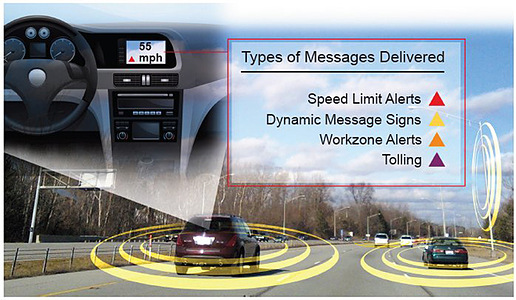 路燈上的DSRC系統可提供大量信息,協助車輛導航。