為了助力汽車行業尋找到更節油的技術,山特維克公司推出了兩款無縫不銹鋼管——Pressurfect和Pressurfect XP——來處理汽油缸內直噴(GDI)中的高燃料壓力。
GDI系統可協助燃料噴射到壓力相當高的氣缸內,使得燃燒更均勻,更可控。供應商指出,燃燒室中不斷升高的壓力會對燃料管和燃料軌造成負擔。另外,此類產品通常暴露于強腐蝕性的環境中,于是在使用不同的燃料混合物時情況會更為嚴重,例如混有乙醇的普通汽油。
為了應對這些挑戰,山特維克開發了兩種級別的定制鋼材來生產燃料管和燃料軌,并稱其在GDI系統中在“目前使用的和未來將使用的壓力下”能夠高度抗腐蝕并且展現出優秀的性能。
Jari Ponsiluoma是山特維克公司汽車部產品主管,他表示,碳鋼管和焊接碳鋼管耐腐蝕性較差,較易產生應力腐蝕裂痕。他認為高質量的不銹鋼和雙相(奧氏體-鐵素體)不銹鋼,如Pressurfect XP,將成為GDI技術和下一代燃料系統發展的關鍵推動者。
“基于高質量無縫不銹鋼管的屬性,Pressurfect能夠在當今的GDI系統中以較高的安全系數來應對燃料壓力”,Ponsiluoma通過電子郵件向SAE雜志解釋道,“更重要的是,它非常適合用于解決下一代GDI系統壓力升高這一問題,因為高壓會給標準焊接或其他質量等級更低的不銹鋼管造成負擔。”
Ponsiluoma還表示,由于Pressurfect XP的材料成分,山特維克能夠提供更低的全壽命周期成本:“使用這種材料,發動機設計師現在就已經能夠設計出更高效的GDI系統,來適應未來更嚴格的法律規定了。一大主要優點是我們可以使GDI系統在相同的工作壓力下使用更薄的壁厚,從而減小管材/組件的重量,而這將為我們的客戶提供成本效益。”
管材壁厚為0.89 到3.0毫米(0.035到0.118英寸),公差為±10%。在20攝氏度(68華氏度)時,Pressurfect的保證強度≥210兆帕,抗張強度為515到680兆帕,而Pressurfect XP的保證強度≥450兆帕,抗張強度為690到820兆帕。
這兩種新產品同樣具有良好的可加工性。山特維克的報告中說他們已經收到了客戶關于Pressurfect可加工性和釬焊屬性的正面反饋。
“盡管我們對這兩種級別的產品本身并不陌生,但GDI系統的廠商對表面性能等參數有非常具體的要求”,Ponsiluoma說,“我們付出了巨大的努力來滿足這些特定的行業要求,并保證各個批次的質量高度一致,并具有可追蹤性。”
燃料軌的材料是經過擠壓、冷軋、固溶退火的無縫鋼管;燃料管的材料是經過擠壓、冷軋、冷拔、固溶退火的無縫鋼管。
Ponsiluoma指出,山特維克公司的汽車部正在與研發部和多個客戶合作,測試這兩種產品在除了下一代GDI系統之外的其他領域未來應用的可能性。
To assist the automotive industry in its quest to develop ever more fuel-efficient technologies, Sandvik Materials Technology is launching two grades of seamless stainless tubing—Pressurfect and Pressurfect XP—to handle higher fuel pressures in gasoline direct injection (GDI) engines.
GDI systems facilitate the injection of fuel into the cylinders at considerably higher pressures, resulting in a more controlled and even burn. Rising fuel pressure in the combustion chamber is placing strains on fuel lines and fuel rails, the supplier notes. In addition, such products are often exposed to a highly corrosive environment, which can be exacerbated by the increasing use of different fuel blends, for example ethanol in regular petrol.
To counter these challenges, Sandvik has developed two tailored steel grades for fuel line and fuel rail production that it claims are highly corrosion resistant and perform well with “the pressures being used today and for the foreseeable future” in GDI systems.
Carbon steel tubing and welded carbon steel tubing exhibit less resistance to corrosion and stress corrosion cracking, according to Jari Ponsiluoma, Product Manager Automotive, Sandvik Material Technology. He believes high-quality stainless steel and duplex (austenitic-ferritic) stainless steel—i.e., Pressurfect XP—will become key enablers in the evolution of GDI technology and next-generation fuel systems.
“Due to the properties of high-quality seamless steel tubing, Pressurfect is capable of handling fuel pressures in today’s GDI systems with a healthy safety margin,” Ponsiluoma explained to SAE Magazines via email. “More importantly, however, it is ideal for coping with the rising pressures in the future generations of GDI systems, which are putting a strain on standard welded or other inferior-quality grades of stainless tubing.”
Due to the material composition of Pressurfect XP, Sandvik can offer lower total life-cycle cost, according to Ponsiluoma. “With this material, the engine designer can already now design more-efficient GDI systems to meet the tougher future legislations. One of the main benefits is that we can offer thinner wall thickness using the same working pressure in the GDI systems. This will give our customers a cost benefit due to lower weight on the tube/component.”
Wall thickness for the tubing ranges from 0.89 to 3.0 mm (0.035 to 0.118 in), with a tolerance of ±10%. At 20°C (68°F), Pressurfect has a proof strength of ≥210 MPa and tensile strength of 515 to 680 MPa, while Pressurfect XP’s proof strength is ≥450 MPa and its tensile strength 690 to 820 MPa.
The new grades are also highly machinable. Sandvik reports that it has received positive customer feedback on Pressurfect’s machinability and brazing properties.
“While the grades themselves are not new, the makers of GDI systems have very specific requirements when it comes to surface properties and other parameters,” Ponsiluoma shared. “Extensive efforts have been made to meet these specific industry requirements and to prove consistent quality and traceability for all batches.”
The material for the fuel rails is extruded, cold pilgered, and solution annealed seamless tubes. The fuel lines are extruded, cold pilgered, cold drawn, and solution annealed seamless tubes.
Ponsiluoma noted that Sandvik’s Automotive group is working with the R&D department and various customers to test the two new products for other future application areas beyond next-generation GDI systems.
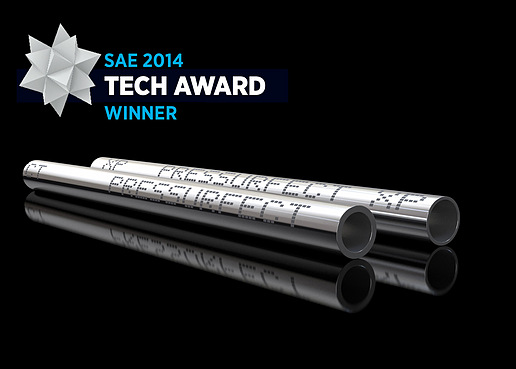 據山特維克稱,Pressurfect XP無縫不銹鋼管的一大優點就是它使得GDI系統在汽缸壁更薄的情況下保持相同的工作壓力,從而減輕材料重量。