本田2026款量產電動車將帶來眾多全新理念。
從20年前的阿西莫(Asimo)機器人到發射輕型衛星進入軌道的可重復使用火箭計劃,本田公司始終走在交通運輸技術創新的前沿。在日本栃木縣10月初舉行的技術展上,本田公司公布了即將推出的本田0系列電動車架構(英語Zero,寫作數字0)。這是完全由本田內部獨立設計的首款電動車平臺。本田還介紹了為實現其核心設計和技術理念而首創的一系列先進制造工藝。
本田公司表示,全新0系列平臺的目標是達到美國環保署(EPA)規定的300英里(483公里)續航里程,同時還要保持“纖薄、輕便、智慧”的特點。雖然本田公司的高管并未透露關于電池組、充電架構或額定輸出功率的具體信息,但他們還是對部分組件進行了詳細介紹。
本田公司與其合作伙伴日立安斯泰莫(Hitachi Astemo)共同開發了新型e-Axle電機。本田表示,與同類產品相比,新款電機的體積和重量均減少了40%。為節省空間,逆變器被直接置于電機旁邊。0系列平臺將提供50kW和180kW的可選配置方案,其最大輸出功率可達360kW。
本田表示,0系列平臺的電池“比目前市面上量產電動車使用的標準組件薄6%”,但沒有透露其用于比較的競品。由于采用了新型模塊化制造技術,電池箱中的零件數量已從60多個削減至僅僅5個。
本田表示,在采用800V架構的情況下,軟包電池能夠在10-15分鐘內從15%充到80%。這款電池由本田與LG組建的合資公司共同研發,并于本田俄亥俄州馬里斯維爾(Marysville)工廠進行生產。
本田計劃在2030年前在北美市場推出7款基于該平臺的電動車。0系列平臺對本田實現全面電動化至關重要,它將助力其在2040年前實現純電動車和燃料電池汽車占全球銷售100%的目標。搭載該平臺的首款電動車為即將上市的本田Saloon,這款轎車已在2024年美國拉斯維加斯電子消費展(CES 2024)上亮相。量產版Saloon將在CES 2025上推出,屆時可能會采用新名稱。Saloon將成為0系列的旗艦車型,隨著后續車型的推出,該平臺技術也將陸續應用于其它價位更低的電動車上。本田表示,量產版Saloon將作為2026款車型上市。
為實現0系列平臺“纖薄、輕便、智慧”的目標,本田專門為該平臺開發了新型制造工藝,并投入大量資金購置機器設備,這些設備將于明年到達俄亥俄州工廠。
本田購置了六臺6000噸的超大型鑄造機,最初將用于制造0系列平臺的電池箱,未來還將擴大應用范圍,用于生產后艙模塊等車架結構。這些機器能夠為本田在該平臺上打造的不同尺寸車型(包括轎車和SUV)生產模塊化電池箱。本田還將使用三維摩擦攪拌焊接(FSW)技術減少零件所受的熱量,從而在減少零件變形的同時增強接頭之間的強度和氣密性。本田在其全地形車(ATV)上開發了這項技術,并首次應用于2012款(及以后的)雅閣前車架的量產。
本田公司在焊接技術方面也取得了開創性進展,研發出了恒定直流斬波(CDC,Constant DC Chopping)熔接技術。該技術能夠使各種厚度的高強度鋼板在焊接過程中減少飛濺物,并同時增強焊接強度。本田從生產線和發電機領域的逆變器應用中汲取經驗,以改善焊接過程中的熱量分布并維持熱量恒定,從而提高了連接質量。本田表示,只需更換焊接槍并在焊接與機器人控制器中添加軟件,便可實現CDC熔接技術的推廣應用。公司將首先在0系列平臺的生產線上應用這項技術,并逐漸推廣至內燃機車和混合動力汽車,從而實現全系列產品20%左右的減重。
本田還計劃推出機器視覺和人工智能技術,以實現人工質檢流程的數字化,并提高零部件的可追溯性。本田在日本展示了一款安裝在工人安全帽上的攝像頭,它能夠拍攝焊接視頻并評估其質量。由于本田即將在內燃機車和混合動力汽車的混合生產線上再加入電動車,因此公司還采用了數字孿生技術,以盡可能提高生產線的利用率,并管理不同動力總成的制造復雜性。
除了創新的制造方式外,本田還重新設計了未來純電動車的車架和車身組件,以改善操控性、減輕重量,并提高在碰撞中的表現。例如,新設計降低了e-Axle電機的位置,以避免在碰撞事故中撞擊車身。本田的工程師告訴SAE,利用新車架和車身組件,他們已成功將小重疊碰撞測試中的碰撞力轉化為旋轉力,而非使其直接作用于座艙。
本田還采用了阿西莫機器人的陀螺儀姿態解算(Gyro attitude estimation)和穩定控制技術來改善未來汽車的動態性能。這些技術將被整合到一個ECU中,旨在通過控制懸架、轉向、制動和驅動電機確保平穩的過彎性能和車身操控管理。
Honda has long been at the cutting edge of mobility and tech, with everything from the Asimo robot of 20 years ago to plans for reusable rockets to launch lightweight satellites into orbit. During a Tech Day event in early October in Tochigi, Japan, the Japanese automaker announced further details of its upcoming Honda 0 architecture (Honda calls it “Honda Zero” but writes it with the number), its first in-house electric platform designed from the ground up. Honda also discussed some of the advanced manufacturing techniques it’s pioneering to reach its core design and technology tenants.
Smaller Axles with Plenty of Power
Honda said that the company’s goal with the new 0 platform is 300 miles (483 km) of EPA range while remaining“ Thin, Light and Wise.” While executives declined to give specifics on the battery pack, charging architecture, or definitive power output, they did provide some details on some components.
Honda developed the new e-Axle motors in partnership with Hitachi Astemo, one of the company’s joint venture partners. Honda says that the new motors are 40% smaller and lighter than the competitive set, with the inverter placed directly next to the motor for space savings. The 0 platform will get 50 kW and 180 kW options that can be configured for a maximum power output of 360 kW.
Honda said the 0 battery will be “6% thinner… compared to the standard component/function installed in currently available production EVs,” but wouldn’t say which competitors it used. The company also reduced the number of parts in the battery case from over 60 to just five thanks to new modular manufacturing techniques.
Honda said the pouch-style cells will be able to charge from 15% to 80% in around 10-15 minutes, suggesting an 800-volt architecture. The batteries were developed in conjunction with the joint venture that Honda has with LG, and will be built in the Marysville plant.
Honda plans to release seven EVs for North America on the platform by 2030. The 0 platform is an important step toward Honda’s goal of all global sales to be battery electric or fuel cell EVs by 2040. The first EV on the platform will be the upcoming Saloon, a sedan-style vehicle that was previewed at CES 2024. Honda says that the Saloon, which will likely get another name when it makes its production debut at CES 2025, will essentially be a halo vehicle for the brand and that the technology will trickle down to other lower-priced EVs as the company rolls out the rest of the lineup. Honda says the production Saloon will appear in showrooms as a 2026 model.
Manufacturing updates and innovations to get to 0
To achieve its thin, light goals for the new 0 platform, Honda developed new manufacturing techniques and has made large machine investments that will arrive at the Ohio plant in the coming year.
The company has invested in six 6,000-ton mega-casting machines that will initially be used to manufacture the battery case for the 0 platform. Eventually, these machines will be expanded to manufacture body frames like the rear module. These huge machines will be able to produce modular battery cases for different-sized vehicles that Honda will build on the platform (both sedans and SUVs), and Honda will use 3D friction stir welding (FSW). The technique reduces the amount of heat put into parts, thus reducing deformation while improving the strength and air-tightness between joints. The company developed the technique on its ATV vehicles and first used it in mass production for the front body frame under the Accord starting in 2012.
Honda has also pioneered a welding technique called Constant DC Chopping (CDC), which allows the welding of thinner and thicker pieces of high-tensile steel with less splatter and better connection. Honda has leveraged what it has learned from inverter technology used in everything from their manufacturing lines to their experience in generators to manage the heat distribution in the weld and keep it constant, ensuring a better connection. Honda says it can roll out CDC welding by replacing the welding guns and simply adding software to the weld and robot controllers. The company will start by rolling the technology out to the 0 manufacturing line and then apply it to their ICE and HEV products, resulting in around 20% weight savings across the entire fleet.
Honda also plans to roll out machine vision and AI to digitize the quality assurance of human workers and improve parts traceability. In Japan, the company showed off a camera attached to a worker’s hard hat that could capture video of a weld and rate it for quality. The company also uses digital twin technology to maximize the manufacturing line and manage the complexity of different powertrain builds, as the company will build EVs alongside the ICE and hybrid vehicles it already builds on the same line.
Improved Safety and Frame Flex
In addition to innovative manufacturing, Honda has also rethought the frame and body components of its future BEV vehicles to improve handling, create lighter vehicles, and improve performance in a crash. For one, the e-Axles are now lower in the vehicle to avoid interfering with the body in an impact. Engineers told SAE Media that they’ve been able to convert the collision in the small overlap crash test into a rotational force rather than a direct cabin force thanks to the new frame and body components.
Gyro attitude estimation and stabilization control lessons from the Asimo robot will also be used to improve the dynamics of future Honda vehicles. They will be integrated in a core ECU that will help control suspension, steering, brake control, and drive motor to keep cornering flat and manage body control.

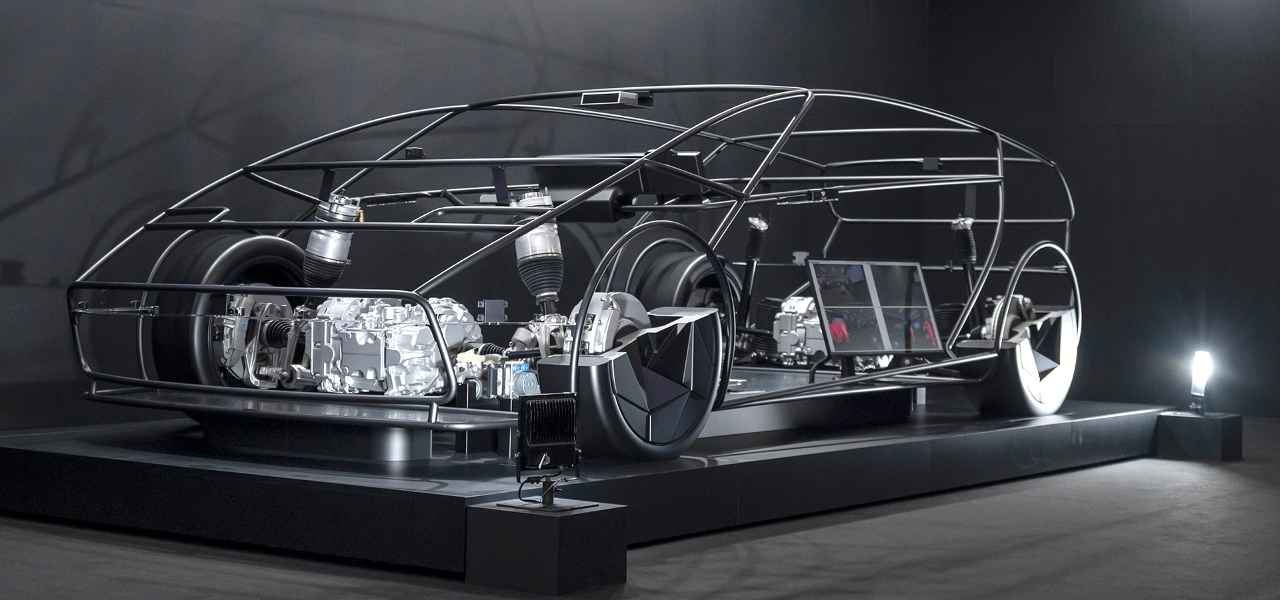 搭載ADAS組件的本田0系列電動車的剖視圖。(本田)
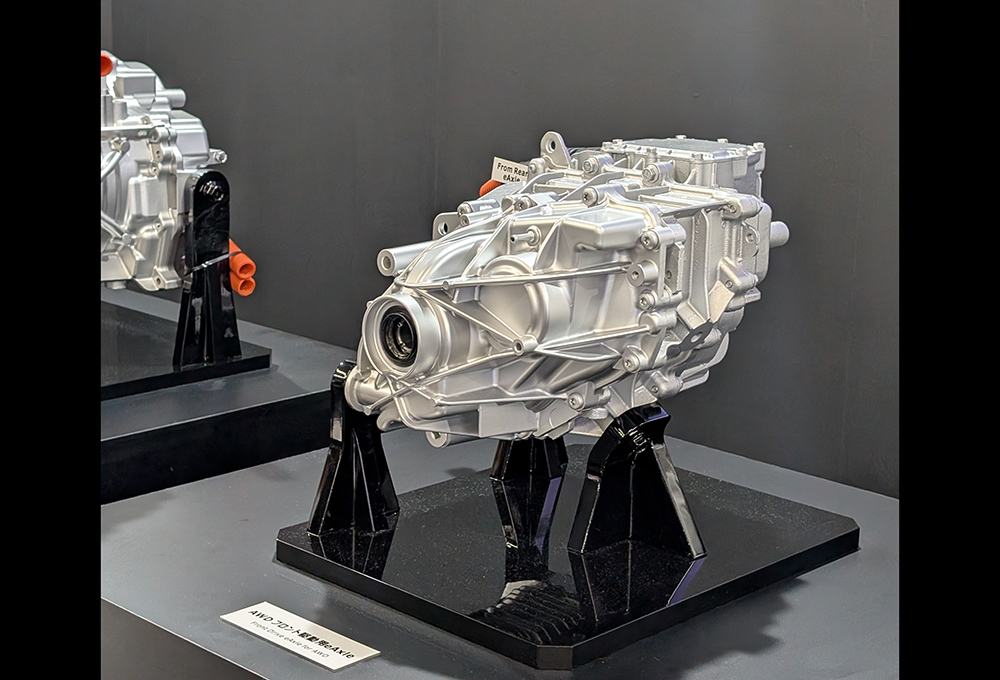 本田與日立 Astemo 合作開發了新型e-Axle電機,將用于未來的本田 0 系列平臺,逆變器位于電機旁邊。(Abigail Bassett)
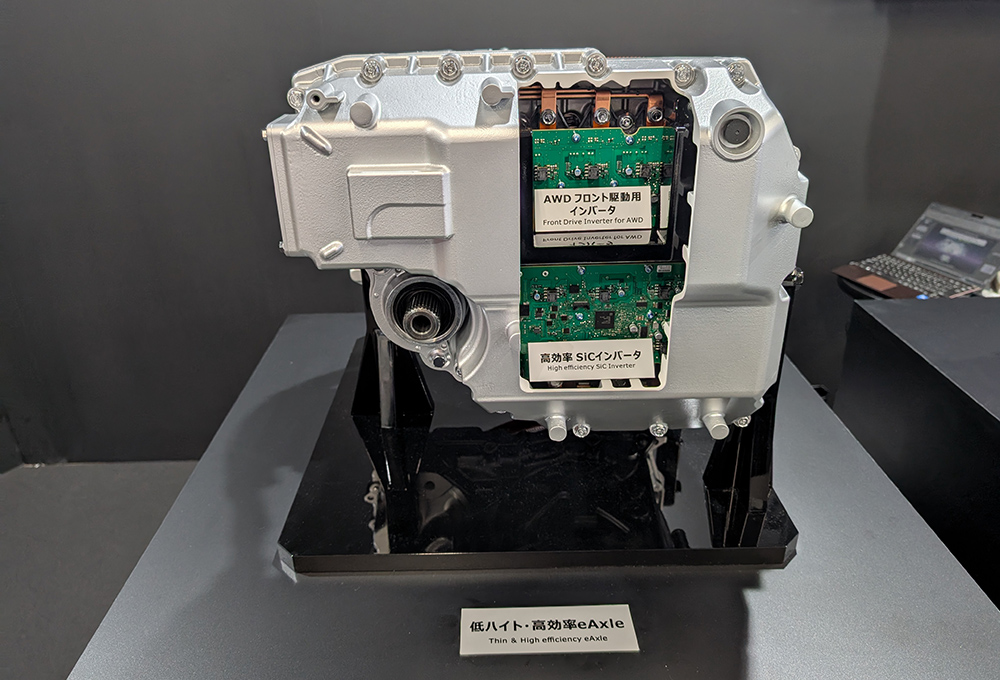 本田的新型e-Axle電機將在0系列平臺上提供50kw和180kw兩種選擇,最大功率輸出可配置為360kw。(Abigail Bassett)
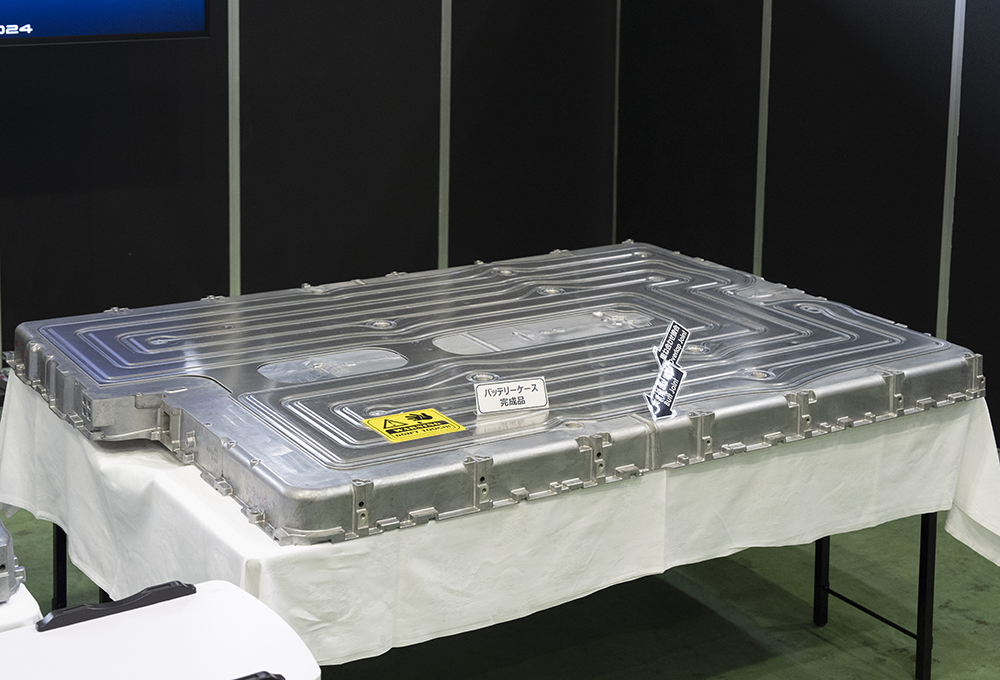 本田0系列電動車的完整電池箱。(本田)
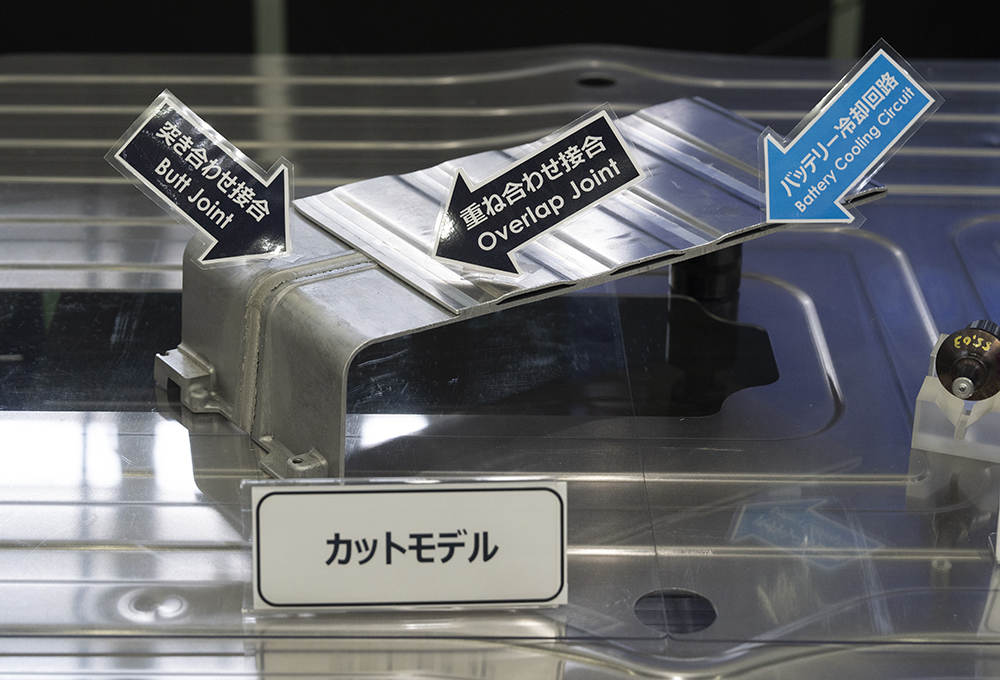 本田0系列電池外殼的橫截面,展示了電池組的集成冷卻通道。(本田)
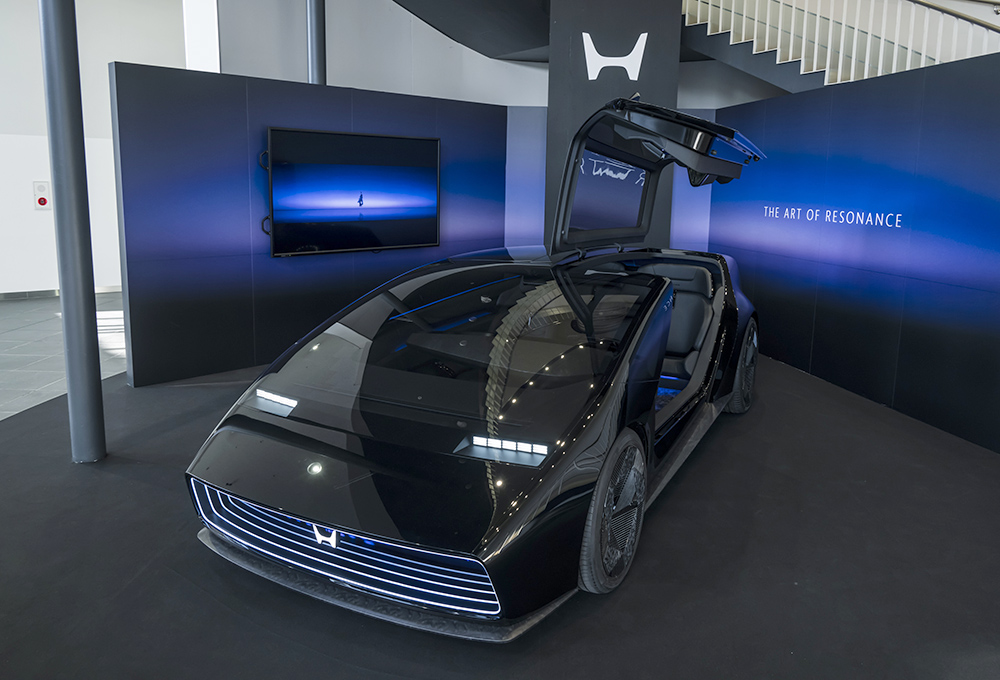 日本本田櫪木研發中心大廳內的本田概念車。這款電動車在2024年的CES 上首次亮相,預計將成為首批投產的本田0系列車型之一。(本田)
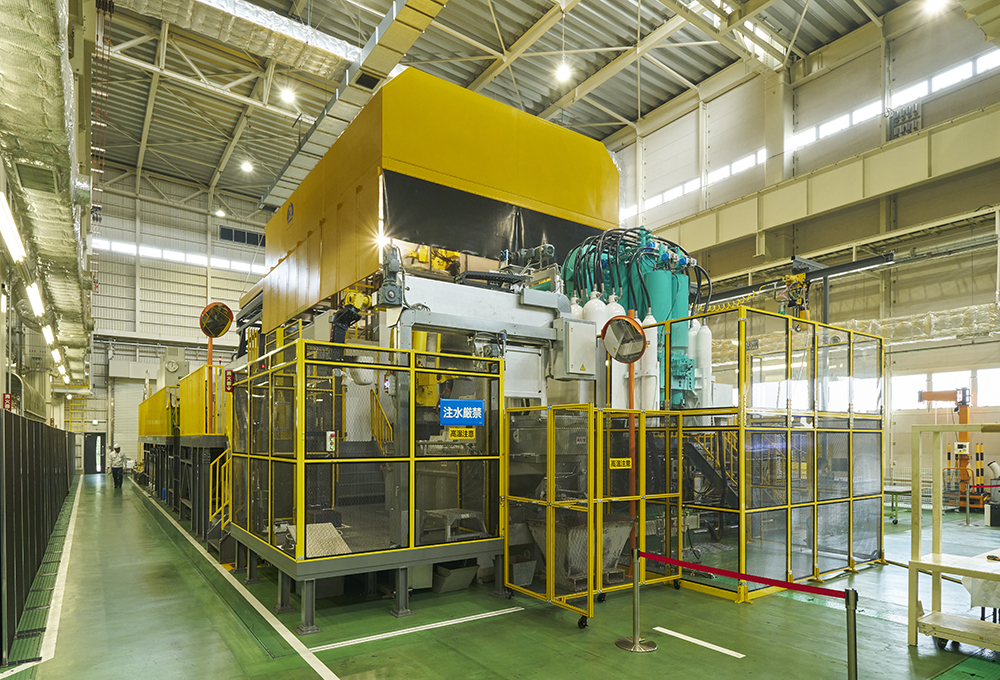 本田的新型大型鑄造機之一,將生產本田0系列電池箱。(本田)
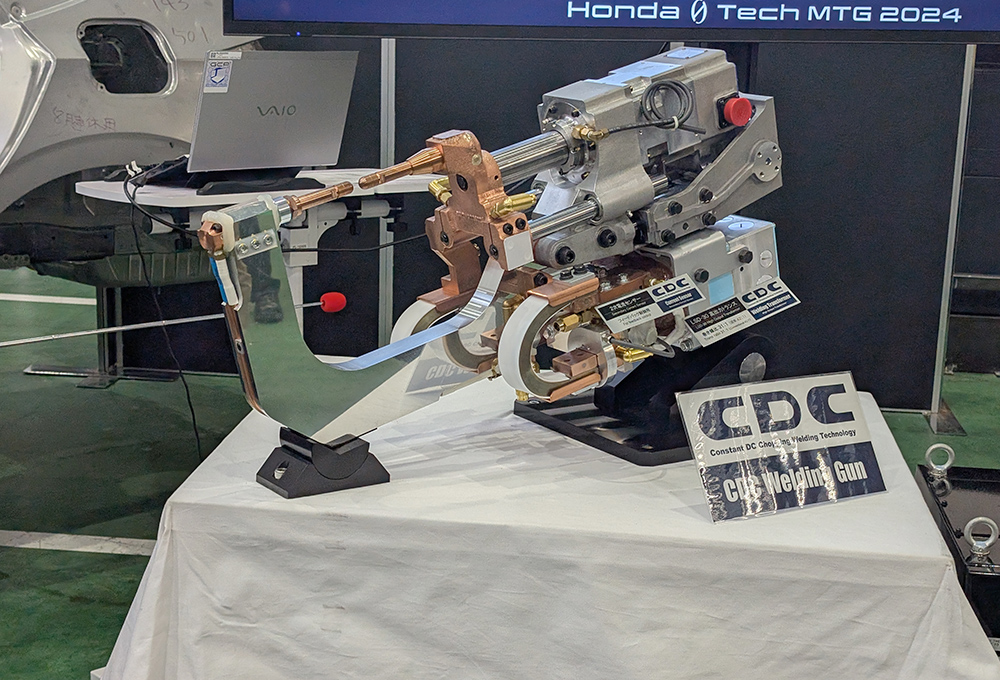 本田表示,其新型恒定直流斬波(CDC)熔接技術可以焊接較薄和較厚的高強度鋼片,飛濺更少,連接效果更好。(Abigail Bassett)
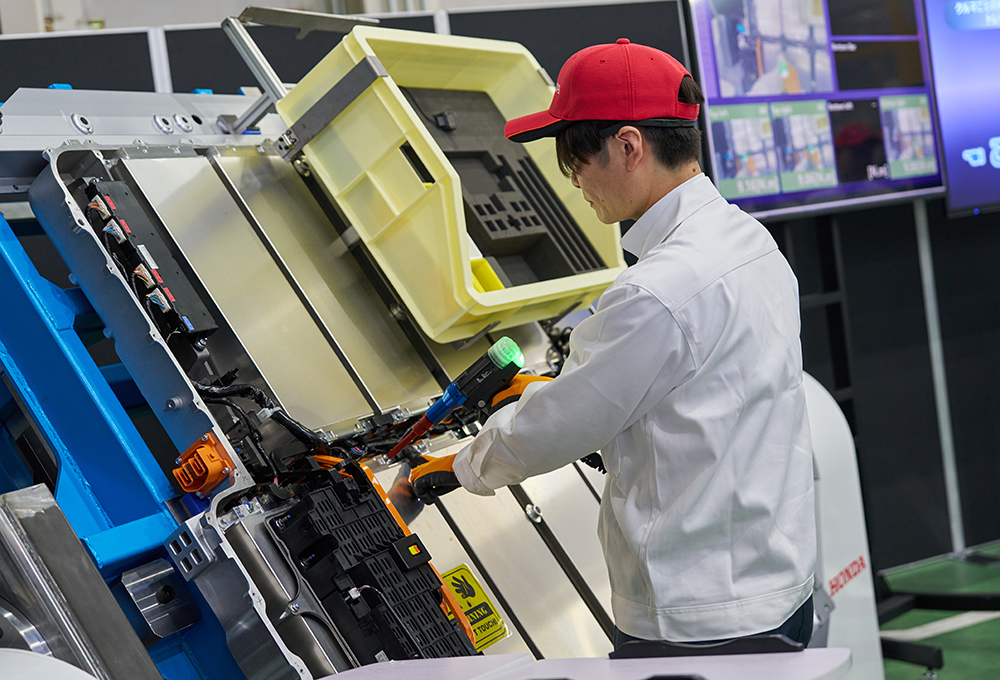 本田0系列電池模塊采用質量控制跟蹤系統進行組裝。 設備上的綠色指示燈可確認連接正確。(本田)