SkillReal使用市售小型攝像頭和自研算法,大大加快了人工檢測或設備檢測的速度。
一家公司稱,他們通過結合復雜AI算法,結合市售攝像頭,開發出了一款數字孿生對準系統。該系統有可能改變汽車行業,為生產線的缺陷檢測過程節省高達 200 億美元。
通常情況下,焊點、螺栓孔等部位的檢測主要通過以下三種方式進行:
-
緩慢且錯誤率高的人工檢測;
-
速度更慢的坐標測量機檢測,檢測150個焊點可能需要數小時;
-
激光等技術,非常昂貴,但不能保證完美無缺
以色列公司SkillReal剛剛在大眾沃爾夫斯堡工廠完成技術驗證,最近正式公開亮相。該公司表示,只需使用一個售價約1000美元的攝像頭和一臺游戲筆記本電腦,其軟件就可以在短短幾秒鐘內將零件照片與數字孿生體進行比較,并指出缺陷。
這與一些OEM和供應商的傳統做法截然不同,他們通常交給檢測員一支記號筆和一份顯示焊點位置等特征的 PDF文件,然后由檢測員目測比較零件與文件,并標記零件缺陷。
位于密歇根州利沃尼亞的SkillReal北美總部的首席運營官Pete Grabowski表示,人工檢測的成本可能會迅速增加,因為OEM的安全投產需求使供應商每月需要支付高達50000美元的費用給第三方公司,專門用以確保零件符合OEM和其他監管標準。當一家供應商為多個汽車項目生產幾十或數百個零件時,相關成本就會大幅上升。
他說,SkillReal系統的獨特之處不僅在于能檢測出CAD文件中具有 XYZ 坐標的產品特征,還在于其極高的檢測精度。“我們能夠以亞毫米級的精度確定這些特征的確切位置,而且在幾秒鐘內就能完成檢測。”該系統還具有很強的容錯能力,能夠補償被攝測試零件的位置變化。SkillReal曾在在底特律地區一家沖壓和組裝廠進行過一次測試,Grabowski 稱之為“我們的‘John Henry’與機器對決”。在該測試中,SkillReal與工廠最好的標記審計員進行了一場高難度挑戰:評估整個車輛底盤上的焊點和其他項目,其中涉及多張照片。工廠操作員在 90 分鐘內完成了任務。“而我們在不到 10 分鐘內就完成了,”Grabowski 說。
在大眾沃爾夫斯堡工廠開展的檢測結果則更加顯著。Grabowski 說,大眾的兩名操作員用了整整八小時輪班檢測焊點,而SkillReal的軟件在15秒內就完成了相同的工作。“大眾對我們進行了兩年的嚴格測試。我們希望確保這些測量結果確實是亞毫米級的,可以精準無誤地指出特征的位置。因此大眾分別用自己的系統和我們的系統對其零件進行了測量,然后將零件放在坐標測量機上進行核對。在確保我們的系統具備商業可行性之后,我們將通過NorthStar Vision在美國推出該系統,現在我們正在添加更多功能。”
SkillReal的一位顧問表示,對供應商和制造商而言,實現效率和成本控制的關鍵在于及時發現問題,避免拖到下一零件生產或子裝配完成后才發現。
SkillReal的軟件可以支持一臺搭載英偉達GPU的個人電腦,連接多達八個攝像頭。Grabowski說,工人每個工人在一個班次八小時的時間內,就能完成該系統的使用培訓。
SkillReal的創始人兼CEO是 Shai Newman,他在創立SkillReal之前,曾創立了Compedia,一家幫助出版商將其內容轉化為虛擬3D教育環境的公司。西門子曾與Compedia開展合作,設計一種能為其生產線檢測員的AR眼鏡提供支持的系統。2D攝像頭檢測技術的想法正是誕生于這次合作。
被問及該系統的數學原理時,Grabowski說,該算法可進行“數十億次的硬核計算機視覺計算”,實際上就是將2D圖像逐像素分解。“它對 3D 模型也做了同樣的處理,以實現完美的疊加。然后我們在上面添加 AI,這樣我們就知道需要查看哪些地方。”該系統還利用了一個巧妙的計算節省技巧,即只掃描組件應該存在的位置。換句話說,不需要浪費處理器資源來分析沒有檢測特征的位置。
Grabowski提到,公司確實看到了該技術的更多應用潛能。“目前,我們的主要業務集中在白車身,但我們認為,該技術也能擴展到汽車內飾的最終組裝和其他應用。單在汽車行業,就有眾多應用領域尚待我們開發。目前還沒有其他公司能夠從事這種超快速、亞毫米級精度的尺寸檢測。”
他同時表示,相信SkillReal的先發優勢和一系列專利,可以保護其免受潛在競爭對手的威脅。
A company says that its digital twin alignment system, incorporating a sophisticated AI algorithm and an off-the-shelf camera, has the potential to revolutionize the auto industry, potentially saving it up to a staggering $20 billion in the effort to detect defects on the manufacturing line.
Generally, such inspections of spot welds, bolt holes and the like are handled one of three ways:
-
Slow manual inspections that can have high error rates.
-
Even slower inspection with coordinate-measuring machines (CMMs) that can take hours to inspect 150 spot welds.
-
Tremendously expensive technology, such as lasers, that still aren’t perfect.
SkillReal, an Israeli company that just exited stealth mode after proving its technology at Volkswagen’s Wolfsburg plant, says that using a roughly $1,000 camera and a gaming laptop, its software can compare a photo of a part with a digital twin, highlight problems and be completed in mere seconds.
That’s in contrast with what some OEMs and suppliers do, which is essentially hand an inspector a Sharpie and a PDF showing weld locations and other features. The inspector then visually compares them and marks the part for deficiencies.
Pete Grabowski, SkillReal’s chief operating officer at its North American headquarters in Livonia, Michigan, said the costs of these inspections can really add up because of OEM demands involved in safe launches, in which suppliers are made to pay up to $50,000 a month to third-party companies to ensure parts meet OEM and any regulatory standards. That adds up quickly when a supplier has dozens or hundreds of parts going to multiple vehicle programs.
He said that what sets SkillReal’s system apart is not just detecting features represented in a CAD that have an XYZ coordinate, but how accurate the system is. “We can pinpoint the exact location of those features with submillimeter accuracy. And we do that in seconds.” The system is forgiving, too, able to account for positional variations of the photographed test object. One test of the system that Grabowski called “our John Henry versus the machine” was conducted at a Detroit area stamping and assembly plant. The test pitted SkillReal against the plant’s best marker auditor in a daunting challenge: evaluating welds and other items on the entire underbody of a vehicle involving multiple photos. The plant’s operator finished in 90 minutes. “We were done in less than 10,” Grabowski said.
At the VW plant in Wolfsburg, the results were even more dramatic. Grabowski said VW had two operators working entire eight-hour shifts checking spot welds, while SkillReal’s software covered the same ground in 15 seconds. “They put us through the wringer for two years,” he said. “We want to make sure that these measurements are really sub-millimeter, that you’re really right in saying where they are. So they take parts, measure it with their system, our system, then they put it on a CMM. We got it commercially viable and then launched in the States through our group NorthStar Vision, and now we're adding more features.”
The key to efficiency and cost control for the suppliers and manufacturers, one Skillreal adviser said, is to detect the problem before the next part is built or sub-assembly completed.
The SkillReal software can support up to eight cameras from the same PC running an NVIDIA graphics processing unit. Workers can be trained to use the system in a single eight-hour shift, Grabowski said.
SkillReal’s founder and CEO is Shai Newman. Before Skillreal, Newman founded Compedia, a company that helps publishers transform their content into virtual 3D educational environments. The idea for the 2D-camera inspection technology was born when Siemens approached Compedia in its own search for a system that it hoped would power some kind of augmented reality glasses for the manual line inspectors.
Asked to detail the inner workings of the math, Grabowski said the algorithm does “billions of hardcore computer-vision calculations” that actually break the 2D image up pixel by pixel. “It does the same thing with a 3D model for that perfect overlay,” he said. “And then we layer the AI on top so we can know where to look.” In a nifty compute-saving trick, the system only scans where the components are supposed to be. In other words, there’s no need to waste processor power analyzing locations that don’t include features to inspect.
Grabowski said the company does see more future uses of the technology. “The automotive body in white is our bread and butter for the time being,” he said. “But we see expansion into final assembly of automotive interior trim panels and more. There are so many different avenues that we can use this in automotive alone. No one's doing this type of ultra-fast, sub-millimeter accurate dimensional check.”
He said the company believes its first-mover advantage and series of patents protect it against potential competitors.

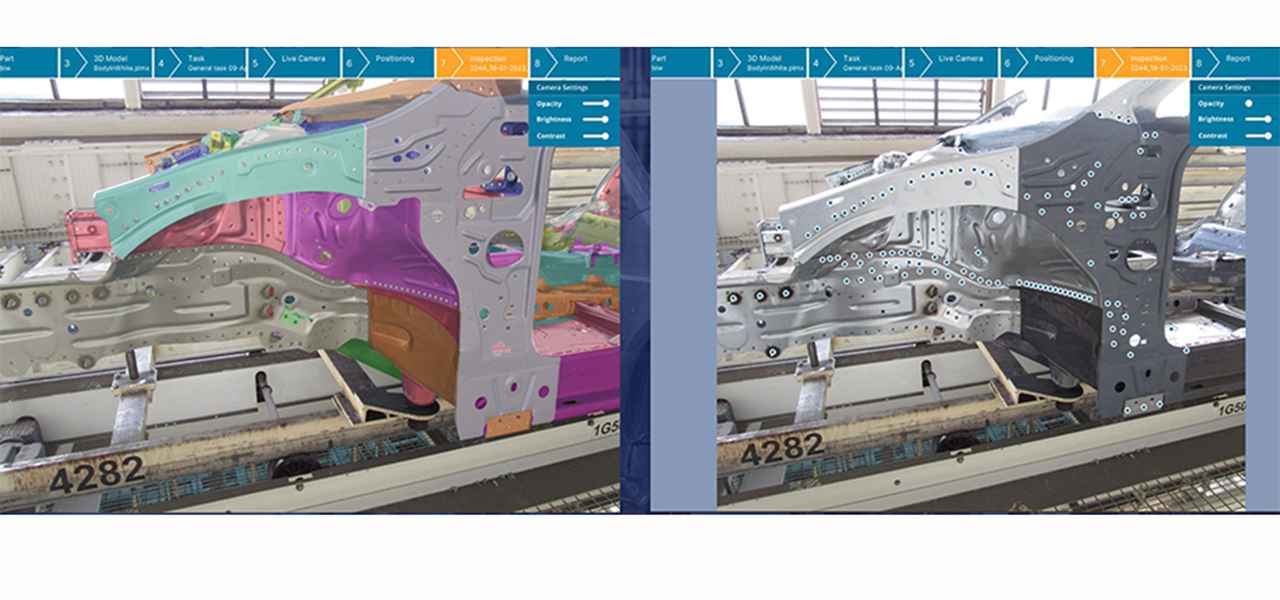 SkillReal演示用的一張幻燈片顯示了數字孿生體(左側)以及公司的檢測照片。(SkillReal)
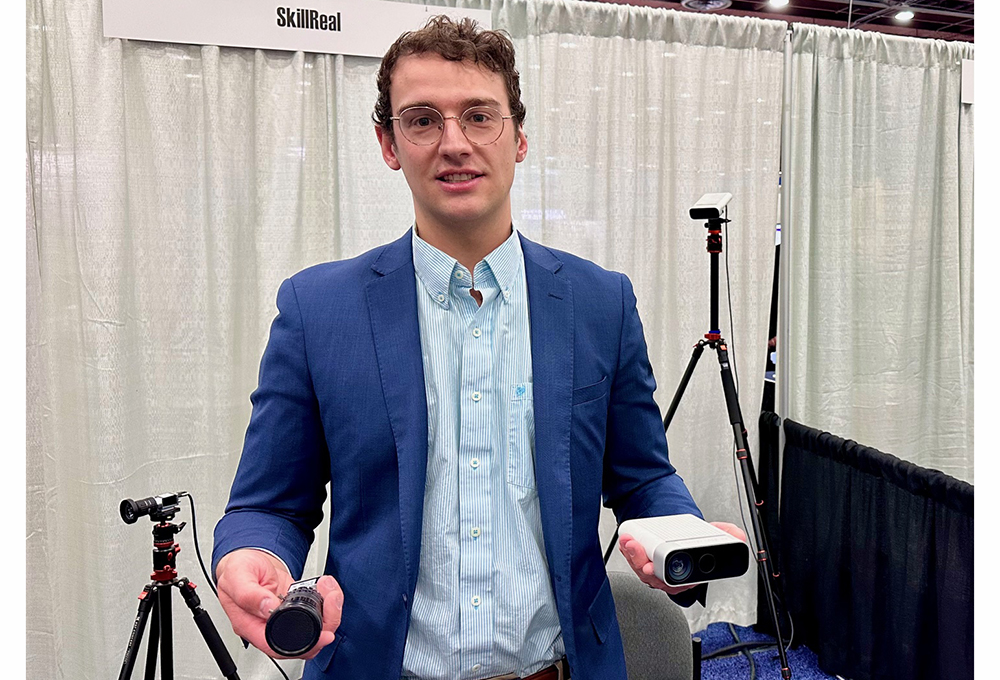 Peter Grabowski展示了技術的一部分,該技術與SkillReal的算法相結合,可以提高零部件檢測的速度和準確性。(SAE | Chris Clonts)
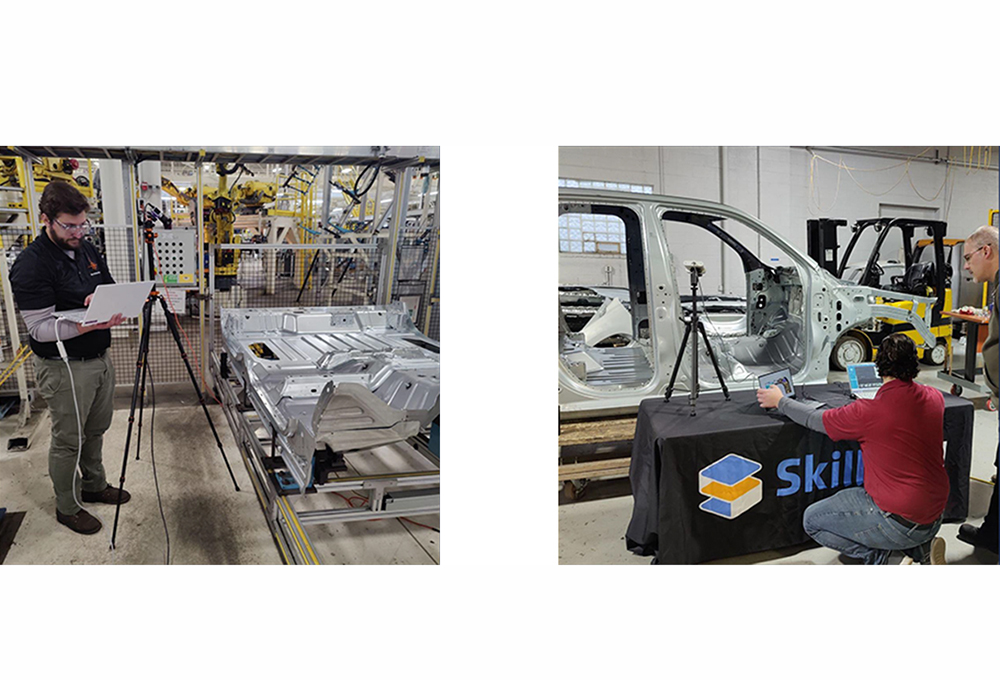 該系統只需最小的占地面積和一名操作員,八小時的輪班即可完成培訓。(SkillReal)
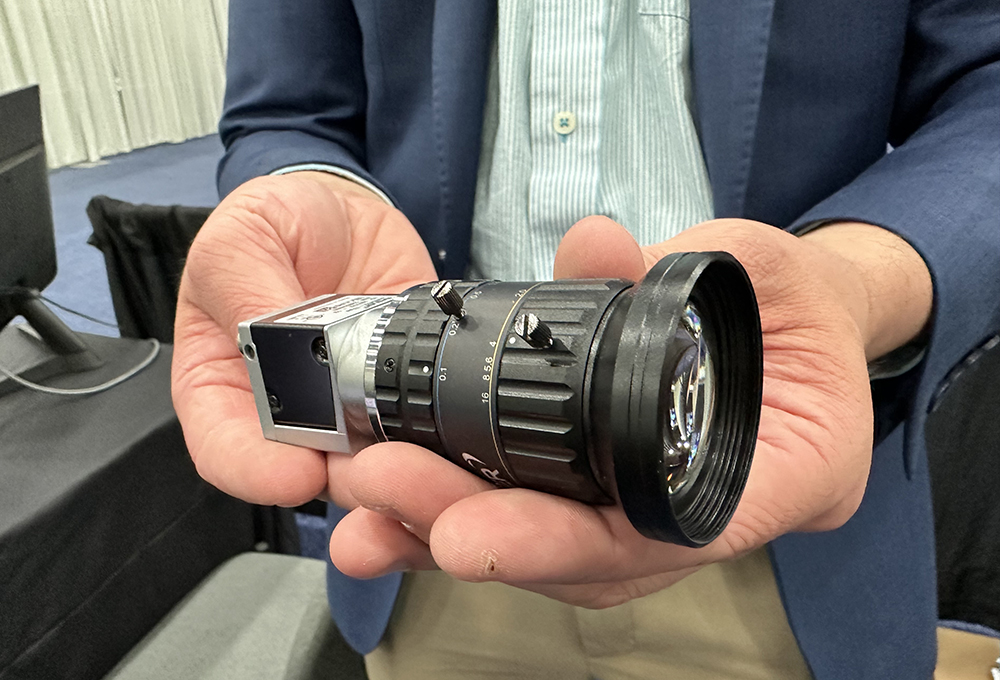 在進行亞毫米級比較之前,系統會生成一張標準的二維照片。(SAE | Chris Clonts)