新推出的卡車安全評級測試旨在模擬現實世界的碰撞場景,并鼓勵OEM采用避撞技術,并改善駕駛員視野。
歐盟新車安全評鑒協會(Euro NCAP)透露了正在籌備的新卡車安全評級的部分內容,以及打算如何測試卡車性能并設定基準。在今年四月于德國慕尼黑舉行的NCAP24世界大會上,Euro NCAP向國際道路安全專家發表了這一聲明,并表示此舉旨在減輕重型卡車對道路安全的影響。根據其援引的數據,卡車僅占歐盟道路車輛的3%,卻造成了近15%的道路死亡事故。
Euro NCAP表示,新推出的評級測試將在深度和執行速度兩方面超越當前的歐盟卡車安全法規。該機構的目標是推動創新并加速主動安全技術的采用,如自動緊急制動(AEB)和車道保持系統(LSS),同時平衡歐洲各商用車市場的需求。
“這是Euro NCAP卡車安全評級測試史上的重要時刻,”Euro NCAP秘書長Michiel Van Ratingen在NCAP24大會上表示。“Euro NCAP規定卡車需要進一步配備救生技術,特別是與避撞、視野和碰撞后救援相關的技術。此次在慕尼黑宣布的協議將于2024年5月正式發布,標志著過去十年為乘用車開發的經典測試方法將為設計更安全的未來重型卡車提供指導。”
新評級基于Euro NCAP的輕型商用車安全方案開發而成。所有協議和要求都由Euro NCAP的成員與測試機構合作制定,并通過了制造商的審核。
Euro NCAP決定在評級正式發布前公開展示程序和要求,以鼓勵行業關注并采取相應措施,Van Ratingen表示。一些主要的供應商和汽車制造商已在NCAP24上展示了其最新的先進安全技術,包括DAF、斯堪尼亞、沃爾沃和采埃孚。
“在過去一年間,我們與汽車制造商密切合作開發測試,并向歐洲各地的不同利益相關者進行了咨詢,其中包括分銷商、運輸公司、保險公司、市政府、立法機構和道路規劃機構,以全面理解提高卡車和道路安全的復雜性,”Euro NCAP戰略發展總監Matthew Avery在一份聲明中表示。“未來的卡車安全評級將激勵行業進一步提升卡車在城市和高速公路上的安全表現,并同時優化運營安全和成本。我們的目標是推行所有類型車輛安全方面的最佳實踐,而不僅僅是達到最低標準。”
卡車事故的具體情況往往因道路環境(城市或高速公路)以及碰撞對象(乘用車或弱勢道路使用者)而異。據Euro NCAP稱,卡車與弱勢道路使用者之間的事故目前占歐盟所有死亡事故的25%。新測試旨在模擬現實世界的碰撞,并鼓勵制造商安裝避撞技術和改善駕駛員視野。Euro NCAP表示未來還將進一步擴展該測試,以納入碰撞保護的相關內容。
“為提高卡車和道路兩方面的安全性,我們需要采取整體式的方法:從駕駛員行為和監控到道路基礎設施,從采用目前用于乘用車的輔助駕駛技術,再到研究卡車的結構及其在事故中的表現,”瑞典道路運輸公司協會的Ulric Långberg表示。“我們越早認識到卡車上的安全技術落后于乘用車,就能越早降低卡車的致命事故數量。”
今后,測試要求還將根據制造商提供的反饋不斷完善。Euro NCAP的卡車安全路線圖包括從2027年開始增加主動安全操作要求,并從2030年開始對卡車進行碰撞測試,以進一步加強被動安全保護。測試劃分不同行業,并重點關注城市配送、高速公路配送、長途運輸、翻斗車和垃圾車等車輛類型。Euro NCAP表示,第一版評級將于2024年11月發布。
Euro NCAP的Avery表示,新的卡車安全評級測試將是該行業的首次嘗試,旨在幫助貨運行業的所有利益相關者正確識別和評估卡車的安全水平。“這不僅將提升駕駛員的安全性,還將為那些投資最安全車輛的運營商創造機會,無論對于保險公司還是貨運公司,該方案都將產生吸引力”。“Euro NCAP致力于通過打造一個安全市場,鼓勵制造商和供應商進一步開展創新,并隨著評級的發展不斷提升安全效益。”
Euro NCAP正在評估的關鍵安全技術包括智能速度適應(ISA),該技術能夠使用攝像頭和GPS地圖自動讀取限速信息并控制車輛速度。此外還有攝像頭監控系統(即電子后視鏡),這種系統不僅能夠提供極為寬闊的視野,且圖像失真度也優于傳統后視鏡,此外還可以集成盲點信息和預警系統。
Euro NCAP指出,另一項重要技術是弱勢道路使用者自動緊急制動(AEB VRU)系統,它可以預防三分之一的重卡與行人之間的碰撞事故。這些系統融合了攝像頭和雷達數據,能夠檢測到橫穿的行人、騎行者和滑板車騎行者,并向駕駛員發出警告或自動剎車。Euro NCAP希望所有制造商都能安裝AEB VRU技術,但也指出,目前只有一家卡車制造商已將該系統投入生產。
斯堪尼亞發表聲明支持Euro NCAP的新重型卡車安全測試系統。斯堪尼亞卡車可持續運輸負責人Jacob Thärnå表示:“我們將Euro NCAP的倡議視為我們開發過程中的一個新穎且有趣的方面。評估卡車的安全功能比評估乘用車要復雜得多。重型卡車種類繁多,而且設計目的各不相同。Euro NCAP從小規模開始測試并在后續過程中不斷學習的做法是明智的。”
Euro NCAP has revealed the elements it is considering as part of an upcoming Truck Safe rating, and how it intends to test and benchmark truck performance. The announcement was made to an audience of international road safety experts at the NCAP24 World Congress in Munich, Germany, in April. The action is intended to mitigate heavy trucks’ impact on road safety. The organization cited data showing that trucks are involved in almost 15% of all EU road fatalities but represent only 3% of vehicles on Europe’s roads.
Euro NCAP says the future rating scheme is designed to go further and faster than current EU truck safety regulations. The organization’s goal is to drive innovation and hasten the adoption of active-safety technologies such as automatic emergency braking (AEB) and lane support systems (LSS), while balancing the needs of the different commercial-vehicle sectors across Europe.
“[This] marks a significant moment in the development of Euro NCAP’s Truck Safe rating scheme,” Michiel van Ratingen, secretary general Euro NCAP, said at NCAP24. “Euro NCAP highlights the need for trucks to be better equipped with life-saving technologies, particularly related to crash avoidance, vision and aspects of post-crash rescue. The protocols announced [in Munich] that will be formally published [in May 2024] demonstrate that best-practice test methods developed over the last decade for passenger cars can be turned into useful guidelines for the design of future, safer heavy trucks.”
The new rating builds on Euro NCAP’s Light Commercial Van safety scheme. All protocols and requirements are being developed in collaboration with Euro NCAP members, test facilities and reviewed with manufacturers.
The organization decided to publicly present the procedures and requirements ahead of the rating to encourage the industry to take note and react accordingly, van Ratingen said. Major suppliers and vehicle manufacturers demonstrated their latest advanced safety technologies at NCAP24, including DAF, Scania, Volvo and ZF.
“Over the past 12 months, we have worked closely with vehicle manufacturers to develop the tests, and consulted with different stakeholders across Europe, including distributors, haulers, insurers, city authorities, legislators and strategic road organizations to fully understand the complexities of making trucks and roads safer,” Matthew Avery, director of strategy development at Euro NCAP, said in a statement. “The future Truck Safe rating will incentivize good safety performance in both cities and highways and allow optimization of operational safety and cost. Our aim is to progress towards best practice in all types of vehicle safety, rather than just meeting minimum standards.”
Tests emulate the real world
Truck accidents vary depending on the road environment (city or highway) as well as the collision partner (passenger car or vulnerable road user). Accidents between trucks and vulnerable road users (VRUs) currently account for 25% of all EU fatalities, according to Euro NCAP. The new tests aim to emulate real-world collisions and encourage manufacturers to fit collision avoidance technologies and improve driver vision. Euro NCAP says it will expand the program in the future to include crash protection as well.
“It’s about taking a holistic approach to making both trucks and roads safer: from driver behavior and monitoring to road infrastructure, to adopting assisted driving technologies currently available on cars, and looking at the structure of trucks and how they perform in accidents,” said Ulric Långberg of the Swedish Association of Road Transport Companies. “The sooner we recognize that safety technologies on trucks lag behind those on cars, the quicker we will be able to reduce the number of fatal accidents involving trucks.”
The requirements are expected to evolve as manufacturers provide feedback on the tests. Euro NCAP’s Truck Safe roadmap includes increased active-safety maneuvering requirements starting in 2027, and the crash testing of trucks to encourage better passive safety protection commencing in 2030. The vehicles will be tested by sector and will focus on city delivery, highway distribution, long haul, and tipper and refuse trucks. The organization says initial ratings will be released in November 2024.
The new Truck Safe rating scheme will be a first for the sector and will enable all stakeholders in the freight industry to identify and assess the safety level of trucks, according to Euro NCAP’s Avery. “Not only will this deliver enhanced safety for drivers but also create opportunities for those operators that invest in the safest vehicle, making the scheme attractive to insurers and freight shippers alike,” he said. “In creating a market for safety, Euro NCAP will encourage manufacturers and suppliers to innovate further, increasing the safety benefits as the ratings evolve.”
Key safety technologies being assessed by Euro NCAP include Intelligent Speed Adaptation, which uses cameras and GPS mapping to automatically read the speed limit and control the vehicle’s speed, and camera monitor systems (aka eMirrors) that present a large field of view with less image distortion than traditional mirrors and can be integrated with blind spot information and warning systems.
Another important technology, AEB VRU systems, could prevent a third of all heavy-truck-to-pedestrian crashes, according to Euro NCAP. These systems fuse camera and radar data to detect crossing pedestrians, cyclists and scooter riders, and warn the driver or automatically brake the truck. Euro NCAP wants all manufacturers to fit AEB VRU technology but notes that only one truck maker has a system in production.
Scania put out a statement welcoming Euro NCAP’s new system for safety testing of heavy trucks. “We see the Euro NCAP initiative as part of a new and interesting aspect in our development processes,” said Jacob Thärnå, head of sustainable transports at Scania Trucks. “Assessing safety-related functionality in trucks is a lot more complicated task than it is for passenger cars. Heavy trucks are very diverse, and they are made that way for a reason. Euro NCAP’s approach to start on a small scale and learn as they go is a wise decision.”

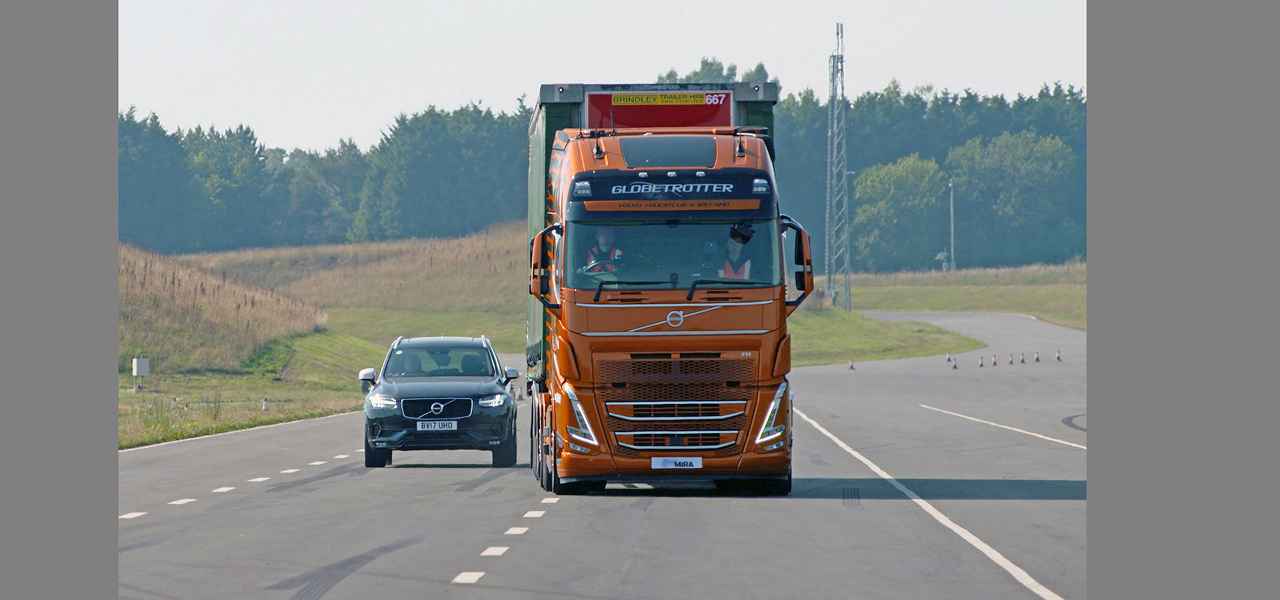 歐盟新車安全評鑒協會(Euro NCAP)將測試新型車道保持系統,該系統不僅能對卡車無意間偏離車道時發出警告,還能通過主動操控阻止其發生。(Euro NCAP)
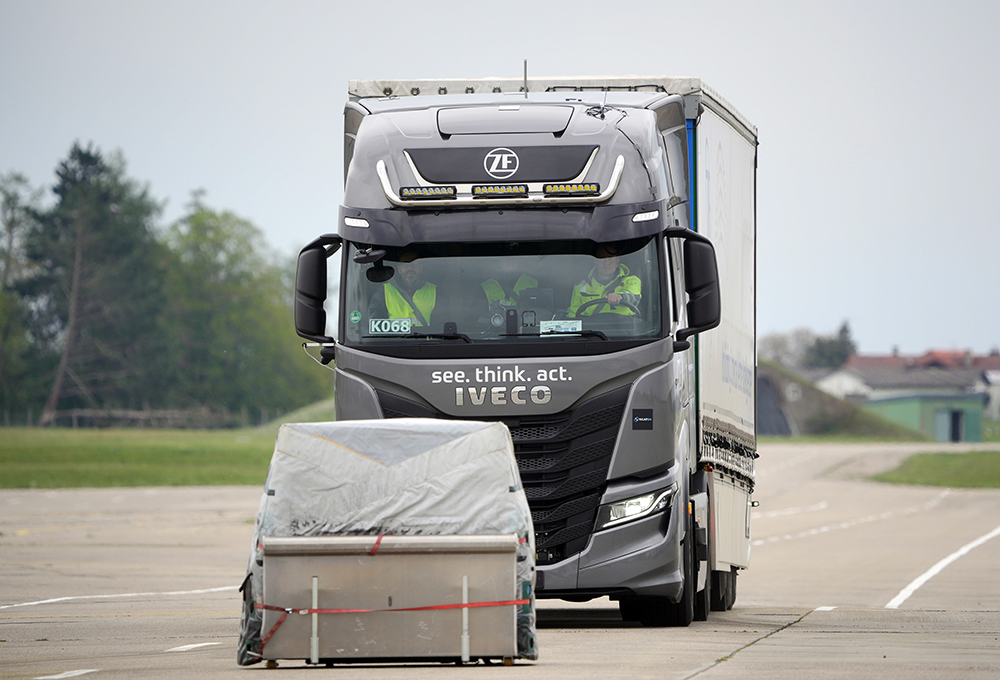 Euro NCAP認為,AEB 可以更有效地幫助減少卡車追尾時的死亡人數。(Euro NCAP)
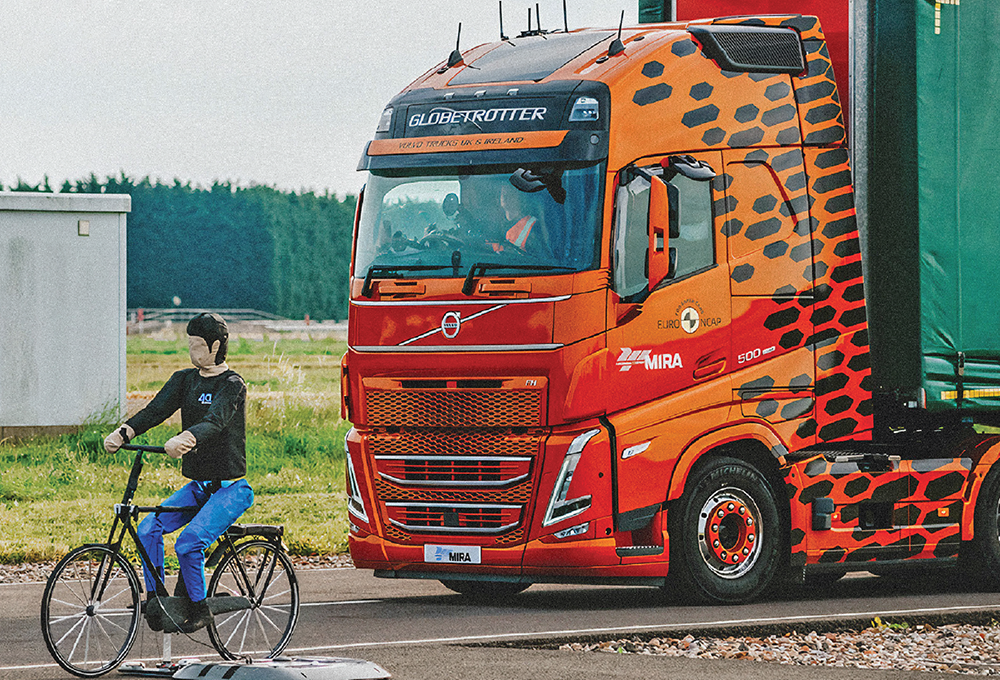 沃爾沃的側向防撞安全系統在卡車的兩側各安裝了一個雙雷達,當其他道路使用者進入盲點區域時,雷達就會檢測到。(Euro NCAP)
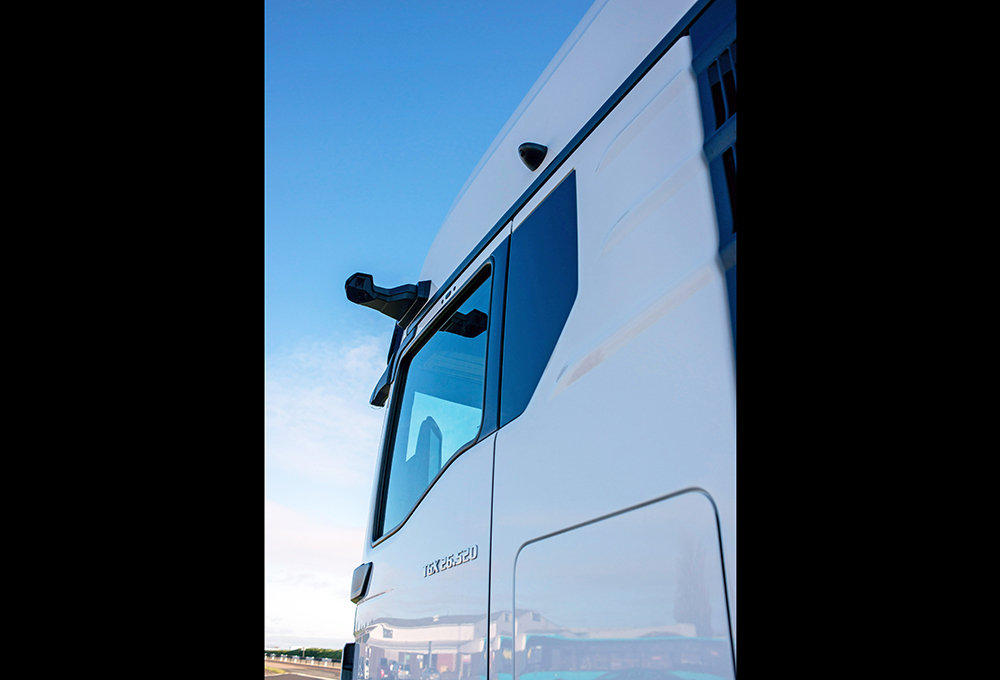 MAN的TGX卡車用一個較小的攝像監控系統(或稱eMirror)取代了實際的后視鏡,該系統視野更大,圖像失真更少。(Euro NCAP)
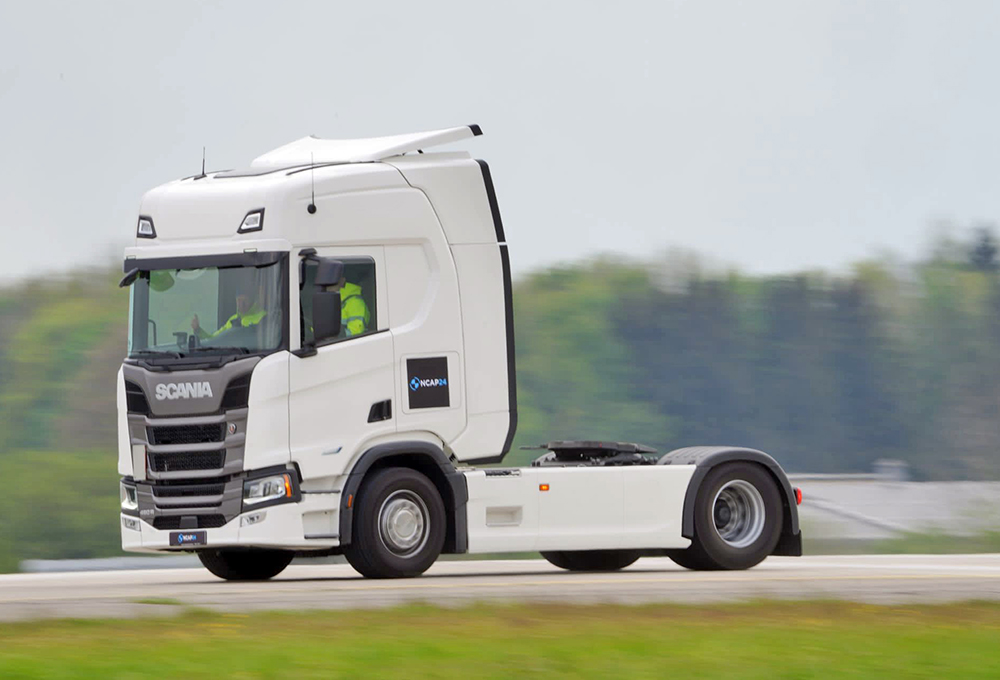 斯堪尼亞對Euro NCAP的安全測試方法表示贊賞,該方法最初側重于避免碰撞和駕駛員視覺系統。主動安全要求將會提高,被動安全保護的碰撞測試將在未來的迭代中進行。(Euro NCAP)