在自動駕駛汽車的設計圖上,我們常常會看到座椅呈傾斜或朝向后方。奧托立夫公司(Autoliv)致力于為未來的自動駕駛汽車營造安全乘坐環境,對于公司的工程師而言,這些以前看似不可能實現的座椅布置方式,對被動安全保護提出了新的挑戰。
這家汽車安全公司的產品研發副總裁E. Scott Dershem此前在位于密歇根州奧本山的技術中心接受了《汽車工程》雜志的采訪,他表示:“自動駕駛汽車的被動安全是一個難以解決的復雜問題,這也是為什么我們選擇從最基本的場景切入——即坐在稍微傾斜的座椅上的前排乘客遇到正面碰撞。”
安全工程師已經認識到,自動駕駛汽車的座椅布置方式將有別于傳統汽車。Dershem表示,“我們面臨的難題不是如何達到某個自動駕駛級別,而是如何為車內靈活布置的座椅提供有效的安全保護。”
這就是為什么“以座椅為中心”的安全變得至關重要。Dershem表示,“目前的法律法規已經對安全帶的掛點位置做出了強制規定。但是自動駕駛汽車的座椅會發生旋轉和傾斜,因此目前的掛點位置已不再是最佳的選擇。我們可以通過改變掛點位置的方式來解決該問題,比如前移掛點,讓安全帶不再扣在腹部的位置。”
安全氣囊的封裝通常受到座艙配置的影響。如果自動駕駛汽車去除了儀表板或其它傳統的座艙配置,那么座椅將是放置氣囊的最佳位置。
Dershem說道,“自2014年起,我們就在開發一款叫‘LifeCell’的概念產品,這是一款帶有兩個充氣裝置的簾狀氣囊。”Life Cell安全氣囊啟動時從座椅內彈出。完全釋放后,氣囊會包裹住乘客的頭部和肩部。Dershem表示,“我們已經改良了這款產品,此前的第一代氣囊是不會包住頭部的。”
研究人員和工程師正在探討,當座椅的傾斜角度處于所謂的“正常后傾”角度時,應當如何保護乘客的安全。目前計算機模擬和碰撞假人測試結果表明,此時乘客的頭部并不在安全氣簾的保護區域內。
Dershem還談到了乘坐自動駕駛汽車可能會導致的另一個問題,“我們正在討論是否應該在座椅傾斜時抬高座椅。這樣做有兩個好處:1. 當發生側面碰撞時,抬高座椅可以讓氣簾得以包裹住頭部。2. 乘客頭部的位置會在車輛的腰線以上,并和車窗重新持平,以預防暈車。”
仿真第一
奧托立夫的被動安全系統測試流程通常從計算機仿真測試開始,然后進行靜態測試。靜態測試的目的是為了檢測安全氣囊觸發后測試假人的狀況。接著是測試假人受到固定障礙物沖擊的滑車測試。Dershem表示,“如果我們想要調整一項不完善的技術,通常會需要從源頭開始。”最后一步的測試將在實車上進行。
據介紹,奧托立夫的技術人員可能會到2020年才開始進行假人實車碰撞測試。Dershem表示,“一些汽車制造商希望打造自動駕駛汽車接送服務,這些車企很可能會率先開展實車測試。”
當碰撞事故發生時,被動安全系統可以保護乘客的安全。與此同時,這些技術在事故預防中也發揮著重要作用。
Dershem表示,“自動駕駛汽車會采取避撞措施,比如快速變道或緊急剎車,以防止和路面物體發生沖撞。這些物體可能是其它車輛,也可能是行人、騎車者,甚至可能是一頭鹿。試想一下,如果座艙布置得像客廳一樣,沒有一位乘客系著安全帶,然后車輛突然以1G的減速度剎車,那么車內肯定會怨聲四起。”
Reclined and rotated seating positions are commonly depicted for autonomously driven vehicles. But for the Autoliv engineers tasked with developing occupant safety for tomorrow’s self-driving vehicles, those previously improbable seating positions dictate innovative new passive safety protections.
“Passive safety for autonomous vehicles is a pretty complicated problem to solve, which is why we’re starting out with the simplest scenario: a frontal crash with a front occupant in a partial-recline position,” E. Scott Dershem, Autoliv’s Vice President of Product Development, said in an interview with Automotive Engineering at the safety supplier’s Auburn Hills, Michigan technical center.
Safety engineers know occupants in self-driving vehicles might be seated in unconventional positions. “For us, it’s not really about a particular level of autonomy; it’s more about the level of seating flexibility inside the vehicle,” he said.
That’s why "seat-centric" safety is vital. “There are laws and regulations now as to where seatbelt anchors have to be. But as seats rotate and recline, today’s anchor points aren’t in the optimum location. That issue could be solved with a change in the anchor point, such as moving it further forward to get the seatbelt off the abdomen area,” he offered.
In-cabin features heavily influence the packaging of airbags. But if a self-driving vehicle is without a conventional instrument panel or other traditional cabin fixtures, the seats are the prime packaging locale for airbags.
“We’ve been working on our Life Cell concept since 2014. It’s a curtain airbag with two inflators,” said Dershem. The Life Cell airbag deploys from the seat and when fully deployed essentially envelopes the occupant’s head and shoulders. “The product has evolved. Our first-generation version didn’t go over the occupant’s head,” he said.
Researchers and engineers are looking for ways to address what happens during a so-called ‘normal-recline seating position.’ Computer simulations and testing with crash dummies show that the occupant’s head won’t be within the curtain airbag’s protection zone when seated in the ‘normal recline’ position.
“We’ve been talking about raising the seat up as you recline. That does two things: It gets the head back into the curtain area during a side impact. It also puts the head above the vehicle’s belt line and back into the window area so the occupant doesn’t get motion sickness,” he said, referring to a malady that’s possible when riding in an autonomously-driven vehicle.
Simulation first
Autoliv’s typical testing process for passive safety systems starts with computer simulations. That’s followed by static testing to determine what happens to crash test dummies when airbags deploy and sled crashes with crash-test dummies into fixed barriers. “It’s not uncommon to go back to the beginning if we want to tweak an under-development technology,” he said. The final testing stage involves actual vehicles.
Autoliv technicians likely won’t conduct crash tests with dummies inside physical vehicles before the 2020 timeframe. “Some vehicle manufacturers are looking to do autonomous mobility as a delivery service, so those are likely to be first in-line for actual vehicle testing,” he said.
Passive safety systems offer protection during a vehicle crash, but those same technologies could be vital in instances of accident avoidance.
“There will be evasive maneuvers by autonomously driven vehicles that prompt a quick lane change or emergency braking to avoid a collision with another vehicle, pedestrian, bicyclist, deer, or some other object,” said Dershem. “Imagine if the occupants are in ‘living room’ seating position and the vehicle does 1G braking and no one is belted. It’s going to get ornery inside that vehicle.”
Author: Kami Buchholz
Source: SAE Automotive Engineering Magazine

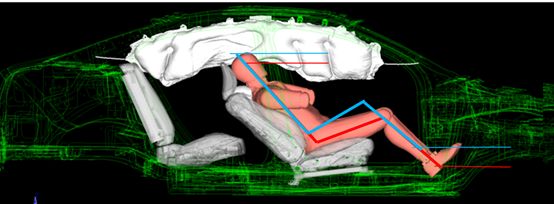 Autoliv工程師正在設計安全氣囊和安全帶系統,用于自動駕駛車輛的傾斜和放松座椅位置。(圖片來源:Autoliv)
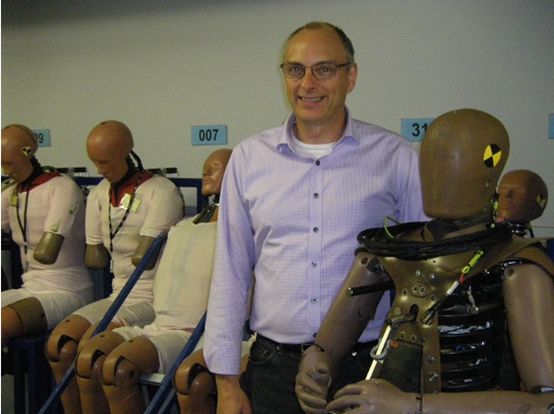 Autoliv副總裁Scott Dershaw身旁的碰撞測試假人(圖片來源:Autoliv)
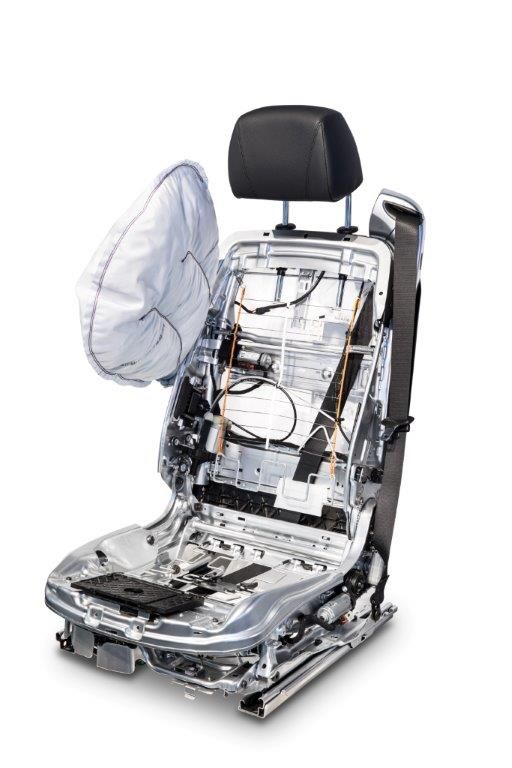 這款由Adient設計的模塊化座椅框架包含一個安裝在框架上的安全氣囊和一個集成的安全帶系統。 Autoliv正在與座椅制造商合作,將其安全氣囊和安全帶系統整合到車輛座椅中。(圖片來源:Autoliv)
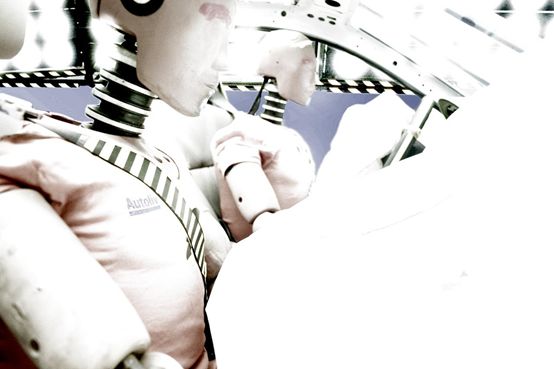 安全氣囊上的油漆痕跡顯示了將測試假人撞到障礙物的后遺癥。(圖片來源:Autoliv)