雖然車企在新車上引入了各種主被動安全系統,但美國的機動車致死率仍然是居高不下。每年依然約有4萬人被機動車事故奪去生命,盡管其中6000人是行人,而且有些也不是因車禍喪生,但這個總數還是觸目驚心。
而在機動車致死事故中,28%(約10,000人)都是和酒駕有關。在美國,如果駕駛員每100毫升的血液中酒精含量超過0.08克(80毫克),即判斷為酒駕。猶他州今年更是將血液酒精濃度(BAC)的標準下調到了0.05克/100毫升。在致使行人死亡的事故中,有13%的駕駛員和33%的行人是處于醉酒狀態。
盡管執法部門的打擊力度不斷,酒駕問題依然十分棘手。這也促使車企開始研發車載BAC檢測設備,希望能借此準確地識別出醉酒司機,阻止其駕駛車輛。
正在測試中的紅外線技術
目前,有一個研究機構正在探索基于呼氣和手指觸摸的兩類紅外線檢測技術。該科研項目是由美國高速公路交通安全管理局(NHTSA)和由16家整車企業組成的交通安全汽車聯盟(ACTS)資助,目前已開展了九年。參與研究的還有一些交通安全領域的非政府組織。項目全名為“駕駛員酒精安全檢測系統”,簡稱DADSS。
不同于需要被測者深呼氣的警用呼氣測定儀,DADSS的呼氣檢測系統只需接收駕駛員正常呼氣,然后傳感器發出紅外線的波束會穿過主要為二氧化碳的呼出氣體,再由電子模塊分析回波。由于紅外線的波長會根據穿透氣體的濃度而變化,模塊便可以據此分析出樣本氣體的酒精濃度。
這和某些紅外線汽車空調制冷劑識別及泄露探測設備的工作原理有些相似。
DADSS的另外一種系統是觸摸檢測,該設備可能會被內置在發動機啟動鍵內。其工作原理是照亮指尖并發射紅外線,使其穿透皮膚進入指尖的毛細血管,然后和呼氣檢測一樣,紅外線波束反射回傳感器。在特殊濾波器的幫助下,觸摸檢測系統可以探測到兩種可以反映酒精的波長。
兩種DADSS檢測技術都能快速呈現讀數。觸摸檢測系統可在一秒之內顯示多個讀數,而呼氣檢測系統因為需要等待駕駛員呼氣,所以相對慢一些,但是一旦呼氣采集成功,也能立刻呈現出讀數。
然而,盡管這兩種系統在技術上已經可行,但離真正應用還需進一步探索。設備的尺寸必須縮小到智能手機的大小,而且還不能犧牲反應速度。而且,不論環境條件如何,硬件都必須保持準確可靠。當然設備還必須保證與駕駛員的行為無縫銜接,也就是說,一旦檢測出駕駛員有酒駕的可能性,無論他采取任何常規的行動,設備都必須發出“發動機不會啟動”的信號。
同時,系統必須能有效避免攻擊策略。該項目的設備采用了六西格瑪(99.9997%)質量標準和美國國防部技術制造成熟度評價等級。
呼氣仿真機
DADSS呼氣檢測系統的原型機測試采用了常用的實驗方法 ——使用人體呼氣仿真設備,通過結合二氧化碳、氮氣、氧氣和適量水氣,生成和人體一樣的呼氣,然后在進行酒精濃度檢測實驗時加入乙醇。
仿真設備的呼氣還可以還原空中的灰塵、溫度變化和不同的人體動作。
此外,研究人員也還在研究應當把傳感器放在哪里,可能的兩個選項是駕駛員一側的車門和轉向柱。同時,為了更有效地區分駕駛員和乘客的呼氣,研究人員也在探討安裝多個傳感器的價值和必要性。
呼氣系統的傳感器由兩家瑞典公司——Senseair和汽車安全系統供應商奧托立夫共同研發而成。
觸摸檢測系統的研究方法和呼氣系統截然不同。鑒于每個人的皮膚厚度不同,研發人員采用了模擬人體組織的仿真校準設備。當然,真實的人體測試也在同步進行。檢測系統正在由美國TruTouch科技公司研發,該公司原本的產品是用于檢測員工是否在上班前飲過酒。TruTouch的數據表明,雖然設在公司門口的觸摸檢測系統的速度比車內的慢,但它的準確性還是和呼氣檢測一樣高。
觸摸設備應僅限駕駛員一人使用,因此,需要高級驗證技術來確保坐在駕駛座上的是真正的司機,比如,可以結合臉部識別傳感器和坐姿駕駛員傳感器。按照目前的配置,除非駕駛員是以坐姿按下啟動鍵,否則系統都不會發出有效的發動機啟動信號。
DADSS紅外線檢測系統可能會成為未來的車輛配置。盡管系統將從今年開始上車進行實地測試,但是離量產還是尚有時日。另外值得一提的是,雖然禁止發動機啟動的BAC基線為0.08,但父母可以為21歲以下的駕駛員設置更低的限值。
兩種檢測系統都可以迅速重設。不合規的司機可以找人代駕,或休息片刻后重測。
毒駕也需謹防
在道路安全部門和執法部門大力實施酒駕法規的同時,NHTSA也在打擊毒駕。關于酒駕的數據多如牛毛,但有關毒駕的負面影響的數據卻是寥寥無幾。人們通常引用的全美毒駕的數據其實是來源于個別州或簡單的問卷調查,這些州的警力都受過毒駕的稽查培訓。
根據NHTSA的數據顯示,大麻是最常用的毒品,2013年,周末夜間的毒駕比例已從2007年的16.3%上升到了20%。此外,由于大麻在很多州被合法化和執法標準的缺位,連唾液、汗液的測試都成了難題,根本無法獲得基本數據。當警察找到毒駕的證據后,按照美國法律可以進行視覺測試,比如要求駕駛員做行走測試,這種做法雖然有時候會得到法院的認可,但現在還是沒有一個關于“毒駕”的普遍認可的法律定義,也缺乏真正的執法行動。
不過,一些地區已經在使用毒品測定儀,比如密歇根州和加拿大,密歇根州更是從法律上禁止了毒駕。典型的測定儀可以在一兩分鐘之內檢測出最常用的幾類毒品。
Despite the introduction of active and passive safety systems installed on new vehicles, the U.S. motor vehicle death rate remains high, currently some 40,000 persons. Although this number includes 6,000 pedestrians (and not all deaths involved a crash), the total is alarming.
And significantly, 28% of all motor vehicle fatalities—over 10,000 persons—involve an alcohol-impaired driver, with a blood-alcohol content level (BAC) of at or over of 0.08, or 80 mg alcohol per deciliter of blood. (Utah is lowering its BAC limit to 0.05 this year). In accidents that result in a pedestrian fatality, 13% of the drivers and 33% of the pedestrians involved were alcohol-impaired.
Despite efforts by law enforcement to identify alcohol-impaired drivers, the problem remains. This has led to intensified work on development of in-car detection of high-BAC sensing equipment that can accurately detect a drunken driver and prevent him from starting and driving a car.
Infra-red technologies in testing
There are two infra-red technologies under current investigation by a research consortium, one system that is breath-based, another that is finger touch-based. The work, underway for nine years, is sponsored by NHTSA and the Automotive Coalition for Traffic Safety (ACTS), an organization of 16 vehicle OEMs. Also participating is a host of traffic safety NGOs. The project is called the Driver Alcohol Detection System for Safety, or DADSS.
The breath-based system is not like the breathalyzer used by police, which requires a deep-breath air sample for analysis. Rather, it takes a sample of the driver’s normal exhalation, which is primarily carbon dioxide. The sensor directs infra-red beams through it, and an electronic module analyzes the return waves. Because infra-red wavelengths vary according to the concentrations of different gasses through which they pass, the percentage of alcohol in the sample can be measured by the module.
This operating principle is somewhat akin to the operation of infra-red type automotive A/C refrigerant identifiers, and to some A/C refrigerant leak detectors.
The touch-based device, which likely would be built into an engine start button, illuminates and sends infra-red light through the skin into the capillaries of the fingertip. Like the breath-based system, infra-red beams are reflected back into the sensor. The touch-based system, using specific filters, looks for the two wavelengths that indicate the presence of alcohol—and only those wavelengths.
Both technologies have been developed to the points where they can take readings very quickly. The touch-type is being tuned to take several readings in under a second. The breath type is reportedly not nearly as fast, because of its type of operation (waiting for the driver to exhale), but the system response is instantaneous once the sample is taken.
Although the two systems are technically feasible, making them technologically usable requires continued research. The hardware must shrink in size, and the objective is to make it the size of a smartphone, while maintaining its fast action. However, its precision and reliability under all environmental conditions still must be proved. And of course, the technology must operate seamlessly, that is produce an engine-will-not-start signal with all-natural actions by the driver.
The systems also have to be reasonably resistant to defeat tactics. The program’s equipment quality level is set at Six Sigma (99.9997%) plus U.S. Department of Defense technology/manufacturing readiness levels.
Breath simulator
The prototype testing for the breath-based system lends itself to a long-employed laboratory approach: use of a simulator, in this case for human breath. It produces an artificial equivalent to human breath, by combining carbon dioxide, plus some nitrogen and oxygen, and normal amounts of moisture. Ethanol is added in test concentrations for alcohol identification.
Airborne dust, and changes in temperatures and the simulation of a wide range of human movements all can additionally be incorporated.
Also in the research stage is location of the sensor, with the driver’s side door and steering column among the possibilities. In addition, the research teams are looking at the possible value or need to use more than one sensor, to identify locations that would positively separate the driver’s breath sample from those of passengers.
The system was developed by a pair of Swedish companies—the sensor by Senseair, working with an automotive safety supplier, Autoliv Development.
Touch-based detection research must take a totally different approach; a calibration device was developed that simulates characteristics of human tissues—because each person’s skin is of different thickness. In addition, of course, actual human testing has been underway. The system is being developed by TruTouch Technologies, a U.S. company that makes devices to detect alcohol impairment in workers arriving at a workplace. Its data shows a virtually exact match in accuracy compared with breath-based systems, although its work-entry devices are not designed to perform with the same speed as its automotive touch system.
Ensuring that a touch device is used by the driver alone will require a high level of verification that the actual driver is in the seat. It could be a combination of a facial-recognition sensor and a seated driver presence sensor. As currently configured, the system will not generate a valid engine-start signal if other than a seated driver presses the start button.
The system would be a vehicle option, and although vehicle installations and field testing is starting this year, the consortium has not gone beyond “a step closer” assessment of OE production. Although the BAC detection would be set at 0.08, a parent would be able to program the device to a no-start for drivers under 21, with an even lower BAC level if desired.
Instant reset is a feature of either system, so a designated driver could take over, or the motorist could take a nap and retest himself later.
Drug impairment needs attention
While safety agencies and law enforcement are working to enforce drunk driving laws, NHTSA also is looking at drug-impaired motorists. Although there is profuse data on alcohol impairment, there is little on the adverse effect of drug use. The data that is nationally cited is from the few states that have police officers trained to detect it, and simple Q&A surveys.
NHTSA data shows that use of marijuana, the most common drug, rose from 16.3% in 2007 to 20% in a 2013-14 survey of nighttime, weekend drivers. However, with marijuana legal in many jurisdictions, and no standards in force, even the availability of saliva/sweat testers are little more than sources of basic data. State laws on evidence of impaired driving, followed by police-performed visual tests (driver walking, etc.), are sometimes acceptable in court, but widely-accepted legal definition and real enforcement still are in their infancy.
Several drug testers are in use, both in states like Michigan which has legal restrictions on drugged driving, and Canada. The typical tester can perform an analysis in a couple of minutes, identifying most commonly used drugs.
Author: Paul Weissler
Source: SAE Automotive Engineering Magazine
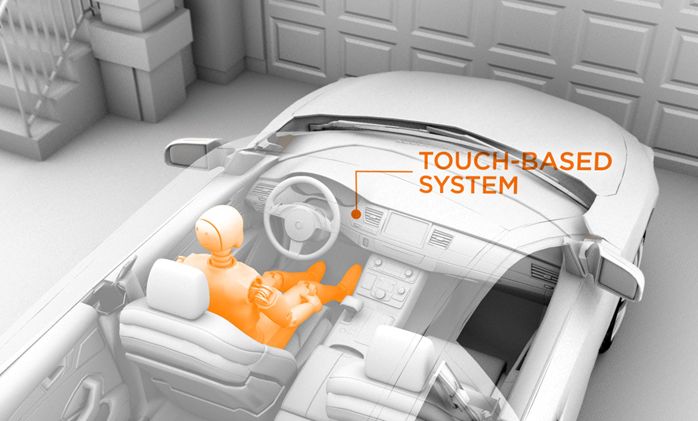 觸摸酒精檢測傳感器可能會內置在車輛啟停鍵內,面向駕駛員一側。(DADSS)
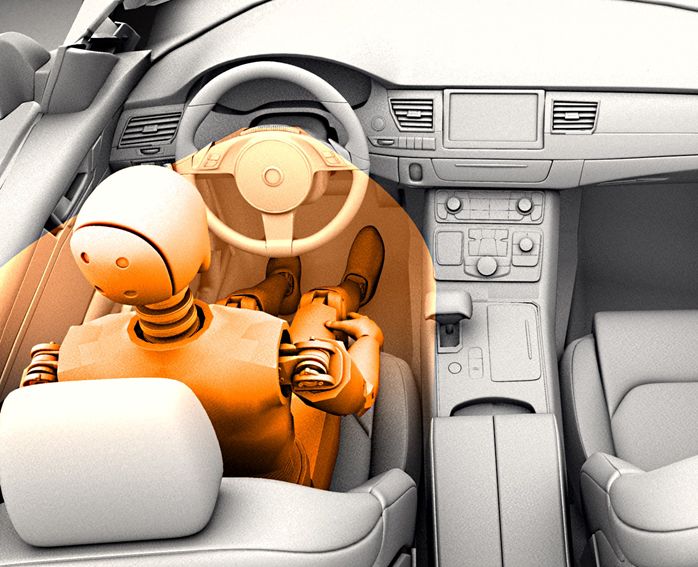 基于呼吸的酒精傳感器可以安裝在方向盤附近的轉向柱上,也可以安裝在司機的側門上.。(DADSS)
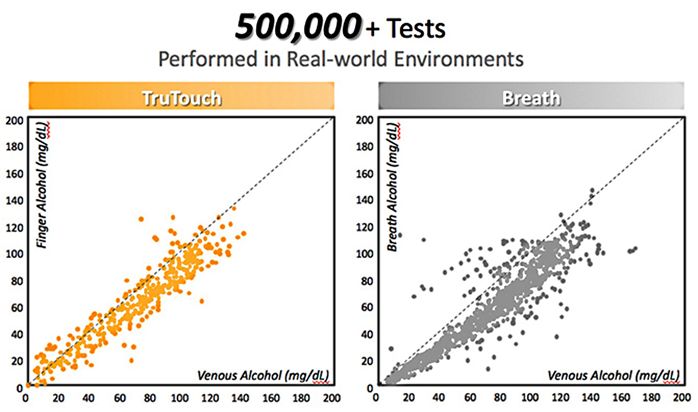 TruTouch技術公司使用工業接觸式酒精探測器和呼吸式酒精探測器的比較數據顯示,這兩種技術都達到了最先進的水平。(TruTouch)
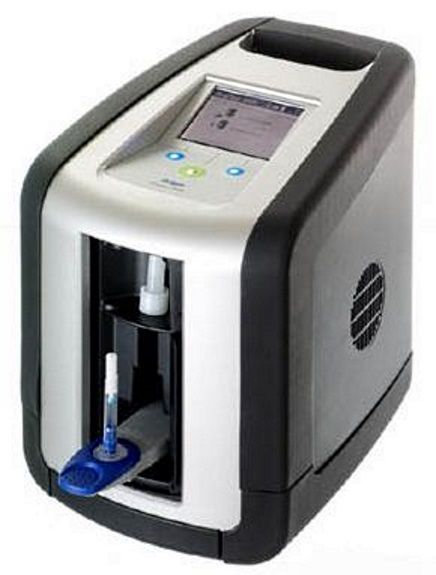 這個毒品測試儀可以識別唾液中的安非他明、阿片劑、可卡因、大麻、美沙酮和其他管制毒品。(Dragerwerk AG)