今年 9 月下旬的兩個大晴天,我們乘坐一款世界上最先進的豪華轎車,與一家享有盛譽的汽車制造商,共同開啟了一場了不起的公路旅程。不過,這次和以往有所不同。
我們從芝加哥出發一路向南,駛入伊利諾伊州的 57 號州際公路,我對 Sam 說,“車子已經行駛大約 500 英里了,而你和我碰都沒碰過方向盤,這相當了不起,太棒了。”
Sam Abuelsamid 曾是一名專業的電子系統工程師,而后轉行成為記者,現任《汽車工程》專欄作家。他回答說,“如果不想在長途駕駛中太辛苦,你可以考慮買這款車。”
接著,這輛 2018 款凱迪拉克 CT6 繼續在無人駕駛的狀態下行駛了 200 英里(321 公里),我們在車輛快到目的地孟菲斯時,才重新接管了方向盤。總結一下,我們這趟旅程的總里程約 900 英里(1450 公里),其中75%均是在汽車最新“超級巡航”技術的支持下,通過自動駕駛進行的。按照 SAE 的定義,“超級巡航”系統的無人駕駛水平已經達到 2 級,即“部分無人駕駛”。這意味著,在特定駕駛環境下,裝載“超級巡航”系統的車輛可以在人類駕駛員的監督下進行自動駕駛,并在適當時機重新把控制交還給人類駕駛員。
“超級巡航”的準確定義更接近一款“自動駕駛輔助系統”,2018 款凱迪拉克 CT6 旗艦轎車是通用汽車首款搭載“超級巡航”功能的車型。通用汽車曾在 5 年前就展示過類似系統,公司當時的計劃是在 2016 年進行發布。然而通用后來遭遇了耗資數十億美元的“點火開關召回”事件,而特斯拉的 Autopilot 系統又被卷入一場交通致死事故,在此背景下,通用明智地“暫停”了無人駕駛系統的研發。此外,一些特斯拉 (Tesla) 車主還將車輛置于 Autopilot (自動駕駛)模式下行駛,自己卻爬到車輛后座拍攝視頻上傳到社交網絡,這也引起了通用汽車工程師和一些安全專家的擔憂,因此對待“超級巡航”系統的研發工作更加謹慎。
2017 年夏季,通用汽車的“超級巡航”系統已經全面完成開發和驗證,做好了登陸凱迪拉克 CT6 轎車的準備。為展示公司對“超級巡航”系統的信心,通用汽車邀請了一些媒體乘坐一個小型CT6 轎車車隊,參加從紐約到洛杉磯的自動駕駛旅程,行程共分為 3 段,每段大約 1000 英里。Sam 和我選擇了“克利夫蘭 - 芝加哥 - 孟菲斯”的第二段路線。此外,由于目前“超級巡航”系統僅支持告訴公路行駛環境,因此我們這段旅程的絕大部分時間均沿著美國洲際公路和多車道高速路進行。
駕駛員監控基準
通用的汽車工程師和人機接口設計師共同為“超級巡航”系統打造了一個操作簡單、界面直觀的交互系統。駕駛員按下方向盤輻條左方的按鈕,即可命令車輛沿著車道中央行駛。此時,車輛中央儀表盤上將亮起一個圖標,示意系統已做好準備;接著,駕駛員再次按下該按鈕,屏幕上的圖標和方向盤上方的燈條將同時變成綠色,代表“超級巡航”系統已經接管車輛的方向盤,將以每小時不超過 80 英里(129 公里/小時)的“官方設定最高速度”在高速公路上行駛。不過,也有記者提到,凱迪拉克 CT6 在“超級巡航”模式下的最高時速曾達到 90 英里/小時(145 公里/小時)。
此后,駕駛員可以松開方向盤,而車輛將沿著車道居中行駛,即使有些地方的車道標記已經褪色或根本不存在(例如最近鋪過瀝青的路段),也不會出現偏移。Sam 和我有幾乎超過 1 個小時完全沒有接觸方向盤。不過在超車時,駕駛員仍需要踩下油門,但“超級巡航”系統將在駕駛員松開踏板后很快恢復對車輛的控制。此外,駕駛員在手動制動后,按下按鈕也會重新啟動“超級巡航”系統。
“超級巡航”系統的硬件主要包括:3 個外部攝像頭(1 個面向前方,安裝在車輛后視鏡中;另外 2 個則位于后視鏡外殼上)和 5 個雷達傳感器(1 個遠距離前視單元;其余 4 個為短距離側向單元,分別安裝在車輛的四個角上)。在進入隧道后,車輛仍將在“超級巡航”系統的控制下最多行駛 0.6 英里(1 公里),而后開始重新進行航位推算。
“超級巡航”系統的另一個重要組成部分為“駕駛員注意力監視器 ” ( Driver Attention Monitor ) 。 監視器的工作原理在于:方向盤燈條內的紅外發射器會將數千個不可見的紅外光點投射到駕駛員臉上,而車輛轉向柱上有一個幾乎無法發現的小型攝像機,用于捕捉這些光點的變化,監測駕駛員頭部、面部和眼睛的位置和移動情況,進而判斷:駕駛員是否在注視前方道路,并保持注意力集中?駕駛員是否閉上眼睛休息了?Sam 和我都帶著太陽鏡,并想用“眨眼”和“翻白眼”等動作來欺騙監測系統,但一次也沒有成功。
值得注意的是,CT6 的車主可能需要花一些時間適應車輛的“超級巡航”系統。這主要是因為系統允許駕駛員將目光離開前方道路,檢查后視鏡或設置空調系統的時間限制僅為幾秒,而且時間限制也會因車速變化而有所調整。這意味著,駕駛員可能沒有時間向迎面駛過的法拉利行個注目禮,或欣賞道路兩邊的舊谷倉,因為系統會在這種情況下提醒駕駛員保持注意力,并不斷升級提醒方式,直至駕駛員的目光重新回到前方道路。
通過體驗“超級巡航”系統在車道保持、進行轉向和制動操作的能力,Sam 和我都認為,通用汽車的傳感器融合和校準技術,均優于迄今為止我們測試過的任何 SAE 1級自動駕駛汽車。
據通用的車輛性能經理 Robb Bolio 介紹,“超級巡航”系統的最大感知距離為 2500 米(1.5 英里),系統的傳感器陣列和控制器均來自通用汽車的 ADAS 組件供應商。系統的軟件部分是由公司內部團隊研發的,而Trimble 公司則為通用提供了精確度達到 2 米(6.5 英尺)的 GPS 系統。
“超級巡航”系統并未使用激光雷達。通用汽車委托總部位于亞特蘭大的 Ushr 公司(該公司前身屬于 GeoDigital)對美國和加拿大地區超過 16 萬英里(257,500 公里)的高速公路繪制了精確的 3D 高清數字地圖,而這也是“超級巡航”軟件的核心基礎部分。
“這就像是高速公路的‘地理圍欄’”,Bolio 指出,“目前尚未到覆蓋鄉村道路、城鎮或市區道路。”地圖數據可以“提供準確的彎道、路線及備注的詳細信息”。并且您在提車時4S店將為您進行OTA空中升級更新數據。在長約 900 英里的行駛中,我們乘坐的CT6 在絕大多數的并道或看不到標識的情況下,均能穩定保持居中行駛。不過,車輛的確有幾次在下匝道處試圖下去,但很快又能重新回到預定的車道。
方向盤交還給你!
按照設計,當駕駛員分心情況超過 5 秒時,車輛的駕駛員監控系統將開始發出穩定的警告信息,并不斷進行升級,直至駕駛員重新恢復注意力。進行警告時,車輛儀表盤上的綠色“超級巡航”圖標和方向盤上的燈條將開始閃爍,而且系統還會發出聲音信號。此外,凱迪拉克還可為駕駛員提供全新的座椅震動警告功能(用戶可選裝),也可以有效將駕駛員的注意力拉回來。警告持續五秒之后,綠色的視覺警示燈將變為紅色,而聽覺和觸覺警示也將不斷升級。
如果駕駛員仍未做出反應(車輛必須通過方向盤輪圈上的觸摸傳感器“感受”到駕駛員的注意力恢復),再過五秒后車輛將在“超級巡航”系統的控制下在車道中央減速停車。Bolio 解釋說,通用汽車的研究結果顯示,路上停車比路肩上停車更加安全,因為有時根本就沒有路肩。車輛減速時,“超級巡航”系統也會關閉,直至駕駛員重新啟動車輛。此外,當車輛完全停下后,系統還會在車上人員需要緊急醫療護理的情況下,呼叫“安吉星” (OnStar) 系統,并通知急救人員。
在設計方面,也許有人認為,通用汽車 2018 款 CT6 的“超級巡航”系統仍有限制,但其他人,包括我本人在內,均認為“超級巡航”系統是通往更高級別自動駕駛的重要環節。系統的“5 秒限制”需要駕駛員時刻保持注意力,這意味著我們在超過 900 英里的旅程中幾乎無法放松頭部和眼睛。事實上,我發現在“超級巡航“模式下,我比“自己在高速公路上開車”還要警醒,因為駕駛員必須隨時準備接管控制權。
目前,“超級巡航”系統還不會自動變道,這項任務仍需駕駛員完成。此外,該系統無法像梅賽德斯 E 級轎車搭載的輔助駕駛系統那樣,能夠理解道路上的限速標志,也無法通過施工區周圍設置了護欄警戒線的區域。我們乘坐的 CT6 至少有一次在剛剛駛入符合自動駕駛條件的施工區域后,突然將控制權交還給我。
此外,一些同樣參加了第二段旅程的媒體也提出,當一大早從從克利夫蘭出發,向西行駛時,“超級巡航”系統怎么也啟動不了。Bolio 已經了解這個問題的存在,他解釋說,這是因為當陽光中特定波長的紅外線以特定角度進入車輛時,車輛駕駛員監控系統中的發射器可能無法正常發射光點。這會導致監控攝像機無法“看到”駕駛員的臉,因此“超級巡航”系統也無法工作,只有在進入車內的這種光線消失時,問題才能解決。
據我估算,“超級巡航”系統的成本大約在 400 美元,而該系統的選裝價格則為 5000 美元,因此可以輕松收回成本。“超級巡航”系統是高配 CT6 車型的標準配置之一。由于受日光影響的問題,建議經銷商處的銷售人員將試駕安排在太陽升起后進行。
然而,通用汽車的競爭對手早已在凱迪拉克的4S店門口排起了長隊,迫不及待要對“超級巡航”系統進行拆解分析。
超級巡航–“通往自動駕駛的關鍵一步”
在從芝加哥開啟長約 900 英里的 CT6 “超級巡航”測試前,《國際汽車工程》曾采訪了通用的車輛性能經理 Robb Bolio:
SAE:為什么通用汽車決定重新考慮最初的“超級巡航”項目,并一些在功能方面顯的過于保守?
Robb Bolio:很顯然,其中肯定有安全方面的考慮,包括進行地圖驗證,以確保系統萬無一失。我們希望駕駛員隨時隨地都可以使用“超級巡航”系統,但為了保證系統的穩健和安全,這并不現實。
“超級巡航”系統是公司實現自動駕駛戰略的關鍵環節,通用決定通過這種技術的發展,最終為客戶提供真正的自動駕駛汽車。在工作中,我最喜歡的部分就是整合;我的團隊曾參與過第一代雪佛蘭 Volt、Spark EV 和 Bolt EV 項目的開發。這些都是公司的關鍵性戰略項目,我們也必須適應這種高速發展的節奏,并為后期改動做好準備。
“超級巡航”系統的主要組成部分包括:自適應巡航控制、車道居中控制、駛員監控系統,以及基于非常復雜算法的“虛擬車道”系統。這是一種更高級別的系統整合與傳感器融合。因此,我們決定在相關研發中保持格外謹慎的態度,公司的領導層也支持我們的決定,一切都必須萬無一失。
我們還親自完成了軟件部分的開發——該系統使用的所有算法都是由通用的內部團隊研發的。我們希望真正掌控這項技術。在傳感器和處理器方面,我們會與供應商合作,但最終是我們在推動整個過程的發展,也希望能夠擁有相關技術的知識產權,尤其是在軟件方面。這些關鍵技術的結合方式對我們來說非常重要。
SAE:在項目啟動時,盡管一下子確定所有部分比較困難,但您是否是從系統整合的角度看待這個項目的呢?
Robb Bolio:沒錯。在與供應商合作時,隨著項目推進,技術規格隨時都會有所變化。我們也在前進過程中不斷學習;我們可能的確已經確定了一組規格,但兩個月后又決定要改,這很正常。不過,擁有軟件系統可以讓我們以相對較低的成本,實現快速迭代。你很難在項目一開始就完全確定項目完成時會是什么樣子,這非常困難。
Two sunny days in late September, a state-of-the-art luxury sedan, and good company make for a potentially great road trip. But this one was special.
“Pretty remarkable that we’ve already driven about 500 miles without either of us touching the steering wheel; I’m impressed,” I noted to co-driver Sam Abuelsamid, as we headed southbound from Chicago, on Interstate 57 in Illinois.
Sam, a former electronic systems engineer-turned-journalist, analyst and Automotive Engineering columnist, concurred. “It appears this is the vehicle to have if you want to reduce the driving workload over long distances,” he offered.
We covered another 200 miles (321 km) of hands-free operation before re-taking the wheel of the 2018 Cadillac CT6 as we neared our Memphis destination. Of the 900 miles (1450 km) we’d traveled since leaving Cleveland the previous day, over 75% were handled by GM’s new Super Cruise technology. In terms of the SAE automated-driving levels, Super Cruise operates at Level 2, or ‘partial automation.’ This means the vehicle drove itself in certain situations under human supervision, and re-engaged us to pilot when appropriate.
GM’s flagship sedan is the first to feature Super Cruise, best described as an automated driver-assistance package. Demonstrated five years ago, the system was slated for 2016 launch. But GM wisely pushed the ‘pause’ button after the company’s tragic, multi-billion-dollar ignition switch recall and a traffic fatality involving Tesla’s erroneously named Autopilot. Various YouTube videos of ludicrous Tesla drivers climbing into their cars’ back seats during Autopilot operation also caused GM engineers and safety experts to move Super Cruise forward more cautiously.
By summer 2017 the system had been fully developed and validated and was readied for the CT6 application. To demonstrate its confidence in Super Cruise, GM invited media to drive a small fleet of CT6s from New York to Los Angeles, in three waves of roughly 1,000 miles each. Sam and I chose the second wave on the Cleveland-Chicago-Memphis leg. Most of our journey was on U.S. interstate highways and multi-lane divided state freeways because currently they are the only types of roads for which Super Cruise is operationally mapped.
Benchmark driver monitoring
GM engineers and human-machine interface designers created a system that is easy and intuitive to operate. Press a marked button on the left steering wheel spoke, center the vehicle in the lane, and an icon will appear in the cluster signaling that the system is ready for use. Press the button again and the icon turns green, as does a light bar inset into the upper radius of the steering wheel—Super Cruise is thus engaged and the CT6 steers itself along the highway at speeds up to an ‘official’ 80 mph (129 km/h), although a few journos said they saw 90 mph (145 km/h) while in Super Cruise mode.
With the driver’s hands off the wheel, the vehicle consistently follows lane markings and stays centered, even when the lines are faded and non-existent, such as on fresh asphalt. Sam and I each “drove” for intervals of an hour or more without touching the steering wheel. Passing other vehicles does require the driver to press the throttle pedal but Super Cruise then resumes operation when the pedal returns. Pressing the button after manual braking also re-engages the system.
Primary hardware includes three exterior cameras; one is forward-looking and mounted in the rearview mirror module. The other two are located on the exterior mirror housings. There are also five radar sensors, one a forward-looking long-range unit and the others short range/side-looking, mounted in the front and rear corners. After entering a tunnel, Super Cruise remains engaged for up to 0.6 mi (1 km) at which point dead reckoning takes over.
Another vital element is Super Cruise’s Driver Attention Monitor. Its performance is benchmark: Infrared emitters in the light bar within the steering wheel rim project thousands of invisible points of light onto the driver’s face, which are then captured by a small, almost unnoticed camera located on the steering column. The system monitors position and movement of the driver’s head, face and eyes—are you looking forward and attentive to the road ahead? Are your eyes closing due to sleepiness? Behind our dark sunglasses, Sam and I each tried to ‘trick’ the system by fluttering our eyelids and rolling our eyes but it was never fooled.
Super Cruise will require some CT6 owners to adapt. The time it permits the driver to scan the mirrors or select an HCAC setting is mere seconds, and is speed-dependent. It won’t let you ogle that Ferrari passing in the opposite lanes or check out that cool old barn along the roadside before it starts to escalate driver intervention, as explained below.
Sam and I agreed that the overall quality of GM’s sensor fusion and calibrations, based on our perception of how smoothly Super Cruise keeps lane, handles curves, and brakes itself is superior to any SAE Level 1 vehicle we’ve tested to date.
Maximum sensing-distance capability is 2500 m (1.5 mi), noted Robb Bolio, the Vehicle Performance Manager who accompanied our media wave. He said the sensor array and the system controller are all sourced from GM’s regular ADAS component vendors. System software was developed in house and Trimble supplied Super Cruise’s GPS that’s accurate to 2 m (6.5 ft).
There is no lidar; GM enlisted Atlanta-based Ushr (formerly part of GeoDigital) to digitally map over 160,000 miles (257,500 km) of divided highways in the U.S. and Canada. The resulting precise, high-definition 3D maps are the heart of the Super Cruise software.
“It ‘geofences’ the highway,” Bolio noted. “No back-road, town or urban capability at this point.” The map data “provide accurate details of road curvature, trajectory and annotations,” he said, and will be over-the-air updated for customers at Cadillac dealers initially. During the 900-mi trek, our car remained consistently centered and faithful in most cases where lanes merge or end; a few times it did attempt to exit a couple off-ramps for a split second before snapping back into the intended lane.
Here, you take the wheel
If you’ve been distracted for five seconds, the driver monitor begins a steady and rapid warning escalation to regain your attention. The green Super Cruise icon on the cluster and the light bar on the wheel begin flashing and audible chimes in. There’s also a driver-select haptic seat “buzz” pioneered by Cadillac that’s quite effective in jogging your attention. Less than five seconds later, if the driver hasn’t responded the flashing lights turn red and the audible and haptics heighten.
Another five seconds without driver response (the car must “feel” driver contact via capacitive sensors in the steering wheel rim) and Super Cruise begins to slow the car’s speed toward a stop—which it will also do, smack dab in the lane. Bolio explained that GM research concluded that stopping in the road is safer than on the shoulder, which often doesn’t exist. As the car decelerates, it also shuts off the Super Cruise function until the next time the driver turns off and on the ignition. During a full vehicle stop the system calls OnStar for help and alerts first responders if emergency medical care is required.
By design, GM’s Super Cruise as employed in the 2018 CT6 has what some may consider to be limitations. Others, however, including me will applaud them as well-reasoned conservative steps toward the ‘higher’ levels of SAE autonomy. That the five-second limit requires driver attention and minimal head and eye movement proved not to be relaxing on 900-mile journey. In fact, I found my typical sense of highway-driving alertness to be heightened considerably. The driver must be prepared to take back control at any time.
Super Cruise currently will not change lanes—that’s a manual task left to the human. It also doesn’t read speed-limit signs like the Mercedes system in the E-Class, although it’s capable of doing so. Nor will it transit through a cordon of Jersey barriers in construction zones. In at least one hands-free situation with me behind the wheel, our CT6 handed control back to me abruptly a few feet after entering a single-lane-with-concrete-barriers construction zone.
And we media types on the second-wave drive complained that the system stubbornly would not engage as we departed Cleveland, when the bright morning sun was behind us. Bolio was aware of this issue, explaining that infrared wavelengths contained in the sunlight entering the car at specific angles can foil the emitters in the driver-monitoring system. The monitoring camera then cannot ‘see’ the driver’s face and so will not engage Super Cruise until the sun rays entering the car diminish.
As a system, Super Cruise by my estimate may cost GM $400, a figure Cadillac will easily recoup in its $5000 option pricing. The system is standard on Premium-trim CT6 models. Dealer sales staff are advised to give test drives only when the sun is high in the sky. Competitors, however, are already lined up at Cadillac dealers to order Super Cruise-equipped cars for their teardown and analysis.
Author: Lindsay Brooke
Source: SAE Automotive Engineering Magazine

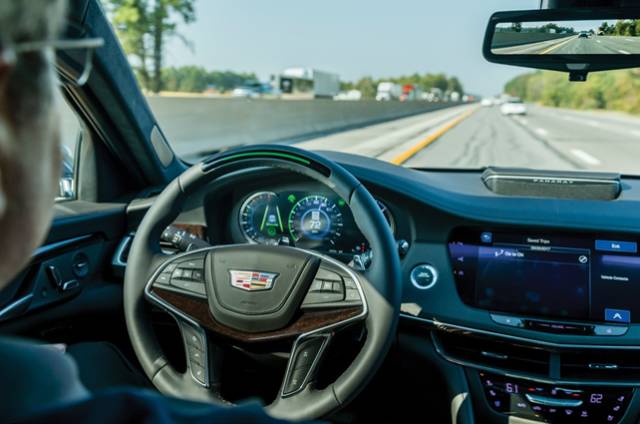 “超級巡航”是一項重要的技術進步,可以協助用戶適應特定條件下的高速公路無人駕駛。請注意,方向盤上方亮起的綠色光條代表車輛已經被“超級巡航”系統接管。
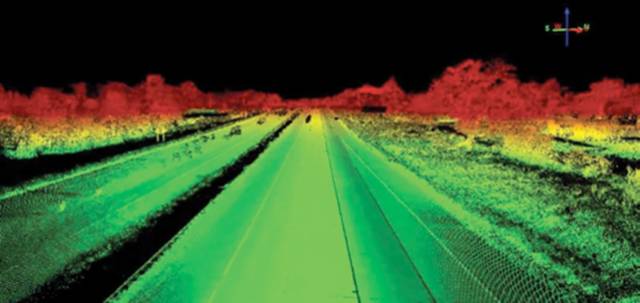 通用汽車與數字地圖專家公司 Ushr合作,為北美地區的高速公路繪制高分辨率的 3D地圖。
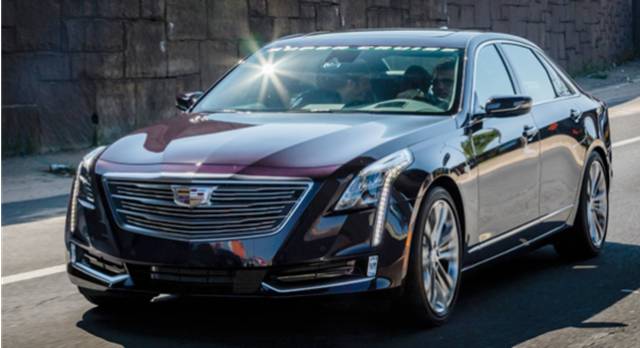 凱迪拉克 CT6 豪華轎車搭載“超級巡航”系統,除了加載的地圖數據和優異的數據融合功能外,車輛還配置了 3 個攝像頭和 5 個雷達傳感器。
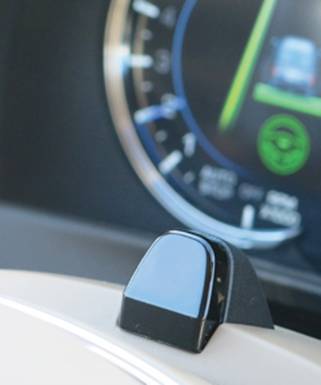 安裝在 CT6 轉向柱上的微型攝像頭可以精確監控駕駛者的頭部和眼部運動,支持“超級巡航”系統的工作。注意,儀表盤上的綠色“方向盤”圖標代表“超級巡航” 系統已經接管車輛。
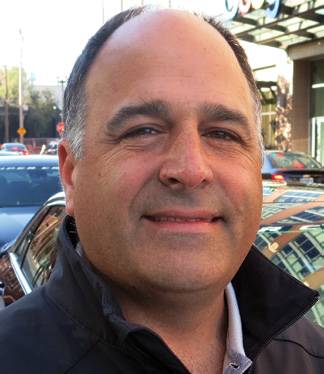 通用汽車“超級巡航”車輛性能經理Robb Bolio 在混動和電動汽車項目方面的經驗非常豐富。