當大眾汽車(Volkswagen)埋頭專注于滿足美國與歐洲的燃油排放標準要求時,通用汽車在就已經將發展重心轉移到了小型渦輪增壓柴油機乘用車市場。當馬自達(Mazda)正在驗證其2.2升Skyactiv-D發動機,為CX-5(預計2018年春發布的新款)做準備時,通用汽車(GM)也同樣希望能夠填補這一市場空白。事實上,作為2018款雪佛蘭Cruze and Equinox所選用的發動機,這款造價2,200美元的1.6升渦輪增壓柴油機4年前就在意大利完成了設計,之前還曾在底特律進行校準,而目前則正在匈牙利進行制造。
低油耗是柴油動力系統的一大優勢,這在公路行駛工況下尤為明顯。根據美國環保署(EPA)公路測試標準,在搭載通用與福特合資的9T50 9級自動變速箱時,Cruze柴油機的油耗為52mpg(4.52L/100km)。兩輪驅動的6級自動變速Equinox油耗為39mpg(6.03L/100km),而該車型的四輪驅動版油耗則為38mpg(6.19L/100km)。由于Equinox整備質量優勢明顯,在真實駕駛工況下,9級變速相對于6級變速的燃油經濟性優勢并不明顯。
獲得SAE認證的“flüsterdiesel 安靜發動機”
這臺SAE認證的功率為102千瓦(合137馬力)的發動機,是通用全球MDE家族的一員。發動機轉速在每分鐘1500至3250轉之間時,可達到理論峰值扭矩的90%,即325牛·米(合240磅·英尺)。在《汽車工程》雜志(Automotive Engineering)的道路測試中發現,這臺發動機的噪音非常小。德國汽車行業的撰稿人率先給它起了個別名叫做“der flüsterdiesel”,翻譯過來就是“安靜的發動機”。當你站在怠速狀態的發動機旁時,幾乎聽不到任何的震顫聲。
這款發動機的汽缸蓋、汽缸體和汽缸座都是鋁制的,壓縮比為16:1,采用固定氣門正時技術。發動機的性能和排放表現都有明顯提升,這主要歸功于位于發動機軸上的旋轉蝶閥。通過從這一裝置,每個汽缸都能增加一次進氣。博格華納的可變形渦輪增壓量最高可達290千帕(合42 psi),采用空氣對空氣的冷卻方式,可讓加速更順暢。同大多數柴油機一樣,這款發動機在快速空轉時可以實現最大扭矩,使汽車啟動時體驗良好。
盡管頂部蓋有一層吸音棉,噴油器和共軌裝置也覆有吸音棉,并采用了翻蓋式歧管,但要最終要成就這樣一款低噪音發動機,還是要依靠優秀的工程設計。這臺1.6升的發動機里,裝有10步螺線管噴油器(每個噴油器有8個孔),定時齒輪和定時鏈的位置都靠后,這樣鐘型外殼和傳動軸就能夠吸收定時齒輪或定時鏈帶來的噪音。
通用全球推進系統區域總工程師Mike Siegrist表示,該款多重噴油器更趨近于壓電式噴油器。不過,他也透露,如果真的采用壓電式噴油器的話,那么在1.5升基本款的燃油發動機里,每個孔的造價都要再貴上30美元。這款新一代螺線管噴油器的脈動頻率可以達到之前的2倍,當系統在2,000 bar(合29,000 psi)的壓強下工作時,性能可以接近壓電式噴油器。
螺線管噴油器的多次脈沖噴油方式
螺線管噴油器起初進行預燃燒噴油,接下來會進行很多次高頻預點火嘗試,以縮短延遲時間,之后才是燃燒噴油。這些措施可減少氮氧化物的生成,并降低噪音或振動。接下來則是燃燒—點火脈沖,之后是燃燒后脈沖,用以控制蒸汽溫度,盡可能多地充分燃燒微粒,并進一步減少尾氣排放。最多可達十次的脈沖過程,最終可以實現以上所說的結果。
Siegrist解釋說,廢氣再循環(EGR)系統包含液體冷卻,盡管柴油發動機一般是在非節流狀態下運轉的,1.6升的Ecotec發動機里卻裝有一個電子節流閥以此來提升歧管的壓力,以增加EGR空氣流動,成為發動機控制系統的一部分。該系統將后燃燒選擇性催化還原(SCR)與尿素噴射合在一起,進一步控制氮氧化物的排放。此外,這一系統里還包括了一種氧化催化劑和帶有再生功能的顆粒捕集器。很明顯,通用正在不遺余力地進行研發,以期達到美國對于該類發動機的認證標準要求,確保低排放。
搭載這款發動機的汽車都有一個18.5升(合4.9加侖)的容器來存放尿素溶液(也稱為“柴油發動機排放處理液”)。盡管制造商試圖將處理液更換的里程數調整到12,000公里以上(合7,500英里),使之接近發動機油的換油期,然而Siegrist還是略顯保守地表示,根據最終校準結果來看,1.6升的Ecotec發動機更有可能在行駛8,000至9,600公里(5000~6000英里)左右后就需要補充尿素溶液,因為在這個里程數下,尿素箱檢測系統曾多次通過儀表盤發出補充處理液的警告。
怠速啟停也是這款發動機的一大優勢,而根據《汽車工程》的道路測試顯示,發動機的再次啟動迅捷而輕巧,甚至讓人幾乎感覺不到。
When Volkswagen fell afoul of U.S. and European emissions rules, it effectively stripped the U.S. car market of small turbodiesels for passenger vehicles. While Mazda is still certifying its 2.2-L Skyactiv-D for the CX-5 (now expected on sale in spring 2018), General Motors is also eager to fill the void. Its new 1.6-L turbodiesel, a $2,200 option for the 2018 Chevrolet Cruze and Equinox, was engineered four years ago in Italy, is built in Hungary, and was calibrated in Detroit for the hitherto-abandoned market.
Fuel economy, with highway numbers particularly impressive, are diesel strong points. The Cruze diesel is EPA highway-rated at 52 mpg with the GM-Ford joint venture 9T50 9-speed automatic. The Equinox is rated at 39 mpg for 2WD, 38 mpg for 4WD with the 6-speed automatic. Equinox’ greater curb weight precludes any real-world economy advantage for the 9-speed vs. the 6-speed.
SAE-certified "flüsterdiesel"
The engine, part of GM's global MDE family, SAE-certified at 137 hp (102 kW). GM claims 90% of the 240 lb·ft (325 N·m) peak torque is available from 1500 to 3250 rpm. The engine proved extremely quiet during an Automotive Engineering road test. German autowriters first dubbed it der flüsterdiesel, or "whisper diesel." We heard no audible chatter while standing next to the car with the engine idling.
Featuring an aluminum cylinder head, block and bedplate, the engine has a 16:1 compression ratio and fixed valve timing. Performance and emissions are improved by variable intake air swirl from a shaft-mounted lineup of pivoting butterfly valves for one of each cylinder’s two intakes. The BorgWarner variable-geometry turbo machine, with peak boost of 42 psi (290 kPA), uses air-to-air intercooling which smoothes acceleration. Like most diesels, peak torque is at fast idle, providing pleasing launch.
Although there’s an acoustic foam top cover, acoustic foam-covered injectors and common rail; and clamshell manifold cover, quiet design also is engineered-in. The 1.6-L incorporates 10-step solenoid fuel injectors (each with eight holes), and rear location of timing gears and chains, where the bell housing and transaxle absorb gear/chain noise.
That level of multi-injection would be more typical of piezo injectors, admitted Mike Siegrist, GM Global Propulsion's Regional Chief Engineer. But piezo units would add an intolerable “$30 per hole” over the 1.5-L base gasoline engine, he revealed. This new generation of solenoid injectors, with twice the previous pulsation rate, he said, provides near-piezo performance with the system operating at 29,000 psi (2000 bar).
Multi-pulse solenoid strategy
Solenoids start with pre-combustion pilot injection, and follow with a varying number of rapid pre-ignition “shots” for a shortened delay before the combustion injection. These reduce NOx generation and lower noise/vibration. The combustion-ignition pulse follows, and then post combustion pulses to control exhaust gas temperature, burn off maximum amount of particulate and further lower emissions. It’s the up-to-10 pulses that produce the total results.
The EGR (exhaust gas recirculation) system incorporates liquid cooling and although a diesel normally runs unthrottled, the Ecotec 1.6 L has an electronic throttle to raise manifold pressure, to increase EGR flow as part of the engine control system, Siegrist explained.
The system incorporates post-combustion SCR (selective catalyst reduction) with urea injection for further NOx control. There is also an oxidation catalyst and particulate filter with regeneration. GM clearly approached U.S. certification of this engine aggressively to ensure low emissions.
The vehicles have an 18.5-L (4.9 gal) tank of “diesel emission fluid” urea solution. Although manufacturers try to calibrate for a 7500-mi-plus (12,000 km) range to coincide with the oil change interval, Siegrist conceded that with the final calibrations the 1.6-L Ecotec is more likely to need a tank refill in the 5000-6000 mi (8000-9600 km) range. He explained that the urea tank monitoring system provides continuous instrument panel warnings in plenty of time for a refill.
Idle stop-start is incorporated with both automatics, and AE's road testing showed it’s barely perceptible, with restarts quick and gentle.
Author: Paul Weissler
Source: SAE Automotive Engineering Magazine

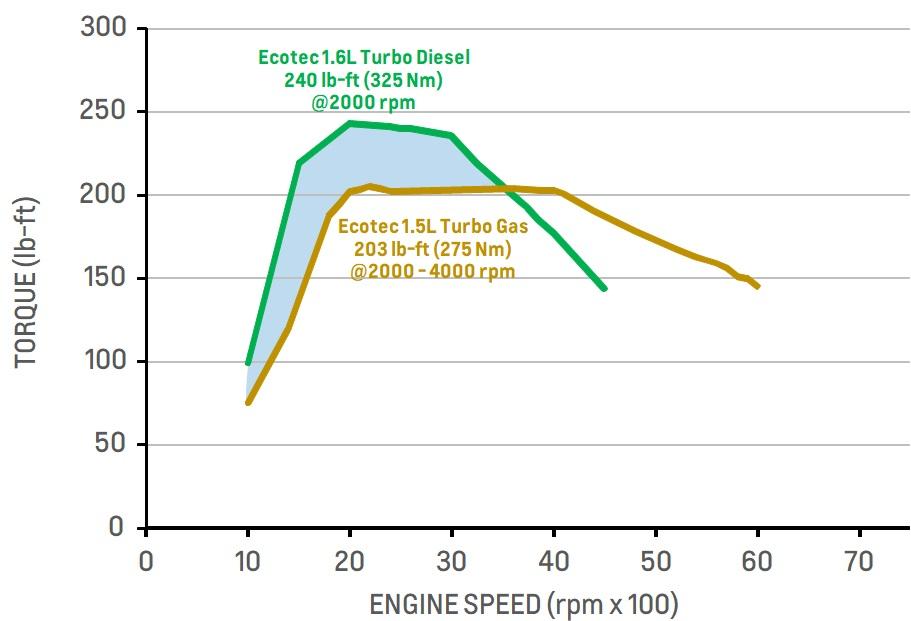 1.6升渦輪增壓柴油機與1.5升基本款渦輪增壓汽油機的扭矩對比曲線圖。(數據來源:通用汽車)
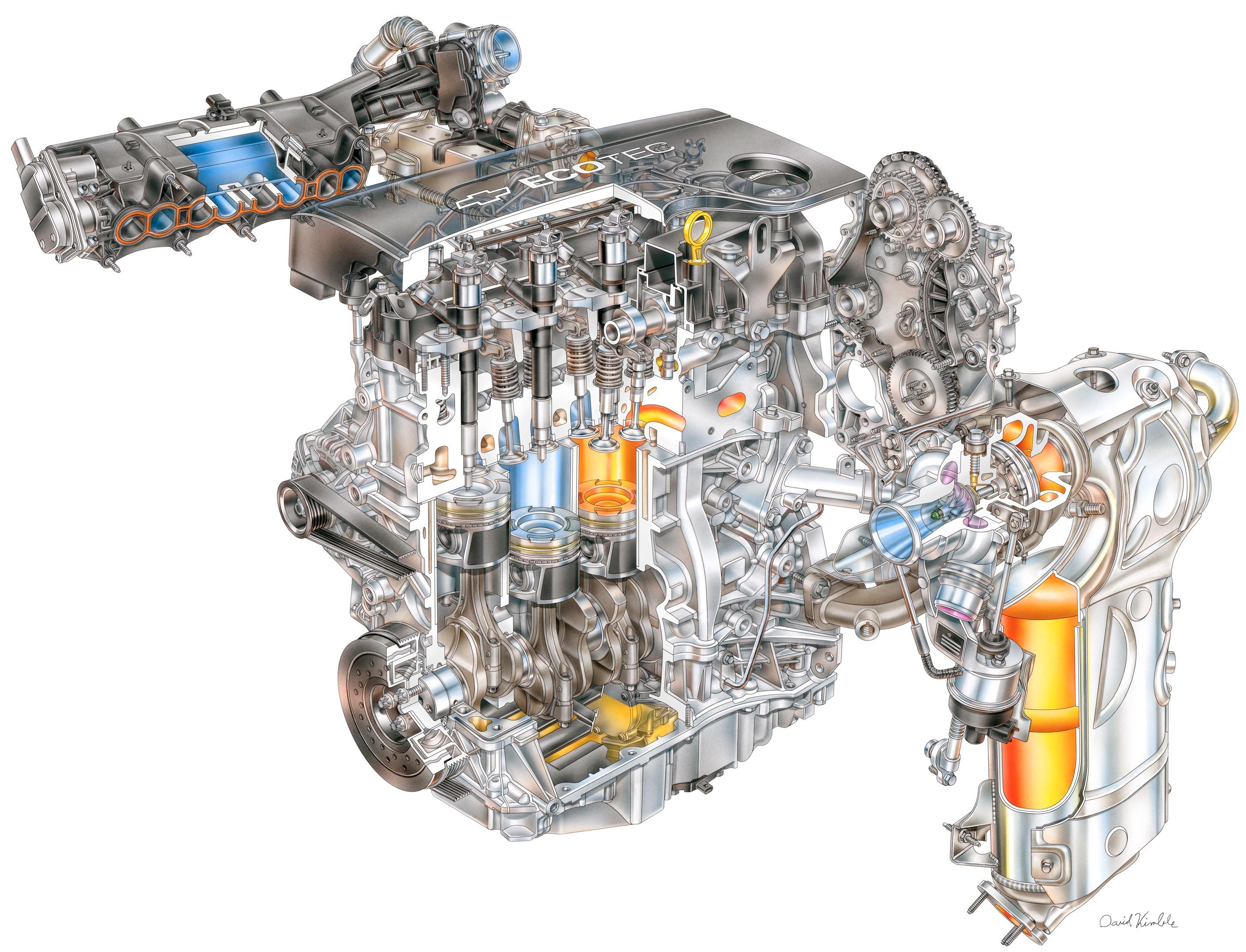 著名剖面圖畫家David Kimble筆下的通用汽車1.6升渦輪增壓柴油發動機。(插圖:David Kimble/通用)
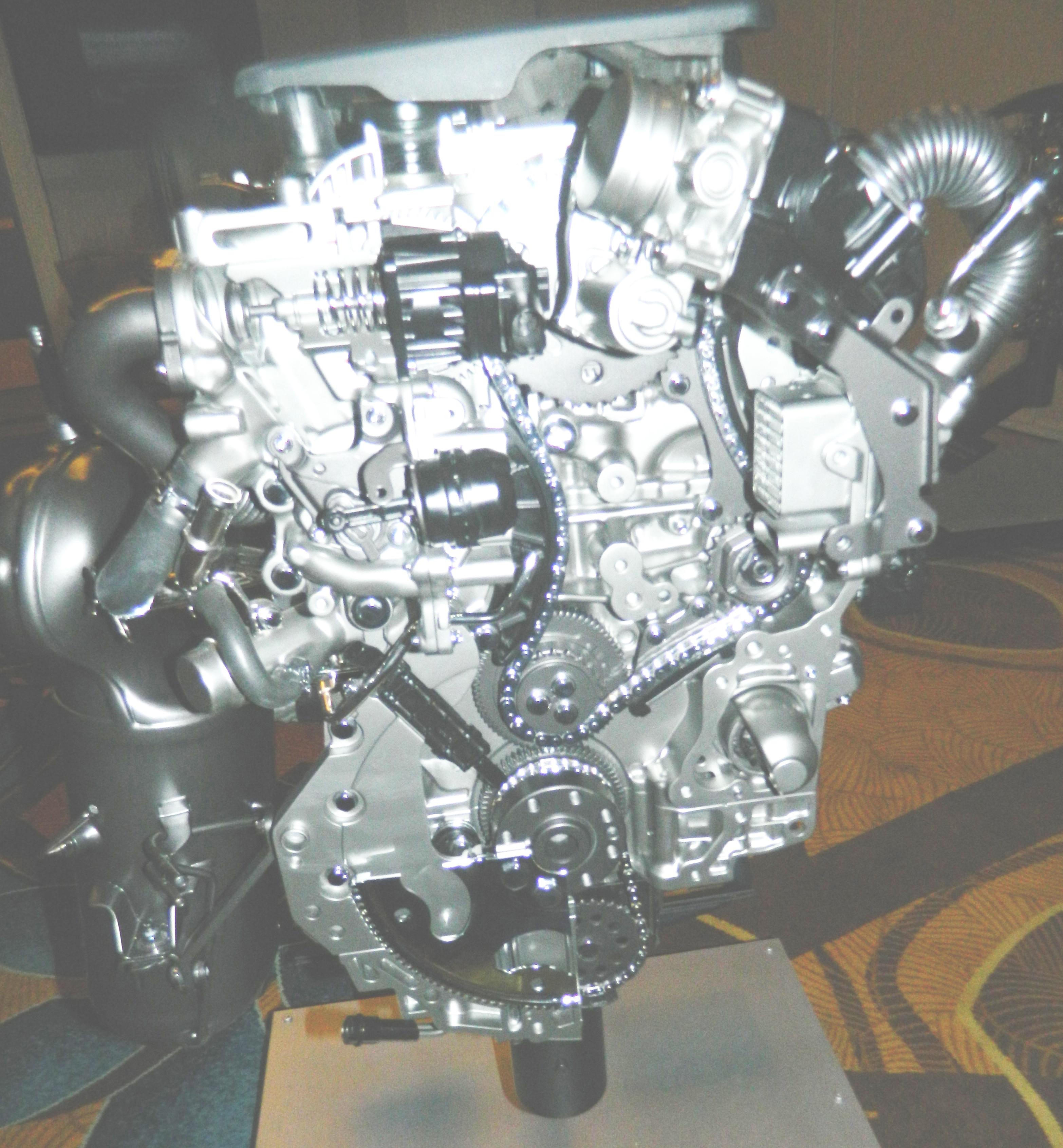 通用1.6升渦輪增壓柴油機的后視圖里,可以看到定時鏈驅動裝置。(圖片來源:Paul Weissler)
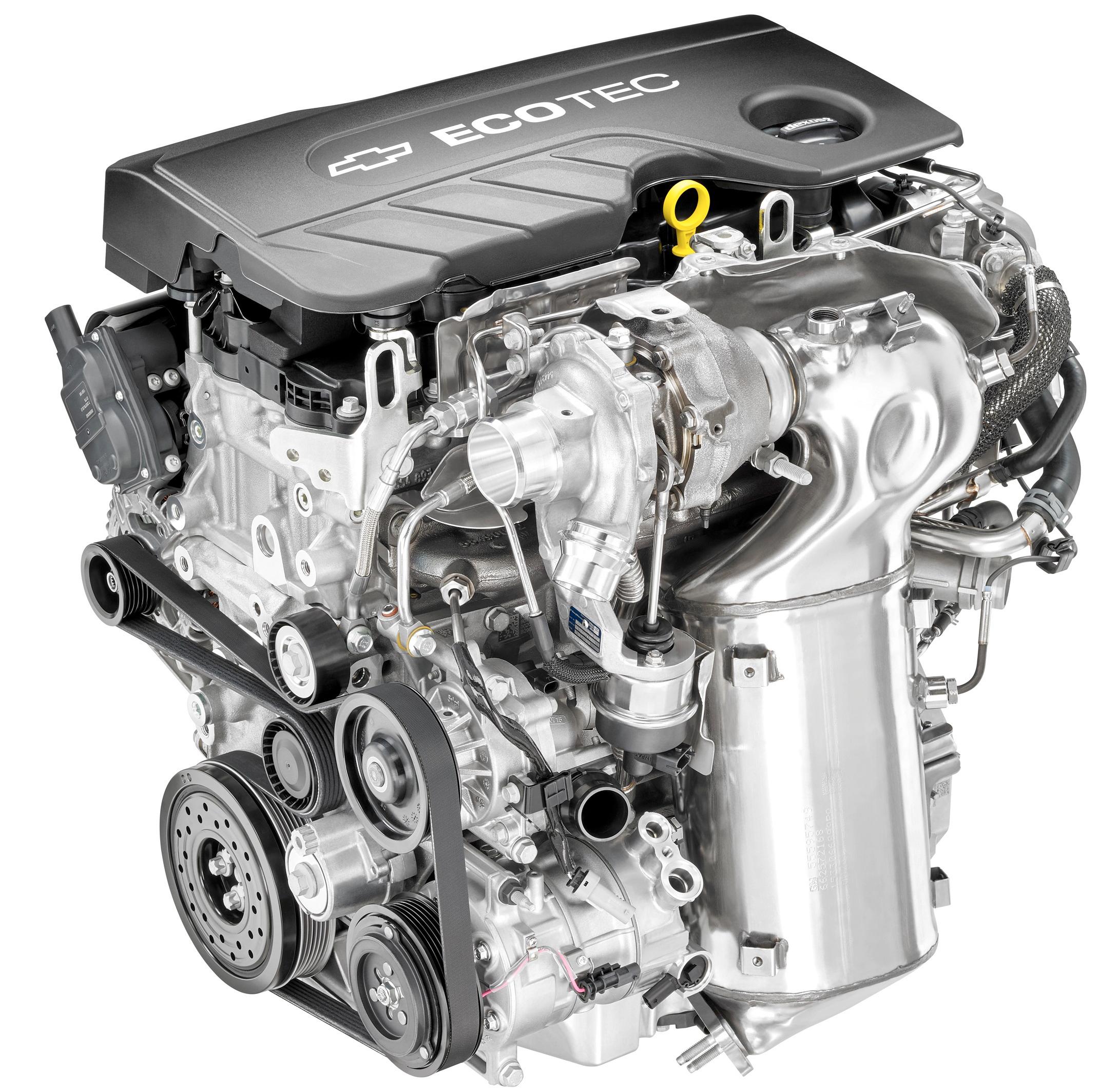 博格華納(BorgWarner)的可變形渦輪是通用1.6升渦輪增壓柴油機的一大特點,它和氧化催化劑裝置緊挨在一起。(圖片來源:通用)