大眾汽車 (Volkswagen) 的暢銷產品EA888 4 缸汽油發動機系列新添又一明星產品——全新 B 循環發動機 EA888 Gen3B。盡管沒有明確說明,但大眾汽車似乎有意讓這款發動機接替未來將退出北美市場的高效柴油發動機。
大眾汽車將全新EA888發動機第三代稱為“B 循環”架構,是因為B 代表大眾汽車先進動力系統研發工程師 Ralf Budack 的姓氏首字母。多年以來,Budack 一直在努力研究如何結合目前越來越受歡迎的阿特金森循環和米勒循環燃燒過程,通過延遲關閉進氣門縮短壓縮行程,增長膨脹行程。
在此背景之下,這款 2.0L EA888 Gen3B 發動機應運而生。大眾汽車表示,與 1.8LTSI 發動機相比, Gen3B 可以取得與前者相同的功率水平,但燃料經濟性可以實現 8% 的提升,幾乎與小型 1.4L 發動機持平。因此,購車者除了享受到 2.0L發動機比目前的1.8L發動機更大的排量之外,還可以同時獲得 1.4L 小型發動機才能達到的燃油效率。EA888 Gen3B 發動機將率先采用于 2018 款全新途觀 (Tiguan) 緊湊型跨界車,而后將陸續用于帕薩特 (Passat)、捷達 (Jetta)、高爾夫 (Golf) 和甲殼蟲 (Beetle) 等車型。
新型氣缸蓋與花式凸輪軸設計
在最近一次的媒體見面會上,大眾汽車動力系統工程師 Marcel Zirwes 詳細介紹了這款發動機的開發細節。Zirwes 表示,雖然新款 B 循環發動機保留了 EA888 的鑄鐵缸體,但氣缸蓋設計幾乎已經完全不同了。
這款 EA888 Gen3B 發動機的核心技術在于兩步式進氣凸輪軸設計。具體來講,新設計采用了一款滑動鈍齒,可以實現可變氣門正時:發動機可以在需要最大功率時保持正常進氣門開啟設置,也可以在部分負載條件下,利用凸輪凸角提前關閉進氣門,從而實現更長的膨脹行程,這也就是 B 循環的意義所在。
Zirwes 表示,B 循環發動機的進氣門機制不僅可以縮短進氣門的開啟時間,開合幅度也有縮小。
EA888 Gen3B 發動機的全新鋁質活塞采用了一種獨特的活塞頂和活塞碗設計,可以實現 11.7:1 的高壓縮比(相較之下,EA888 Gen3 標準 4缸發動機的壓縮比僅為 9.6:1)。這款 B 循環發動機搭配了一款響應速度更快的渦輪增壓器,使用常規汽油即可取得最大功率和扭矩。與普通的 2.0L 發動機相比,新款 B 循環發動機還調整了噴嘴的位置,每個燃燒周期中最多可以實現 3 次噴射。
由于采用了張力更低的活塞環設計,新款發動機的摩擦減少了 8% 左右;這種設計在完全負載條件下的平均有效制動壓力 (BMEP) 更低,這意味著工程師可以縮小車輛曲柄的主軸承尺寸,以及2 條平衡軸之間的傳動鏈尺寸,進而實現小型化設計。
目前,B 循環發動機為新款途觀的唯一發動機配置,4,400 轉時可提供 184 hp 馬力,與前身 2.0L 發動機相比,可在更低轉速時輸出峰值功率。具體來說,該款發動機在 1,600轉時即可輸出最大扭矩 221 lb·ft (300 N·m),并持續保持至4,000 轉左右,這與柴油機的水平相仿。盡管與途觀目前采用的 2.0L TSI 發動機相比,新款 B 循環發動機的功率輸出降低了 200 hp,但扭矩卻出人意料地實現了 14 lb·ft (19 N·m) 的提升。
對 2018 款途觀而言,目前這款 B 循環發動機僅可搭配大眾汽車的 8 速自動變速器。盡管新途觀采用了大眾汽車的暢銷 MQB 汽車架構,但與該架構車型通常搭配的 DSG 手動變速器不同,為了提供更加流暢的駕駛性能,面向北美市場的途觀特別采用了傳統的自動扭矩轉換器設計。
Volkswagen’s not saying it directly, but the company’s unique new twist on its well-established EA888 gasoline 4-cylinder engine family looks to be a potentially effective high-efficiency surrogate for the diesel engines it no longer will sell in North America.
The company calls the new third-generation variant of the AE888 engine architecture “B-Cycle,” so named for its developer, VW group advanced-powertrain engineer Ralf Budack, who for years envisioned this melding of the increasingly popular Atkinson- and Miller-cycle combustion processes that seek to use a truncated compression ratio—via late closing of the intake valves—to achieve an effectively longer expansion ratio.
Resulting is a 2.0-L engine that VW said has the power of the 1.8-L TSI it replaces, but roughly 8% better fuel economy—generating efficiency one might expect from a smaller 1.4-L engine. So in effect, buyers who get the new B-Cycle engine—first in the all-new 2018 Tiguan compact crossover and then the Passat, Jetta and Golf and Beetle—will enjoy 2.0-L displacement in place of today’s 1.8-L, with the added bonus of 1.4-L-like efficiency.
New cylinder head, fancy cam
Although the EA888’s iron cylinder block remains, the new B-Cycle variant has what amounts to an almost entirely new cylinder head design, said Marcel Zirwes, a VW powertrain engineer who detailed the engine’s development during a recent media program.
The central technology for the B-Cycle variant is a two-step intake camshaft that employs a sliding cog to locate the cam on one of two discrete timing regimes: a normal intake-valve opening setup when maximum power is required, or the partial-load setting that angles the cam lobes for the early intake-valve closing that delivers the B-Cycle effects. Zirwes said the B-Cycle intake-valve regime brings not only more-brief initial valve-opening duration, but also a smaller opening.
A new alloy piston has a unique crown and bowl shape that enables the higher 11.7:1 compression ratio (the standard third-generation EA888 4-cylinder engines have just a 9.6:1 compression ratio)—but the B-Cycle engine’s optimized interplay of engine operation, along with a new, faster-responding turbocharger, means the engine can develop full power and torque on regular-grade gasoline. The direct-injection system has relocated injectors compared with the standard 2.0-L engine and enables up to three injection events per combustion cycle.
The new engine’s friction is reduced by some 8% with lower-tension piston rings; the design’s lower full-load brake mean effective pressure (BMEP) also means that the crankshaft main-bearing diameter could be reduced and the size of the chain driving the twin balance shafts is smaller.
The B-Cycle is the only engine offering in the new Tiguan and develops 184 hp at 4,400 rpm, the power peak coming slightly sooner than with the previous 2.0-L engine. Maximum torque is 221 lb·ft (300 N·m), arriving at a low, almost diesel-like 1,600 rpm and holding to almost 4000 rpm. The hp figure does represent a reduction from the 200 hp available from the outgoing Tiguan’s 2.0-L TSI engine, but the more-economical B-Cycle engine surprisingly makes 14 lb·ft (19 N·m) more torque.
For the 2018 Tiguan, the B-Cycle engine is available exclusively with VW’s 8-speed automatic transmission. Although the new Tiguan is based on the company’s widespread MQB vehicle architecture that sees most engines coupled with the direct-shift gearbox (DSG) automated-manual transmission, VW said the conventional torque-converter automatic was specified for the Tiguan in the U.S. because of its smoother driving characteristics.
Author: Bill Visnic
Source: SAE Automotive Engineering Magazine

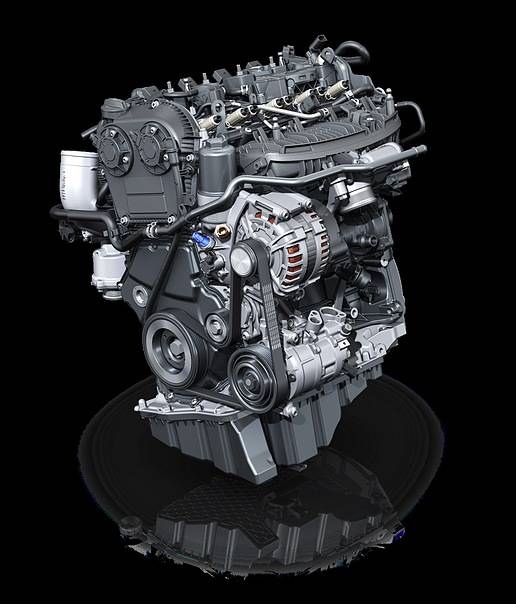 大眾汽車推出 EA888 Gen3B 全新發動機。其中,B 代表大眾汽車先進動力系統研發工程師 Ralf Budack 的姓氏首字母。
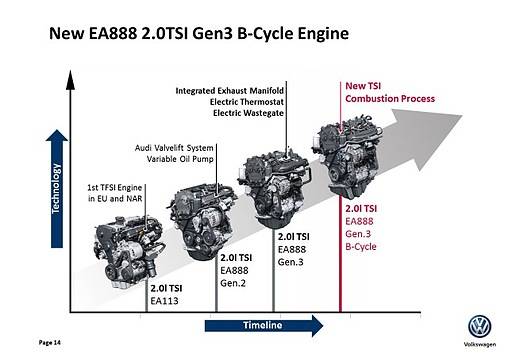 目前,大眾汽車廣泛使用的EA888 渦輪增壓直噴 4 缸發動機系列又新增了一款明星產品——第三代 B 循環發動機 EA888 Gen3B。
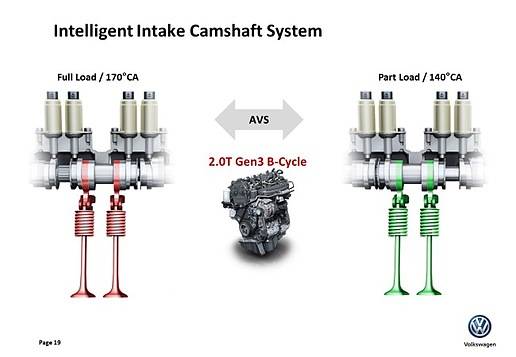 EA888 Gen3B 發動機的獨特凸輪軸調整機制,可以延遲關閉進氣門,這也是 B 循環概念的核心。
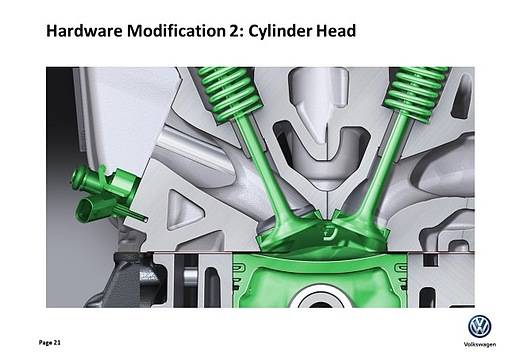 EA888 Gen3B 發動機的氣缸蓋設計幾乎與 EA888標準 2.0L 發動機沒有任何相似之處。
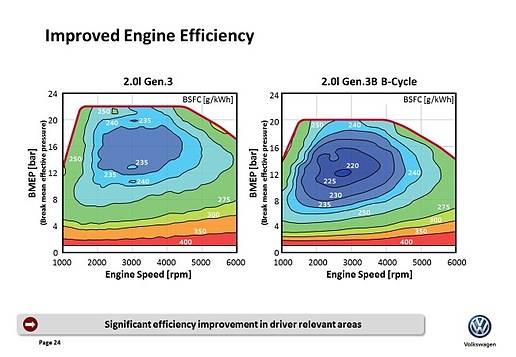 大眾的 EA888 Gen3B 發動機實現了“駕駛員”時速范圍內的能效提升。