如今,人們對于非公路用車和卡車的需求已變得愈發復雜。車輛必須更環保,能在更苛刻的工況下運行,行駛時長更久,還需運用最新的材料和科技技術,達到最佳性能,滿足市場需求。而為了更好地滿足未來全球范圍的減排需求,就需要將已有的技術更廣泛地投入應用,同時也需要性價比更高的新技術研發有所突破。作為密封裝置、蓄能器和高性能材料的領先制造商,Freudenberg密封技術公司正積極致力于現有和待開發的各類動力系統,以滿足世界各地不同的客戶需求。
在討論排放的測量時,議題的中心往往是法規要求,但總的來說,提高能效是節能減排最直接有效的途經。像發動機小型化、燃油直噴、廢氣再循環、減小摩擦以及減少使用不必要的催化劑等手段,都會影響發動機的能效,從而改變排放量。
系統最優化
要實現系統最優化并延長車輛壽命,先進的密封技術起著至關重要的作用。舉例來說,密封技術決定著自動變速傳動系統中近1/4的機械能損耗,所以,自動變速系統制造商十分渴望能進一步減少系統摩擦,從而將機械能損耗降到最低。而如今,全新的密封材料和密封設計將會有效減輕系統重量,減少摩擦,并降低油耗。
而在發動機方面,我們面臨的挑戰很多,包括要能匹配更加輕量化的發動機,并且能適應發動機更極端的高溫/低溫工況要求。而隨著更先進的燃料和潤滑油的應用,以及更加苛刻的駕駛工況出現,由此帶來的一系列挑戰也是我們必須面對的。為此,Freudenberg公司和客戶之間密切合作,制定出應對這些挑戰的各種方案,同時針對各種不同的動力系統,進行節能減排性能的優化。目前,公司已經研發出了新的密封技術,能夠承受超過18,000小時的高負荷運轉,并計劃將這一數字翻倍。
而在密封系統優化的研發中,明確各種應用需求至關重要。有時客戶往往會提出一些極具挑戰性的要求,時常同污染排放或溫度設定有關。而密封技術是摩擦學的一部分,所以如果沒有把所有性能參數都仔細分析過,就無法實現系統的正常運轉。在很多時候需要同時采用多種密封技術,但是只有全面分析過速度、溫度、用途、環境、壓力、尺寸(也被稱為S.T.A.M.P.S.)等各項參數,才能確定最優的解決方案。
Freudenberg公司同時也在不遺余力地進行低排放密封技術(LESS)產品的研發。LESS部件在制造和實測時,都會首先考慮S.T.A.M.P.S.參數,以實現各種運輸機械和卡車的節能減排。這些產品包括:用于柴油發動機的改進款閥桿(有助于機油計量和漏氣控制)、新一代曲軸密封技術(摩擦降幅可達90%)、更先進的密封材料及加工技術(以便改善機油的流動和壓力,實現功率損失的最小化,提高傳動系能效)、改良的密封墊(能適應承受度更強的塑料罩)、兼容排氣系統和尿素添加劑的密封墊,以及耐高溫的車用尿素(AdBlue)接觸材料等。
車輛電氣化和其他全球主要趨勢
除了動力系統優化之外,其他一些全球主流趨勢也都著眼于未來的發動機減排戰略。總體而言,所有歐洲和美國的新出廠設備,都嚴格遵循StageIV(四階段)排放標準。所以當務之急是,需要了解其他國家或地區會以何種速度跟上這一減排步伐?比如,對于亟待解決空氣污染問題的中國而言,其排放標準很可能會逐步向StageIV靠攏。然而,像印度或伊朗這些國家的情況就很難預測了。為此,全球的車輛制造商都必須盡可能地掌握尖端技術,以符合更嚴苛的法規和標準要求,同時,這也是為了更好地控制“總體擁有成本”(即TCO),延長現有設備的使用壽命。
車輛電氣化也是一種主流趨勢,但具體發展因市場而異。對于物料搬運設備而言,這一技術就被用在了工業用卡車上。卡車在封閉的環境里作業,并且需要額外配重以防止其翻倒。卡車的電池就充當了配重的角色,而一些客戶也正想方設法用燃料電池組件取代原來的電池,這樣就不再需要充電站了。這也被視為是節能減排的終極解決方案。不過,不同市場對設備電氣化的需求也不盡相同。例如,農業用機械往往需要以一個恒定的速度作業相當長的時間,并且周圍鮮有充電和加氫基礎設施。在這一情況下,使用高效的柴油發動機就是最佳方案了,因為只要適時加油,設備就可以進行全天候的作業。
而對于城市的小型建筑工程機械而言,柴油混合動力車技術然效果更佳。柴油發動機以一個恒定的速度旋轉,類似于一臺發電機,可以大大降低噪音,而設備作業則完全依靠電動系統。但是,在某些情況下——比如對于挖掘機而言,用電動系統替代液壓系統并不可行,而液壓輔助儲能系統則更管用。這樣,液壓系統產生的壓力就能儲存在蓄能器中,而不會再釋放回液壓系統。而在下一步作業啟動時,就可以充分使用這部分能量,而不必耗費新的能源。而如果多項低負荷作業都能使用蓄能器中儲備的能量,那么整體的能效平衡便能大大改善。
過去10年中,發動機和傳輸密封系統的能效提升了近50%。而通過應用和改良已有的新技術,在現有基礎上再提升50%的能效也不無可能。目前,汽車行業正在使用已有技術對設計進行優化,客戶將能夠以一種更加經濟的方式步入節能減排的新紀元。
本文作者系Freudenberg-NOK密封技術公司運輸機械工程部全球副總裁Joel Johnson,屬于《卡車與非公路設備工程》“高管視角(Executive Viewpoints)”年度系列報道的一部分。
Demands on off-highway vehicles and trucks today are exceedingly complex. Equipment must be more environmentally friendly, work in a more aggressive environment, run longer hours and rely upon the latest material and product technology to meet market demands for peak performance. To satisfy future global emissions-reduction demands, a wider application of existing technologies and the development of innovative yet cost-effective technologies is required. As a leading manufacturer of seals, accumulators and high-performance materials, Freudenberg Sealing Technologies is dedicated to addressing the existing and future system requirements of customers throughout the world.
Discussions regarding regulations often center around measuring emissions but, in general, improving efficiency is a direct input to improving emissions. Actions such as downsizing, direct injection, exhaust gas recirculation, friction reduction and selective catalytic reduction all affect engine efficiency and thus emissions.
Systems optimization
Advanced sealing solutions play a critical role in systems optimization and extending the overall life of the machine. For example, seals are responsible for nearly one-quarter of all lost mechanical energy in today’s automatic transmissions, so transmission manufacturers are keen to lower system friction to minimize this loss. New seal designs and materials available today can help lower system weight, reduce friction and lower fuel consumption.
In engines, we are challenged to support lightweight designs, accommodate extended temperature ranges and address challenges posed by advanced fuels, lubricants and aggressive media. Freudenberg works in close cooperation with customers to develop solutions that resolve these challenges, while also optimizing the efficiency and emissions performance of various powertrain systems. The company has developed seals that withstand more than 18,000 hours of hard operation with plans to double this.
In developing optimal sealing systems, it is essential to identify application conditions. In some cases, our customers have extreme requirements, perhaps relating to contaminant exclusion or temperature specifications. Seals are part of a tribological system and can’t function properly when all performance parameters are not carefully analyzed. In many cases, multiple sealing solutions can be considered, but the optimal solution becomes evident only through extensive analysis of factors like speed, temperature, application, media, pressure and size (S.T.A.M.P.S.)
Our company’s efforts have coalesced in the development of its Low Emission Sealing Solutions (LESS) portfolio of products. LESS components have been engineered and field-tested to address S.T.A.M.P.S. parameters that influence energy consumption, efficiency and emission challenges in mobile machinery and trucks. These products incorporate: valve stem modifications for diesel engines that facilitate oil metering and blow-by control; next generation crankshaft sealing technology that reduce friction up to 90%; material and process technologies that improve transmission efficiency through seals that use oil flow and oil pressure to minimize power loss; improved gaskets that accommodate the increased tolerance range of plastic covers; gaskets compatible with exhaust gas and urea additives; and AdBlue-resistant materials for high temperatures.
Electrification and other global trends
In addition to powertrain system optimization, other global trends also are driving future engine emission strategies. For the most part, all new equipment in Europe and in the United States conforms to Stage IV emission standards. A pressing question is where and to what degree will other regions follow suit? In China, for example, where air pollution is a major issue, we will likely see emission standards that converge with Stage IV limits. But what about in other markets like India and Iran? Global manufacturers must be able to incorporate new technologies that help meet stricter limits, while balancing a “total cost of ownership” approach that extends the life of existing equipment.
There’s also a trend toward electrification, but it varies by market. In material handling equipment, electrification certainly lends itself to industrial trucks. They are often operated in enclosed spaces and need additional weight so they don’t tip over. The battery supplies the counter weight and some customers are working to replace the battery with a fuel-cell assembly to eliminate the recharging station. This is the ultimate in emissions reduction. The view of the situation is different for each market though. Agricultural machines are often operated over long periods at a constant speed, far from any infrastructure. In this application, an efficient diesel engine is generally seen as the best choice because it can provide more of a 24/7 type performance only stopping for refueling.
For smaller construction machines used in an urban environment, a diesel-electric hybrid powertrain definitely makes sense. The diesel engine would run solely as a generator at a constant rotational speed, which reduces the noise level considerably, but the work is initiated via an electrical system. In some applications, such as a classic excavator, substitution of the hydraulic system with an electrical system is not practical, so hydraulic assist storage systems may make more sense. In these cases, the pressure generated by the hydraulic system is stored in an accumulator rather than being released back into the oil reservoir. This energy is then used to initiate the next machine movement rather than starting from scratch. If the phases with lower loads use the energy stored in the accumulator, the overall energy balance is improved.
During the past 10 years, the efficiency of engine and transmission sealing packages has been improved by nearly 50%. By applying and refining technologies available today, an absolute improvement of efficiency of the same magnitude can be achieved. By optimizing current designs with existing technology, customers are able to cost-effectively move the needle in emissions reduction.
Joel Johnson, Global Vice President, Mobile Machinery at Freudenberg-NOK Sealing Technologies, wrote this article for Truck & Off-Highway Engineering as part of our annual Executive Viewpoints series.
Author: Joel Johnson
Source: SAE Truck & Off-highway Engineering Magazine
 Joel Johnson目前擔任Freudenberg-NOK密封技術公司運輸機械工程部的全球副總裁。
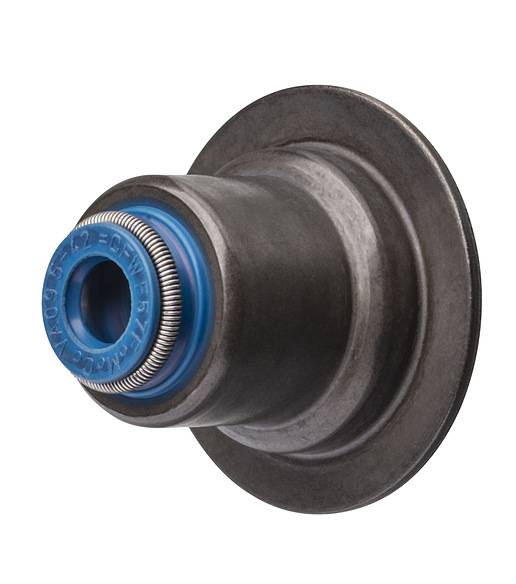 過去10年中,發動機和傳動系密封系統的能效提升了近50%。Johnson相信,通過應用和改良已有的新技術,在現有基礎上再提升50%的能效也不無可能。
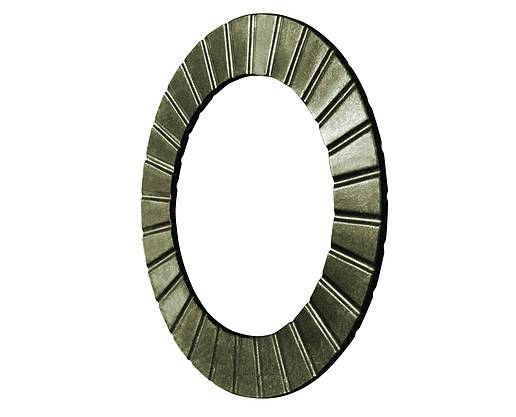 圖為止推墊圈。