幾年前,當梅賽德斯-奔馳(Mercedes-Benz)確認將推出一款新的直列六缸發動機架構時,除了公司高層領導和一些真正的技術“信徒”之外,我想也許沒人比我更高興了。多少年來,這種發動機架構一直都是梅賽德斯品牌出色性能與優化水平的基石。
自上世紀50年代進入“現代”以來,梅賽德斯-奔馳幾乎成了直列六缸發動機的“代言人”,并在接下來的近半個世紀內陸續推出了多款直列發動機車型,其中奔馳的傳奇300 SL運動賽車就采用了博世的3.0L直噴M198直列發動機。1998年,梅賽德斯推出公司歷史上最后一款I6車型,之后直列發動機逐漸成為了這家德國廠商一段塵封的記憶。
今年10月,梅塞德斯-奔馳公布了旗下新直列六缸發動機系列的基本信息。該系列基于模塊化的500cc氣缸打造,大量采用了各種新一代電氣化功能。
毫無疑問,我本人一直非常懷念I6發動機。眾所周知,隨著前驅架構的流行,其實也就是全球正向碰撞安全法規的收緊,直列六缸發動機的研發開始逐漸成為汽車廠商的負擔。通常來說,直列六缸發動機的長度太長,很難達到橫置發動機設計的尺寸要求(雖然也有一些成功案例)。同樣由于長度問題,這種發動機無法預留出足夠的緩沖區域,在車輛發生正向碰撞時吸收能量,因此甚至很難用于縱置發動機設計。
這些年來,當直列發動機在全球市場節節敗退時,只有BMW堅持了下來。如今,BMW在直列發動機方面的聲譽甚至超過了梅賽德斯-奔馳。我曾多次咨詢BMW的資深工程師、設計師和高管,當全世界都說直列發動機沒有未來時,BMW到底是怎樣堅持下來的。這里我引用他們最常見的回答:“可能因為我們總是把直列六缸發動機放在第一位。”
直列發動機的內在平衡性和扭矩表現都非常出色,最終決定放棄這種發動機的人也一定經歷了一番困難的抉擇。正如通用汽車首席工程師Ron Kociba所言,與V6發動機相比,I6發動機在設計和制造方面也擁有很多優勢。這位工程師在V型發動機盛行之時,“反其道而行”地設計了Vortec4200直列六缸發動機,Kociba也總是樂此不疲地介紹直列發動機的優勢。諷刺的是,現在I6發動機的這些優勢又被作為“成本優勢”重新提起,而當時梅賽德斯等一眾公司拋棄I6時給出的理由也正是“成本考慮”,他們認為V6與V8發動機的兼容性更強,可以共用更多模塊。天啊,世界變得真快——現在,通過模塊化設計分擔成本又成了被大家“拋棄”的直列I4發動機,而不是V8發動機的關鍵優勢。
I6并不是德國廠商的專利。舉例來說,日本豐田公司就曾推出過幾款非常出色的直列六缸發動機,其中包括我個人的最愛:末代Supra采用的雙渦輪增壓3.0L直列2JZ-GTE發動機。但無論如何,直列發動機的名字將永遠與梅賽德斯-奔馳和BMW的牌子連在一起。
更讓直列發動機愛好者高興的消息是:正如上世紀50年代的M198一樣,梅賽德斯-奔馳推出的新一代I6發動機也采用了當下最為尖端的技術:48V系統。這種設計極大地推動了多項節能優化技術的誕生,其中包括有助于消除渦輪“延遲”的電加速渦輪增壓器。
如今,經典I6發動機“重出江湖”。在梅賽德斯-奔馳的直列發動機復興中,“老”可能代表“古老”,但更多意味著“經典”。無論如何,只要記住一點,梅賽德斯-奔馳的最新I6發動機絕對不是“老古董”。世界真奇妙啊!
Apart from top brass and various other engineering true believers at Mercedes-Benz, perhaps no one was more delighted than me when it was confirmed a couple of years ago that Mercedes was introducing a new architecture for inline 6-cylinder engines, an engine layout that long served as a cornerstone for the brand’s reputation for consummate powertrain performance and refinement.
The inline six became synonymous with Mercedes in its “modern” era that started roughly in the 1950s and appeared in some form or other for the next half-century (including the seminal 3.0-L Bosch direct-injected M198 for the legendary 300 SL), with the company cutting ties with its last I-6 in 1998.
In October, Mercedes made known the basic details of the new inline 6-cylinder family, the foundation of which is a modular 500-cc cylinder—not to mention the incorporation of new-age electrification features; Automotive Engineering European correspondent Stuart Birch delivers the initial rundown at: http://articles.sae.org/15093 .
I’ve certainly missed the I-6. As many know, inline sixes gradually became a vehicle-development liability as front-drive vehicle architectures began to dominate and, more directly, as global frontal-crash regulations tightened. Inline sixes typically were too long to be effectively packaged in transverse-engine platforms (although it was done)—and the straight six’s physical length similarly made it difficult to fit one even in a platform designed for longitudinal placement, because the unyielding engine didn’t permit enough energy-absorbing crumple zone in frontal impacts.
Only BMW—which over the years became more famous for the straight six than even Mercedes—somehow kept the faith. When inline sixes started to bite the dust all over the globe, I repeatedly asked senior engineers, designers and executives how BMW could somehow get on the right side of crash physics when everyone else claimed it couldn’t be done. The usual answer, I’ll paraphrase, tended to: “Perhaps it’s because we make the inline six-cylinder a priority.”
It surely must have been difficult for those concerned with engine superiority to turn their backs on the I-6 layout’s inherent balance and outstanding torque characteristics. Then there are the considerable design and manufacturing advantages compared with a V-6, as Ron Kociba, former General Motors chief engineer of the "zig-when-everyone-else-is-zagging" Vortec 4200 I-6 never tired of explaining. It’s ironic those benefits are being revisited as cost advantages when compared with a V-6, given that one justification Mercedes and others cited for moving to vee-arranged 6-cylinder engines was modular compatibility with V-8s. My, how the world has changed: now the critical cost-sharing modularity metric is with inline 4-cylinder engines, not V-8s.
The German luxury-car makers didn’t have an exclusive on the I-6 secret—Toyota, for one, authored some magnificent inline sixes, including my personal craving, the ballistic twin-turbocharged 2JZ-GTE 3.0-L used in the last-generation Supra—but for Mercedes and BMW, there’s no doubt the format is indelibly tied to those brands.
What makes it all the better for straight-six disciples: as with the M198 from the 1950s, Mercedes is launching its new-generation I-6s with the era’s most bleeding-edge technology: integration with a 48-volt electrical system that facilitates several nifty efficiency and performance game-changes, included an electrically-accelerated turbocharger as the last word in eradication of turbo “lag.”
What’s old really is new again. In Mercedes’ revival of the inline-six, “old” may equate to vintage attributes, but these new engines promise to be anything but vintage. What a world.
Author: Bill Visnic
Source: SAE Automotive Engineering Magazine
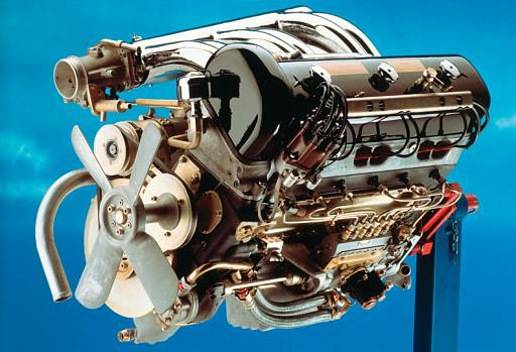 梅賽德斯-奔馳爺爺級直列六缸發動機的 —1954年,300SL運動賽車采用的直噴M198發動機。