在介紹公司技術(shù)時(shí),梅賽德斯-奔馳(Mercedes-Benz)一向沒有夸口的習(xí)慣,因此當(dāng)這家公司的工程師表示將開展 “史上最大的戰(zhàn)略性發(fā)動(dòng)機(jī)計(jì)劃” 時(shí),這絕對(duì)值得大家的關(guān)注,而電氣化正是其中最引人關(guān)注的部分。
梅賽德斯-奔馳旗下全新4缸2.0L柴油發(fā)動(dòng)機(jī)為公司的“閃電戰(zhàn)”拉開了帷幕,目前這款發(fā)動(dòng)機(jī)已經(jīng)在梅賽德斯-奔馳E級(jí)橋車上采用。2017年,公司還將繼續(xù)推出一款用于S級(jí)轎車的全新4.0L V8雙渦輪汽油發(fā)動(dòng)機(jī)、采用48V技術(shù)的新型6缸汽油/柴油發(fā)動(dòng)機(jī),以及另外一款同樣采用48V電氣系統(tǒng)為輔助功能供電的2.0L 4缸汽油發(fā)動(dòng)機(jī)。由于梅賽德斯-奔馳的工程師認(rèn)為,如果要搭配48V電氣系統(tǒng),直列式發(fā)動(dòng)機(jī)的優(yōu)勢(shì)更大,因此上述6缸發(fā)動(dòng)機(jī)均采用了直列設(shè)計(jì),并不是“V”型氣缸排列。
與現(xiàn)行版本相比,新一代8缸發(fā)動(dòng)機(jī)的排量縮小了0.7L,應(yīng)用了氣缸鈍化技術(shù),可在負(fù)載較低的巡航狀態(tài)下進(jìn)入4缸模式。據(jù)了解,這款發(fā)動(dòng)機(jī)的官方數(shù)據(jù)非常亮眼,功率輸出 “超過” 350kW (469hp),峰值扭矩可達(dá) “大約” 700 N·m (516lb·ft),已經(jīng)吸引了梅賽德斯-奔馳高性能分部AMG調(diào)優(yōu)專家的目光。
目前,一些高檔汽車制造商傾向于通過減少發(fā)動(dòng)機(jī)的氣缸數(shù)量,來達(dá)到相關(guān)燃耗和排放要求。舉例而言,正在奮力躋身于豪車品牌之列的沃爾沃(Volvo)就為旗下絕大部分車型配備了4缸發(fā)動(dòng)機(jī)。然而,盡管梅賽德斯-奔馳旗下也擁有不少4缸車型,但卻并沒有被一頭扎進(jìn)“降低排量”的熱潮之中。相反,這家德國汽車廠商決定采用更多的先進(jìn)輔助技術(shù),來滿足政策對(duì)清潔、經(jīng)濟(jì)發(fā)動(dòng)機(jī)的要求,并同時(shí)保證用戶對(duì)公司中高級(jí)車型的性能和優(yōu)化預(yù)期。
除了48V系統(tǒng)以外,公司還將應(yīng)用更多輔助技術(shù)進(jìn)行發(fā)動(dòng)機(jī)優(yōu)化,包括一款集成啟動(dòng)器發(fā)電機(jī)(ISG)和一款電動(dòng)輔助渦輪增壓壓縮機(jī)(eZV),可協(xié)助車輛廢氣渦輪壓縮機(jī)的運(yùn)轉(zhuǎn)。
為了繼續(xù)保持最大效率的系統(tǒng)銜接,梅塞德斯-奔馳專門在公司的Sindelfingen工廠中設(shè)置了一個(gè)新的傳動(dòng)系統(tǒng)整合中心(AIZ)。
全新I6問世,將取代V6發(fā)動(dòng)機(jī)
戴姆勒集團(tuán)與梅賽德斯的汽車開發(fā)組織研究工作負(fù)責(zé)人Thomas Weber博士教授在談及公司的“戰(zhàn)略性發(fā)動(dòng)機(jī)計(jì)劃”時(shí)表示,“我們?cè)谠O(shè)計(jì)高科技發(fā)動(dòng)機(jī)時(shí)必須綜合考慮所有當(dāng)下和未來的需求,而我們也正是這么做的。為了實(shí)現(xiàn)這一目標(biāo),關(guān)鍵的成功因素之一就是廣泛推進(jìn)動(dòng)力系統(tǒng)的電氣化。”
在所有新型發(fā)動(dòng)機(jī)之中,最受關(guān)注的就是這款3.0L直列6缸發(fā)動(dòng)機(jī)。其中,汽油版M256“據(jù)稱”可以輸出300kW(402hp)的馬力和超過500N·m(369 lb·ft)的峰值扭矩。梅賽德斯-奔馳在多個(gè)場(chǎng)合介紹發(fā)動(dòng)機(jī)的新架構(gòu)時(shí)均采用了這樣的說法,這意味著公司要么是對(duì)這些數(shù)據(jù)信心不足,要么就是日后還準(zhǔn)備了更大的驚喜。與新款4缸柴油發(fā)動(dòng)機(jī)相同,汽油版發(fā)動(dòng)機(jī)的單缸體積也在500立方厘米。
這款6缸直列汽油發(fā)動(dòng)機(jī)(明年將登陸S級(jí)豪華轎車)采用了48V電氣系統(tǒng)和增壓進(jìn)氣技術(shù),增加了ISG發(fā)電機(jī)為能量回收系統(tǒng)等混動(dòng)功能供電。
1998年,為了滿足車輛的正向碰撞預(yù)防需求,梅賽德斯-奔馳首款6缸V型發(fā)動(dòng)機(jī)M112正式問世,取代了公司經(jīng)典的系列I6直列汽油發(fā)動(dòng)機(jī)。2017年,梅賽德斯-奔馳又重回“I”時(shí)代,直列發(fā)動(dòng)機(jī)再次煥發(fā)新生。梅賽德斯-奔馳的工程師稱,這款發(fā)動(dòng)機(jī)的性能與8缸發(fā)動(dòng)機(jī)相仿,將給明年的S級(jí)轎車帶來特別驚喜。此外,這款發(fā)動(dòng)機(jī)減少了系統(tǒng)對(duì)前端輔助帶動(dòng)的需求,從而可以為工程師的設(shè)計(jì)帶來更多可能性,有助于控制車輛的總長度。
梅賽德斯-奔馳的工程師表示,針對(duì)少量熱量損失的“類發(fā)動(dòng)機(jī)”廢氣再處理系統(tǒng)也有助于降低排放。48V電氣系統(tǒng)可以為水泵、空調(diào)和ISG等“用電大戶”供電。與現(xiàn)行V6發(fā)動(dòng)機(jī)相比,這種設(shè)計(jì)可以大約減排15%。
全新I4發(fā)動(dòng)機(jī),應(yīng)用48V技術(shù)
全新I6系列中的OM656發(fā)動(dòng)機(jī)采用了Camtronic公司的可變氣門正時(shí)系統(tǒng),應(yīng)用了鋼制分級(jí)活塞和2級(jí)渦輪增壓技術(shù)。
梅賽德斯-奔馳的工程師稱,分級(jí)活塞可以給燃燒過程帶來積極影響,比如活塞關(guān)鍵區(qū)域的熱負(fù)載及減少煙塵進(jìn)入機(jī)油方面。與之前的“歐米伽”燃燒室相比,新發(fā)動(dòng)機(jī)的燃燒率更高,因此效率也有所提升。在新設(shè)計(jì)中,工程師們專門綜合優(yōu)化了燃燒室形狀、空氣流動(dòng)和噴油器的設(shè)計(jì),從而提高空氣的使用效率,支持發(fā)動(dòng)機(jī)在高空氣順差狀態(tài)下的運(yùn)行。這意味著,這款發(fā)動(dòng)機(jī)可以將尾氣中的微粒排放控制在一個(gè)相當(dāng)?shù)偷乃健?/p>
發(fā)動(dòng)機(jī)機(jī)體采用鋁制材料,缸體也采用了“改進(jìn)”的Nanoslide涂層。此外,這款發(fā)動(dòng)機(jī)也采用了“類發(fā)動(dòng)機(jī)”尾氣處理系統(tǒng)和Camtronic的可切換排氣凸輪軸。
這款發(fā)動(dòng)機(jī)的功率輸出 “超過” 230kW (308 hp),可以稱得上是梅賽德斯-奔馳史上最強(qiáng)勁的乘用車柴油發(fā)動(dòng)機(jī),最大扭矩 “超過” 650 N·m (479lb·ft)。
目前,4.0L V8汽油版M176是本系列中最強(qiáng)勁的發(fā)動(dòng)機(jī),據(jù)稱可以強(qiáng)勢(shì)輸出350kW(469hp)的馬力,2,000轉(zhuǎn)時(shí)的扭矩輸出在700 Nm(516 lb·ft)左右。
這款發(fā)動(dòng)機(jī)也支持氣缸鈍化,可在輕負(fù)載時(shí)通過Camtronic進(jìn)行切換,進(jìn)入4缸模式。為了增加效率,工程師將發(fā)動(dòng)機(jī)的2個(gè)渦輪增壓器放置在兩排氣缸之間的位置。
盡管看起來不如6缸和8缸發(fā)動(dòng)機(jī)那么“光鮮亮麗”,但梅賽德斯-奔馳的2.0L 4缸發(fā)動(dòng)機(jī)M264對(duì)公司一些“走量”的車型有重要意義。M264又稱Toptype,采用了“降型/適型化”設(shè)計(jì),可提供100 kW/L(134hp/L)的單位輸出。這款發(fā)動(dòng)機(jī)采用了大量先進(jìn)技術(shù),比如雙渦旋渦輪增壓器、48V帶動(dòng)啟動(dòng)器發(fā)電機(jī)和48V水泵等。據(jù)稱,能量回收表現(xiàn)可達(dá)12.5kW(17hp)左右。
M264支持熄火滑行,進(jìn)氣側(cè)采用了Camtronic系統(tǒng)。另外,梅賽德斯-奔馳還計(jì)劃擴(kuò)大顆粒過濾器在汽油發(fā)動(dòng)機(jī)產(chǎn)品中的應(yīng)用。
M256--“專為電氣化設(shè)計(jì)”
Weber教授強(qiáng)調(diào)了進(jìn)行持續(xù)研發(fā),從而在同時(shí)期內(nèi)提供更多動(dòng)力系統(tǒng)選擇的重要性:“無論是高效、清潔的汽油機(jī)、柴油機(jī)、插電式混動(dòng)機(jī)、純電池,還是氫燃料發(fā)動(dòng)機(jī),這些動(dòng)力系統(tǒng)都有自身存在的理由,也有各自的發(fā)展前景。M256是梅賽德斯-奔馳首款從一開始就為電氣化專門設(shè)計(jì)的發(fā)動(dòng)機(jī)。”
他補(bǔ)充說,發(fā)動(dòng)機(jī)內(nèi)的ISG系統(tǒng)可為車輛的混合動(dòng)力、增壓和能量回收系統(tǒng)供電,并同時(shí)節(jié)省之前高壓混動(dòng)系統(tǒng)所消耗的燃料。“另外,M256的電動(dòng)輔助壓縮機(jī)也取得了令人印象深刻的提升,此時(shí)大型渦輪增壓器可以更快進(jìn)入最佳工作狀態(tài)。”
Weber教授在談及公司的發(fā)動(dòng)機(jī)戰(zhàn)略時(shí)總是在說“適型化”,而不是“小型化”。他指出,“為了實(shí)現(xiàn)上述性能和輸出優(yōu)化,除了從一開始就簡單減少氣缸的數(shù)量外,我們還有一些更加智慧的解決方案。”他稱,M176 V8發(fā)動(dòng)機(jī)可在轉(zhuǎn)速3,600rmp之下時(shí)關(guān)閉部分氣缸,變身為一個(gè)特別高效的4缸發(fā)動(dòng)機(jī)。之后,隨著需求的增加,更多氣缸可逐步切入為發(fā)動(dòng)機(jī)提供更多輸出,而用戶在整個(gè)過程中不會(huì)感到任何不便。
梅賽德斯-奔馳的全新“動(dòng)力系統(tǒng)集成中心”擁有10個(gè)測(cè)試平臺(tái),可直接進(jìn)行高精度的扭矩測(cè)試。該中心將以發(fā)動(dòng)機(jī)和變速器為研究重心,主要是為了優(yōu)化車輛的舒適度、動(dòng)力性能、整體靈活性,從本質(zhì)上說也就是車輛的駕乘和操作性能。另外,該中心還擁有一個(gè)海拔環(huán)境測(cè)試艙和全自動(dòng)汽車測(cè)力計(jì)。
梅賽德斯-奔馳正在準(zhǔn)備建設(shè)一個(gè)汽車安全、電子部件和計(jì)算機(jī)技術(shù)研發(fā)中心。另外,公司剛剛發(fā)布了旗下的EQ純電動(dòng)SUV概念車,這款車的前后軸均安裝了電機(jī),可支持四輪驅(qū)動(dòng),動(dòng)態(tài)分配前后輪的扭矩。車輛電池則位于前后軸之間的中間位置。
梅賽德斯-奔馳曾表示,這款概念車的最大功率輸出為300 kW(402 hp),最大扭矩為700-N·m,續(xù)航里程可達(dá)500 km。
Mercedes-Benz is not generally given to hyperbole to detail its technology, so when company engineers describe a program as “the biggest strategic engine initiative” in the automaker's long history, it is worth taking notice. And electrification is very much to the fore.
The company's latest propulsion blitz opened with the new 4-cylinder 2.0-L diesel now used in the E-Class. It will continue in 2017 with the appearance of a new gasoline 4.0-L V8 biturbo for the S-Class, new 6-cylinder units in gasoline and diesel forms with 48V technology, and a 2.0-L 4-cylinder gasoline which also uses 48V to power auxiliaries. The sixes are inline, not "vee"-arranged, because Mercedes’ engineers reckon in combination with 48V electric systems, the return to the hallowed inline-six layout delivers meaningful packaging advantages.
The V8 has capacity reduced by about 0.7-L from the outgoing V8 and gets cylinder deactivation, becoming a "four-pot" unit under light loads while cruising. With a claimed output of “over” 350 kW (469 hp) with “about” 700 N·m (516 lb·ft) peak torque, the engine has received attention from Mercedes’ AMG tuning specialists.
Some premium car makers are fixated on reduction of cylinder count—for example Volvo, with its aim of being accepted by the market as a premium producer, reckoning four cylinders is the maximum for all its models—to achieve required fuel consumption and emissions targets. Mercedes, though, while demonstrating what can be achieved with four cylinders on many models, is not being seduced by the prospect of drastic cubic-capacity reduction. Instead, it is using advanced complementary technology to meet the unremitting demands for cleaner, more-frugal engines while maintaining the level of performance and refinement expected of its powertrains in their higher-level models.
As well as 48V, those complementary technologies also include an integrated starter generator (ISG) and electric auxiliary turbocharger compressor (eZV) to assist the exhaust-driven compressor.
To help continue maximum efficiency systems cohesion, Mercedes has opened a new powertrain integration center (AIZ) at its Sindelfingen assembly complex.
All-new I6 replaces V6
Prof. Dr. Thomas Weber, responsible for group research for Daimler AG and Mercedes cars’ development, says of the strategic power unit initiative: “Our high-tech engines need to be (and are) designed with a view to all current and future requirements. A key success factor is the extensive electrification of the powertrain."
Of the new engines, it is the 3.0-L inline sixes that are the real attention-grabbers. The gasoline version (M256) produces a claimed 300 kW (402 hp) and delivers maximum torque of “more than” 500 N·m (369 lb·ft)—the qualifying words, which the company uses extensively in its initial talk about the new engine architectures, shows either a caution about claims or a plan to surprise later. Mercedes has chosen 500 cm3 per cylinder as the optimum swept volume, the same as that for the new 4-cylinder diesel.
The gasoline inline 6-cylinder (the S-Class gets that too, next year) uses a 48V system and forced air via an eZV and has an ISG to look after hybrid aspects, including energy recovery.
Mercedes' first V6, the M112, was introduced in 1998 as a response to new frontal-crash requirements, replacing the company's classic gasoline I6 family. For the move back to inline cylinders for 2017, Mercedes engineers cite performance akin to an 8-cylinder, which should make next year’s S-Class something very special. It also brings design opportunities, such as eliminating the need for a front-end accessory belt drive, that help reduce overall length.
Near-engine exhaust aftertreatment for low heat loss helps reduce emissions. The 48V system looks after the high-power demands of the water pump and air-conditioning compressor and the ISG. With this setup, emissions are down some 15% against the outgoing V6, engineers claim.
48V with new I4
The diesel version (OM656) of the new I6 family incorporates the Camtronic variable valve timing, with steel stepped-bowl pistons and 2-stage turbocharging.
The stepped-bowl piston has a positive effect on the combustion process, engineers explain, in terms of thermal loading of critical areas of the pistons and the introduction of soot into the engine oil. Efficiency is increased by the higher burn rate in comparison with the previous "omega" combustion bowl. The characteristic feature of the specifically configured combination of bowl shape, air movement and injector is its very efficient utilization of air, which allows operation with high air surplus. This means that particulate emissions can be reduced to an especially low level, engineers said.
The engine’s block is aluminum and what is described as “improved” Nanoslide coating is used to line the cylinders. The engine also uses near-engine exhaust treatment. A Camtronic switchable exhaust camshaft is integrated.
Output is “over” 230 kW (308 hp) to make it the most powerful passenger-car diesel in Mercedes-Benz history. Maximum torque is “over” 650 N·m (479 lb·ft).
Topping the muscle chart for the new engine group is the M176 gasoline V8 4.0-L, claimed to deliver a hefty 350 kW (469 hp) and “around 700 Nm (516 lb·ft) from 2000 rpm.
Cylinder shut-off via Camtronic at part load effectively creates a V4. For added efficiency, the engine’s two turbochargers are placed between the cylinder banks.
Less glamorous than the sixes and V8 but very significant for Mercedes’ higher-volume models is the new gasoline 2.0-L 4-cylinder (M264). Also known as the Toptype, it follows downsizing/rightsizing philosophy by offering a specific output of 100 kW (134 hp) per liter. It is technology-dense with a twin-scroll turbocharger, belt-driven 48V starter-generator and 48V water pump. Energy recovery capability is claimed to be some 12.5 kW (17 hp).
The design enables engine-off coasting and Camtronic is used on the intake side. And Mercedes plans to expand its application of particulate filters across its gasoline engine range.
M256 "designed for electrification"
Prof. Weber underlined the importance of Mercedes continuing to develop and offer a wide range of co-existing drive systems: “Efficient and clean gasoline engines, diesels, plug-in hybrids, battery and hydrogen drives—each has its justification and future prospects. The M256 is the first engine that we have systematically designed for electrification from the outset.”
The ISG, responsible for hybrid functions, achieves boost or energy recovery while allowing fuel savings that were previously reserved for high-voltage hybrid technology, he added: “And the electric auxiliary compressor makes for an impressive step-off with the M256, bridging the time lag before the large exhaust turbocharger cuts in to full effect.”
Weber always talks of “rightsizing” rather than downsizing. “Instead of trimming the number of cylinders from the outset, thereby foregoing refinement and output, there are much more intelligent solutions," he noted. The M176 V8 uses cylinder shutoff; at part-load up to 3600 rpm it is an especially efficient 4-cylinder, he claims. Then, imperceptibly for the vehicle’s occupants, cylinders 2, 3, 5 and 8 cut in.
Mercedes’ new Powertrain Integration Center houses 10 test rigs fitted with high-precision torque measurement directly at the wheels. Integration covers engine and transmission, comfort, dynamics and overall agility—essentially ride and handling. The center includes a climatic altitude chamber and fully automatic operation of the vehicle on a dynamometer.
Mercedes is just starting work on a vehicle safety, electronics, and computer technology center. Just revealed is Mercedes EQ pure electric SUV coupe concept, with motors on front and rear axles to give all-wheel drive and front/rear variable torque distribution. A battery is positioned between the axles in the car's floor.
Mercedes has talked of a maximum 300-kW (402-hp) output and up to 700-N·m for the concept, and a potential 500-km (310 mi) range.
Author: Stuart Birch
Source: SAE Automotive Engineering Magazine

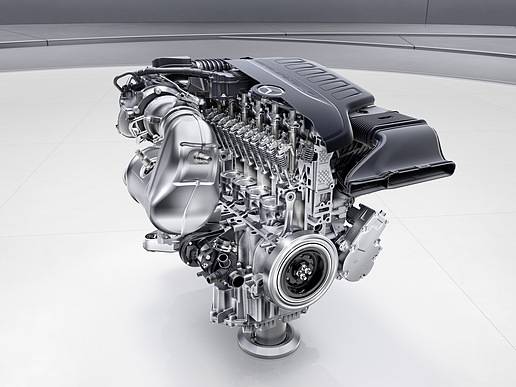 梅賽德斯-奔馳的最新6缸直列發(fā)動(dòng)機(jī)M256采用了48V技術(shù)。
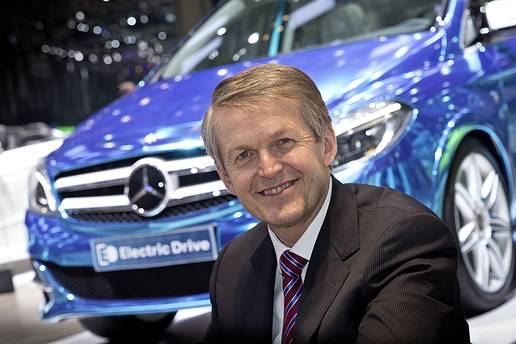 Thomas Weber博士教授強(qiáng)調(diào)了梅賽德斯-奔馳開展動(dòng)力系統(tǒng)電氣化項(xiàng)目的重要性。
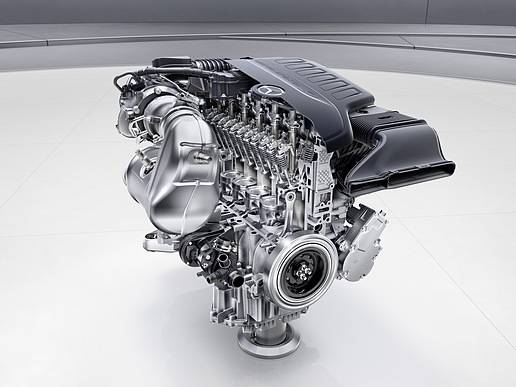 梅賽德斯-奔馳的6缸柴油發(fā)動(dòng)機(jī)OM656采用了分級(jí)燃燒和2級(jí)渦輪增壓技術(shù)。
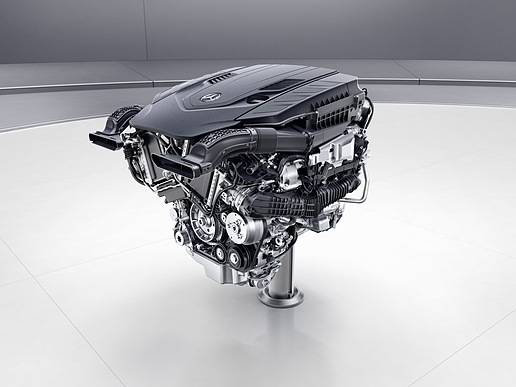 梅賽德斯-奔馳的全新4.0L V8雙渦輪汽油發(fā)動(dòng)機(jī)M176(如圖所示)經(jīng)過專門設(shè)計(jì),專為2017款S級(jí)豪華轎車而生。
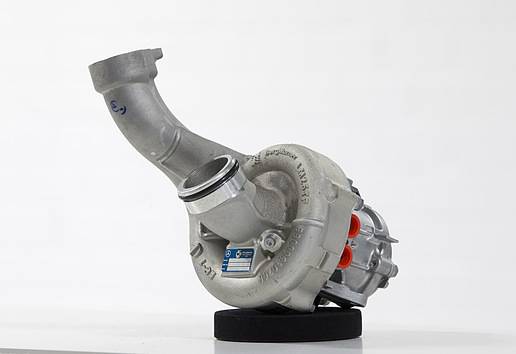 新發(fā)動(dòng)機(jī)采用了渦輪增壓和電動(dòng)輔助壓縮機(jī)的設(shè)計(jì),可協(xié)助實(shí)現(xiàn)強(qiáng)制進(jìn)氣功能。博格華納是主要供應(yīng)商之一。
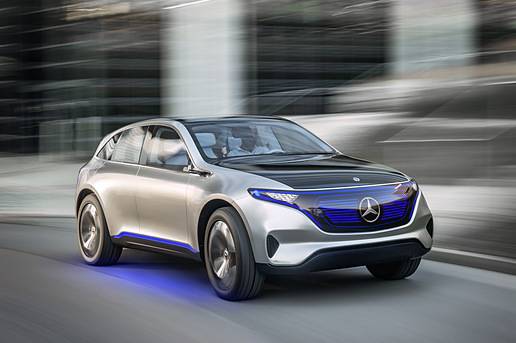 梅賽德斯-奔馳EQ純電動(dòng)概念車:不斷追求實(shí)用性功能性與續(xù)航里程的提升。