如果說3D虛擬現實(VR)和增材制造(AM)象征著顛覆性的制造技術已經進軍航空航天領域,那么另外一種令人覺得不可思議的創新技術,則會讓您覺得是科幻電影中的某個橋段。
航空材料與生物科學領域中的新興技術融合,首次讓人們對未來能夠“種植”組件、系統,甚至整架飛機的充滿了無限期待。這是一個非常激動人心的突破,這種“種植”技術在未來可望降低新型航空產品的價格的同時進一步促進可持續發展,以此應對不斷減少的傳統原材料供應,以及不斷增長的市場需求。
作為共享技術與科學思維的方式作為開放創新的一部分,由BAE 系統公司共同提出的一系列的全新概念。或許正是受到“藍天科學研究”的挑戰,眾多由來自高校的科學家、研究人員及畢業生所組成的創新型公司正在經歷著快速成長,他們代表了創新的新浪潮中的一些最具創新性的驅動力。
藍天研究(也稱為藍天科學):是在“真實世界”應用不是立即顯現的領域的科學研究。 它被定義為“沒有明確目標的研究”和“好奇心驅動的科學”。它有時與術語“基礎研究”互換使用。這種科學模式的支持者認為,意想不到的科學突破有時比議題驅動性研究的結果更有價值,預示遺傳學和干細胞生物學的進展作為例子,最初被視為純理論范圍的研究,并無法預見其價值。由于投資回報率固有的不確定性,以及無法獲得更可靠的利潤或實踐研究,藍天項目在政府和商業層面上均不受歡迎,往往得不到資金的支持。
想象一下,有一臺機器能夠從分子層面開始合成化學元素,運用所合成出來的材料再“種植”另外種機器。雖然這聽起來像是天方夜譚,但事實上這樣一個極具顛覆性的概念已經出現,并期望使用可持續材料快速制造一大批專用小型無人機,支持軍事行動。此外,這種技術也可以運用于制造大型飛機的多功能組件。
英國格拉斯哥大學(University of Glasgow)皇家欽定教授(Regius Professor)Lee Cronin正在研究飛機“種植”技術所面臨的技術挑戰,他的工作得到了BAE系統的支持,后者可隨著研究的推進適時提供行業意見。2015年,Cronin教授的公司Cronin Group PLC從格拉斯哥大學取得了該技術的知識產權,并開始著手以此為基礎開發一種名為Chemputer(商標)的自動化通用數字合成引擎(autonomous universaldigital synthesis engine),旨在利用數字化技術推廣化學工藝的應用范圍。
皇家欽定教授(Regius Professor):由英國女王欽定,獲得者均是在英國大學里開展了高水平學術研究的專業。
Cronin教授認為,隨著Chemputer的革命性化學工藝的不斷加速,未來這種技術將具備“種植”復雜小型飛行器的能力。對比來說,3D打印機是通過一層層的材料疊加來打造物體,而Chemputer則是以可持續材料為原料,以高級化學過程為手段,從分子層面開始一點點“生長”飛機的主體結構和部分復雜電子系統。Cronin指出,Chemputer可以將小型飛機的設計和制造過程從幾年時間縮短到短短幾周,從而快速有效支持各種軍事行動的推進。他說,“這是化學工業發展進程中一個非常激動人心的時刻。”
如此一來,只要有需要,Chemputer隨時可以在飛行器使用地點的附近快速制造一大批設備,而不用在倉庫中堆積大量庫存。
“我們一直在尋找實現數字化合成與材料化學的道路,希望未來可以‘從無到有’地組裝復雜物體,或盡量減少這一過程中需要的人工。”Cronin表示,“打造小型飛機這個任務非常具有挑戰性,但其中所使用的創造性思維和大量數字化技術,將最終帶領我們實現復雜化學與材料系統的數字化編程。”
If 3D virtual reality and additive manufacturing (AM) are indicative of one direction that disruptive developments are taking the aerospace engineering sector, then another, even more radical innovation may make these technologies look like mere stepping stones within a generation. The fusing of emerging technologies from the aerospace materials sector and biological sciences are now, for the first time, heading toward the prospect of growing parts, systems, and, ultimately, perhaps whole aircraft. This is an exciting breakthrough that might help keep the development of new aerospace products affordable and at the same time more sustainable in a future world where the diminishing supply of conventional raw materials might struggle to cope with market needs.
New concepts have been developed by BAE Systems collaboratively as part of an open innovation approach to sharing technology and scientific ideas. Many such spin-off companies, often formed by and employing former university scientists and graduates, are experiencing rapid growth and represent some of the most innovative drivers of the new wave in innovation, possibly as a result of coming at challenges with blue-sky ideas, unconstrained by convention.
Imagine a machine that can synthesize chemicals and materials to grow another machine from a molecular level upwards. It sounds like pure science fiction but such a unique disruptive concept has emerged and it envisages the use of environmentally sustainable materials to support military operations where a swarm of small unmanned air vehicles could be built quickly for a specific purpose. Such a technology could also be used for making multi-functional parts for large aircraft.
Regius Professor Lee Cronin at the University of Glasgow is pioneering a technology that investigates the challenge of growing an aircraft and BAE Systems is supporting his work by providing industrial advice as that work proceeds. In 2015 his company, Cronin Group PLC, acquired intellectual property from the university to develop the Chemputer (the trademarked name) as an autonomous universal digital synthesis engine, which is intended to open up chemistry to a wide user base via digitization.
By speeding up evolutionary processes and chemical reactions in the Chemputer, he anticipates that one day it could be capable of growing a small-scale, complex aircraft. Unlike a 3D printer, which places layers of matter to build up an object, the Chemputer will draw on advanced chemical processes to build up aircraft structures and some of their complex electronic systems from the molecular level, using environmentally sustainable materials. Cronin points out that such small aircraft could be designed and created in a matter of weeks, rather than years, and could support a wide range of military operations quickly and effectively. “This is a very exciting time in the development of chemistry,” he said.
Large stocks of such machines would not have to be held in storage areas but could be produced close to where they might be used and when required at relatively short notice, depending on the need and specific requirements, which might cover a range of missions.
“We have been developing routes to digitize synthetic and materials chemistry and at some point in the future hope to assemble complex objects in a machine from the bottom up, or with minimal human assistance,” said Cronin. “Creating small aircraft would be very challenging but the creative thinking and convergent digital technologies will eventually lead to the digital programming of complex chemical and material systems.”
Author: Richard Gardner
Source: SAE Aerospace Engineering Magazine

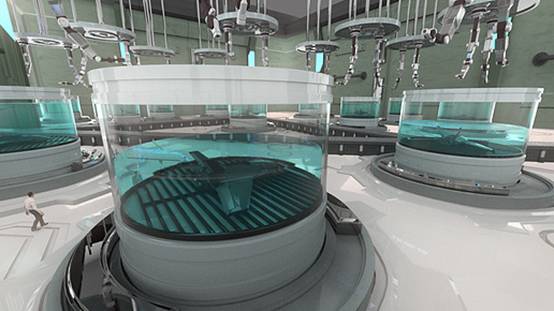 這張效果圖描繪了未來Chemputer工廠“生長”小型飛機的場面,看起來完全就是電影《外星人》中的情節。
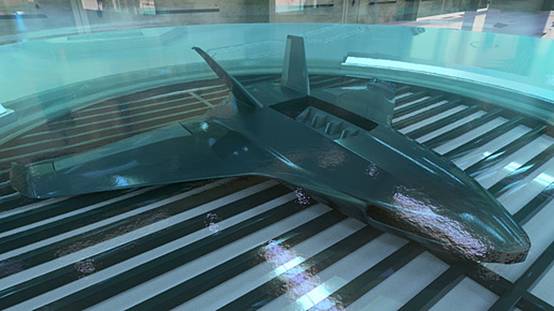 BAE系統與Cronin集團正在開發的Chemputer技術將可用于“種植”包括飛機在內的復雜設備。
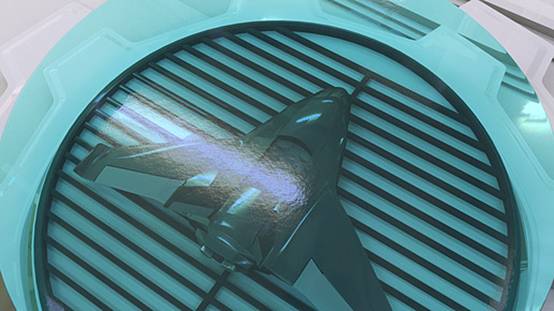 簡單來說,3D打印機是通過一層層的材料疊加來打造物體,而Chemputer則是以可持續材料為原料,以高級化學過程為手段,從分子層面開始一點點“生長”飛機的主體結構和部分復雜電子系統。