在最近舉行的德國IAA(漢諾威)商用車展上,依維柯(Iveco)帶來了一款科技感十足的Z Truck概念卡車。據了解,這款卡車由CNH工業集團(CHN Industrial)的設計中心和創新部門聯合設計研發,展示了依維柯眼中的未來卡車概念。無論是以生物甲烷為燃料的新一代液化天然氣發動機,還是先進自動駕駛系統、增強空氣動力學性能、升級安全表現以及全新駕駛室生活空間均是未來卡車概念中不可或缺的元素。
依維柯聲稱,這款長途概念卡車將打破所有約束,完全不會對可持續發展交通系統造成任何影響。
“正如我們的Z Truck及其采用的29項專利,依維柯將不懈努力,定義未來卡車的面貌:未來卡車應該可以共享人類維度,且長期穩定滿足駕駛員的各種工作和休閑需求。”依維柯品牌總裁Pierre Lahutte表示,“在我們的定義中,長途貨車必須滿足100%的可持續性,也就是說不能對周圍環境造成任何影響,即實現‘零排放’和‘零事故’。”
據了解,Z Truck概念卡車采用了液化天然氣動力系統搭配16速變速器的設計,額定功率460hp(約合343 kW),扭矩2000 N·m(約合1475lb·ft)。報道稱,ZTruck可節省33%的“油耗”。根據依維柯的數據,這款概念卡車配有兩個油箱,總容量1200升(317加侖),每次滿充后的續航里程達2220 km(1380 mi)(1380英里),比現行版Stralis NP天然氣卡車高60%。
Z Truck概念卡車采用了SAG公司研發的新概念油箱。該油箱采用鋁制箱體,并搭配了一種新型多層絕緣技術(Multi Layer Insulation),可保護油箱免受熱輻射損害。這種技術讓正方形油箱的出現成為可能,也最終幫助工程師充分優化空間利用,實現了雙油箱的設計。
此外,Z Truck概念卡車還搭配了一款車載朗肯循環廢熱回收系統,可重復利用廢氣熱源進行熱量回收。
Z Truck的研發還受到了PLI(Petronas Lubricants International)公司的大力支持。這款概念卡車采用了液化天然氣搭配PLI低粘度機油的設計,這有助于依維柯實現零排放目標。
Lahutte表示,未來卡車還必須實現零事故的目標,依維柯則將通過一系列主動/預防安全功能及全自動駕駛系統的研發實現這一愿景。依維柯認為,未來這些新興技術和自動駕駛系統將改變人類駕駛員的角色,將他們變成“車載物流操作員”。
Lahutte還表示,“零壓力”和“零時間浪費”也是公司“以駕駛員為中心而設計”的關鍵目標。在依維柯看來,未來駕駛室應完全擺脫傳統的約束,可根據駕駛員的每日活動進行自由配置,比如駕駛、自動駕駛、室內工作或休息等。車輛的座椅、方向盤、油門、剎車及中控臺將構成一個完整系統,可獨立于駕駛室進行控制。
車輛座椅和可伸縮方向盤可相互配合,便利駕駛員的需求:當方向盤伸出時,座椅將向后回撤,從而為駕駛員提供一個舒適的位置。而駕駛室的部分側墻、頂部和地板將形成一個獨立滑動空間,可將內部空間增加50厘米。
此外,車輛滑門還可旋轉滑開,可伸縮平臺伸出,接著5階臺階以平行于車輛的方向滑出,從而為駕駛員提供與房屋類似的臺階設計,方便人員出入。
這款概念卡車的人機界面經過專門設計,可根據駕駛員的需要,調整信息顯示方式。卡車提供的信息將顯示在“智能”擋風窗上,而且可以根據駕駛員的實時需求進行調整變化。此外,Z Truck概念卡車的擋風窗上方區域還可以顯示車輛多攝像頭系統捕捉的多角度視圖,從而協助駕駛員全面了解車輛周圍的情況。
“我們將面對一場源于環保、經濟和安全考慮的革命。”Lahutte表示,“依維柯一直視支持可持續發展、降低總擁有成本(TCO)以及與我們的客戶建立商業合作伙伴關系為核心價值觀。我們一直致力于通過生物天然氣等可替代能源,持續降低依維柯車輛對環境的影響,并始終將駕駛員和消費者放在我們技術研發的中心位置。”
此外,概念卡車的互聯技術還延伸至米其林提供的超未來感輪胎。據了解,米其林XLine Energy是第一款被授予AAA級滾動阻力表現的輪胎,可幫助長途貨車節省燃料(1L/100km)。每一個X Line Energy輪胎均內置RFID標志。駕駛員可憑借該標志追蹤該輪胎在整個生命周期內的使用情況,并實時查詢類型、尺寸、型號、磨損、性能或胎溫等信息。此外,配合輪轂上的傳感器,胎壓監測系統還可以提供胎壓數據。這些信息中的部分或所有均可以在有必要時顯示在駕駛室內,為駕駛員提供警示。
依維柯Z Truck概念卡車采用了整合式拖車和大膽的牽引車幾何形狀設計,在空氣動力學性能方面取得了大幅提升。依維柯表示,這款概念卡車的風阻系數最高可降低30%,且在隊列配置下還有可能實現更高提升。
Designed in collaboration by CNH Industrial’s Design Center and Innovation department, the Iveco Z Truck concept that debuted at the IAA Commercial Vehicles show in Hanover, Germany, is the company’s take on what future trucks may look like. This vision includes alternative energy—a new-generation LNG (liquefied natural gas) engine running on bio-methane derived from refined biogas—automated driving, enhanced aerodynamics, improved safety and the creation of a new living space in the cab.
The long-haul concept truck breaks away from every constraint, the company claims, to be a zero-impact vehicle for a totally sustainable transport system.
“With Iveco Z Truck and its 29 patents, we are defining where our efforts could lead us in the future: a vehicle with a human dimension, designed to accommodate comfortably and safely the work and leisure activities of the driver, adapting each time to his needs,” said Pierre Lahutte, Iveco Brand President. “We are defining a future of long-haul freight transport that is totally sustainable—a vehicle that has zero impact on its environment, with zero emissions and zero accidents.”
The LNG powertrain has rated power of 460 hp (343 kW), torque at 2000 N·m (1475 lb·ft), and a transmission with 16 gears automated with powershift in the upper gears. The Z Truck reportedly uses up to 33% less fuel. Two tanks with a capacity of 1200 L (317 gal) result in a range of 2220 km (1380 mi)—60% greater compared to the current Stralis NP natural-gas model, according to Iveco.
The truck adopts a new concept tank developed with SAG. It is made of aluminum insulated with a new Multi Layer Insulation, a reflective foil that protects from heat radiation. The technology allows for a squared shape, making it possible to optimize the use of space and accommodate two tanks with a single recharge.
An onboard Rankine-cycle waste heat recovery system exploits exhaust gas as a heat source to recover energy.
Petronas Lubricants International supported development of the Z Truck. LNG used in conjunction with Petronas Urania low-viscosity engine oils contributes to Iveco’s zero-emissions target.
Zero accidents are the vision for this concept truck through the deployment of active and preventive safety technologies up to full automated driving technologies, according to Lahutte. Iveco sees a future in which these new technologies and autonomous driving will change the role of the driver, who they say will become an “onboard logistics operator.”
Lahutte also shared that zero stress and zero waste of time is the goal of the driver-centered design where the cab is freed from traditional constraints and can be totally reconfigured according to the various activities of the day (driving, automated driving, office working, resting). The seat, steering wheel system, pedals and controls console form a self-contained unit that is suspended independently from the cab.
The seat and retractable steering wheel combine two systems that move together in a double arch rotation: while the steering wheel moves forward, the seat moves back to provide a comfortable position for the driver. Parts of the side wall, the pavilion and the floor are integrated to form a self-supporting box-sliding structure, adding 50 cm (20 in) of interior length.
A sliding door opens and moves away with a rototranslating movement, enabling a retractable platform and 5-step stairs to slide out parallel to the vehicle. This provides full ergonomic access to the cab similar to home stairs.
The HMI (human-machine interface) is designed to adapt the way it provides information to the driver. The information on the truck’s functions is projected on the “smart” windshield as it becomes necessary and changes according to what the driver needs at the time. Views from a multi-camera system are displayed on a wide screen at the top of the windshield, giving the driver full visibility around the vehicle in every driving phase.
“We are facing a revolution triggered by the concern for the environment, the economy, and safety on and around vehicles,” said Lahutte. “With our focus on our values of sustainability, TCO (total cost of ownership), technology and business partnership with our customers, at Iveco we have been working to constantly reduce the impact of our vehicles with alternative fuels such as bio-LNG, and putting the driver and the customer at the center of our technological and design development.”
Connected technology extends to the futuristic tires supplied by Michelin. The Michelin X Line Energy tires are the first range to be awarded the AAA grading in rolling resistance, which saves long-haul convoys up to 1 L of fuel per 100 km. The tires feature RFID embedded tags that can track each tire throughout its life cycle, providing real-time information such as type, size, model name, wear, performance or temperature. Used with Tire Pressure Monitoring System sensors on the rims, they can also provide pressure data. Any or all of this data can be displayed in the cab as necessary to alert the driver.
Anticipated improvement in aerodynamics results from the integration of the trailer and the extreme geometry changes on the tractor. As a result, drag is reduced by up to 30%, according to Iveco, with potential for further improvement in platooning configuration.
Author: Greg Muha,Ryan Gehm
Source: SAE Truck & Off-highway Engineering Magazine

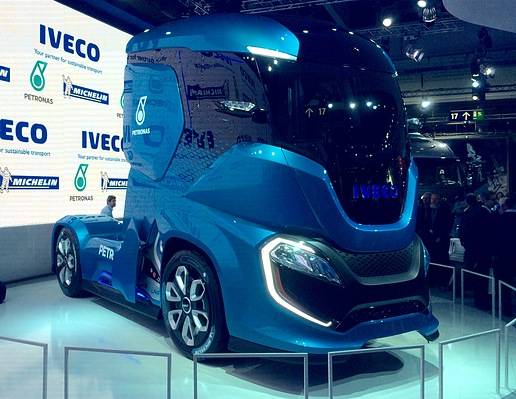 IAA商用車展上,依維柯ZTruck概念卡車憑借極具未來感的外形和優異的空氣動力表現,一亮相便脫穎而出。
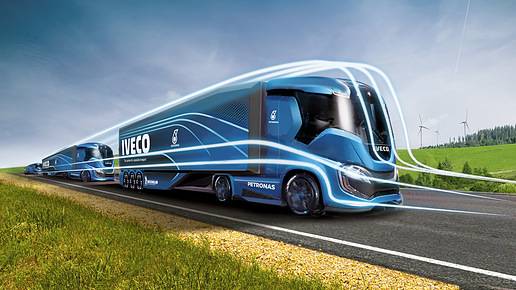 依維柯Z Truck概念卡車采用了整合式拖車和大膽的牽引車幾何形狀設計,最終實現了高達30%的風阻降幅。這款卡車還有可能在隊列模式下取得更優異的空氣動力學表現。
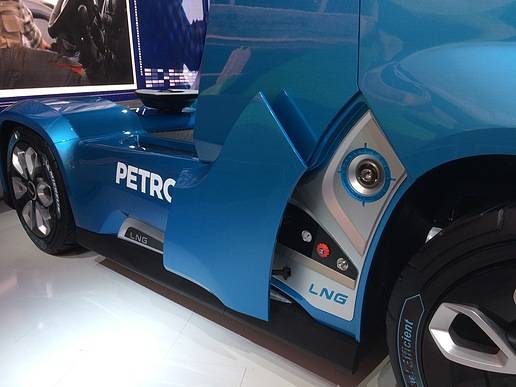 替代能源在依維柯的可持續交通系統戰略中扮演著非常關鍵的角色。這款長途貨車概念車采用了新一代液化天然氣發動機,燃料為從經過精制的生物沼氣中提取的生物甲烷。
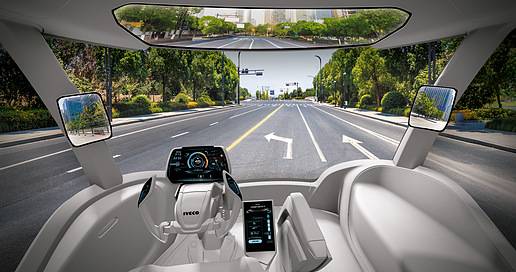 這款概念卡車的人機界面經過專門設計,可根據駕駛員的需要,調整信息顯示方式,包括“智能”擋風窗上的信息顯示。Z Truck概念卡車還可將多攝像頭系統捕捉的多角度視圖顯示在擋風窗的上方區域。
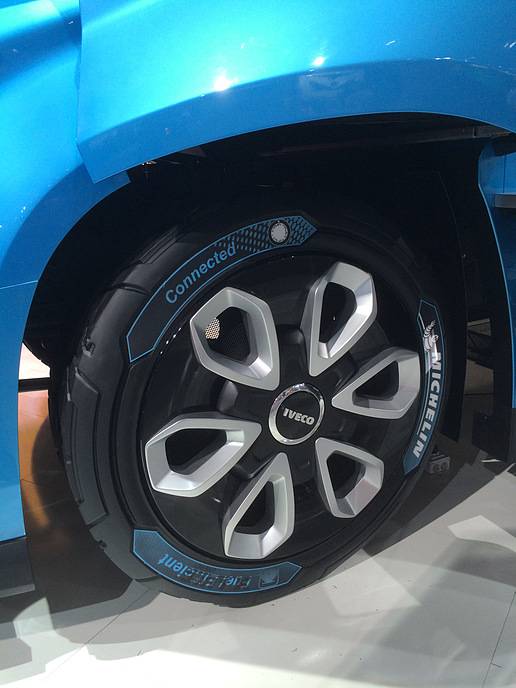 概念卡車的互聯技術已經延伸至米其林(Michelin)提供的超未來感輪胎。這款輪胎的滾動阻力超低,且內置RFID標志,可在整個生命周期內記錄輪胎的使用情況。