近日,戴姆勒集團(Daimler AG)研發與可持續發展副總裁、首席環境官 Anke Kleinschmit在接受《歐洲汽車工程》總編Stuart Birch的采訪中,談論了當今設計師和工程師面臨的眾多挑戰,包括社會對汽車功能的預期變化非常迅速以及全球相關法規日益嚴苛等。
汽車工程:如今,車輛減重的關鍵仍在于混合材料,尤其是高強度鋼材和鋁材的混合應用嗎?還是已經轉向了其他領域?請問在不久的將來,碳纖維材料在大批量生產中是否常見?成本是否仍過于高昂?
Kleinschmit:在梅賽德斯-奔馳(Mercedes-Benz),我們在進行減重研發時的中心思想是‘在合適的地方采用合適的材料’。這是因為不同材料在質量、強度、剛度和防撞性方面的性能各有不同,應該在應用上有所選擇。我們的工程師之所以可以成功實現減重,關鍵在于可以利用高強度鋼、輕質合金、塑料及多種原料,打造一種最符合要求的混合材料。
對于車身、底盤和驅動系統方面的輕質技術,我們追求的目標非常明確:與之前版本相比,每款新車都要實現一定程度的減重。
舉個例子,我們在生產發動機時會使用內部開發的Nanoslide工藝。通過采用這種工藝,我們可以在鋁制曲軸箱內的氣缸表面上增加了一層極薄的低摩擦涂層,這不僅有助于減輕重量,而且由于可以顯著降低摩擦,還能帶來大約每公里幾克的CO2減排效果。
談到碳纖維,我們確實在這種輕質材料的應用方面積累了豐富的經驗;為了提高車輛的性能,當然還有降低重量,我們在梅賽德斯-奔馳的車型中使用了CRP材料,尤其是在以高性能著稱的梅賽德斯AMG系列中。由于碳纖維仍是一種成本高昂的材料,我們在批量生產中必須考慮如何合理地混合不同鋼材和先進鋁合金,制造混合材料(車身)外殼。
汽車工程:雖然,電動車技術已經取得了一定進展,但您認為現階段的技術水平可以在成本、使用壽命、質量和消費者接受程度方面滿足梅賽德斯-奔馳,或者說整個汽車行業的要求嗎?您認為純電動車的成本何時才能與傳統內燃機車型競爭?未來,燃料電池解決方案將走向何處?
Kleinschmit:從長遠來看,我們完全相信動力傳動系統的電氣化是構建“移動性未來”的關鍵組成部分。
我們的理念是,利用不同的技術滿足不同的需求,因此我們在追求“零碳排放”的道路上,一直采用非常靈活的策略:
首先,我們將繼續最大限度地發掘高科技內燃機的潛力。其次,我們將增加對混合技術的應用,從而進一步降低消耗。最后,我們也在進行有關電池和/或燃料電池的研究,助力實現“本地駕駛零排放”的目標。
在質量、使用壽命及安全方面,我們將以同樣的高標準要求旗下所有產品,不管車輛采用的是哪種動力系統。
雖然純電動車仍需更多時間才能占據主導地位,但隨著產品選擇范圍的不斷擴大,純電動車的市場占有率也在不斷提高。
在初始階段,新技術的成本自然會更高。然而,電動車已經在我們的產品組合中占據了相當高的比例,包括插電式混合動力車、B級ED(電驅動)及即將上市的新一代智能ED。這也是我們推出的第一款兩座和四座智能ED車型。此外,我們還將在未來推出更多電動車型。在2020年以前,我們還將推出一款大型電動車,為公司的未來電氣化戰略奠定基礎,即打造續航里程高達500 km的電動車。正因如此,我們已經投資5億歐元在公司的電池產地Kamenz建立了第二座電池工廠。很顯然,隨著電池技術的不斷發展,未來的電動車可以以較低的成本實現更高的續航里程。
不過,即使電池技術已經取得了長足的進步,但燃料電池汽車至少仍擁有一個明顯優勢:不受限制的續航里程和更短的充蓄時間。此外,燃料電池技術還可應用至轎車,甚至是城市大巴等較大車型。我們深信,無論是電動還是燃料電池,追求電動移動性一定是一項造福于全人類的投資。
汽車工程:汽車的空氣動力性能還有提升空間嗎?或者說我們必須面對現實,車輛的風阻系數將停留在0.22到0.25 cd之間?追求更佳的風阻系數是否會影響車輛設計(外形),還是車輛設計會制約車輛的風阻系數優化?
Kleinschmit:車輛的空氣動力性能仍有一定提升空間,但提升將越來越困難。只要車輛的基本結構沒有大的變化,比如長度和形狀變化不大,“傳統”汽車的風阻系數就很難突破0.20cd。我們在2013年推出了CLA轎車,其風阻系數在0.22 cd左右,這已經非常接近極限了。
為了進一步尋求便攜性、空間及整體設計理念的最佳解決方案,我們可以借助一些主動空氣動力優化措施,正如我們的“可變形的(Transformer)”ConceptIAA概念車所做的那樣。
汽車工程:自動駕駛汽車的技術演示將繼續進行,您認為自動駕駛汽車的推廣是勢在必行嗎?如果是這樣,那將是什么時候?現在擺在自動駕駛汽車面前的阻礙是在法規和保險方面,還是在技術層面?請您具體介紹一下。
Kleinschmit:對我們來說,現在的問題不是自動駕駛技術能否發展起來,而是將以怎樣的速度發展?自動駕駛必將一步一步成為現實。
隨著新款梅賽德斯-奔馳E級轎車的推出,我們已經可以為用戶提供一系列半自動駕駛功能,包括駕駛領航(Drive Pilot)、主動變道協助(Active Lane-ChangeAssist)和遠程停車領航(Remote Parking Pilot)等。
我們預計,首批高級自動駕駛系統將在短短幾年內成為現實。具體來說,這批移動汽車僅能在時宜的氣候環境下,在高速公路等特定路段下實現自動駕駛。全時全自動駕駛的實現則仍需要相當長的時間。為了在自動駕駛系統方面取得突破,法規和技術層面的問題都是我們需要面對的挑戰。
消費者對自動駕駛功能的接受程度與其可靠性和可用性密切相關。除了高速公路等相對單純的駕駛環境,自動駕駛功能還必須應對更加復雜的周邊環境,并應對一系列移動或靜止的目標,及不同的天氣和日間條件等。
當然,法律問題仍需得到解決。很顯然,“政治風向”以及最為重要的問題——社會接受度,是自動駕駛汽車何時問世的決定性因素。
汽車工程:CAD和CAE功能的發展跟的上行業的需求嗎?還是有所領先?您能詳細介紹一下嗎?
Kleinschmit:進行數字化是戴姆勒的首要戰略重點之一。無論是在產品研發、生產、物流,還是售后服務環節,我們都采用了最新的IT技術。
我們的目標之一是讓成千上萬分布在世界各地的戴姆勒工程師使用相同的工具,并拿到統一的數據。因此,我們也在各個分公司部署了同一套CAD軟件和高效數據管理工具。這樣一來,我們所有的員工都可以在產品和零部件的完整生命周期內,從開發到售后均使用同一套數據。
此外,我們將利用一系列先進技術,比如增強現實、快速計算機輔助模擬及三維打印技術等,進行數字化研發。在汽車這種競爭激烈的行業中,縮短新品上市周期至關重要,我們也為此做好了準備。
汽車工程:梅賽德斯-奔馳和整個汽車行業面臨的主要技術挑戰是什么?
Kleinschmit:“未來的交通運輸”絕非僅僅關乎汽車本身。未來的汽車將具備完全互聯、自動駕駛和零碳排放等特點,也將成為智能交通服務系統的重要組成部分,比如車輛可以在車主不需要駕駛出行的時候,參與戴姆勒公司的自動駕駛Car2Go車隊。此外,創新的可持續發展移動性概念、智能網絡和定制服務將在未來保證車輛的吸引力。“智能汽車”、“智能電網”、“智能交通”及汽車共享,都是重要的焦點話題。
當然了,我們仍將在前往移動性未來的道路上面對一些挑戰,僅舉幾例:
• 實現互聯功能,需要完整的移動網絡覆蓋。
• 自動駕駛的發展必須在法規監管框架之內。
• 實現零排放的交通運輸,需要建立完整的充電基礎設施。
• 智能交通運輸服務意味著我們所有人都必須習慣新的出行方式。
盡管如此,作為汽車的發明者、研究者和開發者,梅賽德斯-奔馳的每一個員工都將微笑著迎接每一個挑戰,塑造未來的交通運輸!
作者:Stuart Birch
來源:SAE《汽車工程》雜志
翻譯:SAE中國辦公室
Sustainable transformation—the Daimler way
Interviewed by Automotive Engineering European Editor Stuart Birch, Anke Kleinschmit, Vice President Group Research and Sustainability and Chief Environmental Officer, Daimler AG, addressed issues facing today’s designers and engineers, such as society's rapidly changing expectations of automotive functionality and the many facets of ever-more stringent global legislation.
AE: Is reducing vehicle mass continuing to be a matter of combining materials, particularly high-strength steel and aluminum, or is the focus now on other areas to achieve lightweighting? Does carbon fiber remain too exotic and too costly for high-volume applications in the near- to mid-future?
Kleinschmit: Our lightweight construction strategy at Mercedes-Benz is derived from the dictum, 'The right material in the right place.' Depending on its operation purpose, each material has its own strengths in terms of weight, strength, stiffness and crash performance. The key success factor for our engineers is to define an intelligent material mix out of high-strength steels, light alloys, plastics and further materials.
When it comes to lightweighting technologies in body, chassis and drive, we pursue the clear goal to reduce the weight of all our new models in comparison to their predecessors.
For example, when it comes to the production of engines, we use the in-house developed Nanoslide process. Within this process, the cylinder surfaces in aluminum crankcases are provided with an extremely thin and low-friction coating, which not only helps to reduce weight, but also leads to a fuel (efficiency) advantage of several g CO2/km due to significantly reduced friction.
Talking about carbon fiber, we do have a quite extensive experience using it as a lightweight material; we use CRP materials in Mercedes-Benz cars, especially within the area of our high-performance cars from Mercedes AMG, to improve the performance and of course save weight. Since carbon fiber is still a very cost-intensive material, the main focus is on hybrid (body) shells with an intelligent mix of all steel grades and advanced aluminum alloys in mass production.
AE: Electric-vehicle technology is improving but are you confident of its ability to deliver (batteries, motors) what is required both for Mercedes-Benz and the auto industry in general, in terms of cost, longevity, quality, and buyer acceptance? When (if ever) would you expect pure EV cars to achieve unit costs lower than that of conventionally-powered models? What is the likely future for fuel cell solutions?
Kleinschmit: We are absolutely convinced that in the long run, the electrification of the drivetrain is one major element of the 'future of mobility.'
We believe that different technologies will apply to different requirements—and therefore pursue a flexible strategy on our path to zero-local-emissions driving:
First: we’re further maximizing the potential of high-tech combustion engines. Second, we’re increasing hybridization to further reduce consumption. Third, we’re working on zero-local-emissions driving with batteries and/or fuel cells.
Regarding quality, longevity and not least safety, we set the same high standards for all our products, independent of the type of drivetrain.
As for pure electric vehicles, it will be some time until our streets will be dominated by them, but with a growing product (range), the proportion is continuously improving.
It is natural that new technologies are more cost-intensive at the time of their introduction. But we already feel a great commitment to the electrified cars in our portfolio, from plug-in hybrids up to our B-Class ED (Electric Drive) and the upcoming new generation of the smart ED - the first time as a 2- and a 4-seater. And there is more to come. Before the end of the decade, we’re bringing a large electric vehicle to lay the foundation for our future electric strategy with a range of up to 500 km (311 mi). That’s why we are investing 500 million euros in a second battery factory on our battery production site in Kamenz. It is clear that battery technology increasingly allows higher ranges at decreasing costs.
But even if the battery technology is making great progress, the fuel cell will continue to have at least one clear advantage: generous range and short refueling times. In addition, the fuel-cell technology can be applied to larger vehicles such as sedans or even city buses. We are convinced that pushing e-mobility—whether with battery or fuel cell—is a perfect investment in the future of all of us.
AE: Can aerodynamics continue to improve or will they, realistically, plateau at a best of around of 0.22 - 0.25Cd? Do they inhibit design (styling)—or is design inhibiting the figures?
Kleinschmit: The potential for reducing air resistance has not been exhausted, although it will slow down. As long as there are no major changes in the basic architecture of vehicles—like their length and form—there is an asymptotic limit of about 0.20 Cd with "conventional" vehicles. With a drag coefficient of 0.22 our CLA, which we introduced in 2013, is coming quite close to this.
Finding the best solution for portability, space and our overall design philosophy can be further supported with active aerodynamic measures, like our "Transformer” Concept IAA’s features.
AE: Demonstrations of autonomous vehicle technology continue; do you regard its widespread introduction as inevitable? If so, when? Is it just legislation and insurance issues that inhibit its introduction, or technologies—if so, what technologies?
Kleinschmit: For us, it is not a question if the technology of autonomous driving will evolve, but at what pace this will happen. Autonomous driving will become reality step-by-step.
With the new E-Class we already offer a large variety of semi-autonomous driving functions, like Drive Pilot, Active Lane-Change Assist and Remote Parking Pilot.
We expect that it will be possible to realize the first highly-automated driving systems in just a few years on certain types of roads, such as autobahns, and in suitable weather conditions. Fully automated driving in any situation will take much more time to achieve; legislative and technology issues both play a major role in the challenges we are facing to reach the breakthrough of autonomous driving.
Customer acceptance of autonomous driving functions is closely linked to the degree of their reliability and availability. Away from motorways, such a function has to cope with the increasing complexity of the surroundings and manage a greater number of dynamic and static objects as well as different weather and daytime conditions.
And of course, the legal questions need to be resolved. It is clear that 'political will' and above all, social acceptance, are decisive factors for the introduction of autonomous vehicles.
AE: Are CAD and CAE capabilities keeping pace with the industry’s requirements and expectations—or leading them? Can you detail?
Kleinschmit: Digitalization is one of Daimler’s top strategic priorities. From product development, production and logistics to after sales; in all processes, the latest IT technologies are in use.
One of our goals is that the many thousands of our developers at our many locations worldwide all use the same tools and work on the same data. Therefore we deploy the same CAD software at our sites and have an efficient data management in place which further enables us to use the same data throughout the lifecycle of a product and parts—from development to after sales.
When it comes to digital development, we use state-of-the-art technology such as augmented reality, fast computer aided simulations and 3D printing. Reducing the time to market is crucial in a competitive environment such as the automotive industry and we are well prepared for this.
AE: What are the major technology challenges facing Mercedes-Benz and the auto industry in general?
Kleinschmit: The 'Future of mobility' goes far beyond the automobile itself. Tomorrow’s car is fully connected, drives autonomously and emission-free—and it might be part of an intelligent mobility service, e.g. as part of an autonomous car2go fleet when the owner does not need his car. Especially, innovative and sustainable mobility concepts, intelligent networking and tailored services will ensure the car’s attractiveness in the future. Particularly the areas of 'smart car,' 'smart grid' and 'smart traffic' and car-sharing are important focus topics.
Of course we are facing some challenges in this change process of mobility. To name only a few:
• Connectivity means depending on mobile network coverage.
• Autonomous driving also means talking about regulatory frameworks.
• Emission-free mobility means establishing the needed infrastructure of charging stations.
• Intelligent mobility services mean all of us to get used to new ways of traveling.
But as the inventor of the automobile, as researchers and developers—we at Mercedes love every challenge to shape the future!
Author:Stuart Birch
Source: SAE Automotive Engineering Magazine

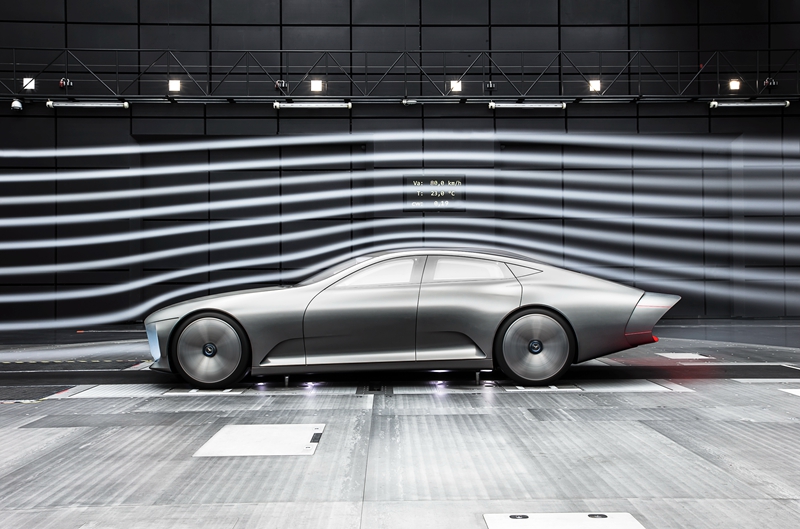 梅賽德斯-奔馳IAA(智能空氣動力性能汽車)概念車是一款四門轎跑,其風阻系統達到了令人吃驚的0.19 cd。前方保險杠處的延伸可以優化流過車頭和輪轂的氣流。車輛前保險杠上的氣窗則可以優化車輛下方的氣體流動。
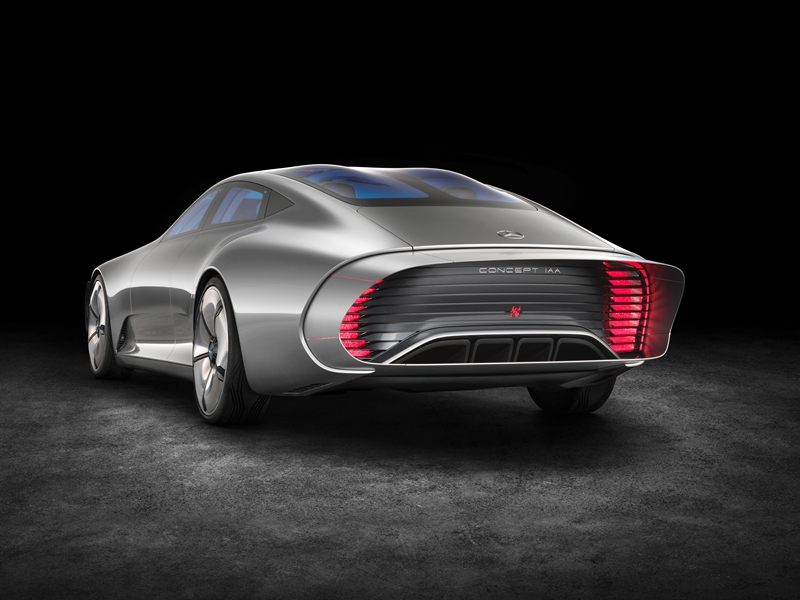 增長性行業:“可變形”的梅賽德斯-奔馳IAA概念車的車尾處采用了8面可延展碳纖維板,可以將車輛長度增加至390 mm,車輛能夠實現0.19 cd的風阻系數也部分歸功于此。
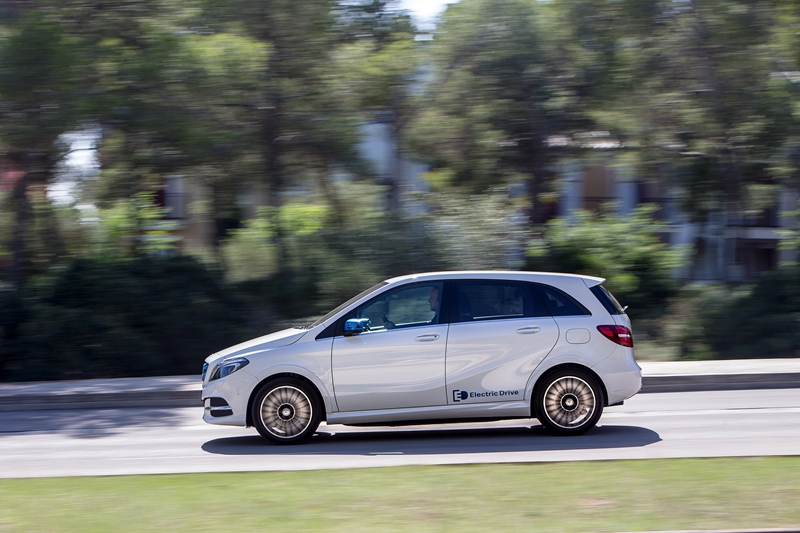 梅賽德斯-奔馳B級 ED(電驅動)SUV展示了公司在推進系統更新換代方面的決心,并在一定程度上反映了梅賽德斯未來ED車型的走向。
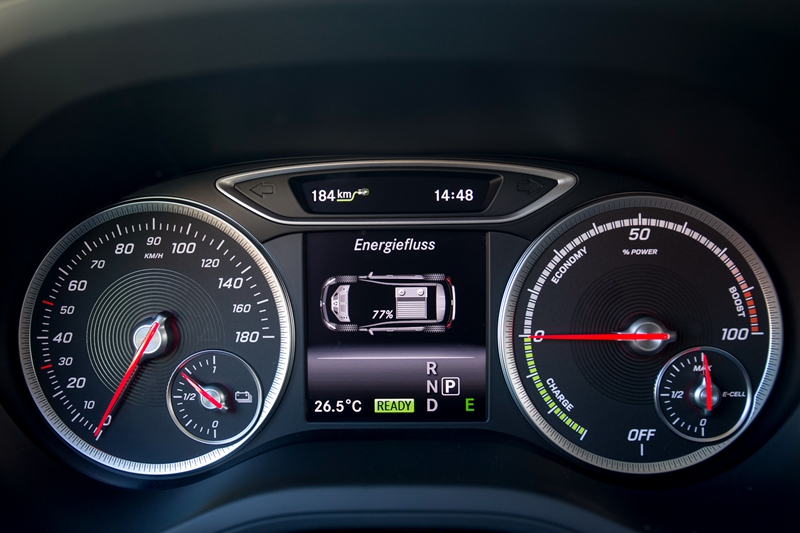 電驅動梅賽德斯-奔馳B級SUV的儀表盤。
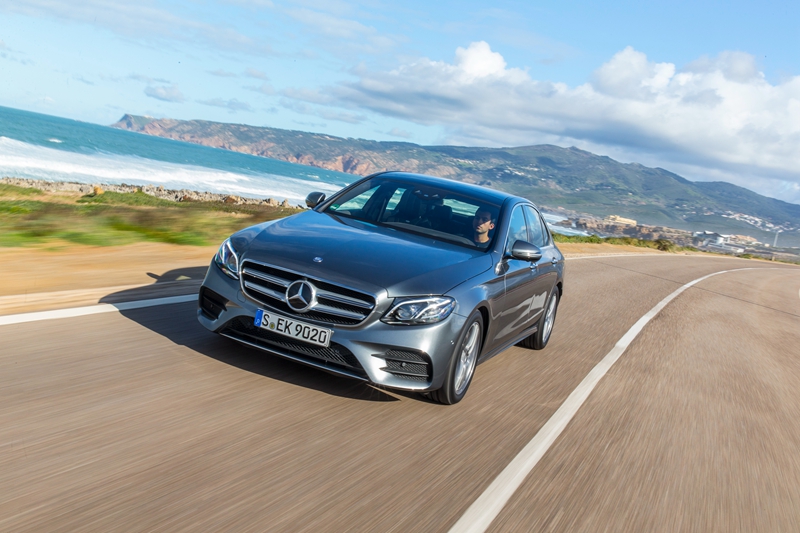 最新一代的梅賽德斯E級轎車可以提供一系列半自動駕駛功能。
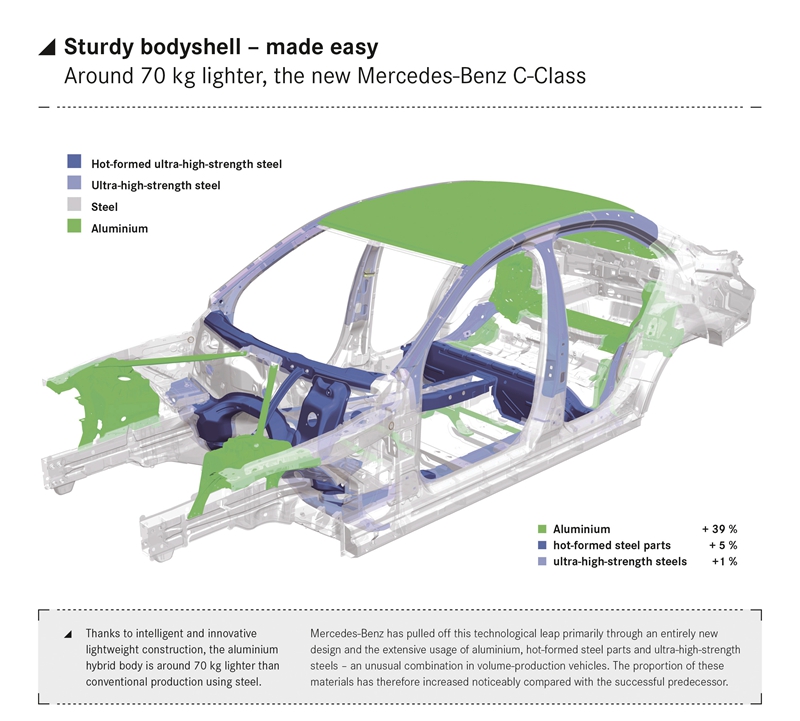 “在合適的地方采用合適的材料”,這就是梅賽德斯-奔馳輕量化結構策略的中心思想。現行版C級車就是一個例子。
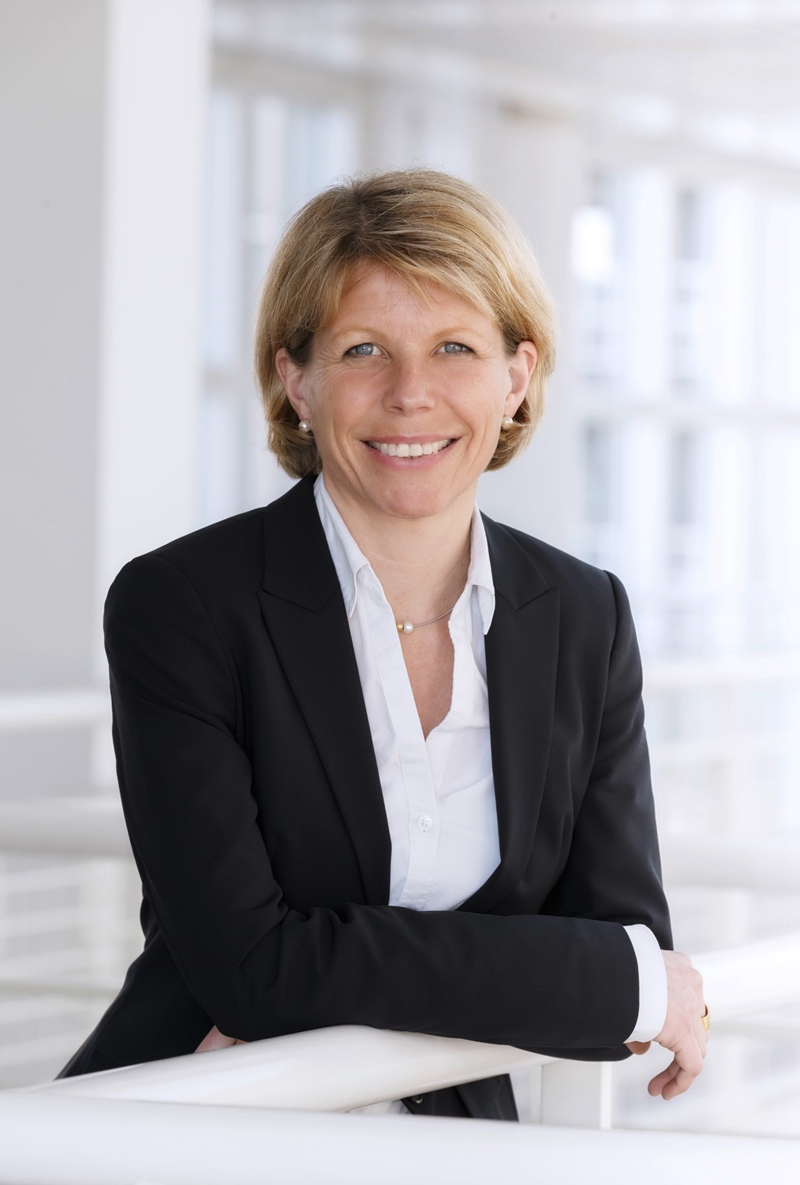 作為戴姆勒集團研發與可持續發展副總裁、首席環境官,Anke Kleinschmit的職責范圍涵蓋了當今汽車行業的許多熱點。