到21世紀20年代,我們的網絡互聯和交通運輸將變成什么樣子?雖然現在距離2020年僅剩短短4年時間,一組專家在SAE2016 全球汽車年會與展覽(SAE 2016 World Congress)上引用了一份研究數據,大膽地預計全球網絡互聯設備將在2020年增長至2000億件,人均“智能”設備擁有量將達到26件。這些設備是IoT(物聯網)系統的重要組成,也是交通運輸領域的關鍵元素。
未來,雖然我們的世界將在很大程度上實現“隨時隨地的互聯”,主要將集中在汽車、家用電器、計算機、辦公及醫療等方面。駕駛員可以通過IoT路徑,隨時輕松訪問任何位置的任何數據。
除了谷歌(Google)等科技公司的自動駕駛汽車研發項目之外,各大汽車廠商也在積極采取各種措施,不斷豐富產品的功能。大會專家組成員David Strickland曾任美國國家公路交通安全局(NHTSA)局長,目前就職于精專自動駕駛領域的Venable LLP律師事務所,負責法律法規領域的事務。他認為,如今我們的自動駕駛發展進程已經實現了四分之三。
對無人駕駛汽車的擔憂
Strickland指出,隨著汽車行業的不斷進步,與互聯相關的信息隱私問題也日益凸顯。但他相信,為了“避免自己汽車成為(無法跟隨技術進步浪潮的)磚頭”,未來駕駛員完全有可能放棄對隱私保護的堅持,轉而向自動駕駛技術敞開胸懷。
通用汽車全球安全策略部總監John Capp介紹了即將在2017款凱迪拉克CT6上采用的V2V通信模塊,以及另一款凱迪拉克車型的“Super Cruise(超級巡航)”系統。據了解,通用汽車的Super Cruise系統結合采用了雷達、超聲波傳感器、攝像頭和GPS等技術,與公司2013年發布的Driver Assist(駕駛員協助系統,即支持自動制動的適應性巡航系統)相比,新系統可以實現更多主動控制,但具體性能仍尚未公布。
雖然,通用汽車已經承認在天氣惡劣、道路標記模糊及交通環境異常等情況下,SuperCruise系統的性能會受到一定影響,但并未明確指出駕駛員應當在哪些情況下完全接管汽車的駕駛,以及如何進行接管。
凱迪拉克將加入沃爾沃S90,搭配最新版半自動Pilot Assist領航輔助系統,可利用車輛的先進攝像頭監測車輛周邊的行人、自行車及各種動物,即使在沒有前車的情況下,也能時刻確保車道的保持。據了解,該系統的可應對的最高車速為130km/h(80mph)。
Alphabet(谷歌母公司)/谷歌(Google)自動駕駛汽車項目安全總監Ron Medford指出,AAA交通安全基金會的研究結果在一定程度上反映了關于無人駕駛汽車的擔憂。通用汽車的Gapp指出,雖然絕大多數駕駛員都愿意“享受自動駕駛”,但這并不能代表所有人的意愿,而汽車行業在進行設計時則必須考慮到所有用戶的偏好。
Capp表示,“到時候,一定仍有駕駛員堅持駕駛‘老式’汽車”,在同一條車道上與自動駕駛汽車一起馳騁,“我們也只能接受這樣的現實。”
DSRC即將進入零部件市場?
在這種情況下,即使不能完全融入自動駕駛的世界,但汽車零部件市場最起碼也應該為“老式”汽車提供改裝服務,為其配備可以產生交通信息的設備,從而便利這種“老式”汽車與自動駕駛車輛之間的互動。如今,汽車零部件市場中的很多高級廣播均配備了DSRC功能(專用短程通信技術),可利用交通運輸專用頻率5.9Ghz進行通信,但目前僅在一些自動公路收費設施上有所應用。如果充分發揮作用,這種技術還可用于汽車與交通監測基礎設施之間的通信。
豐田汽車美國銷售公司首席技術官Ned Curic表示,雖然未來的駕駛員普遍可以享受相當高級別的互聯移動性,Lyft等駕乘分享服務也將進一步鞏固自己的地位,但“千禧一代非常不同。”他解釋說,這部分用戶希望擁有屬于自己的汽車,也想親自駕駛高科技車型,因此他們對自動駕駛世界的貢獻相對有限。
此外,汽車零部件市場在DSRC系統之外的作用也并不確定。Cruise Automation等公司開始嘗試通過安裝套裝,將奧迪車型改裝為自動駕駛汽車。不過,這種做法已經逐漸被另一種不斷發展自動駕駛技術的思路所取代,后者可以更為廣泛地應用至更多車型。目前,這家初創公司即將被通用汽車公司收購。
作者:Paul Weissler
來源:SAE《汽車工程》雜志
翻譯:SAE上海辦公室
2016 SAE Congress: Fear of the driverless car as 2020 approaches
What will connectivity and mobility be like in the 2020s? Although the start of the decade is less than four years away, an expert panel at the 2016 SAE World Congress cited research that sees 200 billion devices online and connected—26 "smart" objects per human—that will constitute the Internet of Things (IoT) and form a key element of new mobility platforms.
The connections will be omnipresent and although the focus may be on the automobile, home, computer, work and health-related connections also will be made. And the motorist will have IoT-enabled access to whatever data is available, anywhere.
Efforts by Google and others to develop self-driving vehicles aside, the major OEMs are taking evolutionary steps to more full-function versions. The present level of technology is three-quarters of the way to a self-driving car, claimed panelist David Strickland, former NHTSA administrator who is a member of law firm Venable LLPspecializing in the regulatory area.
Fear of the driverless car
Strickland pointed to the privacy issues that are arising as the evolution continues. But he expressed confidence that motorists will see sufficient incentives to give up privacy "to avoid the car becoming a [technologically obsolete] brick."
John Capp, GM's Director of Global Safety Strategy, pointed to the forthcoming installations of a V2V module on the 2017 Cadillac CT6 and "Super Cruise" on an unnamed other Cadillac model. Super Cruise is GM's fusion of radar, ultrasonic sensors, cameras and GPS. It represents more active control, derived from the Driver Assist package (adaptive cruise with automatic braking) introduced in 2013, but the performance specifications are yet to be revealed.
Although GM has mentioned limitations for poor weather, illegible lane markings and unusual traffic issues, it has not defined the conditions under which, and how, motorists would be expected to assume full control.
Cadillac will join the Volvo S90, with its latest version of Pilot Assist, a semi-autonomous system with advanced camera detection of pedestrians, cyclists and animals, that controls steering to keep the car in lane even without a vehicle ahead to track. It operates up to 80 mph/130 km/h.
Alphabet/Google's Ron Medford, director of safety for the company's self-driving car project, pointed to an AAA study that showed considerable fear of driverless cars. And GM's Capp noted that although "enjoying hands free" is for many drivers, it isn't for all, and the industry will have to design cars so they can be used the way the motorist wants, when he wants it.
"There'll be guys driving around with old cars" on the same roads as autonomous vehicles, Capp said, "and we'll just have to deal with that."
Aftermarket DSRC coming?
One possibility is that the aftermarket at least could contribute to an autonomous-driving world with cars retrofitted to produce traffic information, if not capable of more complete participation. Many premium aftermarket radios are equipped with DSRC capability (digital short range communication, the 5.9 GHz band set aside for traffic function, and presently used only for automated toll collection). If enabled, they could communicate with a traffic monitoring infrastructure.
Ned Curic, Toyota Motor Sales USA's chief technology officer, said that although the motorist's level of connectivity will be pervasive and ride-sharing systems like Lyft are taking hold, "millennials are very different." They do want to own cars, he said, and they want to drive more technologically advanced models, so their level of participation in autonomous drive may be limited.
The automotive aftermarket's role in the picture beyond DSRC also is uncertain. Companies like Cruise Automation, a startup in the process of being acquired by GM, began with the idea of converting Audi models to autonomous drive with installation of a kit. That idea is being supplanted with one to perfect self-driving technology for a broad range of vehicles.
Author: Paul Weissler
Source: SAE Automotive Engineering Magazine

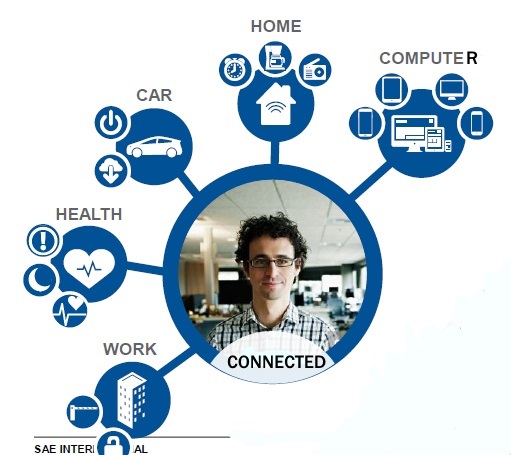 到2020年,人均“智能”設備擁有量將達到26件。屆時,網絡互聯將廣泛滲入至人類生活的方方面面,而汽車則將憑借各種IoT(物聯網)系統,成為其中的主要元素。
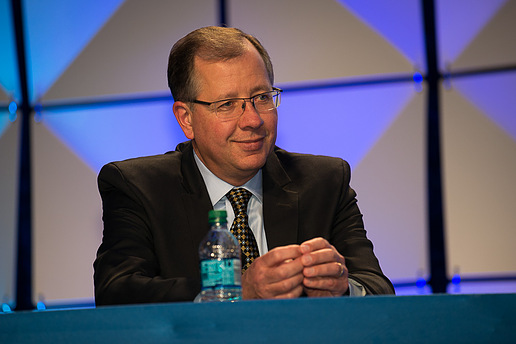 通用汽車全球安全策略部總監John Capp介紹了即將在2017款凱迪拉克CT6上采用的V2V通信模塊,以及另一款凱迪拉克車型的“Super Cruise(超級巡航)”系統。
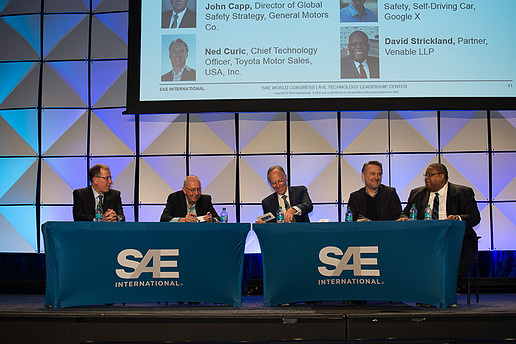 SAE汽車年會2020專家組包括(從左到右):通用汽車John Capp、Alphabet/谷歌Ron Medford、豐田北美工程制造公司Chuck Gulash、豐田汽車銷售Ned Curic,及Venable LLP律師事務所的David Strickland。