一批汽車廠商已經承諾將在2022年前使自動緊急制動(AEB)系統成為一項車輛標配,此舉極有可能改變車輛的電子架構,并促進不同模塊供應商之間的合作。
最近,20家汽車生產商與美國國家公路交通安全局(NHTSA)和美國公路安全保險協會(IIHS)達成自愿性協議,將在未來幾年內推動緊急制動系統從豪華車型向大眾車型的普及。
為了實現這一點,很多汽車平臺將利用已經上路檢驗過的硬件和軟件。然而,這些系統還需經過一些調整才能在成百上千款車型上發揮高效性能。
“未來我們的精力將主要集中在對系統在不同平臺上的表現進行驗證與測試,這并不是無關緊要的工作。”大陸汽車系統項目管理負責人Dean McConnell 表示,“另一個問題在于,真正的功能性要求是什么?車輛變速范圍、制動距離及一些其他性能,都將成為不同系統之間拉開差距的因素。”
根據IIHS的估計,美國每年發生車禍的數量大約在500萬起,而AEB技術最高可以將車禍數量降低20%。最近,在位于瑞典阿爾維斯堯爾市附近的采埃孚天合(ZF TRW) 測試場舉行的冬季測試期間,《汽車工程》的總編有機會體驗了自動緊急制動系統的優勢。
雖然已在先前的干路面測試環節中試駕了多款來自不同供應商的AEB原型車,但總編還是第一次在光滑的冰凍湖面上駕駛配備AEB系統的車型。試駕結束后,這位總編相信,這項技術可以在事故發生前激活限制系統,在預防車禍以及降低車禍嚴重程度方面具有很高價值。見以下視頻。
繁重的工作量
對于汽車行業而言,AEB系統的推廣涉及多個不同模塊。傳感器必須要能保證車輛能夠注意到潛在威脅。當即將發生碰撞時,車輛的多個系統將在不讓車輛打滑的前提下協同工作,盡量降低車速。
“一般來說,這需要攝像頭、雷達等傳感器,配合控制器、軟件和算法協同工作。”博世集團創新及底盤系統控制總監 Frank Sgambati 表示,“這些元件都必須與車輛的制動系統和電子穩定系統 (ESC) 協同工作,所有操作都必須保持協調一致。”
在短短6年內將AEB系統推廣至所有車型并不容易,這需要進行大量的設計和研發工作。AEB系統中的模塊通常來自多家供應商。未來在不同供應商之間、供應商與汽車廠商之間,都極有可能展開更加緊密的合作。
“實現目標的主要挑戰在于繁重的工程量,也就是為了將AEB技術推廣至數百種車型所需進行的各項工作。”采埃孚天合全球電子部產品規劃總監Aaron Jefferson指出,“這也進一步對不同供應商間的高效合作提出了更高要求。”
需要更強勁的控制器嗎?
從一種升級配置到一種車輛標配,自動緊急制動系統地位的變化也有可能改變車輛的電子架構。目前,分布式計算在汽車行業中相當常見,車輛的傳感器和控制器內均配備了微型處理器。當所有汽車都采用更加通用的緊急制動系統時,這種后加式模塊化AEB功能可能會逐漸消失,轉而走向系統整合的道路。
“作為車輛下線后加裝的獨立升級配置,這些功能模塊在設計時必須擁有自己的獨立控制器。” McConnell 表示,“而一旦AEB系統成為一種標準配置,工程師就可以省去不同模塊的冗余設置。當然了,出于安全考慮,車輛仍將保留一部分冗余。”
這將改變汽車行業對半導體的需求。目前,高級駕駛員協助系統在數據到達控制模塊前,主要是依賴智能傳感器做出決定。AEB系統可以減少此類分布式計算的應用,從而將精力更多放在功能更強大的控制器上。
“如今的高級駕駛員協助系統是分散的,每個傳感器都擁有自己的大腦。”瑞薩電子美國分公司高級駕駛員協助系統解決方案細分營銷經理 John Buszek 表示,“廠商也許會選擇減少一些分散式“大腦”的部署,轉而將汽車智能設備集中起來,而這或許意味著必須使用功能更強大的控制器。”
提升計算能力和增加內存容量可能并不是芯片制造商需要面對的唯一變化。過去幾年中,半導體制造商一直在提供更多軟件。AEB系統的普及極有可能拓寬 AUTOSAR(汽車開放系統架構)的適用范圍,這種標準可以幫助廠商兼容來自不同供應商的模塊。
“對很多廠商而言,搶占產品上市時間非常重要。” Buszek 解釋說,“提高上市速度的一個方法就是利用標準,因為標準可以提供共同的基礎,加速各項工作的推進。目前已經存在一些支持 AUTOSAR 的呼聲,我認為未來將出現更多AUTOSAR的推動者,因此硅谷公司未來可能會面對開發此類軟件的需求。”
雖然AEB協議正在從很多方面影響著車輛及車輛次級系統的工程研發,但大多數觀察者均認為,這與汽車廠商為了應對美國不斷收緊的強制性燃料經濟性規定而進行的努力是不同的,并不會引起大規模的顛覆性改變。AEB系統主要是借助現有技術提高車輛安全性。
“AEB系統將大幅降低車禍發生的概率。” Jefferson 表示,“這種系統已經進入市場,運轉良好,且能帶來安全效益,但目前僅能造福一小部分汽車,這就是汽車廠商簽訂協議,促進AEB推廣的原因。”
作者:Terry Costlow
來源:SAE《汽車工程》雜志
翻譯:SAE上海辦公室
Automatic braking pact for 2022 will alter system development
Vehicle OEMs have pledged to make automatic emergency braking (AEB) a standard feature by 2022, a move that is likely to alter electronic architectures and increase collaboration between module suppliers.
Twenty automakers recently teamed up with the U.S. National Highway Traffic Safety Admin. and the Insurance Institute for Highway Safety to set voluntary programs to move emergency braking from a luxury option to mainstream vehicles over the next few years.
For that to happen, many vehicle platforms will leverage hardware and software that’s already being proven on roadways. However, these system will all have to be tweaked to provide efficient performance on hundreds of different vehicle models.
“The main effort will be to validate and test systems on new platforms, which is not an insignificant job,” said Dean McConnell, Project Management Leader atContinental Automotive Systems. “The other question mark is what the actual functional requirements are, the speed range, stopping distance and other functions that will be important differentiators.”
IIHS estimates that as many as 20% of the 5 million vehicle crashes that occur annually in the U.S. could be prevented by the technology. The advantages of AEB were recently demonstrated to Automotive Engineering's Editor-in-Chief during a winter-test session at ZF TRW's proving ground near Arvidsjaur, Sweden.
Having driven AEB-equipped prototypes from various suppliers in previous dry-surface tests, this was the editor's first experience with AEB on a low-mµ-surface frozen lake. He came away convinced of the technology's high value in avoiding crashes as well as reducing the severity of crashes that may not be avoidable, by prepping the restraint systems before impact (seehttps://www.youtube.com/watch?v=8RxifQ_UDoA&feature=youtu.be).
Taxing engineering capacity
For the industry, the engineering task to implement AEB will encompass a number of different modules. Sensors will have to guarantee that they’re seeing something that’s a potential threat. When a collision is imminent, several systems will have to work harmoniously to slow the vehicle without sending it into a skid.
“There’s generally a combination of sensors like cameras and radar, along with controllers, software and algorithms,” said Frank Sgambati, Director of Innovation, Chassis Systems Control, at Robert Bosch. “They all have to work with vehicle braking systems and electronic stability control, all operating in concert.”
Outfitting all these vehicles with AEB in just six years will require a lot of design and development effort. Modules will often come from multiple suppliers, which is likely to foster closer working agreements between suppliers as well as OEMs.
“The main challenge to meeting this goal is engineering capacity — the amount of work needed to add AEB technology to several hundred vehicle models,” noted Aaron Jefferson, Director, Product Planning for ZF TRW Global Electronics. “This further enhances the need for multiple suppliers to work together efficiently.”
More powerful controllers needed?
Shifting from option to standard function may also alter electronic architectures. Distributed computing is currently quite common, with microprocessors deployed in both sensors and controllers. When all cars have more generic types of emergency braking system, the need to use modules that can be added as options can disappear, opening the door for integration.
“The need to design for options is part of why the strategy has gone towards separate controllers for different functions,” McConnell said. “The redundancy of separate modules may go away once it’s a standard feature. Some redundancy will still be required because it’s a safety function.”
That could alter requirements for semiconductors. Advanced driver assistance programs now rely on intelligent sensors that make some decisions before data is transferred to control modules. AEB could reduce the usage of this type of distributed computing, putting more focus on more powerful controllers.
“ADAS today is decentralized; the sensors all have brains,” said John Buszek, Segment Marketing Manager for ADAS Solution at Renesas Electronics America. “OEMs may decide to remove some of those brains and centralize intelligence, which will probably mean using more powerful controllers.”
Boosting computing power and memory size might not be the only change for chipmakers. Over the past several years, semiconductor makers have been providing more software. The standardization of AEB is likely to broaden the role of AUTOSAR, a standard that helps OEMs employ modules from multiple suppliers.
“The big thing for many OEMs will be time to market,” Buszek explained. “One way to move faster is to use standards — they provide a common base so work can proceed quickly. AUTOSAR already has momentum, I think there will be more of push behind it, so silicon vendors will probably be asked to create that software.”
Though the AEB agreement may impact a number of aspects of vehicle and subsystems engineering development, most observers feel that it won’t cause the type of scrambling seen in some efforts to meet tighter fuel economy regulations mandated by the U.S. The voluntary pact relies on existing technology to improve safety.
“AEB will greatly help reduce the number of accidents,” Jefferson said. “The AEB agreement is based upon the foundation that these systems are in the market today, performing well and providing safety benefits, but on a relatively small scale."
Author: Terry Costlow
Source: SAE Automotive Engineering Magazine
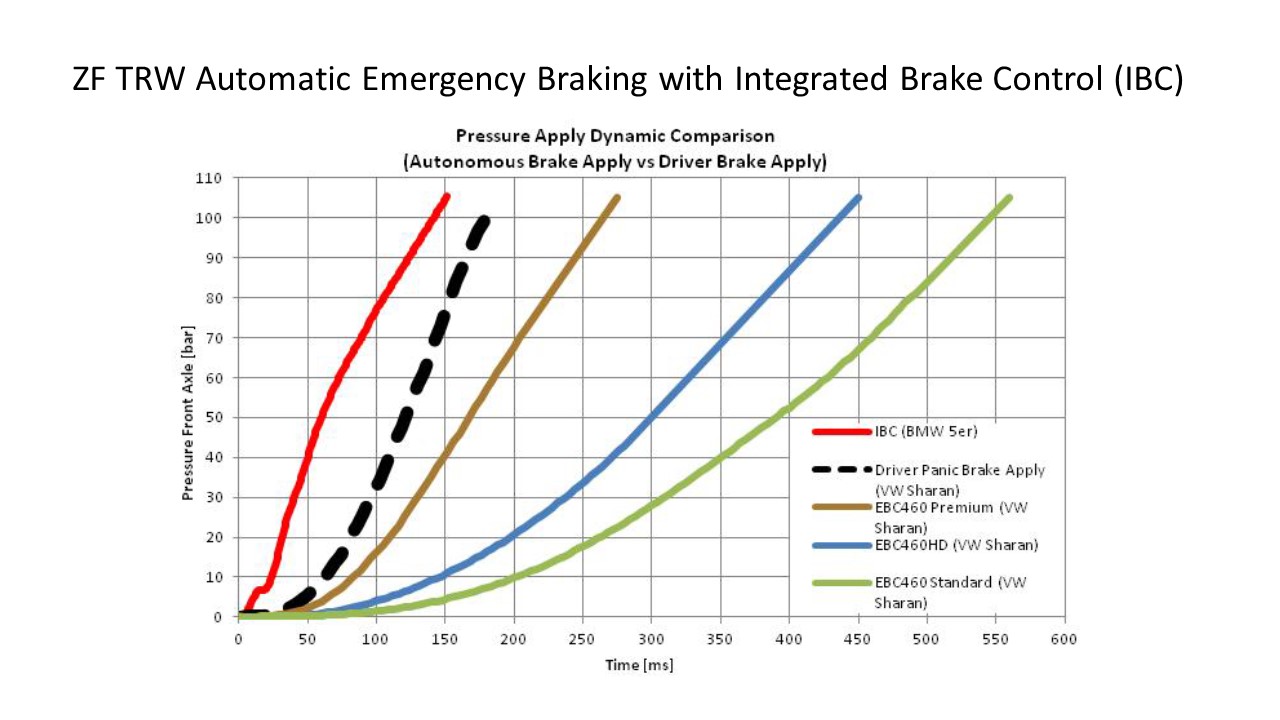 采埃孚天合的AEB系統已經進入原型開發的最后階段,該原型可搭配集成制動控制(IBC)裝置,其優點包括支持制動動能回收功能、無需真空環境(可促進CO2減排)、封裝體積更小、所需元件更少,以及質量更輕等。
 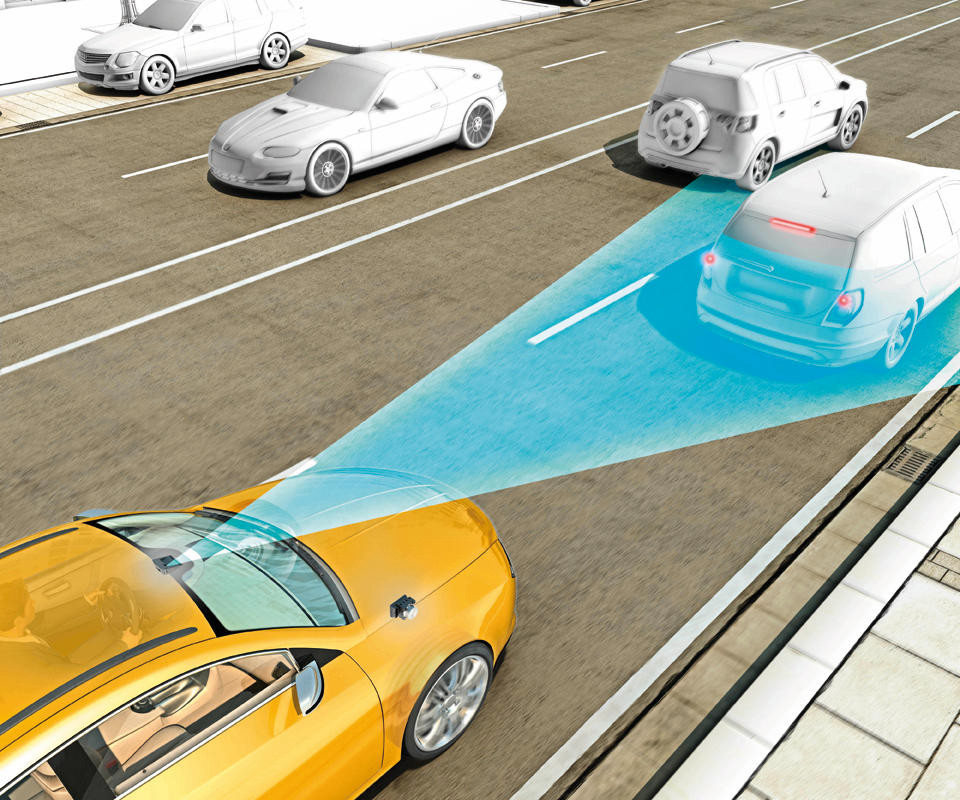 大陸集團的McConnell表示,對緊急制動系統進行調整,以方便各種車型采用該技術,“并不是無關緊要的工作。”