隨著北美汽車市場對啟停系統的接受程度日益增加,各家廠商開始考慮借助鋰離子電池、超級電容、48V“輕混”系統等一系列技術,應對相當車輛頻繁啟停,通常每天多達超過20次的工況。簡單來說,啟停系統的工作原理是通過減少發動機空轉,達到降低車輛燃料消耗和排放的目的。
即使是最不可撼動的鉛酸電池也開始進化了。如今,過去幾十年來最常用的傳統電池正逐漸被支持深度循環(deep-cycling)功能的增強型富液式蓄電池(Enhanced Flooded Battery,下簡稱EFB)和吸附式玻璃纖維隔板(Absorbent Glass Mat,下簡稱AGM)電池所取代。雖然電子元件的快速普及也是一個因素,但造成這一趨勢的關鍵原因還是在于啟停系統的崛起,而啟停系統會對電池的快充功能和使用壽命提出更高要求。
“一般而言,較大的12V AGM電池的使用壽命是傳統電池的4倍,這對汽車啟停系統目前的推廣非常重要。”通用汽車(GM)啟停系統全球總監Kathi Walker表示,“鋰離子電池的應用可在近期成為現實。”
雖然鋰離子電池可能終有一日會成大氣候,但目前由于其過于高昂的價格,并不適合用作車輛啟動、照明和打火供電的主要電源。不過,鋰離子電池仍然可以在動力系統之外發揮作用。
“如果要綜合考量性能與成本,鉛酸蓄電池和高級鉛酸電池仍是世界上最適合內燃機汽車的電源技術,而且這一情況在未來10年內不會改變。”全球最大的鉛酸蓄電池供應商江森自控(Johnson Controls)動力解決方案部高級市場&技術戰略師Craig Rigby表示,“這就是說,我們可以通過新增鋰離子電池等技術,提高鉛酸電池的燃料經濟性,以支持制動動能回收等更多的車內電動功能。”
目前,啟停系統正是驅動汽車電池領域轉型的主要推力。美國阿崗國家實驗室曾在2015年發布了一份研究報告,分析啟停系統對車輛啟動系統元件壽命的影響,其中也包括電池。研究顯示,傳統富液式鉛酸啟動器電池的使用壽命與很多因素有關,其中受車輛啟動次數的影響最小。事實上,真正影響電池使用壽命的因素,是發動機頻繁啟停時不能充分為蓄電池充電,以及發動機在停止狀態下的過度放電。由于放電深度的影響,每次發動機熄火時,車內輔助設備的耗電對電池使用壽命的影響最大,也最直接。如果電池可以在發動機兩次啟動之間充分充電,上述的耗電對電池的影響幾乎可以忽略不計,甚至可以認為根本就不會產生影響。
與此形成對比的是,阿崗國家實驗室的研究結果顯示,無論發動機的啟動次數如何,如果車輛的電池一直無法達到滿充狀態,電池就會更快發生故障。研究同時發現,由于交流發電機的功率輸出較低,發動機怠速時并不能為電池進行有效充電,而駕駛過程中的充電效果最佳。(詳見以下鏈接http://www.anl.gov/energy-systems/publication/stop-and-restart-effects-modern-vehicle-starting-system-components。)
對于電氣系統設計師而言,為頻繁重新啟動的發動機提供電力僅是需要面對的挑戰之一。為了讓消費者接受帶有啟停系統的車型,保證車內音響和照明功能處于恒定狀態非常重要,這就需要12V電池所扮演的“緩沖”角色。
“在啟動時,車輛的電系會經歷一次電壓驟降,從而導致車內照明變暗等狀況。”Walker表示,“為了保證車內照明等功能的穩定性,車輛可以采用多種技術,保護車內元件不受電壓驟降的影響,從而在車輛啟動過程中保證消費者的滿意度。這些技術包括雙電池設計、DC/DC轉換器和超級電容等。”
目前,市面上已經出現了多款采用雙電池系統的車型,這種設計可以支持車內大量的耗電功能與應用。由于如今的車輛不僅采用了很多復雜的節能技術,而且還應用了多種多樣的安全功能,這種雙電池的設計也將日益普遍。
舉例而言,2016款2.5L雪佛蘭邁銳寶的啟停系統正是采用了雙電池設計:一塊12V電池位于發動機蓋之下,另一塊則安裝在車尾。系統(為了加快啟動速度而搭配了一個串聯螺線圈啟動器)經過特別校準,當車輛內燃機停止工作時,第二塊電池可以接收信號立刻接管車內的輔助系統供電負載,比如照明、空調、音響、車窗和門鎖的功能。此外,即使發動機停止工作,車輛的空調此時仍然可以正常運行,只不過會轉換為低功率模式。
“雙電池系統可以在多個方面體現自己的價值,未來這種設計將越來越普遍,”Rigby表示,“兩塊電池可以在車輛的啟停過程中提供更穩定的電壓,還能為高級安全系統提供高級別的可靠性冗余。此外,這種雙電池、雙化學系統的設計也是性能和成本之間的最佳平衡,可以為汽車生產商和消費者提供最大的價值。”
通常來說,車輛的第二塊電池多為48V系統。系統的電壓更高,驅動停車攝像頭和整合式傳感器等功能就越容易。雖然48V系統優勢多多,但專家稱汽車行業未來可能仍會沿用12V系統。不過,起亞(Kia)公司曾在2016年芝加哥車展上發布了2017款Niro混動多功能車,這款CUV并未搭配12V鉛酸電池,而是直接通過48V鋰電池組為車輛頭燈、擋風窗雨刷等功能供電,而這些功能通常是由傳統的12V鉛酸電池支持的(見http://articles.sae.org/14614/)。
“更高的電壓可以降低系統的峰值電流。”德州儀器(Texas Instruments)商業發展經理Stefano Zanella表示,“電池對其在特定安培小時內釋放的容量和負載電流非常敏感,充分利用電池的這一特點,可以有效延長電池使用壽命、減少電纜尺寸,從而降低成本,并減輕重量。”
Zanella解釋說,48V系統必須搭配DC/DC轉換器或第二塊12V電池工作,這是由于目前的汽車采用了大量成本非常低的12V元件,汽車生產商一時很難將這些元件全部替換為48V元件。
除了48V系統,一些開發者還選擇使用超級電容為車輛的啟停系統供電。這些超級電容可以在發動機關閉期間提供電力,不會給電池造成任何負擔。
“由于超級電容在放電時并不涉及化學反應,因此放電速度非常快。”通用汽車的Walker表示,“2016款凱迪拉克ATS和CTS均采用了超級電容的設計,可以在車輛啟動時提供更快的能量提升。這種能量流可以加快發動機的啟動速度,有助于為駕駛員提供更加流暢的再啟動體驗。”
這種設計可以延長鉛酸電池的使用壽命。在凱迪拉克系統的設計過程中,通用公司與大陸集團(Continental)合作,采用了麥克斯威科技公司(Maxwell Technologies)的超級電容,有力補充了車輛的電池電源,但目前高性能版ATS-V和CTS-V尚未采用超級電容的設計。
“增加一個超級電容可以顯著降低電池的啟動電流,從而延緩電池化學材料的損耗。”麥克斯威高級產品營銷經理Jens Keiser表示,“此外,這種設計還能降低電池的峰值電流需求。”
作者:Terry Costlow
來源:SAE 《汽車工程雜志》
翻譯:SAE 上海辦公室
Powering up the new stop-start systems
As stop-start systems gain acceptance in North America, a range of technologies including lithium ion batteries, ultracapacitors, and 48-V "mild hybrid" systems are under consideration to handle the aggressive start cycles, typically more than 20 per day, that are required of these systems. Stop-start is aimed at reducing vehicle fuel consumption and emissions by reducing engine idling.
Even the venerable lead acid battery is evolving. Enhanced flooded batteries and absorbent glass mat (AGM) technologies with deep-cycling capability are slowly displacing batteries used for several decades. While the rapid expansion of electronics overall is a factor, a key reason is the rise of stop-start, which requires quick recharging and long lifetimes.
“Larger 12-volt AGM batteries, which deliver up to four times the typical life cycle of a conventional battery, are important to the current implementation of stop-start,” said Kathi Walker, GM Global Engineering Lead for Stop-Start Systems. “Lithium-ion batteries could be used in the near future.”
While Li-ion batteries may someday take over, they’re currently too expensive to displace the primary storage source for starting, lighting and ignition. However, Li-ion may expand beyond its role in electrified powertrains.
“Lead-acid and advanced lead-acid batteries continue to be the best technology for internal combustion vehicles in terms of performance and cost, and this will continue well into the next decade,” said Craig Rigby, Advanced Market & Technology Strategist at Johnson Controls Power Solutions, the largest global supplier of lead-acid batteries. “That said, fuel efficiency can be found by supplementing the lead-acid battery with other technologies such as Li-ion to deliver brake regeneration and support more electrified functions in the vehicle.”
At present, stop-start is the driving force for these changes. Research published in 2015 by Argonne National Laboratory examined the impact of stop-start systems on vehicle starter system component life, including the battery. The study revealed that the expected lifespan of a conventional flooded lead-acid starter battery is impacted minimally from the number of starting events. Rather, battery life is mostly impacted by limited charge times between frequent engine start events and from excessive discharge during engine-off events from accessory loads. The length of and the cumulative accessory power draw during each engine shutdown event has a direct and strong effect on battery longevity because of the depth of discharge. If the battery is returned to a full charge between engine starts, the effect on battery life is negligible or nonexistent.
Conversely, the ANL research showed that battery failure will occur more quickly if a full charge is never reached regardless of the number of engine start cycles. Also, idling was determined to not be an effective method of recharging the battery because of low alternator power output; driving is best. (See http://www.anl.gov/energy-systems/publication/stop-and-restart-effects-modern-vehicle-starting-system-components.)
Simply providing the power to regularly restart engines is just one challenge for electrical system designers. Keeping radios and interior lights at constant levels—a "buffering" role played by the 12V battery—is a critical factor for consumer acceptance of stop-start vehicles.
“During an auto start, there is a voltage dip in the vehicle’s electrical system,” Walker said. “In order to maintain functionality of cabin systems such as interior lights, there are technologies that can be added to a vehicle to protect the components against a voltage dip and maintain customer satisfaction during an auto start. These technologies include dual batteries, DC/DC converters and ultracapacitors.”
A handful of vehicles already use dual battery systems to support large numbers of power-hungry features and functions. It may become more common as more safety critical technologies are combined on vehicles that use complex fuel-saving techniques.
The 2016 Chevrolet Malibu 2.5-L's stop-start system, for example, uses two batteries: a 12-V battery under the hood and a second one mounted in the rear. The system (equipped with a tandem-solenoid starter for faster starts) is calibrated so that when the ICE shuts off, the second battery is signaled to handle the car's hotel loads—i.e., power the lights, climate control, audio, windows and door locks. Also, with the engine off the car's climate control remains on, albeit operating on reduced power.
“Dual battery systems will become more common as they provide value in several ways,” Rigby said. “Having two batteries provides better voltage stability during start-stop events as well as redundancy to support the high degree of reliability necessary with advanced safety systems. In addition, a dual battery, dual chemistry system allows the optimization of performance and cost to deliver the best value for automakers and consumers.”
Often, the second battery is a 48-V system. Engineering higher-voltage systems can make it simpler to power functions such as parking cameras and integrated sensors. Though going to 48V is beneficial, experts said the industry trend has been to retain the 12V systems. But at the 2016 Chicago auto show, Kia unveiled its 2017 Niro hybrid CUV, which uses its lithium battery pack to provide power for the headlights, windshield wipers, and other traditional tasks of the 12-V lead-acid battery, which has been eliminated (see http://articles.sae.org/14614/).
“Higher voltages help keeping the peak amperage down,” explained Stefano Zanella, Business Development Manager at Texas Instruments. “Batteries are sensitive to the ratio of their capacity expressed in amp hours and the load current, increasing their lifetime and reducing cable size, making them cheaper and lighter."
A 48V rail will require a DC/DC converter or a second 12V battery, he explained, because there are just too many 12V components in a car that are very cheap and cannot be effectively replaced by 48V components.
Some developers are turning to ultracapacitors to provide quick boosts for stop-start systems. They can provide power to turn the engine over without straining the battery.
“Since ultracapacitors do not rely on a chemical reaction to supply their energy, ultracapacitors can discharge their stored energy very quickly,” GM's Walker said. “The 2016 Cadillac ATS and CTS take advantage of ultracapacitors to provide a quick energy boost during the auto start. This burst of energy allows the engine to start faster and helps in providing a more seamless restart for the driver.”
This design technique can extend the lifetimes of lead acid batteries. The Cadillac system, co-developed with Continental, uses Maxwell Technologies ultracaps to augment battery power. It is not available on the ATS-V and CTS-V performance versions.
“Adding an ultracapacitor lets the battery deliver significantly lower starting currents, which leads to less degradation of the battery chemistry,” said Jens Keiser, Maxwell's senior product marketing manager. “Also, the battery sees fewer high-current peak demands.”
Author: Terry Costlow
Source: SAE Automotive Engineering
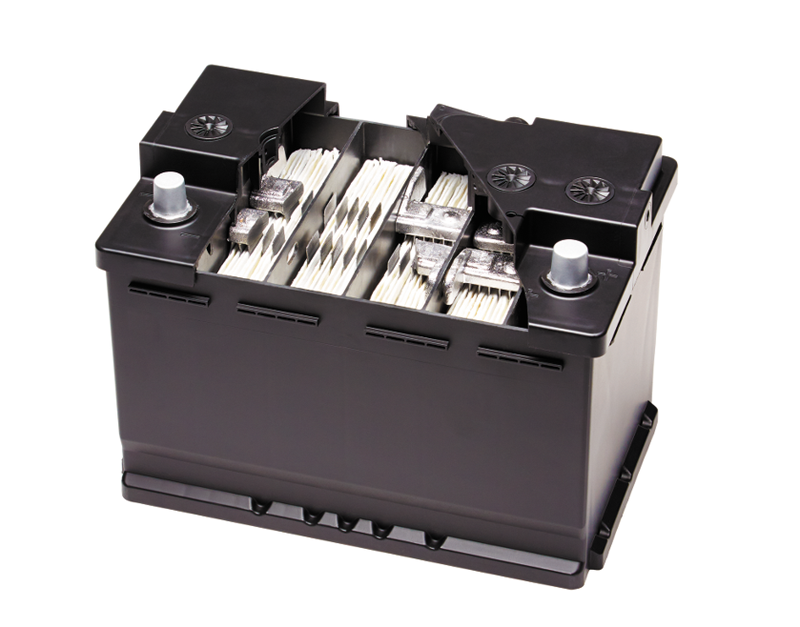 江森自控正在不斷提高AGM電池的產量,以滿足北美市場對啟停系統的需求。
 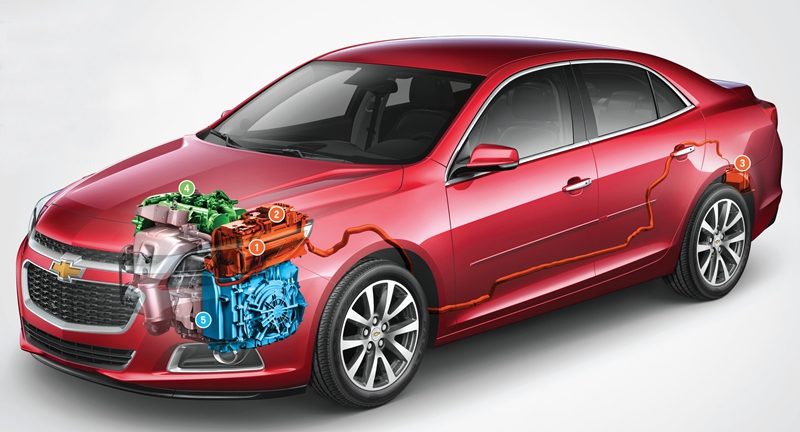 基礎款2.5L邁銳寶啟停系統的示意圖,其中1代表12V AGM主電池;2代表雙電池隔離模塊;3代表為了保證車輛配重平衡而安裝在車尾的12V AGM輔助電池。