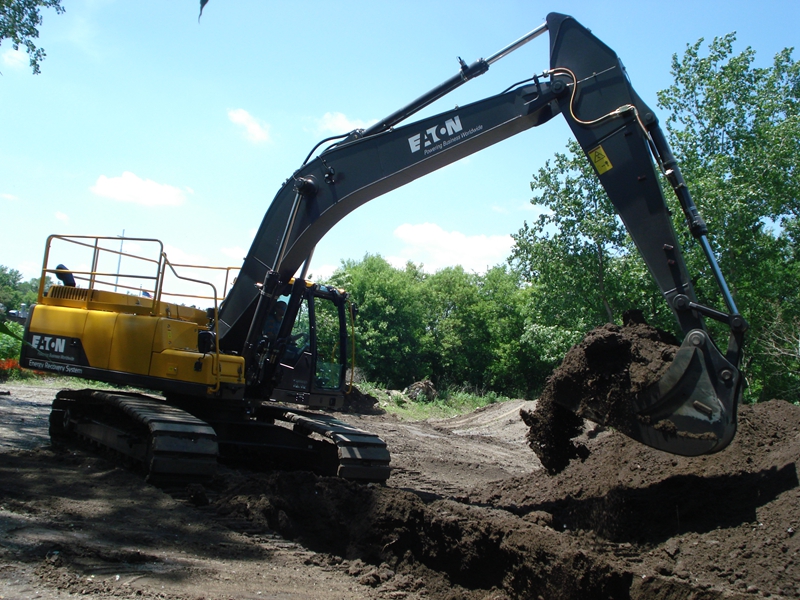
車輛動力系統的電氣化技術,在包括巴士和小型車輛在內的很多領域都實現了成績不俗的商業應用。但在其他一些領域,電動系統還不夠成功。混合動力技術本是一種相當經濟的解決方案,但目前低廉的油價,使這項技術的推廣變得比較困難。
與一些大型工程機械或農機設備相比,多數電動非公路設備都相對較小,其功率需求也不高,因而更適合采用混合動力系統。
“在非公路設備領域,純電動模式好像是小型機械的專利,只適用于那些功率不到19kW的設備。”FEV North America公司動力系統總監Kiran Govindswamy表示,“而混合動力技術則支持多種不同模式,比如微混(Micro)、輕混(Mild)和全混(Full)等,因此應用最為廣泛。究其根本原因,主要是加裝電池的成本較高,且電池充電所需的停工等待時間也較長。”
在任何領域內,電動系統都必須面對液壓混合動力系統的挑戰。與液壓元件相比,電池組所占的空間更大。雖然混合動力車的確推動了電池領域的發展,但多數廠商還是更傾向于使用“久經沙場”的液壓混動系統,而非選擇對現有產品線進行大規模改造。
“加裝電動架構,會增加設備的生產成本和復雜度。”卡特彼勒(Caterpillar)高級元件與系統部首席工程師、液壓專家Randy Peterson認為,“液壓混合動力系統與電動系統的功率密度比大約仍在10:1左右,這會給電動系統的安裝增加一定的挑戰。”
此外,很多應用需要快速輸出大量功率,而電機很難做到這一點。在很多情況下,電動系統中的電池充放電速度有限,也會阻礙這種系統的推廣。
“隨著電池技術的不斷進步,其能源儲存與使用的能力也愈加出色,”伊頓(Eaton)旗下Hydraulics Group的技術研發總監Steve Zumbusch表示,“如果能量消耗速度(功率)過高,那電池的快速充放電就成了一項必須達到的目標。而與此相比,液壓混動系統卻有非常明顯的優勢,比如說,其蓄電池可以極為快速地進行充放電,并提供非常高的功率。”
不過,雖然當下的電池功率仍有局限,但未來也頗具發展的潛力。汽車領域的取得的進展可以降低整個系統的成本,而且誰也無法保證,全球油價將一直保持低位。此外,未來可能出臺的法規政策,也會提起人們對混合動力系統的興趣。
“短期來看,低廉的油價會使電動系統的投資回收更慢,”Govindswamy表示,“目前除了挖掘機,其他電動系統的投資回報速度都并不理想。不過,由于加裝混合動力系統的成本已經大幅降低,而且目前油價也略有抬頭的跡象,混合動力系統的投資回報期將更加趨于合理。”
作者:Terry Costlow
來源:SAE《非公路工程》雜志
翻譯:SAE上海辦公室
Electrified off-highway powertrains search for marketing power
Electrified powertrains have seen success in commercial applications like buses and small vehicles, but in many fields, they’ve seen only limited success. Today’s low fuel prices are not helping marketers expand the niches where hybrids provide a cost-effective solution.
Most electric off-highway vehicles are relatively small vehicles that have small power requirements compared to some construction and agriculture behemoths. Hybrids fit more use cases.
“For non-road mobile machinery applications, a pure electric mode of operation is only relevant for small machines, less than 19 kW,” said Kiran Govindswamy, Powertrain Director at FEV North America. “Only hybrid concepts, from micro to mild and full hybrids, are considered to be feasible for most applications. This is fundamentally driven by high add-on costs for batteries as well as time needed for recharging the batteries.”
In all vehicle classes, electrified powertrains face competition from hydraulic hybrids. Battery packs take a fair amount of space compared to hydraulic components. Automotive hybrids are driving advances in batteries, but many developers feel it’s easier to use battle-tested hydraulics than to revamp systems on existing product lines.
“Adding an electric power architecture adds cost and complexity that the base machine doesn't normally have,” said Randy Peterson, Chief Engineer, Hydraulics, at Caterpillar Advanced Components & Systems Division. “The power density (size) advantage for hydraulics over electrics is still in the neighborhood of 10:1 or more, making packaging electrics a challenge.”
Many usage models require quick bursts of power that can be difficult to provide with electric motors. Battery discharge and charging rates can work against electrics in many environments.
“As battery technology continues to improve, the ability to store and use energy becomes much more attractive,” said Steve Zumbusch, Technology Development Director for Eaton’s Hydraulics Group. “If the rate of energy consumption (power) becomes high, then the battery technology becomes challenged with being able to rapidly store and discharge energy fast enough to be effective. Hydraulics on the other hand, have a very distinct advantage in using technologies such as accumulators that can be charged and discharged extremely fast, providing very high power levels.”
Though battery power has limits, its role may still expand. Advances in automotive are driving down overall system costs, and there’s no guarantee that global oil prices will remain low. Potential regulatory restrictions are also prompting a lot of research into hybrids.
“The low cost of fuel has negatively influenced the payback period,” Govindswamy said. “With the exception of large excavators, electrified powertrain payback times currently remain rather poor. Considering significantly reduced hybrid add-on costs as well as a slight increase in fuel price, hybridization with reasonable payback periods are expected to become feasible in the future.”
Author: Terry Costlow
Source: SAE Off-Highway Engineering Magazine