十一月初,普惠公司為其第四大飛機制造商客戶——巴西航空工業公司(Embraer)的E190-E2和E195-E2飛機設計的PW1900G靜潔動力齒輪傳動式渦扇(GTF)發動機開始進行飛機測試項目,并順利完成了首飛任務。也有其他公司選擇使用PW1000G靜潔動力發動機,包括龐巴迪公司(Bombardier)、三菱公司(Mitsubishi)、伊爾庫特公司(Irkut)和空客(Airbus)。
普惠公司和巴西航空工業公司正在合作進行兩個項目,E-Jet E2項目是其中之一。普惠公司參與協作,為巴西工業航空公司的KC-390運輸機提供V2500-E5發動機,目前該項目正在進行認證活動。普惠也為E-Jet E2項目提供輔助動力裝置。
五大飛機制造商選擇使用GTF發動機,原因之一是該技術據稱能夠降低商用飛機的油耗和二氧化碳排量超過16%,減少受法規限制的排放超過50%。普惠表示,該發動機降低的二氧化碳排量相當于每年種植約100萬棵樹或者停駛300萬輛轎車。同時,該發動機也能將飛機的噪音足跡縮小75%以上。
總體而言,靜潔動力發動機家族已完成23,000小時以上的測試和40,000個測試循環。近期,在日內瓦舉行的全球可持續航空峰會上,航空運輸行動組織(ATGA)將GTF發動機列入《航空業應對氣候變化案例集》(Aviation Climate Solutions),這也體現出該發動機對航空業的影響。
《航空業應對氣候變化案例集》是一項航空業的協作項目,旨在降低二氧化碳排放,并幫助減輕航空業對于氣候變化的影響。迄今該項目已有100個案例,普惠的PW1900G是其中之一。在日內瓦峰會期間,一封由航空業數位首席執行官署名的公開信也得以發布,重申了航空業對于采取行動應對氣候變化的承諾,同時吁請各國政府支持為航空業減排制定統一的全球市場措施,提高航空運輸管理效率,加快可替代燃料和新技術的研發進展。
“航空運輸在世界經濟中扮演著重要角色,是密切人員與商業交流的橋梁,”ATAG的執行董事Michael Gill表示。“航空業同時也在應對氣候變化的行動中發揮著領導作用,目前已制定全面的框架體系和目標來減少由航空運輸產生的排放。《航空業應對氣候變化案例集》通過一系列案例研究,展示了包括普惠公司在內的全球航空業各界同仁,共同為減輕本行業對氣候變化的影響所做的努力。”
2008年,航空業成為首個制定全球目標以積極應對氣候變化影響的行業。通過推行碳中立發展理念,航空業將在2020年穩定其二氧化碳凈排放量,即在持續增加航空運輸量滿足社會經濟發展需求的同時,通過統一的全球市場措施來抵消全行業的碳排放量增長。長期目標是,到2050年將航空運輸業的二氧化碳凈排放量減至2005年的一半。
“靜潔動力GTF發動機為未來可持續的航空業帶來了巨大價值,” 普惠公司技術與環境副總裁Alan Epstein博士表示。“它的發展激勵了商用飛機制造商掀起新一輪的創新。”
作者:Jean L. Broge
來源:SAE《航空工程雜志》
翻譯:SAE上海辦公室
Pratt & Whitney's PW1900G engine takes off
In early November, Pratt & Whitney's PW1900G PurePower Geared Turbofan (GTF) engine for the Embraer E190-E2 and E195-E2 aircraft, successfully completed its first flight, initiating the engine's flight test program for Embraer, PurePower's fourth airframer customer. Also on the PW1000G PurePower dance card isBombardier, Mitsbushi, Irkut, and Airbus.
The E-Jet E2 program is one of two that Pratt & Whitney and Embraer are working together on. Pratt & Whitney is part of the collaboration that supplies the V2500-E5 engine for the Embraer KC-390, which is going through its certification campaign. Pratt & Whitney also supplies the auxiliary power unit for the E-Jet E2 program.
Just some of the reasons why five airframers have chosen the GTF engine is that the technology is said to reduce commercial aircraft fuel burn and carbon dioxide emissions by more than 16% and reduce regulated emissions by more than 50%. P&W claims that the engine will reduce CO2 emissions at a level equivalent to planting nearly 1 million trees or removing 3 million cars off the road—every year. Also, the engine reduces the aircraft noise footprint by more than 75%.
Overall, the PurePower engine family has completed more than 23,000 hours of testing and 40,000 cycles, and its impact in the industry is reflected by the GTF engine recently being cited as an Aviation Climate Solution by the Air Transport Action Group (ATAG) at the Global Sustainable Aviation Summit in Geneva.
Aviation Climate Solutions is a collaboration within the aviation industry that has identified 100 examples, P&W's PW1900G being one such example, to cut carbon dioxide emissions and help reduce aviation's impact on climate change. During the Summit, an open letter from industry chief executives was released that reaffirmed the industry's commitment to climate action and called on governments to support it with the development of a global market-based measure for aviation emissions, improving efficiency in air traffic management, and accelerating research for alternative fuels and new technology.
"Aviation plays a vital role in the world economy, providing connectivity for people and business," said Michael Gill, Executive Director, ATAG. "Our industry has also taken a lead in climate action, putting in place a comprehensive framework and goals to reduce emissions from air transport. The Aviation Climate Solutions are a set of case studies showing how different parts of the industry all over the world, including Pratt & Whitney are working to reduce our climate impact."
In 2008, the aviation sector became the first to set global goals to proactively manage its climate change impact. The industry will stabilize its net CO2 emissions from 2020 through a concept called carbon-neutral growth, whereby traffic would continue to rise to meet social and economic demands, but growth would be offset through a global market-based measure. The longer-term goal is to reduce net CO2emissions from aviation to half of what they were in 2005, by 2050.
"The PurePower GTF engine provides immense value to the future of sustainable aviation," said Dr. Alan Epstein, Pratt & Whitney's Vice President, Technology and Environment. "Its development spurred a new period of innovation among commercial aircraft manufacturers."
Author: Jean L. Broge
Source: SAE Aerospace Engineering Magazine

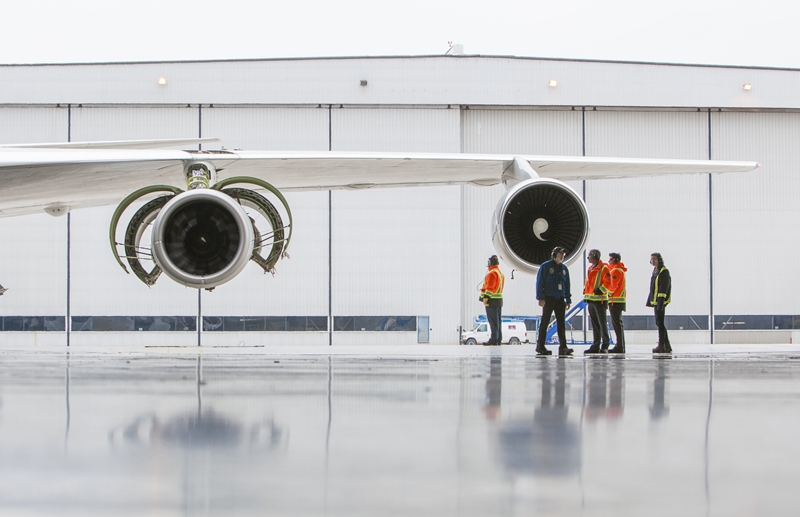 魁北克米拉貝爾飛機測試中心(Mirabel Flight Test Center)的員工正在檢查靜潔動力齒輪傳動式渦扇PW1900G發動機(圖左),該發動機將為巴西航空工業公司的E190-E2和E195-E2飛機提供動力,工作人員正在為普惠747SP測試平臺的首次飛行做地面啟動準備。
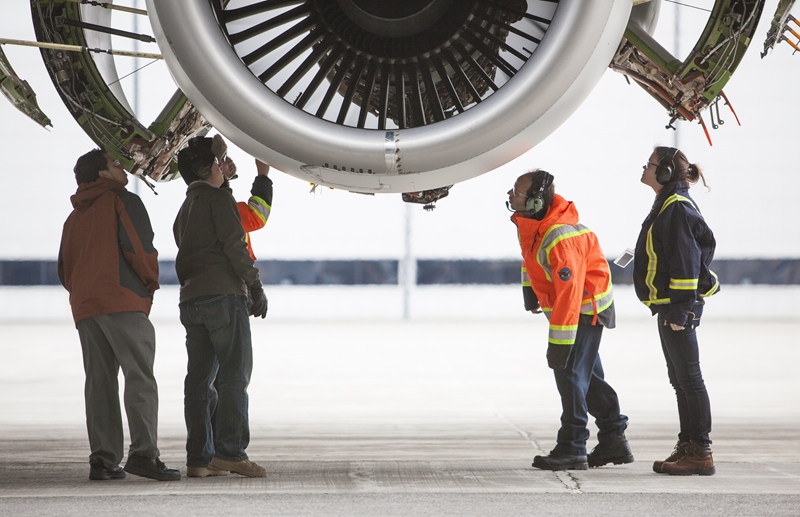 靜潔動力PW1900G發動機專為巴西航空工業公司的E190-E2和E195-E2飛機設計。該發動機正在接受檢查,并準備進行普惠747SP測試平臺的首次飛行。
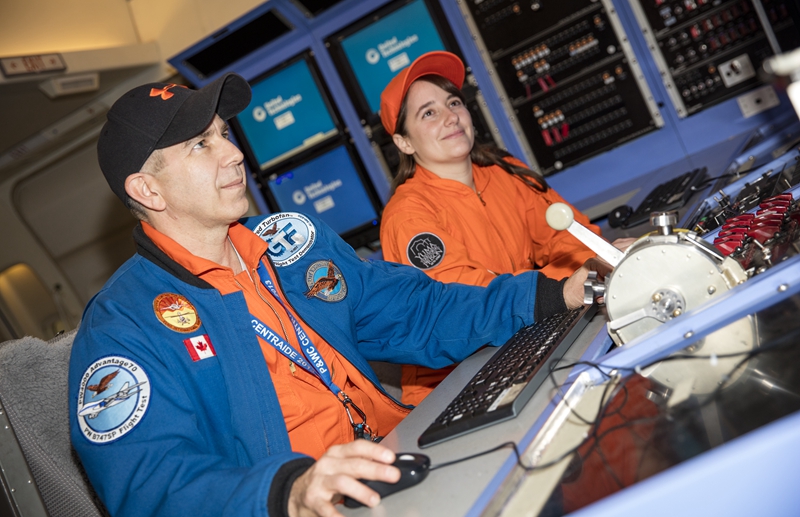 Kevin Ryan和Amanda Varrichio是飛機測試團隊的分析師,他們正在檢查來自普惠747SP飛行測試平臺的飛機數據,平臺位于魁北克的米拉貝爾飛機測試中心。團隊已開始測試靜潔動力PW1900G發動機,該發動機將為巴西航空工業公司的E190-E2和E195-E2飛機提供動力。
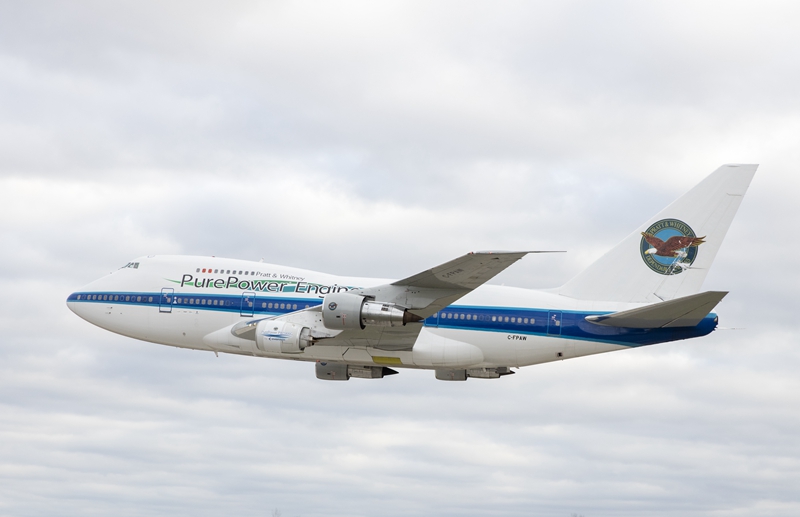 11月2日,靜潔動力齒輪傳動式渦扇PW1900G發動機開始測試首飛,地點在魁北克的米拉貝爾飛機測試中心。PW1900G發動機將為巴西航空工業公司的E190-E2和E195-E2飛機提供動力。