啟停系統在歐洲已非常成功,但著重于美國市場的研發團隊仍致力于達到最佳燃油效率和舒適性。在消費者滿意度評級方面,順暢的再啟動和對調頻廣播音量的影響也位列最大挑戰之中。
啟停系統在歐洲和日本的應用已十分普遍,但北美市場的接受度仍然有限。由于油價較低,4-10%的燃油節約量并非很有吸引力,并且啟停系統的噪聲較大,重啟時有抖動現象,也影響了其推廣。但隨著法規的落實,以及系統越來越精密,這些情況可能會有所改變。
“系統使用率比2007-08年的預測值低很多,但隨著燃油使用效率標準(CAFE)的制定,使用率應該會快速提升,”IHS汽車動力系統預測總監Devin Lindsay表示。“系統已經降低發動機運行的噪聲和抖動感了,今后很多系統會設計一個按鈕,駕駛員可以選擇關閉這個功能。”
美國的汽車制造商正在努力為消費者提供更多選擇。啟停系統將成為通用汽車多款2016凱迪拉克車型的標配。客戶知識普及和技術進步將成為影響啟停系統發展的兩個非常重要的因素。
“啟停技術發展的最大難題就是進行客戶知識普及,我們需要讓客戶了解系統的工作方式,這樣他們才會更認可這種技術,”通用汽車啟停系統全球工程主管Kathi Walker表示。“從設計的角度來說,保持整個汽車平臺的快速、無縫的自動啟動是非常有挑戰性的。”
通用汽車使用了大陸公司(Continental Automotive Systems)的電壓穩定系統,該系統配置了麥克斯威科技公司(Maxwell Technologies)的超級電容器,有助于穩定電流,并在啟動器開始發動時保證廣播和空調正常運行。此外,超級電容器也可以減輕發動機的振動,使重啟更加順暢,并且可以降低影響電池壽命的重復循環次數。
超級電容器也有助于通用汽車達到一系列低溫環境的技術要求。相關部件配有等效串聯電阻(ESR),因此車輛的冬季操作性能得以優化。
“在低溫環境中,電池的ESR有所增高,因此啟動器所需的啟動功率低于正常重啟操作的要求,” Maxwell高級產品營銷經理Jens Keiser表示。“超級電容器的ESR在-40攝氏度以上的環境中都很穩定。”
不論在何種溫度環境中,發動機啟動時,電壓通常會下降到4-6 V左右。一些對電壓、電流有較高要求的系統會受此影響,比如娛樂信息節目系統,與其他數字裝置不同,該系統的很多部件不能在3.3 V或1.8 V的低壓環境中運行。
“比較棘手的領域之一是音頻系統,”意法半導體公司(STMicroelectronics)市場研發部的首席工程師Bill Cleaver表示。“音頻系統的很多敏感模擬部件需要在5V的電壓環境中操作,比如AM/FM調諧器和功率放大器,這些部件有固定阻坑,需要用高電壓維持聲級。如果音樂太響,音量會下降,除非功率系統中有增壓支持裝置。”
為了解決這些問題,通用公司將超級電容器裝配到凱迪拉克系統中,有助于減小電池尺寸,并降低重量。
“車輛啟動時,能量需求是很低的,但功率需求卻非常高,所以必須增加電池尺寸,以便滿足這些高功率要求,” Keiser表示。“通過添加超級電容器滿足高功率要求,可以減小電池尺寸,并著重滿足能量需求。超級電容器的功率密度約為常規鉛酸蓄電池的六到十倍。”
最大的挑戰來自主流的美國市場,也就是自動檔的內燃機車型。我們需要確保在這種車型上系統可以順暢地順暢,并且要保證合理的成本。
“所有混合動力車都有控制元件,所以很容易實現系統順暢運行,” 意法半導體公司汽車產品部(APG)MCU營銷高級總監Roger Forchhammer表示。“但如果不是混合動力車,成本會劇增。”
許多電池制造商正在竭力實現穩健增長。在城市,車輛在行駛中重啟發動機的情況,要求電池壽命更長,充電速度更快。據預計,在配有啟停系統的車輛中,吸附式玻璃纖維隔板電池(AGM)和增強型富液式電池(EFB)技術的應用將穩健增長。
“我們預計,到2020年,啟停系統將覆蓋40%的新車,江森自控(Johnson Controls Power Solutions)的高級市場技術策略師Craig Rigby表示。“主流汽車制造商紛紛表示要大力發展啟停系統,并將其作為新的動力傳動基本策略。我們已經開始努力擴大AGM和EFB電池的容量,以便滿足日益增長的需求。”
作者:Terry Costlow
來源:SAE《汽車工程雜志》
翻譯:SAE上海辦公室
Can turning off the engine turn customers on?
Stop-start systems have seen success in Europe, but development teams focused on the U.S. market are still working to get the right combination of fuel efficiency and comfort. Smooth restarts and radio volume are among for biggest challenges for garnering desired customer satisfaction ratings.
Stop-start is common in Europe and Japan, but acceptance in North America has been limited. The 4-10% fuel savings hasn’t been a big lure given fairly low fuel prices and noticeable noise and shuddering during restarts. That may change as regulations take hold and systems become more sophisticated.
“Adoption has been much slower than people anticipated back in 2007-08, but it should go forward quicker because of the CAFE credits available,” said Devin Lindsay, Powertrain Forecasting Director at IHS Automotive. “Systems have reduced the feeling when the engine engages, and many will have a button that lets the driver turn the function off.”
U.S. carmakers are increasing their offerings. General Motors is making stop-start a standard feature on many 2016 Cadillac models. Customer education and technology are both critical factors in the future of the technology.
“The most challenging part of the stop-start technology is educating the customers so they understand how the system works and they become more accepting/comfortable with the technology,” said Kathi Walker, GM Global Engineering Lead for Stop/Start Systems. “From a design perspective, repeatability of quick and seamless auto starts across vehicle platforms is very challenging.”
GM uses Continental Automotive Systems’ voltage stabilization system, which employs Maxwell Technologies’ ultracapacitors. The ultracapacitor helps maintain current to keep radios and air conditioners running when the starter is cranking. It also lessens engine vibration to smooth out restarts while reducing repeated cycling that can shorten battery life.
The ultracapacitor also helps GM meet requirements in cold environments. These components have equivalent series resistance (ESR) capabilities that give them better winter performance.
“In cold temperatures, the battery ESR is increasing and therefore, cranking power for the starter is below what is required for a reliable restart,” said Jens Keiser, Senior Product Marketing Manager at Maxwell. “The ESR of ultracapacitors is stable until -40 degrees Celsius.”
Regardless of the temperature, voltage levels often fall to around 4-6 V when the engine is started. That can impact systems that have higher voltage and current requirements such as infotainment, where some components don’t have the low 3.3 or 1.8 V levels of many digital devices.
“One of the trickiest areas is the audio system,” said Bill Cleaver, Principal Engineer, Market Development at STMicroelectronics. “A lot of sensitive analog parts in the audio systems operate at 5V—things like the AM-FM tuner and power amps, which have a fixed impedance so they need higher voltages to maintain sound levels. If music is loud, volume will be reduced unless you have boost support built into the power system.”
Concerns like these prompted GM to include ultracapacitors in the Cadillac system. That helps reduce battery size and weight.
“The energy demand of a cranking event is very low, but the power demand is very high, therefore the battery has to be oversized to meet these high power requirements,” Keiser said. “By adding an ultracapacitor to address the high power requirements, the battery can be downsized and focus on the energy demands. Ultracapacitors have approximately six to 10 times the power density of the typical lead-acid battery.”
The challenges are greatest in the mainstream of the U.S. market: internal combustion engines with automatic transmissions. The systems needed to ensure that restarts occur smoothly are a fair cost-adder.
“Any hybrid vehicle has the controls, so it’s easy to keep everything running,” said Roger Forchhammer, Senior Manager, Automotive Product Group (APG) MCU Marketing at STMicroelectronics. “If it’s not a hybrid, there’s a significant cost bump.”
Some battery makers are ramping up for solid growth. Restarting engines during city driving will require longer lifetimes and quicker recharging. Absorbent glass mat and enhanced flooded battery technologies are expected to see solid growth in vehicles with stop-start.
We expect it to reach 40% of new vehicle production by 2020,” said Craig Rigby, Advanced Market & Technology Strategist at Johnson Controls Power Solutions. “All the major automakers have indicated the move to start-stop as the new baseline powertrain strategy. We have already committed to expanding the capacity for AGM and EFB batteries to meet the increasing demand.”
Author: Terry Costlow
Source: SAE Automotive Engineering Magazine
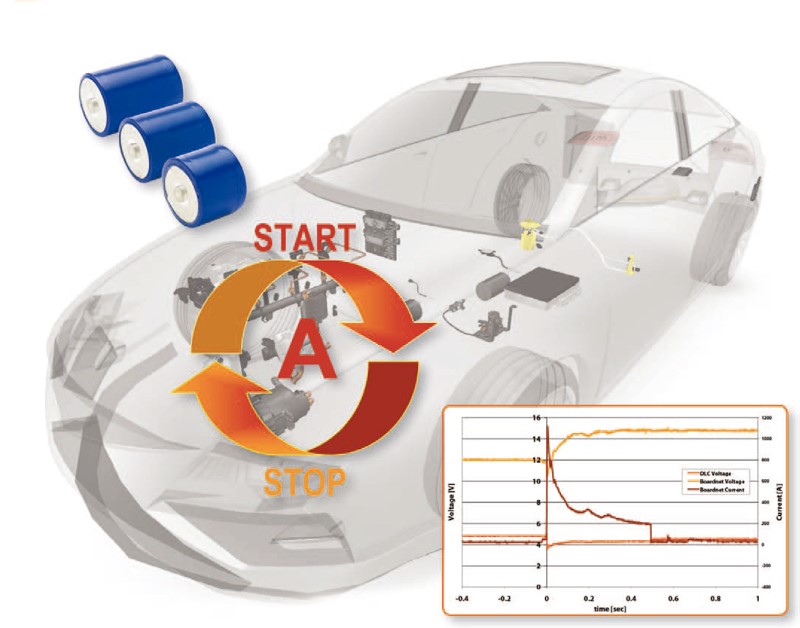 Maxwell的超級電容器有助于通用汽車和其他整車商設計啟停系統,可實現順暢啟動,而無需降低廣播音量。