開發商不斷為高級駕駛員輔助系統(ADAS)增添新功能,提升精密性,因此該系統變得越來越復雜。Elektrobit、英偉達(Nvidia)和英飛凌(Infineon Technologies)也為此攜手合作,致力于提供ADAS解決方案,作為自動駕駛技術的研發平臺。該方案整合了英偉達的Drive PX自動駕駛計算機,英飛凌的AURIX 32位TriCore,以及Elektrobit的符合AUTOSAR 4.x標準的 EB tresos軟件套裝。
英偉達的Drive PX可以分析并整合高清攝像頭和傳感器的輸入數據,英飛凌的Aurix實時處理器能夠提升內置安全性;Elektrobit的tresos軟件有助于整合Linux系統和AUTOSAR應用,并保證多CPU通信在高安全高完整性的環境中進行。解決方案順應了許多行業發展趨勢,包括功能性安全、計算能力提升、多用途通信、和冗余設計。
“我們的軟件運行載體是一塊裝有2片英偉達Tegra芯片和1片英飛凌Aurix TriCore芯片的電路板,”EB自動駕駛項目總監Karsten Hoffmeister表示。“電路板配有CAN、LIN、以太網和FlexRay通信通道,而且還設計了冗余以太網連接路徑。如果某條線路出現故障,其他線路可以保證軟件正常運行。”
這種一塊電路板集成多處理器的方法說明,單電子控制單元(ECU)是未來的發展趨勢,這種做法可以分析多渠道輸入信息,以便做出駕駛決策。減少ECU的數量,提升其性能的做法也可以簡化系統架構,并降低成本。工程師們正在努力減少控制器,但同時也在增加后備系統,以保證安全系統不會因為某一個元件的故障而全面崩潰。
“從系統層面來說,只用單個ECU是不可能的,還需要冗余系統,”Hoffmeister表示。“目前,容易出現單點故障的還是電源供應器。我們今后會采用雙電源供應器。”
ADAS系統越來越精密復雜,這也促進了AUTOSAR的使用。設計團隊可以用軟件模塊處理低級別任務,這樣他們可以集中精力研發高級別操作。
“對于非基于信息娛樂系統的部件研發來說,例如剎車裝置、方向盤、和發動機控制元件,AUTOSAR的確是標準架構,”Hoffmeister表示,“有了AUTOSAR,就無需人力重復配置CAN堆棧了,而且界面也非常穩定。但整車廠各有偏好,特別是在診斷和升級方面。”
Hoffmeister指出,標準應用仍任重而道遠。
“AUTOSAR很復雜。我們對它進行了一些預先設置,運行變的非常簡易。這樣用戶就不用花時間配置了,”他說。“AUTOSAR仍然是為專業人士設計的,使用者應該認真了解它的操作原理。”
越來越多的整車廠和一級供應商開始使用AUTOSAR生產車輛,Linux的地位可能會有所變化。Elektrobit的軟件套裝也包括Linux,但現階段而言,它的功能很大程度上局限于設計和測試領域。
“Linux非常適合研發活動,有很多現成的資源可以使用,”Hoffmeister表示。“在最初的研發階段,可以先在電腦上用Linux;進入量產階段后,根據效果,可以僅在特定部件中使用。”
以太網的整合說明,整個產業正在越來越多地采用商業化技術。網絡的傳輸速率更快,靈活性更高。
“很多整車廠已開始使用以太網,因為帶寬更大,”Hoffmeister表示,“攝像頭可以傳送以太網幀,這更利于數據處理。此外,如果你提供了一項服務,之后想做出改變,也可以動態分配服務和調整服務質量。”
作者:Terry Costlow
來源:SAE《汽車工程雜志》
翻譯:SAE 上海辦公室
Elektrobit, Nvidia, and Infineon team up to tackle safety systems
Advanced driver assistance systems (ADASs) are becoming increasingly complex as developers add capabilities and enhance sophistication. That’s prompted Elektrobit,Nvidia, and Infineon Technologies to team up and offer an ADAS solution that can serve as a development platform for autonomous driving. The solution consists of the Nvidia Drive PX self-driving computer, Infineon’s AURIX 32-bit TriCore, and Elektrobit’s AUTOSAR 4.x-compliant EB tresos software suite.
Nvidia Drive PX makes it possible to analyze and combine multiple HD camera and sensor inputs, while the Aurix real-time processor has enhanced embedded safety and security features. Elektrobit’s tresos software facilitates the integration of Linux and AUTOSAR applications and enables cross-CPU-communication at high safety integrity levels. The companies are addressing many trends, including functional safety, increased computing power, versatile communications, and redundancy.
“Our software runs on a board with two Nvidia Tegra chips and an Infineon Aurix TriCore chip,” said Karsten Hoffmeister, Director of EB’s autonomous initiatives. “The board has CAN, LIN, Ethernet, and FlexRay communications channels, with redundant Ethernet connection paths so if something goes wrong the other channel will be available.”
Combining multiple processors on a board highlights the drive towards a single electronic control unit (ECU) that analyzes many inputs so it can make driving decisions. Using fewer, more powerful ECUs will also simplify architectures and reduce costs. While engineers attempt to trim the number of controllers, they’re also adding backups to ensure that safety systems don’t break down because a single element fails.
“At the system level, you’re not able to use one single ECU. You need redundancy,” Hoffmeister said. “Right now, the single point of failure is still the power supply. In the future, we’ll see two power supplies.”
The increasing complexity of ADAS is also prompting greater use of AUTOSAR. It lets design teams use software modules for common low-level tasks so they can focus on high-level operations.
“AUTOSAR is really the standard architecture for developing non-infotainment-based parts of the vehicle like brakes, steering, and engine control,” Hoffmeister said. “Instead of having people configure the CAN stack again and again, we’ve done it. With AUTOSAR, the interface will be stable, though all the OEMs have their own flavor, especially in diagnostics and updating.”
Hoffmeister noted that using the standard still requires a fair amount of effort.
“AUTOSAR is complex. We have predefined a lot so it runs easily. They don’t have to spend weeks,” he said. “AUTOSAR is still really for specialists; people using it should really take care to understand it.”
While more OEMs and Tier 1s are using AUTOSAR in production vehicles, Linux is another story. It’s included in Elektrobit’s software suite, but at present, its role will be largely limited to design and testing.
“Linux is very good for development, there are lots of libraries out there,” Hoffmeister said. “You can start out using Linux on a PC; then when you go to mass production you can reduce Linux to certain parts where it works.”
The inclusion of Ethernet also highlights the industry’s growing adoption of commercial technologies. The network permits faster transfer rates and more flexibility.
“Many OEMs are moving to Ethernet for bandwidth,” Hoffmeister said. “Cameras can send Ethernet frames, and it’s good for data. Also, if you offer a service and want to change it later, you have dynamic allocation of services and quality of service.”
Author: Terry Costlow
Source: SAE Automotive Engineering Magazine
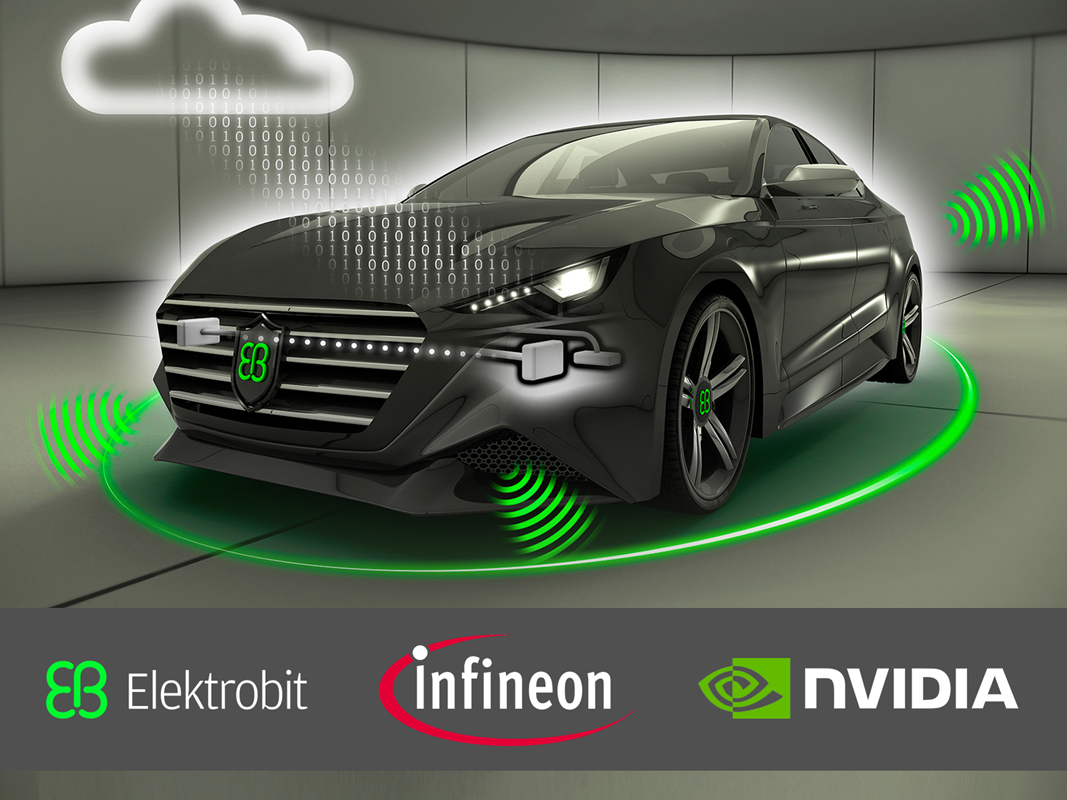 Elektrobit,英偉達和英飛凌正在幫助開發商優化ADAS設計。