發(fā)動(dòng)機(jī)的輕量化有時(shí)會(huì)帶來(lái)一些問(wèn)題,包括低速狀態(tài)下扭矩明顯不足, 以及瞬態(tài)響應(yīng)速度較慢等等。即便應(yīng)用了敏感度較高的渦輪增壓技術(shù),仍然無(wú)法解決這些問(wèn)題。目前Torotrak與巴斯大學(xué)正在研發(fā)一種可能成功的解決方案——可變驅(qū)動(dòng)增壓技術(shù)。在英國(guó)政府的支持下,這個(gè)合作研究項(xiàng)目正在順利開(kāi)展,目標(biāo)是實(shí)現(xiàn)這一技術(shù)的商業(yè)化應(yīng)用。
該項(xiàng)目正在研究業(yè)內(nèi)頂尖水平的輕量化汽油發(fā)動(dòng)機(jī)與可變?cè)鰤浩飨嘟Y(jié)合之后,所形成的系統(tǒng)運(yùn)行的狀態(tài)。以及發(fā)動(dòng)機(jī)與Torotrak的V-Charge可變驅(qū)動(dòng)增壓器如何共同工作,以便在低速狀態(tài)下顯著提高扭矩,加快瞬態(tài)響應(yīng)速度,并降低燃耗。
V-Charge的設(shè)計(jì)和研發(fā)目的,是利用一個(gè)增壓器和一個(gè)變速機(jī)械傳動(dòng)裝置,在任何發(fā)動(dòng)機(jī)轉(zhuǎn)速下實(shí)現(xiàn)Torotrak所稱的“接近即時(shí)”的快速反應(yīng)狀態(tài),并創(chuàng)造出尺寸較大的自然吸氣發(fā)動(dòng)機(jī)能夠帶給用戶的感覺(jué)。
Torotrak的首席技術(shù)官Doug Cross表示:“為了實(shí)施更進(jìn)一步的輕量化策略,我們需要一種既可以提高駕駛性能,又不會(huì)增加成本與復(fù)雜度的方案。而我們遇到的一個(gè)難題就是,牽涉到成本和復(fù)雜程度的不僅僅是增壓系統(tǒng),還有越來(lái)越復(fù)雜的尾氣后處理系統(tǒng),它必須保持較高且穩(wěn)定的溫度才能運(yùn)作,而添加在尾氣流中的渦輪增壓器會(huì)減低其效果。”
最佳方案
除了上述問(wèn)題之外,還有一個(gè)根本性的難題。在發(fā)動(dòng)機(jī)轉(zhuǎn)速較慢、油門并未全開(kāi)時(shí),進(jìn)氣系統(tǒng)中的氣流不夠多,就連一個(gè)二級(jí)式系統(tǒng)中的小渦輪都難以驅(qū)動(dòng)。Cross表示,在一個(gè)輕量化的發(fā)動(dòng)機(jī)中,如需在怠速狀態(tài)下瞬間喚起油門反應(yīng),需要一個(gè)增壓器。這一措施還能解決許多后處理難題,因?yàn)樵鰤浩魇窃诎l(fā)動(dòng)機(jī)溫度較低的那一面工作的,不會(huì)干擾尾氣流。
當(dāng)然,傳統(tǒng)的機(jī)械式風(fēng)扇肯定有自身局限。如果專為發(fā)動(dòng)機(jī)低速響應(yīng)而將風(fēng)扇尺寸縮小,則無(wú)法在高速運(yùn)作時(shí)提供所需的空氣量。而如果使用較大的風(fēng)扇并用齒輪調(diào)整低速響應(yīng)能力,那么則需要使用旁路裝置或離合器來(lái)避免高速時(shí)氣流過(guò)強(qiáng)(這樣會(huì)浪費(fèi)能量)的問(wèn)題。添加一個(gè)離合器可能對(duì)附件驅(qū)動(dòng)造成負(fù)荷壓力,再添加一個(gè)子系統(tǒng)也會(huì)帶來(lái)同樣的問(wèn)題。
某些汽車制造商,比如大眾公司,已經(jīng)決定推行小型增壓器與渦輪增壓器結(jié)合的解決方案,前者可以增強(qiáng)發(fā)動(dòng)機(jī)低轉(zhuǎn)速時(shí)提升扭矩和反應(yīng)速度,而后者可以在發(fā)動(dòng)機(jī)高轉(zhuǎn)速時(shí)提供較高功率。
另一種有潛力的技術(shù)是電動(dòng)增壓,但Cross指出,與其能夠提供的空氣量相比,這一技術(shù)的功率受限程度很高,限制了它在發(fā)動(dòng)機(jī)低速運(yùn)轉(zhuǎn)時(shí)能夠發(fā)揮的作用。1個(gè)12伏的電動(dòng)增壓系統(tǒng)可以多提供2-3kW (2.6-4 hp)的功率用以壓縮進(jìn)氣,但即便是一個(gè)48伏的系統(tǒng),也只能多提供6kW (8 hp)左右的功率。
“最好的解決方案是使增壓器即便在發(fā)動(dòng)機(jī)低速運(yùn)轉(zhuǎn)的狀態(tài)下也能迅速做出瞬態(tài)響應(yīng),并在發(fā)動(dòng)機(jī)的整個(gè)轉(zhuǎn)速范圍內(nèi)配合其需求,”Corss告訴《汽車工程雜志》的記者。它不僅不會(huì)在需求未達(dá)到最大水平的時(shí)候因?yàn)槭褂霉?jié)流閥而降低效率,也不會(huì)浪費(fèi)多余的能量,而且安裝簡(jiǎn)便,能夠降低制造成本和復(fù)雜程度。
巴斯大學(xué)的研究對(duì)象中還包括了福特汽車。福特的1.0-L三缸Ecoboost系列發(fā)動(dòng)機(jī)的轉(zhuǎn)速范圍可以滿足多種車型的轉(zhuǎn)速要求,其中包括C/D級(jí)的蒙迪歐(具體請(qǐng)閱讀http://articles.sae.org/14204/)。
V-Charge目前已經(jīng)發(fā)展到了生產(chǎn)前的設(shè)計(jì)階段,下一步將與現(xiàn)有的增壓方案進(jìn)行對(duì)照評(píng)估。第一步是集中模擬,第二步是將設(shè)備安裝在一個(gè)輕量化汽油發(fā)動(dòng)機(jī)上進(jìn)行測(cè)試。Torotrak已經(jīng)借助一輛1.1-L的汽車向潛在客戶展示了這一設(shè)計(jì)理念的可行性。
“傳統(tǒng)的渦輪增壓器在經(jīng)過(guò)優(yōu)化的穩(wěn)定狀態(tài)下,燃油效率提升非常理想,但當(dāng)發(fā)動(dòng)機(jī)的比輸出升至150kW/L或更高水平時(shí),傳統(tǒng)的單階式渦輪增壓器可以提供低速所需的功率。” Cross解釋道。
他表示,一旦未來(lái)的排放法規(guī)生效,小型發(fā)動(dòng)機(jī)將會(huì)用在與更接近真實(shí)情況的駕駛工況測(cè)試中,瞬態(tài)增壓的重要性就越來(lái)越顯著。這也將是適用于汽油機(jī)和柴油機(jī)的V-Charge發(fā)揮作用的時(shí)候,因?yàn)樗梢越鉀Q目前限制發(fā)動(dòng)機(jī)小型化發(fā)展的一個(gè)主要問(wèn)題。
這個(gè)系統(tǒng)的運(yùn)作方式是通過(guò)一個(gè)緊湊型的變速驅(qū)動(dòng)裝置將傳統(tǒng)的離心增壓器與發(fā)動(dòng)機(jī)連接起來(lái)。這個(gè)機(jī)制可以讓氣流調(diào)整不受發(fā)動(dòng)機(jī)的速度或尾氣能量的影響,獨(dú)立進(jìn)行,以更好地匹配發(fā)動(dòng)機(jī)的要求。增壓器需要安裝在發(fā)動(dòng)機(jī)前端的輔機(jī)傳動(dòng)裝置(FEAD)上,它可提供顯著的增壓能力,持續(xù)功率為20kW (27hp)。
無(wú)齒輪機(jī)械牽引驅(qū)動(dòng)裝置可提供10:1的比例范圍,因此轉(zhuǎn)速范圍很廣。這使得壓縮機(jī)的可以運(yùn)作的范圍比定速驅(qū)動(dòng)裝置理想得多。
冷卻進(jìn)氣是V-Charge的另一項(xiàng)優(yōu)勢(shì)
V-Charge可以像電動(dòng)增壓器一樣,在低速狀態(tài)下快速旋轉(zhuǎn),然后在更高的轉(zhuǎn)速下提供所需的氣流,但不超過(guò)壓縮機(jī)的性能范圍。Cross稱,使用V-Charge后,發(fā)動(dòng)機(jī)的扭矩輸出可在400毫秒內(nèi)從0升至95%,與最先進(jìn)的單階式渦輪增壓器相比,可將“到達(dá)所需扭矩的時(shí)間”最多降低70%。
Cross還表示,因?yàn)楸嚷适怯靡恢?0W的作動(dòng)器通過(guò)機(jī)電控制來(lái)調(diào)整的,而且不需要使用額外的功率保持其穩(wěn)定,因此該系統(tǒng)的效率比傳統(tǒng)的增壓器驅(qū)動(dòng)系統(tǒng)要高得多。
“無(wú)論時(shí)增壓期間還是非增壓期間,我們都已將V-Charge的寄生損失降到了最低水平,”他指出。“今后,它還有可能在油門開(kāi)口較小的時(shí)候切斷驅(qū)動(dòng)。這將帶來(lái)一個(gè)巨大的優(yōu)勢(shì),因?yàn)樵鰤浩髟谥匦陆雍系臅r(shí)候往往會(huì)在FEAD區(qū)域產(chǎn)生巨大的慣性沖擊。但我們的可變驅(qū)動(dòng)系統(tǒng)則可以在重新接合的時(shí)候降低比率和參照慣量。”
除了上述優(yōu)勢(shì)之外,離心式風(fēng)扇還能帶來(lái)其他效率上的好處,因?yàn)樗梢允筕-Charge的進(jìn)氣溫度比螺旋式增壓器更低。這有助于解決輕量化發(fā)動(dòng)機(jī)面對(duì)的一個(gè)根本難題——燃燒溫度過(guò)高。Cross認(rèn)為,在柴油排放的控制方面,SCR(選擇性催化還原)后處理將成為降低氮氧化物含量的最佳方案,因?yàn)椋瑢⒃鰤浩饕浦涟l(fā)動(dòng)機(jī)溫度較低的一側(cè)“可以減小SCR系統(tǒng)的尺寸和成本。”
溫度更低的進(jìn)氣流還有助于提升燃油經(jīng)濟(jì)性的其他策略的實(shí)現(xiàn),如米勒循環(huán)發(fā)動(dòng)機(jī)(豐田最近在其非混動(dòng)汽車上采用了這種發(fā)動(dòng)機(jī),而奧迪則在A4上采用),這種發(fā)動(dòng)機(jī)需要在整個(gè)轉(zhuǎn)速范圍內(nèi)使用溫度較低的進(jìn)氣溫度,并獲得較高的進(jìn)氣壓力。
作者:Stuart Birch
來(lái)源:SAE 《汽車工程雜志》
V-Charging aims to add muscle to downsized engines
Engine downsizing can sometimes include a distinct lack of torque at low revs and slow transient response, even when subtle turbocharging techniques are applied. A potential solution to these issues is variable-drive supercharging, currently under investigation by Torotrak and the University of Bath. The joint research project, supported by the U.K. government, aims for productionization of the technology.
The project is examining how a state-of-the-art downsized gasoline engine combined with a variable supercharger performs at a system level. The research is studying interactions with Torotrak’s V-Charge variable-drive supercharger unit to deliver far higher levels of low-end torque, fast transient response, and reduced fuel consumption.
V-Charge has been designed and developed to provide what the company describes as “near instant” response at any engine speed through the use of a supercharger with a mechanical variable speed drive, and to create the performance “feel” of a larger, naturally-aspirated unit.
Torotrak’s Chief Technical Officer, Doug Cross, said: “For more aggressive downsizing strategies to be implemented, we need solutions that will improve drivability without adding cost and complexity. And part of the challenge is that this cost and complexity is not just in the pressure charging system. The growing sophistication of exhaust aftertreatment, with its need for high and stable temperatures, is also compromised by having turbochargers in the exhaust stream.”
The optimum solution
There's also the fundamental challenge of insufficient airflow in the intake system at low engine speeds and throttle positions, making it difficult to drive even the smaller turbo in a two-stage system. To provide instant throttle response from idle on a downsized engine requires a supercharger, Cross maintains. This also mitigates many of the aftertreatment challenges as superchargers operate on the cold side of the engine without interrupting the exhaust stream.
Traditional mechanical blowers bring their own limitations, of course. A unit sized for low speed engine response is unable to deliver the volume of air required at higher speeds, while a larger unit — if suitably geared for low speed response — either requires a bypass to avoid over-delivery at higher speeds (thus wasting energy), or must be clutched. Adding a clutch can create loading challenges for the accessory drive as well as introducing an additional subsystem.
Some vehicle manufacturers, notably VW, have elected to use a small supercharger to enhance low speed torque and response, combined with a turbocharger to provide high power at the upper end of the engine range.
Another technology demonstrated as a potential solution is electric supercharging, but this is acutely power-limited in terms of the air it can deliver, restricting its contribution at low engine speeds, Cross noted. A 12-v system provides an extra 2-3 kW (2.6 to 4 hp) to compress the intake air, while even a 48-v system only produces some 6 kW (8 hp).
“The optimum solution is a means of boosting that responds quickly to transient changes, even at low engine speeds, and keeps pace with engine demand throughout the speed range,” he told Automotive Engineering. It would not introduce inefficiencies through throttling at times of partial demand or wasting surplus energy, and would minimize cost and complexity through simplicity of installation.
The Bath research project also involves Ford, whose 1.0-L 3-cylinder Ecoboost range of engines is available across several model ranges including the C/D segment Mondeo (see http://articles.sae.org/14204/).
Having evolved to a pre-production design level, V-Charge will be evaluated against current boosting solutions, initially through extensive simulation, then via a downsized gasoline engine. The concept has already been demonstrated by Torotrak fitted in in a 1.1-L car to potential customers.
“A conventional turbocharger is a highly effective device for optimizing steady-state fuel economy but as the specific output of engines climbs to 150 kW/L and beyond, no conventional single-stage solution can deliver the required low-speed drivability,” Cross explained.
He said that as future emissions regulations take effect, the combination of smaller engines and drive cycles closer to real-world use patterns will make engine operation under transient boost conditions increasingly important. This is the region where V-Charge (applicable to both gasoline and diesel engines) is particularly effective, addressing one of the major constraints that presently limits engine downsizing.
The system operates by connecting a conventional centrifugal supercharger to the engine through a compact variable-speed drive. This allows air delivery to be altered independently of engine speed or exhaust energy to match the engine’s requirement. It is designed to be installed on the front end accessory drive (FEAD) of an engine and provides a significant boost capacity, with a continuous rating of 20 kW (27 hp).
The gearless mechanical traction drive provides a 10:1 ratio spread, giving a wide speed range that allows a much greater compressor operating envelope than would be possible with a fixed speed drive.
Cooler intake air is added benefit
The unit is able to spin up quickly like an e-supercharger at low speed, then carry on to deliver the required air mass flow at higher engine rpm, within the limits of compressor performance. Using V-Charge, engine torque output can increase from 0-95% in less than 400 ms, cutting the time-to-torque by up to 70% compared with the latest state-of-the-art single turbocharger technologies, claimed Cross.
Because ratios are changed by a 10W actuator using electro-mechanical control, and no power is required to hold the unit at a given ratio, the system offers much higher efficiency than a conventional supercharger drive, according to Cross.
“We have minimized parasitic losses, not just when the unit is boosting, but also when off-boost," he reported. "We also have the potential to disconnect the drive at small throttle openings. This provides a big advantage because superchargers normally generate a huge inertial shock on the FEAD when re-engaging. But our variable drive can reduce the ratio and the referred inertia from the supercharger at the moment of re-clutching.”
A further efficiency gain, via the centrifugal blower, allows the V-Charge to deliver cooler intake air than a screw-type supercharger. This helps to overcome a further fundamental constraint on downsized engines: high combustion temperatures. His prediction for diesel emissions control is that SCR (selective catalytic reduction) aftertreatment will become the preferred option for reducing NOx, because moving the pressure charger to the cold side "will allow smaller, lower cost SCR systems.”
Cooler intake air also benefits other strategies for improving fuel economy, such as Miller cycle operation (recently adopted by Toyota for non-hybrids as well as by Audion its A4), which relies on cooler induction temperatures and higher induction pressures throughout the rev range.
Author: Stuart Birch
Source: SAE Automotive Engineering Magazine

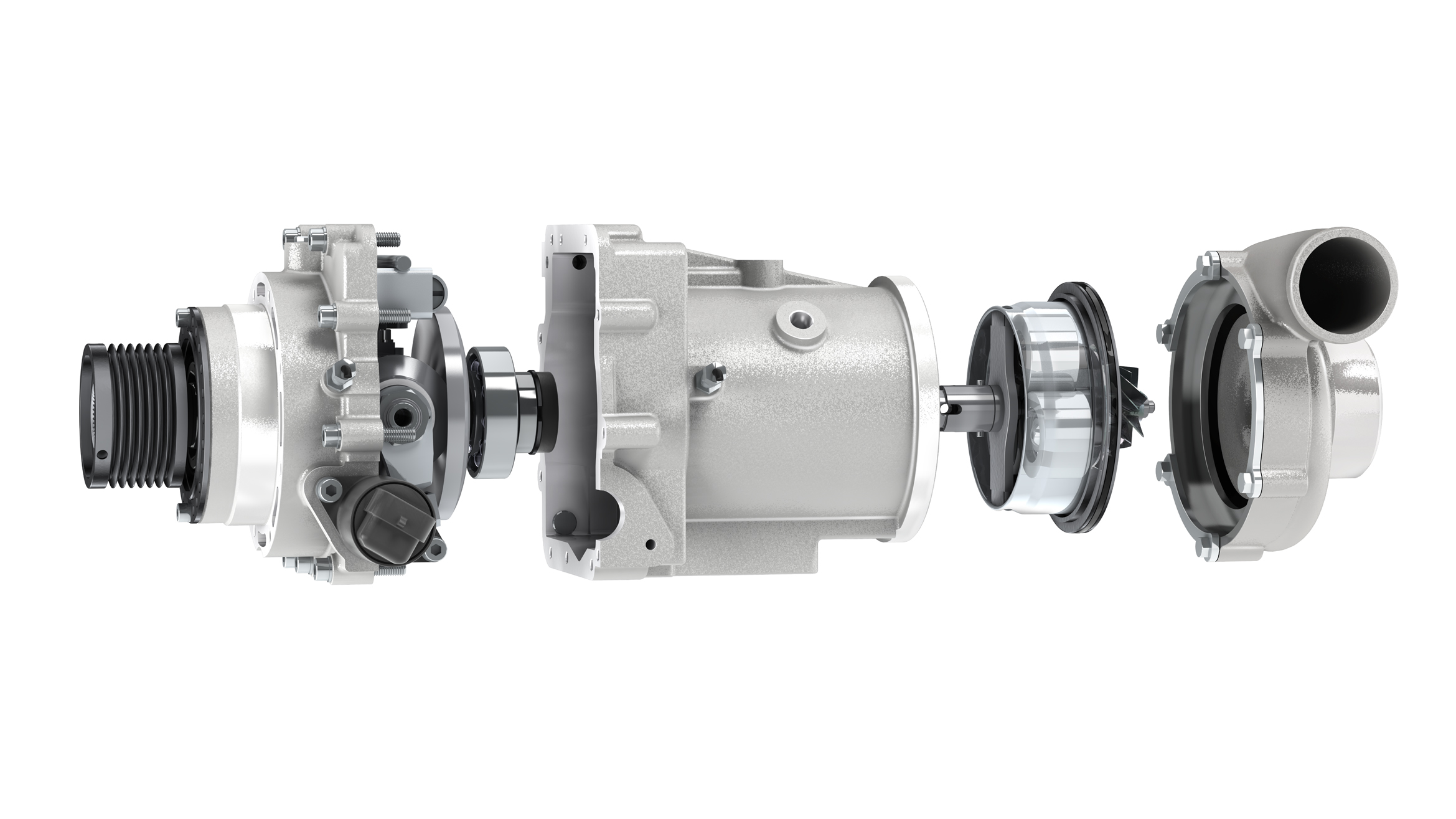 Torotrak的V-Charge增壓器由一只傳統(tǒng)的離心壓縮器與該公司的緊湊型環(huán)形(Torodia)變速器組成,以提供所需的壓縮空氣。
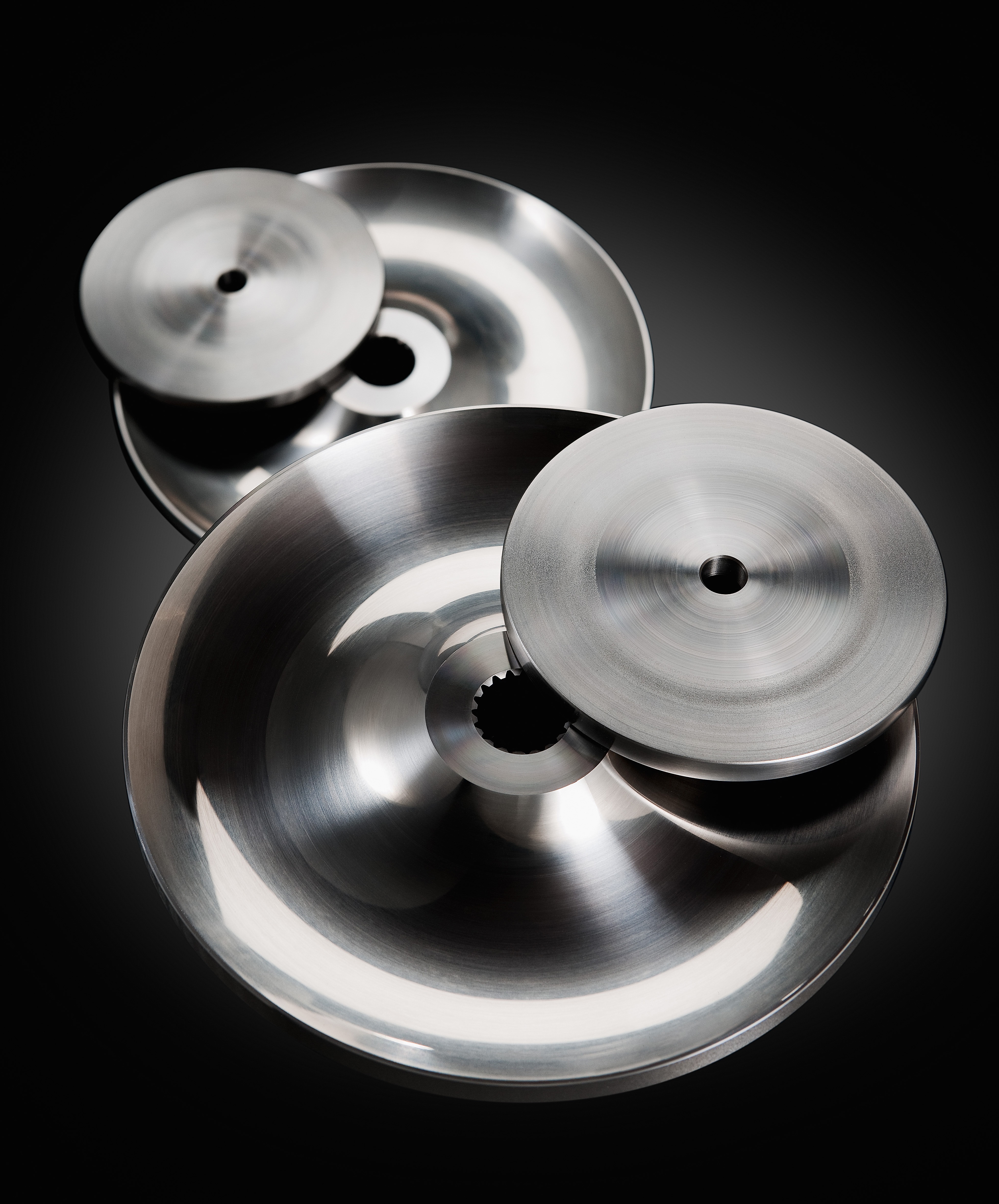 這是Torotrak的環(huán)形變速器的組成部件。
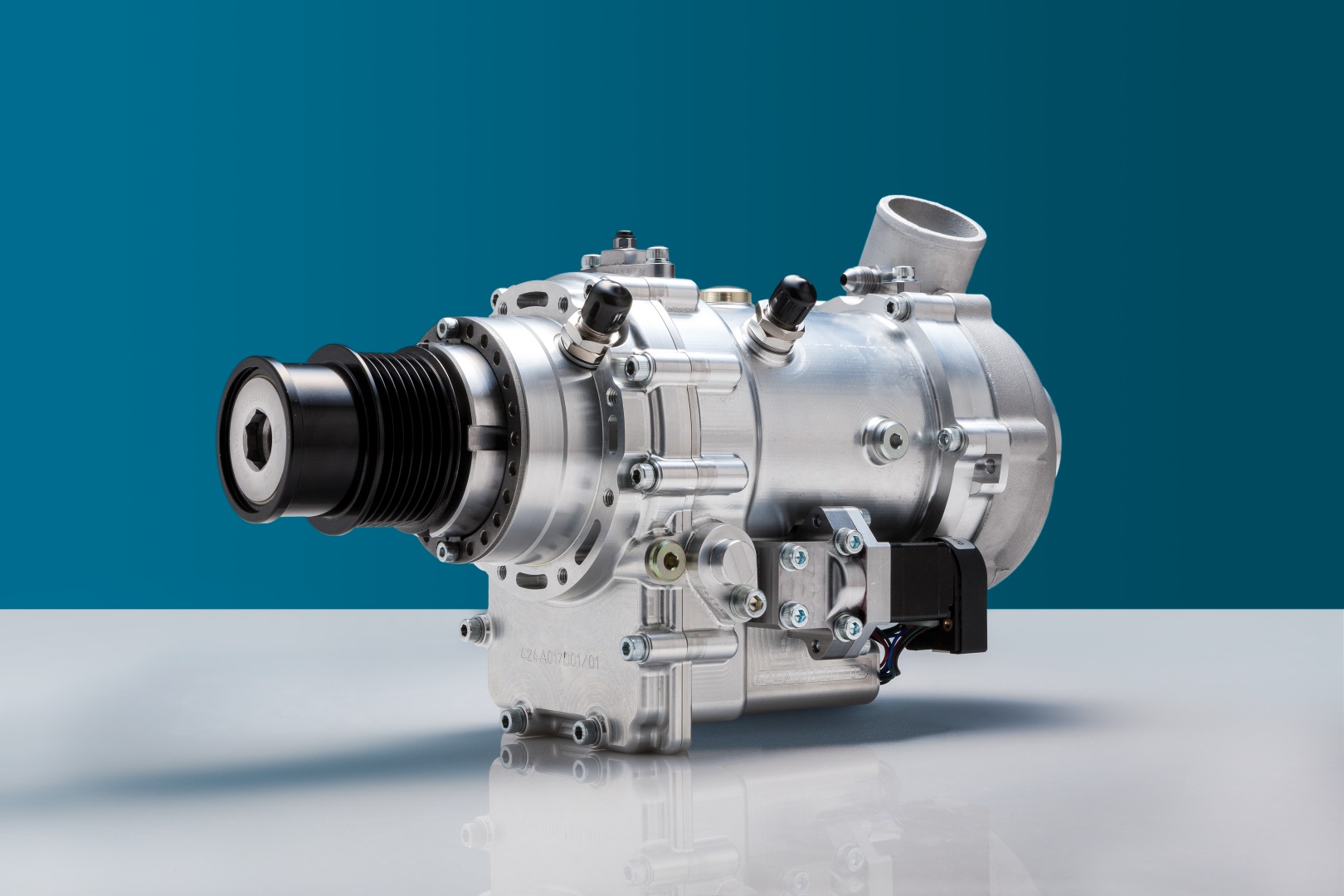 Torotrak的V-Charge系統(tǒng)是專門針對(duì)輕量化渦輪增壓汽油機(jī)開(kāi)發(fā)的,旨在提高低轉(zhuǎn)速下的扭矩與瞬態(tài)響應(yīng)性能。
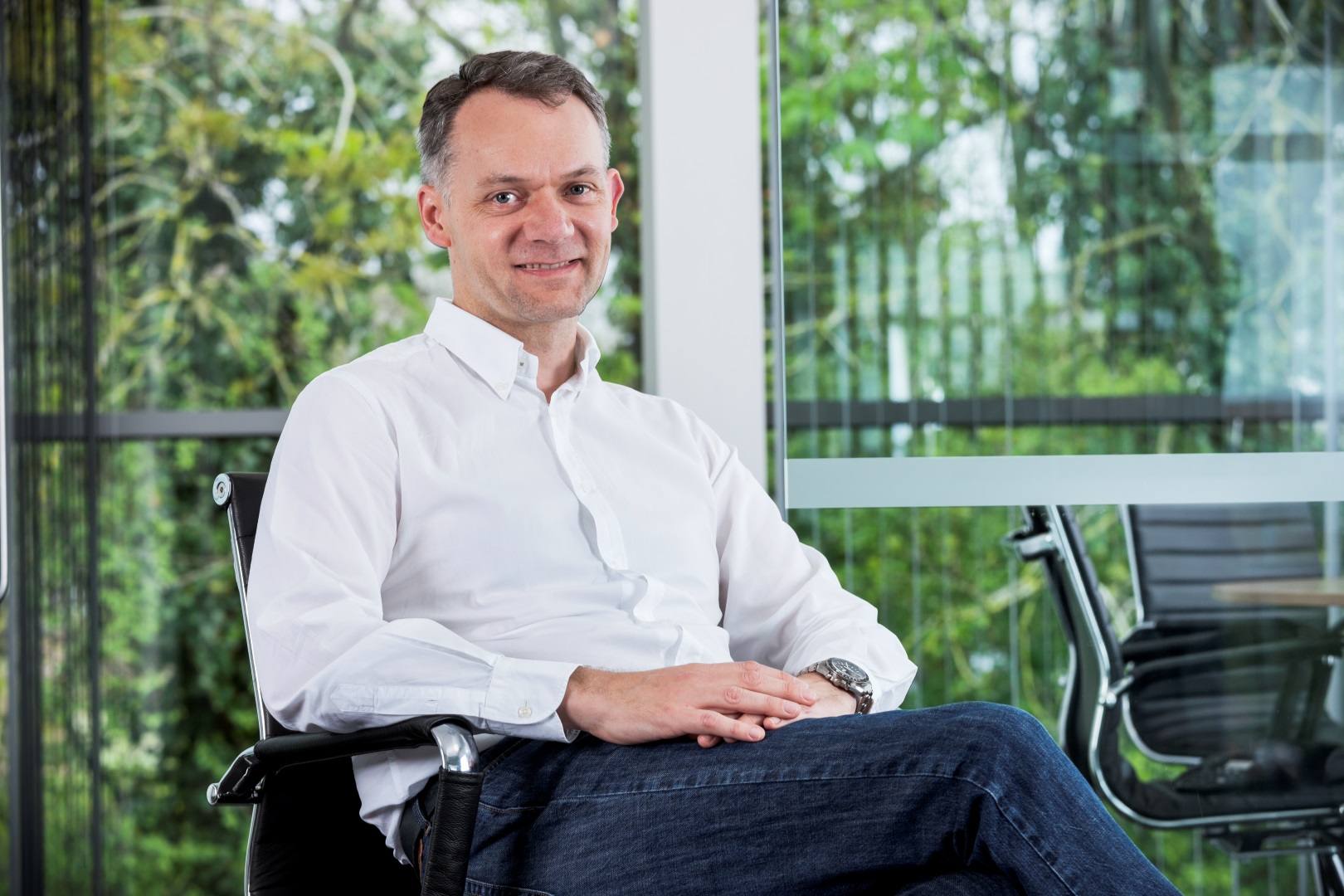 Torotrak的Doug Cross 表示,V-Charge可以實(shí)現(xiàn)“接近瞬時(shí)的”油門反應(yīng)速度。