“搭載1.0L EcoBoost三缸發(fā)動機的福特蒙迪歐”聽起來可能有點別扭,那么想想看,現(xiàn)在福特正在為這個小小的三缸發(fā)動機開發(fā)停缸技術(shù), 是不是很讓人驚異。
福特公司正在與歐洲合作伙伴攜手對這臺最小的點燃式乘用車發(fā)動機展開測試,測試內(nèi)容包括單次和“滾動式”停缸技術(shù)的應(yīng)用。在B級嘉年華和C級福克斯上成功通過測試后,這臺比許多汽車發(fā)動機更小(92kW,69hp,1.0L)的發(fā)動機現(xiàn)在正式用于歐洲的D級蒙迪歐身上了。
當(dāng)三個汽缸同時工作時,這臺迷你發(fā)動機是怎樣在寬敞的轎車中運作的?作為《汽車工程雜志》的編輯,我親自在英國大街上用一輛已經(jīng)上市的三缸蒙迪歐進行試駕,試駕結(jié)果有效地打消了公眾對其是否能駕馭這輛重達1455 公斤(3207 lb)的汽車的疑慮。從0加速至100km/h總共耗費12秒,而其官方公布的最高速度為200km/h(124mph)。此外官方還公布了1.0L蒙迪歐的燃油經(jīng)濟性數(shù)據(jù),100公里油耗為5.1L(約46mpg),二氧化碳排放為119g/km。
此外,無論在通常狀態(tài)還是巡航狀態(tài)下,本次試駕的NVH(噪聲、振動和不平順性)水平都給我留下了極深刻的印象。在巡航狀態(tài)下,蒙迪歐也可以使用兩缸模式,就像體型更小的嘉年華和福克斯車型一樣。
兩種停缸技術(shù)策略
三缸發(fā)動機停缸技術(shù)的可行性是由福特公司內(nèi)部的一個高級團隊著手研究的,該團隊的領(lǐng)袖是研究與高級工程部門全球傳動系統(tǒng)主管Andreas Schamel。他表示,如果該發(fā)動機安裝在福克斯上且開啟666 cm3兩缸模式,那么在各種因素的影響下,整體燃耗可減少4%-6%。
整體停缸系統(tǒng)還有待后續(xù)技術(shù)的補充與完善,其中包括一種專門開發(fā)的擺式減震器。在2015年維也納汽車論壇上發(fā)布的一篇技術(shù)報告中,Schamel表示這個整合進傳動系統(tǒng)的減震器,可使發(fā)動機在低速停缸狀態(tài)下延長行駛里程。
報告中提到了研究的合作方是舍弗勒集團(M. Scheidt)與其LuK分部(由H. Faust博士領(lǐng)導(dǎo))。福特克隆公司的Dipl-Ing C. Weber也是研究團隊中的重要成員。
除了擺式減震器外,使用停缸技術(shù)的福克斯的原型車上還裝有舍弗勒雙質(zhì)量飛輪(DMF)和一個經(jīng)過調(diào)試的離合器片,用以隔離變速箱和發(fā)動機之間的振動。
研發(fā)中所設(shè)定的硬性指標都已成功實現(xiàn),而測試結(jié)果表明,與標準版的1.0L EcoBoost相比,使用停缸技術(shù)的車型,其NVH性能絲毫不遜色。
福特對兩種停缸技術(shù)策略進行了測試,一種是單缸停缸,而另一種被稱為“滾動缸”停缸。后者可以有效地將EcoBoost三缸發(fā)動機切入“發(fā)動機半運轉(zhuǎn)”模式,使停缸的數(shù)量與順序可以自由改變。
Schamel解釋道,在一個三缸發(fā)動機上可以應(yīng)用多種不同的停缸策略。一種策略是“對一個汽缸應(yīng)用合適的閥門失活技術(shù),”該技術(shù)可以有效地實現(xiàn)666cc兩缸模式,但缺點是會導(dǎo)致點火順序不均。福特正在研究可自由改變停缸數(shù)量與次序的其他技術(shù)。
Schamel在報告中指出,這種技術(shù)為滾動式停缸成為了可能,而且可以在半發(fā)動機模式下運行發(fā)動機。這相當(dāng)于一個500cm3的主動排量,但同時具備了點火順序均等的優(yōu)勢。
研究團隊發(fā)現(xiàn),在半發(fā)動機模式下,負載極低時油門損耗更容易避免,但與二分之三模式相比,總體負載限值更低。Schamel補充道:“在兩種停缸技術(shù)策略都可使用的區(qū)域,在全發(fā)動機運行狀態(tài)下,滾動停缸技術(shù)節(jié)約燃油的潛力比固定停缸技術(shù)更大。”
在低負載駕駛循環(huán)中,1.0L發(fā)動機在滾動停缸期間的的燃油經(jīng)濟性比固定停缸期間更高,但這一額外優(yōu)勢的程度取決于汽車的應(yīng)用和循環(huán)。小型汽車輕負載階段的優(yōu)勢最明顯,而大型車在中高負載階段的優(yōu)勢最微弱。因此,在新歐洲駕駛循環(huán)NEDC中,對搭載1.0L發(fā)動機的福特嘉年華車型而言,在通過固定停缸技術(shù)已提升的燃油經(jīng)濟性的基礎(chǔ)之上,它經(jīng)濟性評估還能再提升1.2%。但在更能代表真實的駕駛情況WLTP(全球輕型車測試規(guī)程)循環(huán)中,搭載該發(fā)動機的蒙迪歐所提升的燃油經(jīng)濟性便微不足道了。
攻克NVH難題
盡管降低燃耗是停缸技術(shù)的一大顯著優(yōu)勢,但它同時也會對NVH性能造成負面影響。
Schamel表示,“一方面NVH的要求限制了低速狀態(tài)下的最高扭矩,而另一方面,人類更容易感覺到低頻率的震動,這一特點又不允許發(fā)動機在低速下運作。車型設(shè)計中的NVH性能目標就是將停缸對發(fā)動機低速運轉(zhuǎn)順序啟動造成的影響降至最低。”
“通過傳動系統(tǒng)的優(yōu)化和新技術(shù)的引入,保持NVH目標性能所需要的扭矩限值將會更高,而發(fā)動機低速限值將會更低。”他指出。
福特公司的測試結(jié)果顯示,帶有經(jīng)過調(diào)整的離合器片和雙質(zhì)量飛輪可以抵消0.5階次或0.75階次發(fā)動機振動,擺式減震器可減少90%以上的1.5階次的發(fā)動機振動。
基本配置的雙質(zhì)量飛輪和離合器,可將2檔時的1500rpm提升至6檔時的2000rpm以上,從而實現(xiàn)提升巡航舒適度的目的。減振系統(tǒng)可使所有檔位的低速限值“顯著降低”,而可接受的最大扭矩則可提升至雙質(zhì)量飛輪的機械設(shè)計極限,使得NEDC燃油經(jīng)濟性評估提高1%。若使用滾動停缸技術(shù),該數(shù)值還能再提升0.5%。
在對單缸停缸和滾動停缸的優(yōu)缺點進行總結(jié)時,Schamel與其同事這樣說道:“所有停缸策略都能實現(xiàn)硬性開發(fā)指標,且NVH性能不會下降。在不顯著影響燃油經(jīng)濟性的條件下,單缸停缸策略在復(fù)雜性、控制難易度和成本效益方面更加優(yōu)秀。”
福特的計算結(jié)果顯示,與滾筒停缸相比,單缸停缸技術(shù)的總運行成本及優(yōu)勢更加明顯。一張高級示意圖顯示,用40%的成本便能實現(xiàn)90%的燃油經(jīng)濟性優(yōu)勢,“實在是太劃算了。”研究團隊總結(jié)道,“即便超小型發(fā)動機也能從停缸策略中獲益,而且還能在全球的各種行駛工況和真實的駕駛體驗中看到燃耗的降低。”
If the words “Ford Mondeo powered by 1.0-L 3-cylinder EcoBoost engine” sound a bit incongruent, now consider that the company is researching cylinder deactivation for its little triple.
Ford, working with European partners, has examined both single and “rolling” deactivation strategies for its smallest spark-ignited passenger car engine. After proving itself in the B- and C-segment Fiesta and Focus models, the 92-kW (69-hp), 1.0-L—smaller than many motorcycle engines—is now also available in the D-segment Mondeo in Europe.
How does this diminutive engine perform in the roomy sedan when all three cylinders are on the job? A test drive in the U.K. by this Automotive Engineeringeditor of the production version of the Mondeo triple largely dispelled doubts of its general suitability to propel a 1455 kg (3207 lb) curb weight car. Acceleration from zero to 100 km/h takes 12 s and claimed top speed is 200 km/h (124 mph). Official economy figures for the 1.0-L Mondeo include a combined figure of 5.1 L/100 km (about 46 mpg) with CO2 emissions of 119 g/km.
My test drive was particularly impressive regarding NVH levels both generally and in the cruise. And it is in the cruise that two-cylinder operation for the Mondeo could be viable, just as it may be for the smaller Fiesta and Focus.
Two deactivation strategies
Research into the feasibility of cylinder deactivation for a production triple has been carried out by a high-level Ford team led by Dr. Andreas Schamel, Director, Global Powertrain, Research and Advanced Engineering. He said that when installed in a Focus and dependent on various factors, a fuel consumption reduction of between 4% and 6% is achievable when operating in 666-cm3 twin-cylinder mode.
The general deactivation system would be complemented by further technology that Ford has now researched, including a specifically developed pendulum absorber. Integrated into the driveline, the absorber enables a broader operating range during cylinder deactivation at lower engine speed, explained Schamel in a technical paper he presented during the 2015 Vienna Motor Symposium.
The paper notes Ford's collaboration with Schaeffler Group (Dr. M. Scheidt), including Schaeffler's LuK division (Dr. H. Faust). Dipl-Ing C. Weber of Ford Cologne is also a key member of the research team.
As well as incorporating the pendulum absorber, a cylinder deactivation Focus prototype was also fitted with a Schaeffler dual-mass flywheel (DMF) and a tuned clutch disc, to achieve vibration isolation between transmission and engine.
Mandatory development targets were met and results noted no NVH deterioration compared to the standard production 1.0-L EcoBoost.
Two different cylinder deactivation strategies were examined: deactivation of a single cylinder, and what is termed a “rolling cylinder” deactivation, which would effectively run the EcoBoost triple in a “half-engine” mode, with freedom to vary the number and sequence of deactivated cylinders.
Schamel explained that on a 3-cylinder engine, different strategies for cylinder deactivation are applicable. One "is to apply an appropriate valve deactivation mechanism to one cylinder," effectively creating a 666-cc twin but with the disadvantage of an uneven firing sequence. However, Ford has investigated other technologies which provide the freedom to vary the number and the sequence of deactivated cylinders.
Such a set-up offers the opportunity for a rolling cylinder deactivation and could be used to run the engine in half-engine mode, corresponding to a 500-cm3 active displacement but now with the advantage of an even firing order, he noted in the paper.
The research teams found that the half-engine mode offered a greater potential of avoiding throttle losses at very low loads, but at an overall lower load limit compared to the two-thirds mode. Schamel added: “In the operating area in which the two deactivation strategies overlap, the rolling cylinder deactivation shows a bigger fuel saving potential related to the full engine operation compared to fixed cylinder activation.”
The fuel economy for the 1.0-L engine during rolling cylinder deactivation would be better than that for the fixed cylinder deactivation in low load drive cycles, but the magnitude of the additional benefit would depend on vehicle application and cycle. A small car at light load would get the biggest potential benefit, with smallest achieved by a large car during mid to high load cycle. So a Fiesta with a 1.0-L engine would be able to gain another 1.2% fuel efficiency benefit in NEDC compared to the improvement already achieved with fixed cylinder deactivation. But for a Mondeo using the engine the gain would be negligible in the WLTP (Worldwide Harmonized Light Vehicles Test Procedure) cycle, considered to be more representative of real-world driving.
Conquering NVH
While fuel consumption reduction is the salient plus factor regarding the general application of cylinder deactivation, the downside can be negative NVH effect.
Schamel explained “On the one hand, NVH requirements constrain the maximum torque at lower engine speeds and on the other, the human perception of low frequencies does not allow the operation at very low engine speeds. The NVH objective is the minimization of low engine order excitations caused by cylinder deactivation.
"The NVH limits can be moved to higher torque levels and lower engine speeds by optimization of the powertrain and introduction of new technologies,” he noted.
The use of the dual-mass flywheel with tuned clutch disc counteracts the 0.5th or 0.75th engine-order excitation and the pendulum damper reduces the 1.5th engine order by more than 90%, according to Ford testing.
The baseline production DMF flywheel and clutch facilitates comfortable cruising from 1500 rpm upwards on 2nd gear and above 2000 rpm in 6th. The absorbing system allows the lower speed limit to be “significantly” reduced in all gears and maximum acceptable torque to be increased close to the mechanical design limit of the DMF, bringing a 1% NEDC fuel economy benefit. The rolling mode deactivation would see an extra 0.5% achieved.
Summing up the pros and cons of single or rolling cylinder deactivation, Schamel and his colleagues reported, “The fulfillment of the mandatory development target, no NVH deterioration, is achievable for all cylinder deactivation strategies. Without a significant compromise regarding fuel economy, the single cylinder deactivation strategy is preferred regarding complexity, controls efforts, and cost effectiveness."
Ford calculations show the ratio of total functional benefit and cost to be "advantageous" for the single cylinder deactivation strategy versus the rolling approach. A high level contemplation shows a 90% fuel economy benefit for 40% of the cost—good "bang for the buck." The research team concluded that "even highly downsized engines can benefit from a cylinder deactivation strategy, with fuel consumption reduction gained in various global drive cycles – and under real conditions.”

 Andreas Schamel博士公布福特公司1.0L 3缸點燃發(fā)動機的停缸技術(shù)研究的細節(jié)。
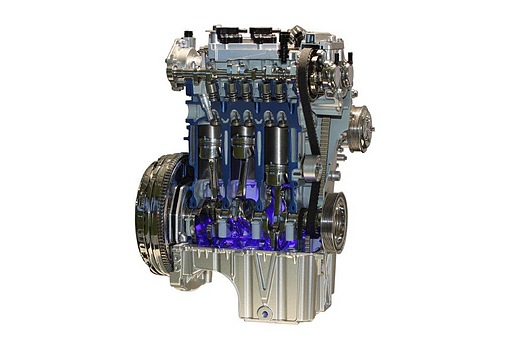 一旦停缸系統(tǒng)得以生產(chǎn),就連福特公司最小型的發(fā)動機也能獲得相當(dāng)于666 cc兩缸發(fā)動機的能力。
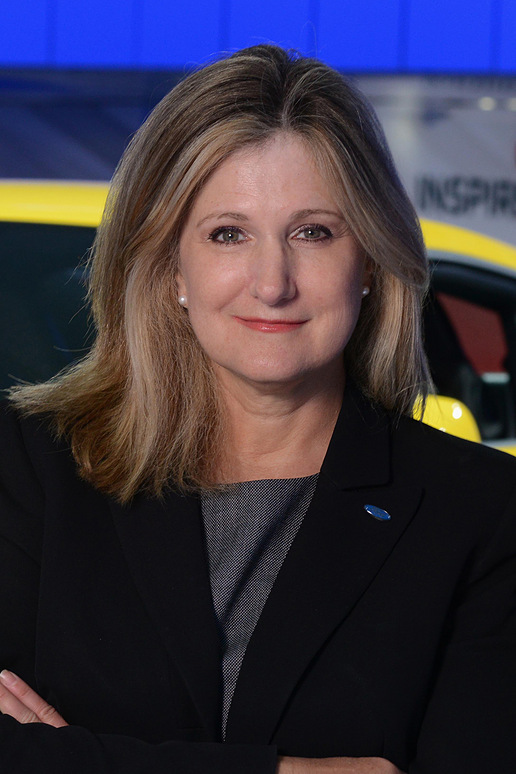 2014年本雜志已報道過福特公司采取停缸技術(shù)的可行性,通用汽車、本田、FCA和梅賽德斯已在該領(lǐng)域展開研究。在該報道的訪談中,福特歐洲首席運行官Barb Samardzich表示:“我認為這個技術(shù)最終會由我們公司首先研發(fā)成功。”
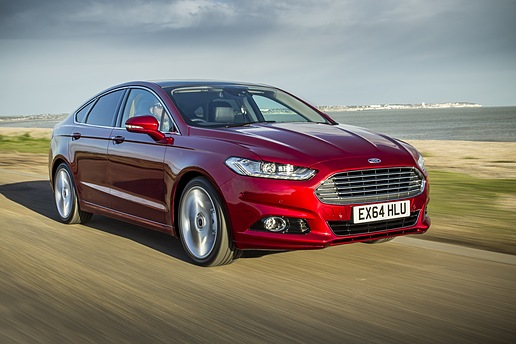 搭載1.0L 3缸EcoBoost 發(fā)動機和其他SI與柴油部件的D級福特蒙迪歐車型(即北美Fusion)目前已經(jīng)上市。